Put titanium quotations on one technical and commercial basis before ranking price. Find the assumptions that change usable quantity, acceptance and delivered cost.
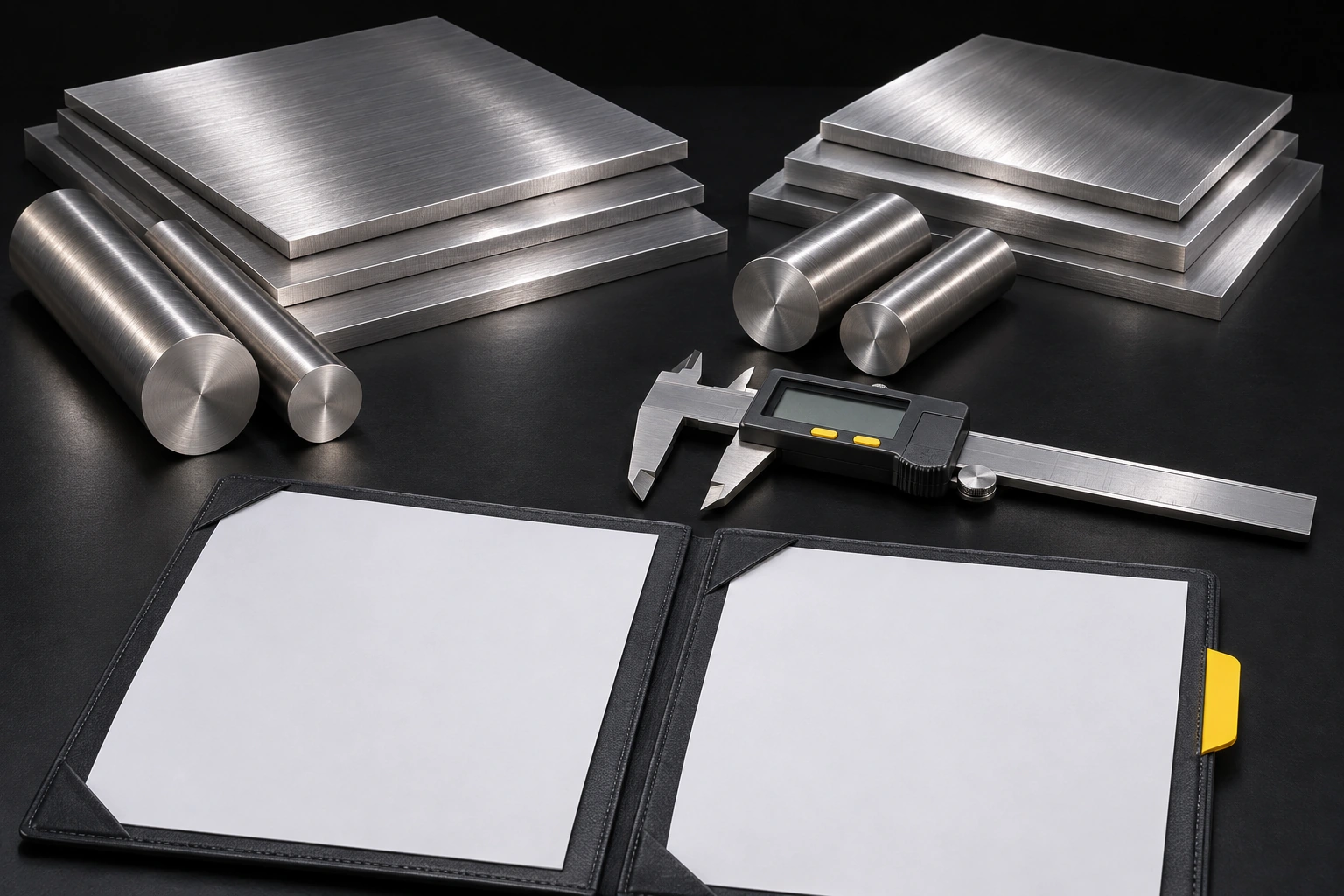
AI illustration. Appearance and labels do not verify material compliance.
How to compare titanium quotations fairly
Compare titanium quotations only after the suppliers are offering the same deliverable. Match the grade, product standard and edition, condition, dimensions, usable quantity and acceptance evidence. Then reconcile the billing weight, cutting losses, separate charges, packaging, delivery responsibilities and schedule assumptions. A low price per kilogram can represent more purchased material, fewer usable pieces or a less complete supply scope.
Use two decisions: first decide whether an offer can meet the approved requirements; then compare the commercial result of the acceptable offers. Do not award points that allow a serious material or traceability gap to disappear behind a low price. Mark unresolved items as open, request clarification, and retain the supplier’s revised response with the order.
01 / Comparison baseline
Start with one comparison baseline
Issue the same RFQ revision to every supplier. Give each line a unique identifier and distinguish stock sizes from finished sizes. A drawing revision, a material condition and a required certificate are part of the commercial scope because they can change the processing route and the evidence needed for release. An email saying “same as your last offer” is a weak baseline when quantities or drawings have changed.
Build a comparison sheet with columns for your requirement, each supplier’s explicit offer, the difference, its cost or schedule consequence, and the person responsible for closing it. Use three response states: confirmed, proposed deviation, and not yet confirmed. Silence belongs in the third state. Request an updated quotation rather than interpreting a generic brochure as a promise about the order.
Also define the comparison endpoint. You might compare material ready for collection, accepted blanks delivered to your receiving site, or finished components released against a drawing. Mixing these endpoints creates a false saving. The method below uses a common accepted deliverable and an agreed delivery boundary; it is a purchasing workflow, not a market price index.
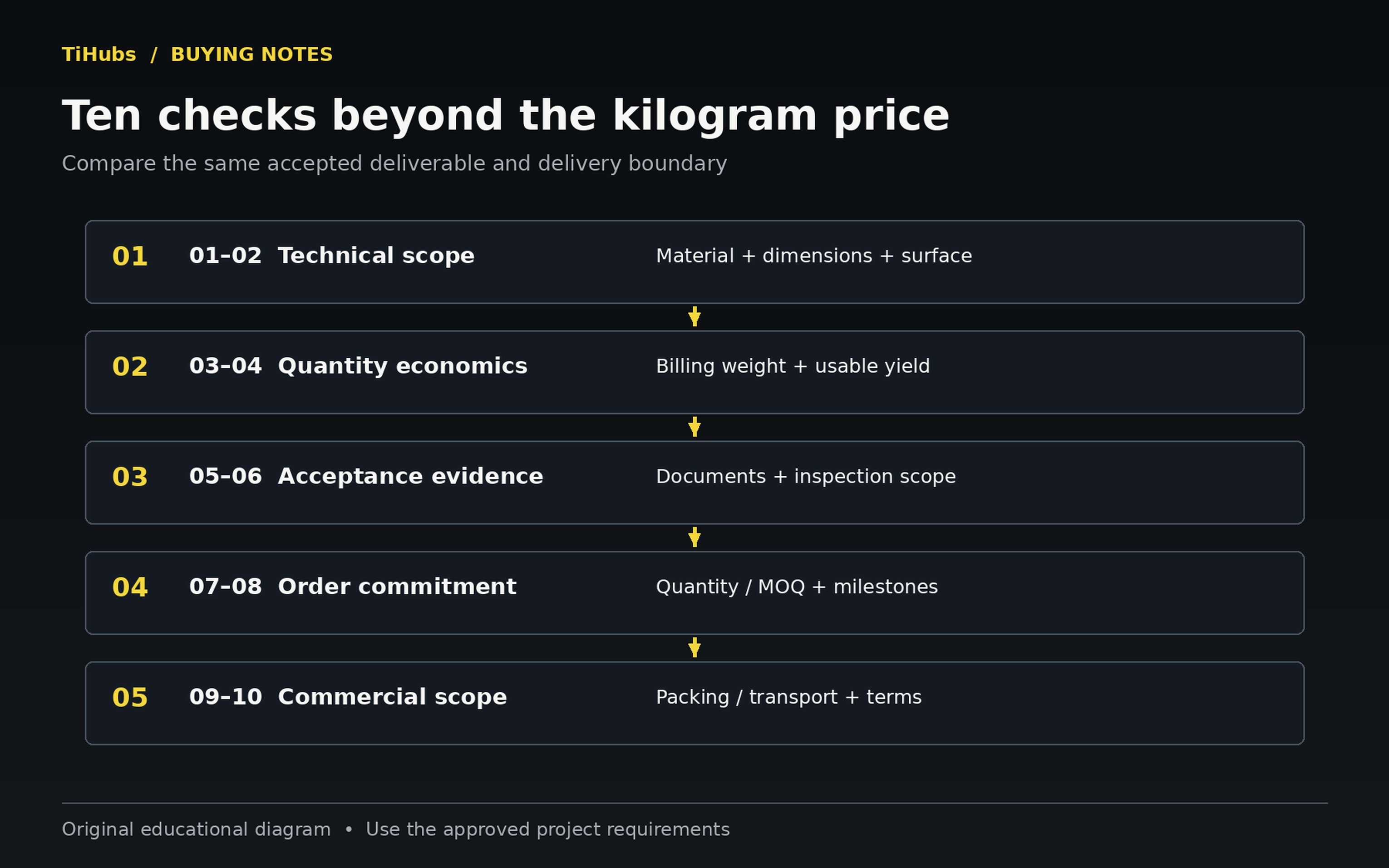
Purchasing planning diagramTen checks beyond the unit price
Original purchasing diagram. Make the technical, quantity, evidence, schedule and commercial assumptions visible.
02 / Ten checks
The 10 checks at a glance
Check
Put the offers on this common basis
Difference that needs clarification
1. Material definition
Grade, specification edition, form, condition
A familiar alloy name replaces a complete specification
2. Dimensions and surface
Stock or finished sizes, tolerances, surface
Nominal dimensions hide machining or finishing work
3. Weight and billing
Actual or theoretical net weight, formula, rounding
Parent-stock mass or gross package mass is billed differently
4. Yield and remnants
Usable pieces, kerf, trim, orientation, ownership
A cheaper kilogram produces fewer acceptable blanks
5. Certificates and traceability
Ordered document type, results, heat/lot map
A generic conformity statement replaces actual test evidence
Different cost exposure is hidden behind the same unit price
03 / Material basis
1. Confirm the complete material definition
“Titanium Grade 2” does not identify a complete sheet, bar or tube order. Ask which product specification and edition apply, what condition is offered, and whether the material is supplied as finished stock or an intermediate product. For example, ASTM B265 concerns titanium flat products; a shared alloy designation does not make it a bar or forging specification. The full purchased specification remains the technical reference. [1]
Where one offer uses a Chinese designation and another uses an ASTM grade, request a requirement-by-requirement review. Do not convert TA2 to Grade 2 or TC4 to Grade 5 merely by replacing the name on the quote. The proposed product must satisfy the ordered chemistry, properties, form, condition, tests and documentation. Approved alternatives should have separate prices and an explicit approval route.
Ask whether the quote assumes a particular mill source, heat or available stock lot. If the offered source changes before order acceptance, determine whether the original documents and delivery promise still apply. A matching unit price is not enough to make a changed source invisible.
04 / Dimensions and surface
2. Compare the delivered dimensions and surface
Separate three dimension sets: the parent material, the delivered blank and the final component. A supplier quoting saw-cut blanks may include positive machining allowance, while another is quoting ground or machined dimensions. Record which faces will be processed and whether the buyer or supplier is responsible for achieving the final envelope.
Specify only the tolerances the application needs, but specify them clearly. Thickness, width, length, flatness, straightness, squareness, ovality and surface condition can create very different work. A general note such as “precision quality” does not tell the supplier how to inspect the result. Ask for a drawing reference or measurable acceptance requirement, with units and the relevant measurement condition where needed.
Surface descriptions also need a basis. Pickled, polished and machined surfaces describe processes; they do not automatically establish a roughness value, a scratch limit or a cleanliness requirement. If an appearance sample is used, identify the agreed sample and the area it represents. Include any protective film, edge treatment or deburring in the comparison.
Illustrative product viewDefine the stock-to-part allowance
AI illustration; not a factory, certificate or inspection record. Confirm the usable envelope and the inspection basis before comparing prices.
05 / Weight and billing
3. Reconcile the weight used for the invoice
For every quotation, ask what the kilogram represents. Is the supplier billing actual net material weight, theoretical mass calculated from nominal dimensions, the starting stock consumed, or a minimum chargeable weight? Net material, packaging tare and shipment gross weight should remain separate. Do not assume the freight document’s gross mass is the material invoice basis.
For theoretical weight, record the density, dimension units, nominal or measured size basis, calculation formula and rounding rule. For actual weight, agree the weighing stage, instrument suitability, how tare is excluded and how the reported weight maps to the shipment. A scale photograph can support a record, but it does not replace an agreed weighing method.
Positive thickness allowance can change actual mass without increasing sheet area or piece count. Conversely, a theoretical-weight invoice may remain fixed while the delivered mass varies within the ordered dimensional requirements. Neither billing method is automatically preferable; compare them against your usable output and write the selected method into the order.
06 / Yield and remnants
4. Count usable pieces and define the remnants
Ask each supplier to show how the requested pieces fit the proposed stock. The layout must allow for the cutting process, edge trim, machining stock, orientation requirements and any excluded areas. Do not assume that dividing total sheet area by blank area gives a manufacturable piece count. A small change in parent-stock width can change the nesting result substantially.
Define what happens to remnants and scrap. If the buyer pays for a whole sheet, does the remaining material ship, stay in controlled storage, or become supplier-owned scrap? If it is retained for later orders, record ownership, identification, usable dimensions, storage duration and the conditions for calling it off. A theoretical scrap value is not a guaranteed credit.
Use a piece-based comparison when that is what production consumes. Cost per accepted blank can be more useful than cost per delivered kilogram. For machined parts, distinguish raw-stock purchase yield from production acceptance yield; do not combine them into one unexplained percentage that conceals rework or rejected pieces.
07 / Certificates
5. Match certificates to the material being supplied
A quotation should name the required inspection document and the information it will contain. “MTC included” is a starting point, not the whole requirement. Confirm the issuer, specification and edition, grade, condition, heat number, applicable product or test lot, actual required results, and connection to the delivered pieces or bundles.
If a stockholder cuts material, request the parent-to-cut-piece identity link. If a certificate covers several dimensions or test lots, establish which results apply to the order. A clean PDF and a recognizable company name do not settle that question. Our mill certificate guide explains the evidence review in more detail.
Determine when the documents will be available: a representative example during quotation, the actual stock certificate before allocation, and the final document set before shipment may serve different purposes. Identify translation, special formatting, additional endorsement or independent inspection requirements before comparing prices. Do not demand retrospective changes that make an original manufacturing record misleading.
08 / Inspection scope
6. Compare inspection deliverables, not test names
For each required examination, agree the method, coverage, acceptance criteria, reporting and represented material. “UT included” or “PMI available” does not establish those details. The ordered product specification and project requirements determine the needed inspection scope; optional buyer checks should be listed separately rather than implied to apply to every titanium order.
Distinguish routine production inspection from an independent witness visit or purchaser hold point. State who arranges access, provides procedures, selects samples, pays laboratory charges and authorizes release. If a failed result requires retesting or investigation, agree how the decision will be handled under the applicable requirements rather than assuming that another sample automatically resolves the issue.
Measurement records should identify the instrument or method and the item inspected. NIST explains that metrological traceability concerns a measurement result and its documented calibration chain, with uncertainty—not simply ownership of an instrument with a calibration sticker. [2] Match the measurement capability to the tolerance being accepted.
09 / Quantity and batch
7. Separate order quantity, process minimum and invoice minimum
The minimum might apply to a stock length, a sheet, a heat, a processing batch, a machine setup or an invoice value. Ask which one creates the constraint. A supplier may be able to supply a small quantity from existing material while a custom route requires a much larger starting lot. Those are different proposals and should be compared as such.
State the required delivered piece count and any permissible quantity variation. Do not accept an unspecified “production tolerance” as permission to deliver a short quantity that stops assembly. When overrun is possible, agree its limit, pricing and approval before production. Where several sizes are grouped, confirm that an overall weight minimum does not leave a critical line short.
If a supplier proposes a blanket order with scheduled releases, distinguish committed quantity from a forecast. Include reservation, storage, ownership and release timing in the commercial comparison. A lower unit price can be offset by unused stock, extra handling or earlier cash commitment; use your own demand assumptions to evaluate that exposure.
10 / Schedule
8. Define what the quoted lead time actually measures
Ask when the clock starts and ends. “Four weeks” could mean after order acceptance, after an agreed payment milestone, after material allocation, or after final drawing approval. It could end at production completion, inspection release, ready-for-dispatch status or carrier handover. None of those automatically means arrival at your plant.
For a custom order, request a short milestone plan: requirements frozen, starting material allocated, processing complete, tests and documents complete, packing complete and dispatch. Identify activities that can run together and those that depend on a prior approval. The schedule should include buyer response deadlines where a late decision would affect production.
Keep a delivery estimate separate from a committed date and its agreed conditions. A fast quotation based on unreserved inventory may expire when another order takes the same stock. See the MOQ and lead-time guide for a practical way to confirm available, processable and releasable quantities.
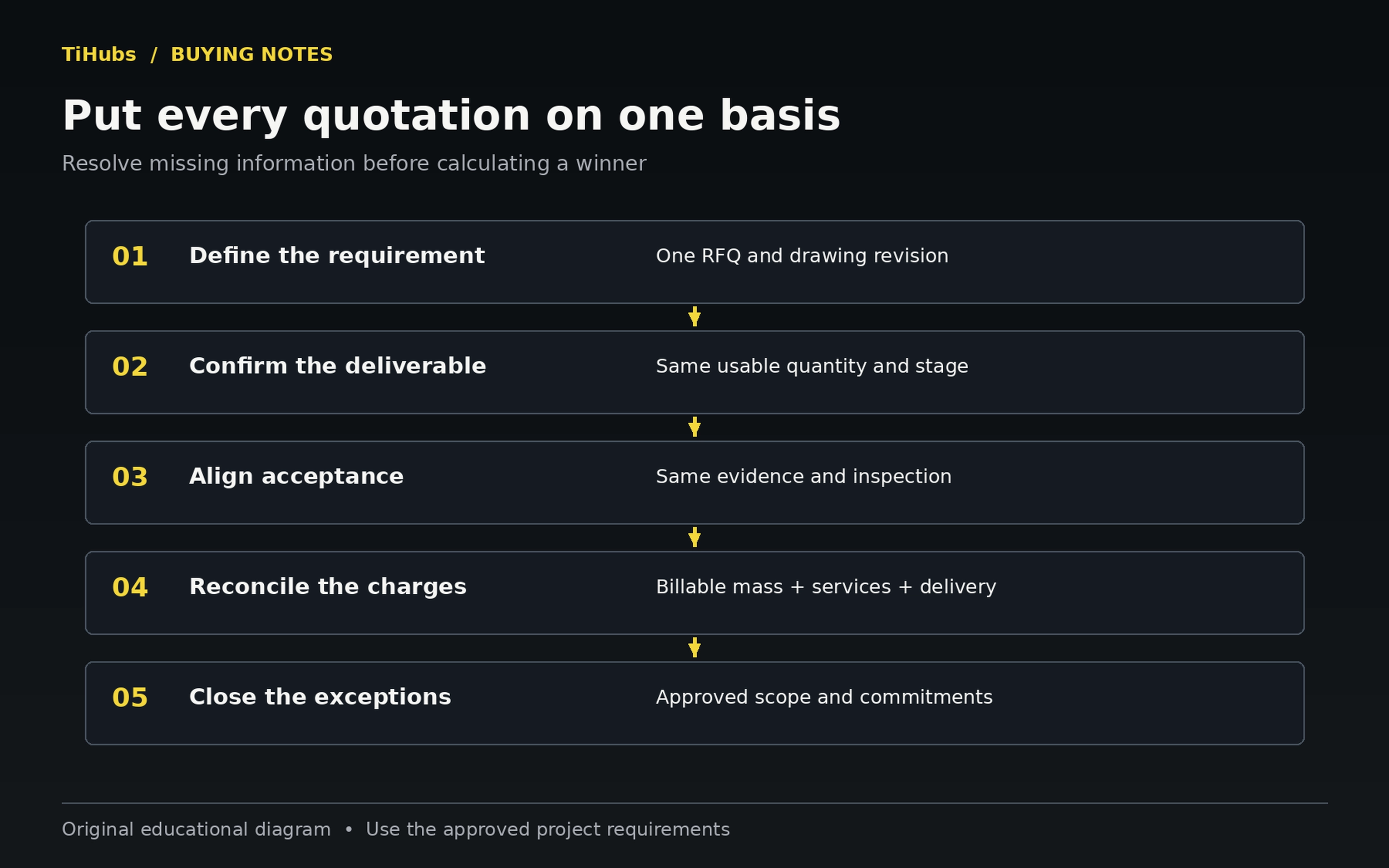
Purchasing planning diagramNormalize the complete offer
Original purchasing diagram. Compare the same accepted output and delivery boundary, then close exceptions.
11 / Packing and delivery
9. Compare packaging and the same delivery boundary
Record packing protection, package count, dimensions, net and gross weights, and handling needs. Long tubes, polished sheet and machined parts can require different supports and separation. Ask whether the price includes suitable protection for the agreed transport route, rather than comparing an unpacked material price with an export-packed delivery.
Write the selected Incoterms® rule, named place or port, and edition. ICC’s rules allocate important delivery, cost and risk responsibilities; the three-letter abbreviation alone is incomplete. [3] Clarify which charges are included at the named boundary and which remain for the buyer, including onward handling or transport where relevant.
Do not assume that payment of freight means risk stays with the seller until arrival. ICC explains that under C rules, the named destination and the point where delivery and risk transfer occur are different. [4] Have the responsible logistics parties confirm the intended route, insurance scope and handover. Use the full applicable rule for the transaction.
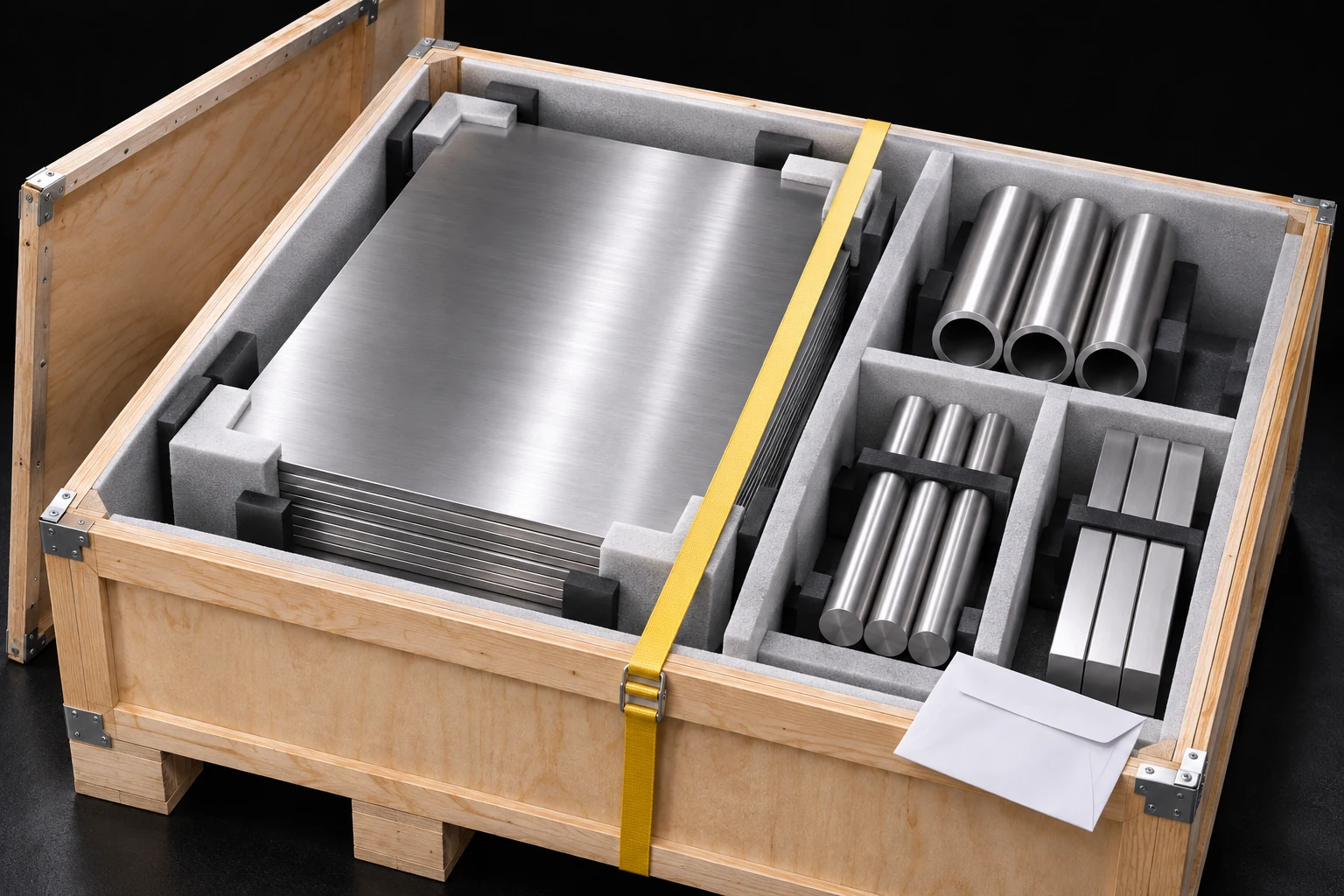
Illustrative product viewInclude protection and packing in the offer
AI illustration; not a factory, certificate or inspection record. Confirm the actual packing design, package map and transport requirements.
12 / Commercial basis
10. Align validity, currency and commercial assumptions
Compare quotations issued for the same RFQ revision and a relevant time window. Record the currency, validity date, quantity breaks, stated escalation assumptions, and whether transport is fixed or provisional. If you convert currencies internally, use one stated evaluation rate and date; that internal comparison does not change either supplier’s contractual currency.
Identify payment milestones, inspection prerequisites, cancellation exposure and the process for resolving shortages or nonconformities. These are separate commercial decisions, not substitutes for material acceptance. Escalate contractual terms to the people authorized to agree them. Do not infer payment timing, title transfer or dispute remedies from an Incoterms abbreviation.
Ask the supplier to list exclusions in one place. A useful response says whether cutting, tests, certificates, packing and delivery are included, separately priced or not offered. Avoid comparing an all-inclusive amount against an incomplete subtotal with unknown items treated as zero.
13 / Worked example
Worked example: the lower kilogram price costs more
The following figures are invented arithmetic examples, not current titanium prices or TiHubs quotations. Both offers must ultimately deliver the same 100 kg of accepted blanks, with matching technical requirements and delivery scope. Taxes and any recoverable credits are excluded from both examples.
Comparison item
Offer A
Offer B
Unit price
USD 30 per billable kg
USD 39 per billable kg
Billable quantity
125 kg of consumed parent stock
100 kg of delivered blanks
Material charge
USD 3,750
USD 3,900
Cutting
USD 300
Included
Agreed testing
USD 180
USD 180
Packing
USD 120
USD 120
Delivery to the common boundary
USD 450
USD 450
Comparable total
USD 4,800
USD 4,650
Cost per 100 kg of accepted output
USD 48.00/kg
USD 46.50/kg
Offer B has a 30% higher quoted kilogram rate but a USD 150 lower comparable total. The result follows from the billing quantity and included cutting, not from an assumed quality difference. If Offer A returns a usable remnant, evaluate that remnant separately using a realistic future use; do not silently assign it full virgin-stock value.
Also test the denominator. If one supplier only guarantees a lower usable piece count, the offers are not yet comparable. Obtain a corrected commitment before using the calculation. Technical eligibility and quantity completeness come before the arithmetic ranking.
14 / Close the gaps
Close gaps before awarding the order
Create a short clarification register with one owner and a due date for each open item. Ask suppliers to respond against the original line numbers. After a revision, reconcile the price, drawing list and exception list together. An email acceptance of one technical detail should not accidentally revive an earlier price or an obsolete delivery date.
Once all essential requirements are met, compare total evaluated cost, evidence quality, schedule confidence and support using your project’s priorities. Keep uncertain risks visible as scenarios instead of disguising them as precise invented costs. Record why an approved alternative was accepted and what evidence will be checked before release.
TiHubs can coordinate this clarification process across Baoji material and processing sources. The useful output is a consolidated, specification-led offer with a clear source and responsibility plan. It should remain possible to trace every offered line back to your request and every approved change back to an authorized decision.
15 / Build your checklist
Build your quotation-comparison brief
Enter the common order basis, the differences you have found and the delivery endpoint you want to compare. You can describe commercial differences without uploading confidential competing offers. State which requirements are fixed and which alternatives you are willing to review. The checklist compiles a brief you can copy or submit to TiHubs.
Build your purchasing and RFQ checklist
Choose the product and add the information you have. Copy the resulting brief or send your requirements to TiHubs. Submitting an enquiry does not place an order.
16 / FAQs
Titanium quotation comparison FAQs
Is price per kilogram ever enough to compare offers?
It can be a useful metric when the specification, delivered form, dimensions, quantity, billing basis and included services are genuinely the same. Confirm those conditions first. Otherwise the same unit can describe different purchased quantities or acceptance obligations.
Should I always choose actual weight rather than theoretical weight?
No. Choose a clear, agreed method that suits the product and your procurement controls. Record the calculation or weighing basis, exclude packaging where appropriate, and evaluate the cost against the required usable pieces.
Can I compare a full sheet with cut blanks?
Yes, after adding the cutting, handling, inspection and yield consequences needed to obtain the same blanks. Clarify ownership and usability of the remnant. A full-sheet price is not already a finished-blank price.
Does an included mill certificate mean inspection is complete?
No. The document must represent the supplied material and contain the required evidence. Dimensional reports, agreed examinations and shipment identity checks may be separate deliverables. Define the complete acceptance package in the order.
Is a shorter lead time always better?
A credible short schedule can be valuable, but first confirm stock reservation, approval dependencies and the date being promised. A production-completion estimate cannot be compared directly with a delivered-to-site commitment.
Can Grade 2 and TA2 offers be compared directly?
Treat them as proposed material bases requiring review against the ordered specification. Similar designation families do not by themselves establish compliance with the same product, test and documentation requirements.
Should unquoted charges be estimated as zero?
No. Mark them as unresolved. Request an explicit included, separately priced or excluded response. If you use a planning allowance internally, label it as an assumption and replace it with confirmed information before commitment.
What should be retained after a quotation is accepted?
Keep the final RFQ and drawing revisions, accepted quotation, exception closures, quantity and weight basis, inspection plan, delivery conditions and authorized changes. These records establish the baseline for shipment review.
17 / Key takeaways
What to confirm before comparing the total
Use one technical scope and one accepted deliverable for every offer.
Reconcile billable kilograms with usable pieces, losses and remnant ownership.
Price the complete document, inspection, packaging and delivery scope.
Resolve exclusions and schedule conditions before selecting the commercial winner.
Technical references
References and scope
This article presents an original purchasing workflow and illustrative arithmetic. The approved order, complete product specifications and applicable commercial terms govern the transaction. Source links support the limited standard, measurement and delivery concepts identified in the text.
TiHubs coordinates titanium materials and custom supply from Baoji, China. Our founder’s 20 years in titanium inform a specification-led sourcing approach: clarify the product, manufacturing and acceptance requirements before quotation. Learn about our sourcing role.
Contents
TiHubs
Talk to TiHubs
Ask about titanium materials, grades or custom parts.
Enter your email to start chatting.
We use your email to respond to your enquiry. Your conversation is stored on this website.
Our team is away right now. Leave your enquiry and we will follow up by email.