Baoji High-tech Zone, ChinaTitanium sourcing · One contact


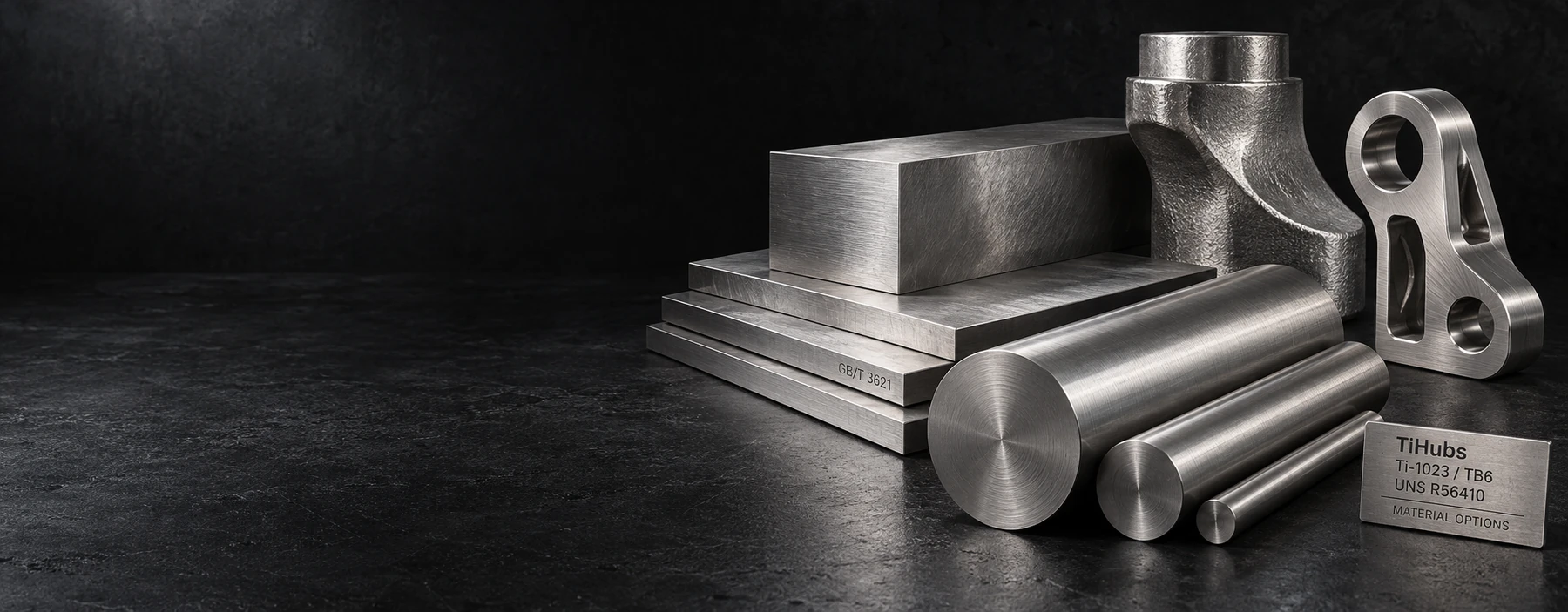
Ti-1023 · TB6 · UNS R56410
Ti-1023 / TB6 titanium.For aerospace structural forgings.
Source Ti-1023 / TB6 titanium bar, forging stock, shaped forgings and specified sheet products through one contact in Baoji. We coordinate the material, condition, inspection and documentation requirements for landing-gear, rotor-hub and airframe-component enquiries.
Start with a specification, drawing or application. We’ll help identify the details still needed.
Material review. Supply coordination.
One contact in Baoji, China.
Ti-1023 / TB6Ti-1023 · Ti-10V-2Fe-3Al · UNS R56410
Defined material & conditionMatch the product, process and acceptance requirements
One contact20 years of founder experience · 100+ Baoji factories
01 / Product forms
Find your
Ti-1023 / TB6 product.
Choose a material form or application. Send the dimensions, service conditions and required records so we can match the manufacturing route to your order.
01 / 06
Ti-1023 / TB6 · Ti-1023 · Ti-10V-2Fe-3Al
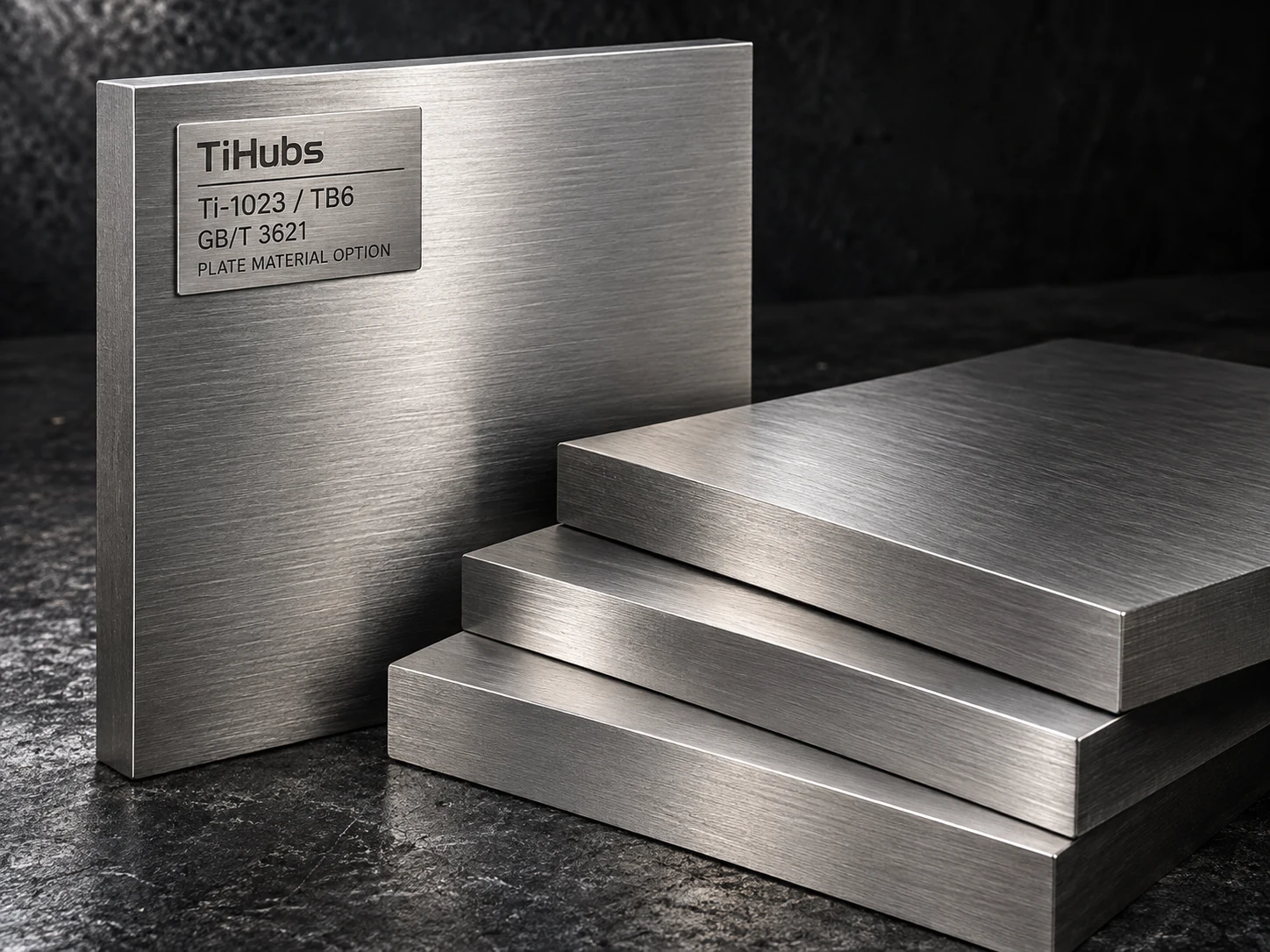
Ti-1023 / TB6 titanium alloy sheet & plate
TB6 sheet and plate for a drawing-defined machining or fabrication route. Start with the required delivery condition and finished-part process; a forging specification does not automatically cover rolled material.
- Specification
- TB6 under GB/T 3621-2022, with composition to GB/T 3620.1-2016. Confirm the ordered thickness and condition and the applicable property table.
- Dimensions
- Thickness × width × length, thickness tolerance, flatness, rolling direction, cut-edge requirements, machining allowance and quantity by size.
- Processing
- Identify the intended machining, forming or subsequent heat treatment and the party responsible for it. Agree sample or first-article needs before committing to production.
- Acceptance
- Heat identity, chemistry, the specified test condition and orientation, dimensions and surface condition. Add inspection after processing where the drawing requires it.
02 / 06
Ti-1023 / TB6 · Ti-1023 · Ti-10V-2Fe-3Al
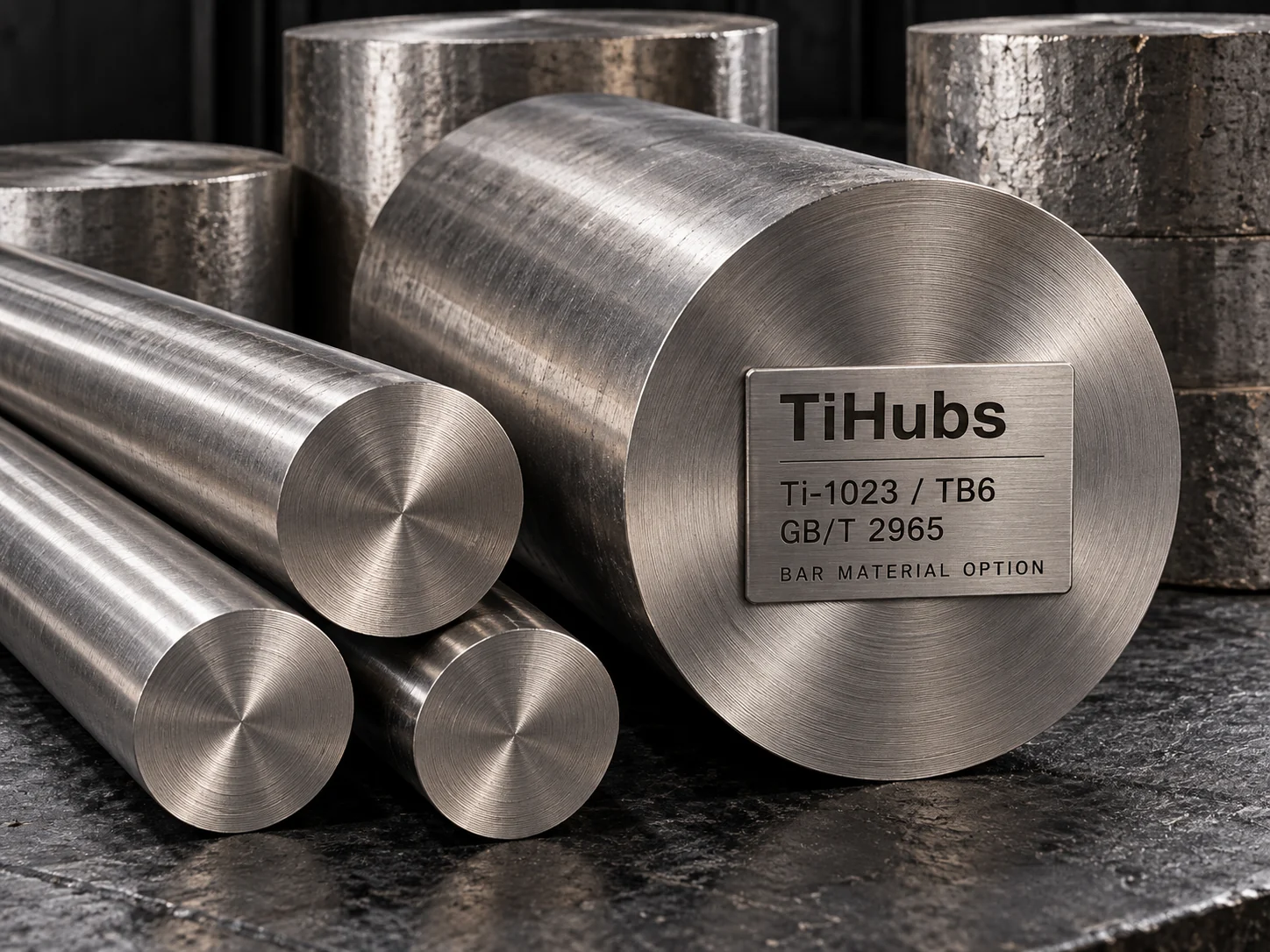
Ti-1023 / TB6 titanium bar & billet
Bar for machining and billet for further forging require different order scopes. We review the intended next operation, section size and heat-treatment responsibility before matching supply resources.
- Specification
- GB/T 2965-2023 for its listed TB6 bar products. For AMS forging stock, use the designated forging specification and its stock requirements, rather than describing every billet as a finished AMS forging.
- Dimensions
- Diameter or section × length, surface finish, straightness, cut allowance and usable length. Distinguish machined-part stock from billet that will be reforged.
- Condition
- State the required delivery condition separately from the mechanical test condition. Include the final component strength requirement and planned heat treatment.
- Acceptance
- Chemistry, heat traceability, mechanical test basis and the agreed ultrasonic, macrostructure or other examination. Define sampling location and surface preparation for inspection.
03 / 06
Ti-1023 / TB6 · Ti-1023 · Ti-10V-2Fe-3Al
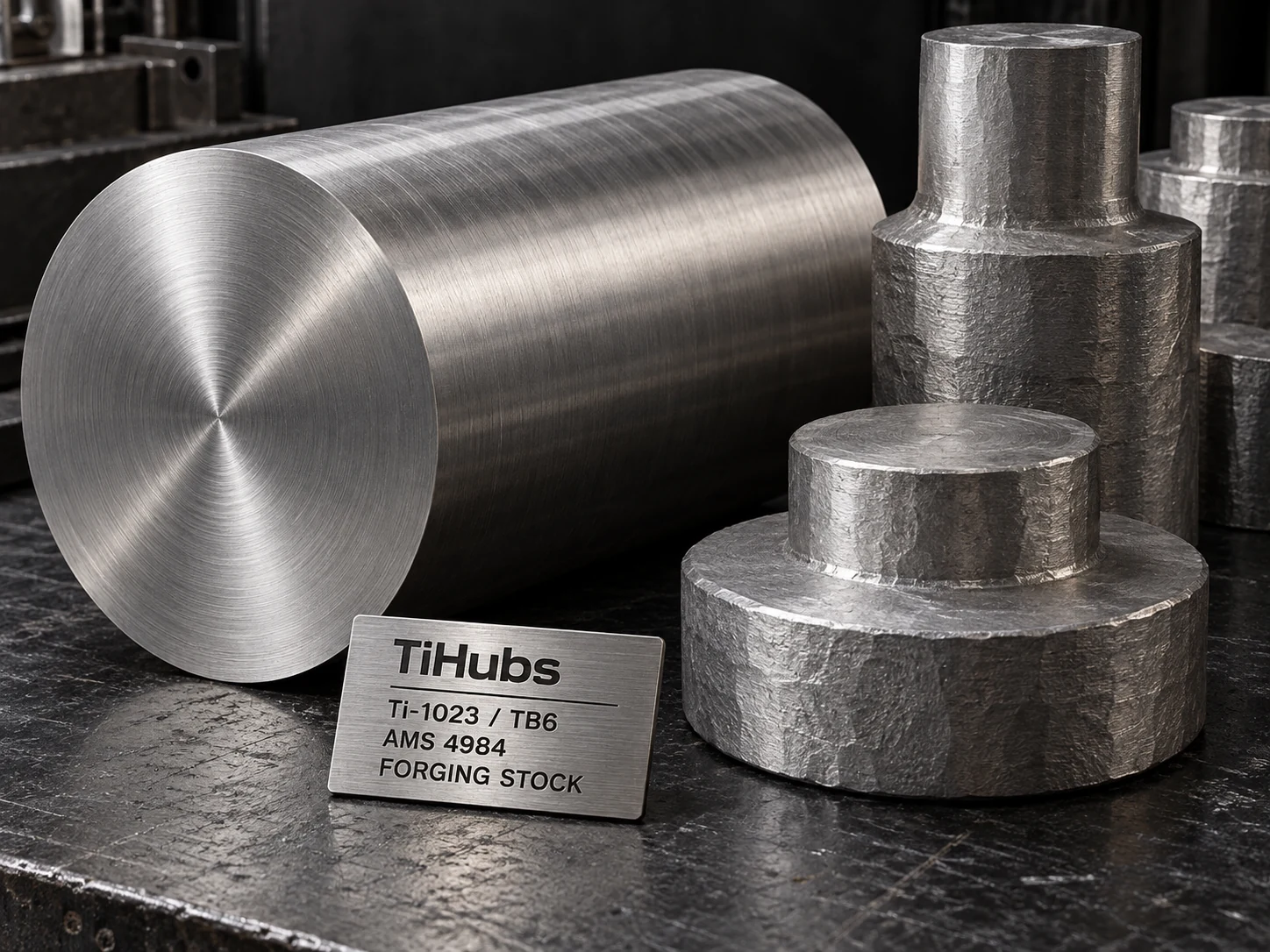
Ti-1023 forging stock & preforms
Billets and prepared preforms for a defined forging programme. Establish the finished forging envelope early so stock selection, allowance and manufacturing records support the downstream order.
- Specification
- AMS 4984G includes stock for forging of any size; its finished-forging scope is limited separately. The applicable revision and customer forging-stock requirements must be stated.
- Geometry
- Billet, cut slug or drawing-defined preform; section, length, weight, surface preparation, crop allowance and quantity. Include the intended finished-part envelope.
- Process information
- Required melting route, forging history, traceability and any purchaser-controlled process requirements. Identify whether the order covers stock only or subsequent forging.
- Acceptance
- Agreed chemistry, stock examination and records. Final forging properties are established through the required processing and test route, not inferred from billet dimensions.
04 / 06
Ti-1023 / TB6 · Ti-1023 · Ti-10V-2Fe-3Al
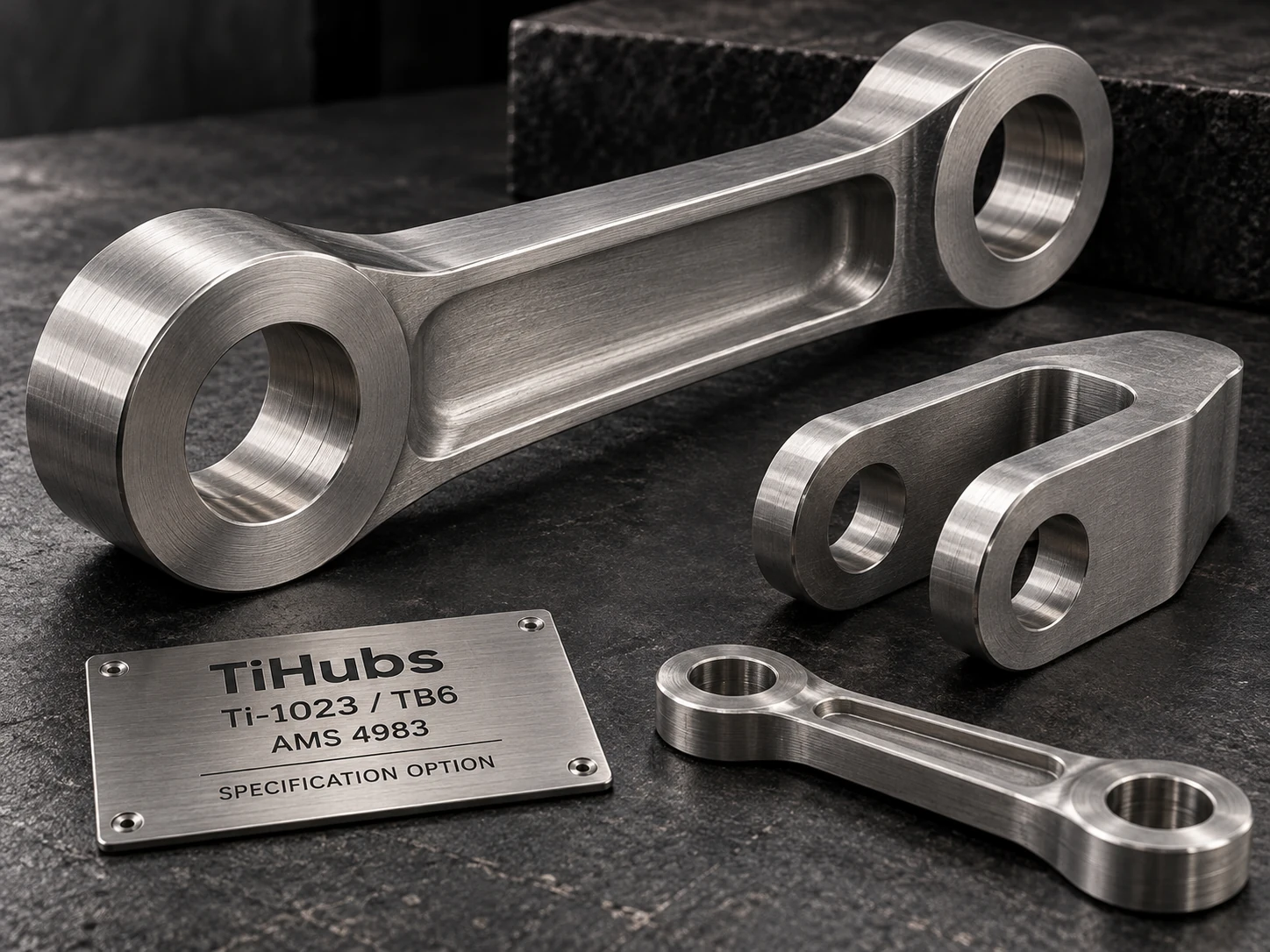
Ti-1023 near-net structural forgings
Forging shapes that approach the component geometry can be evaluated with the final drawing, machining allowance and inspection plan together. Tooling and process approval are explicit quotation items.
- Specification
- AMS 4983G covers finished forgings up to 25.4 mm nominal section; AMS 4984G up to 76.2 mm. Select the applicable strength level, section scope and revision before quotation.
- Drawing
- Forging and finished-part revisions, grain-flow requirements, draft and parting features, machining envelope, datum scheme and critical section changes.
- Heat treatment
- Specify solution treatment and aging requirements, required strength/toughness balance and responsibility for final heat treatment. Control intermediate and final conditions separately.
- Acceptance
- Required test coupons and orientation, mechanical properties, NDT, dimensional report and first-article package. Material compliance does not replace component qualification.
05 / 06
Ti-1023 / TB6 · Ti-1023 · Ti-10V-2Fe-3Al
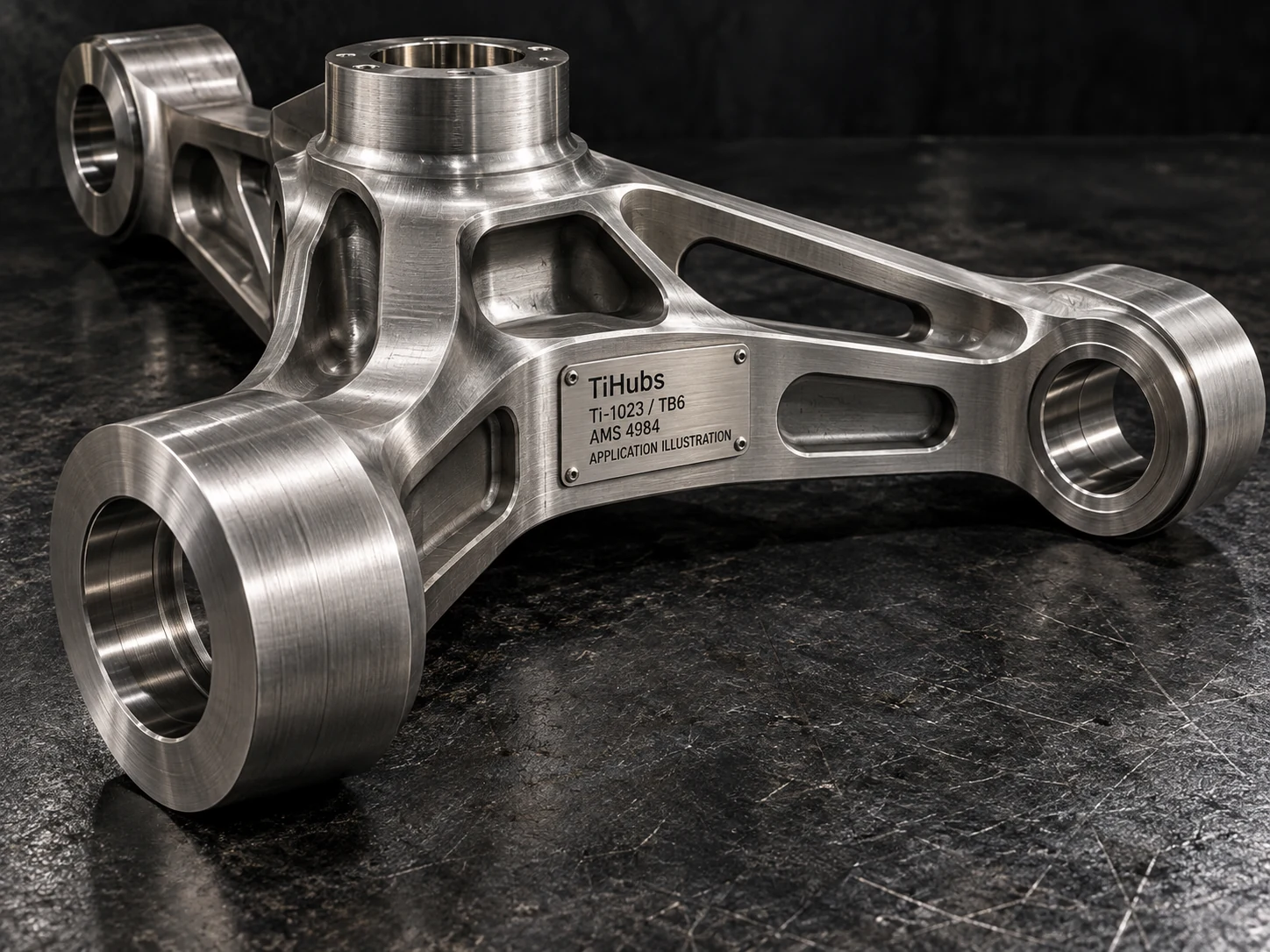
Ti-1023 landing-gear structural forging applications
Application illustration: material and forging routes for drawing-defined landing-gear structural parts. The procurement review must connect the part geometry with loading, fatigue, toughness and the required manufacturing approvals.
- Supply boundary
- Forging stock, heat-treated forging, rough-machined blank or finished component. Identify free-issued material and the party responsible for each subsequent process.
- Design inputs
- Released drawing, nominal and critical sections, grain orientation, bearing or attachment interfaces and the designer’s material and process specifications.
- Qualification
- Required approved sources and processors, first-article review, process records, mechanical and fracture-related tests and NDT acceptance. Confirm these before manufacture is committed.
- Order evidence
- Heat-to-part traceability, inspection reports and the agreed release documents. Application images show possible part families, not a claim of flight approval or completed programmes.
06 / 06
Ti-1023 / TB6 · Ti-1023 · Ti-10V-2Fe-3Al
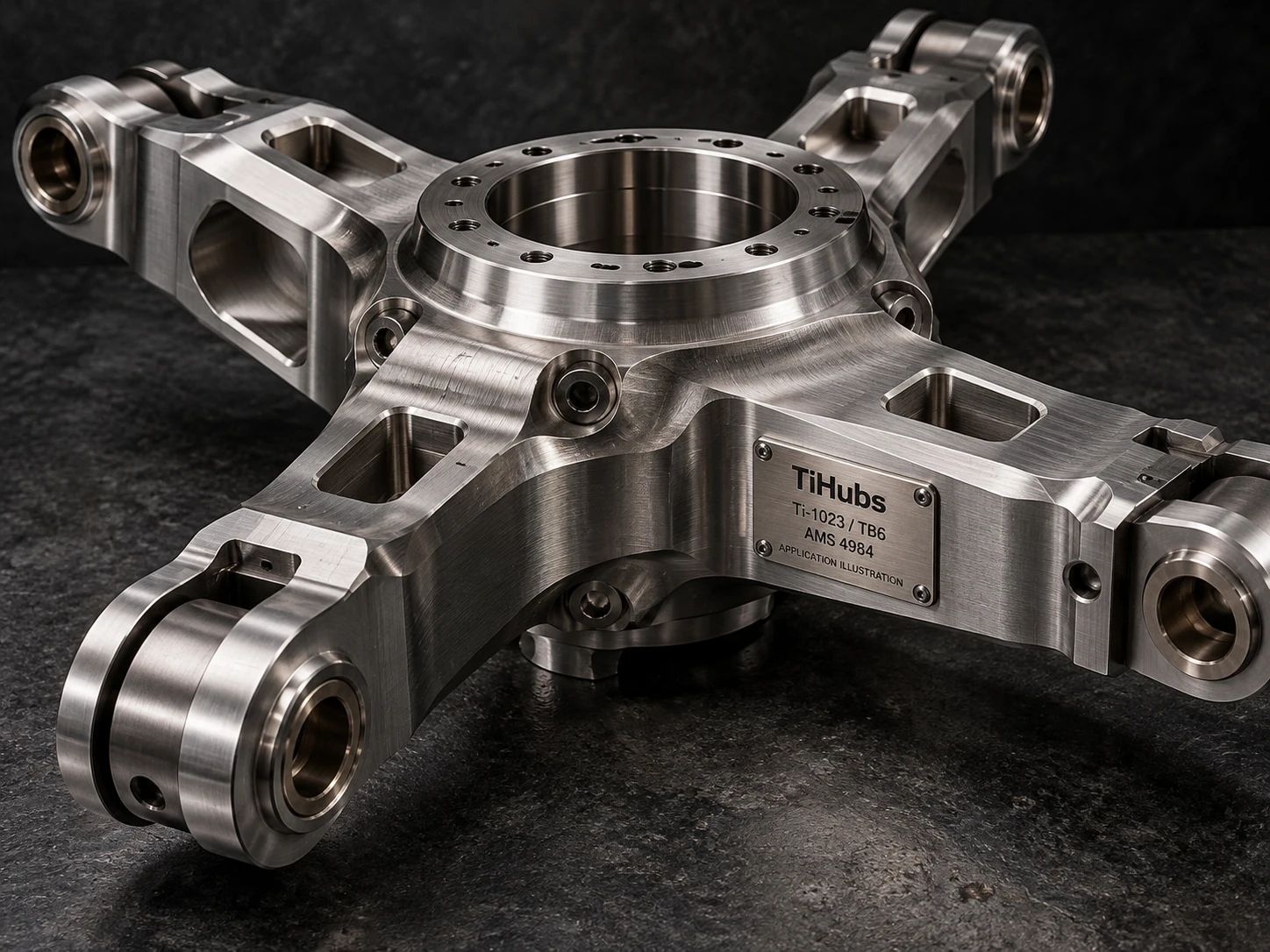
Ti-1023 rotor-hub & airframe-fitting applications
Application illustration: shaped blanks and machined structural parts where the specified material route, section and test orientation matter. Send the component drawing so the manufacturing and acceptance scope can be reviewed.
- Component scope
- Rotor-hub elements, lugs, fittings and related drawing-based structural parts. Clarify blank-only, rough machining, finish machining and inspection responsibilities.
- Section & specification
- Use the exact AMS or purchaser specification appropriate to the nominal section and required properties. Do not transfer a thin-forging specification to a larger hub without review.
- Machining
- Critical bores, attachment faces, concentricity, surface finish, residual-stock requirements and any limits on surface damage or subsequent finishing processes.
- Acceptance
- Traceability through forging, heat treatment and machining; sampling and NDT locations; critical dimensional results and approved disposition of any deviation.
Images illustrate material forms and application possibilities. Reference markings identify specification options; they do not establish dual certification, stock availability or finished-component approval.
Define the product. Share the requirement.
These details help turn your enquiry into a comparable quotation.
01 / Requirement review
Stock, forging or machined part
Define the supply boundary from billet and preform to heat-treated forging and finish machining. Quote tooling and sample work explicitly.
Discuss your requirement02 / Requirement review
A controlled material route
Carry the required specification, section, heat-treatment condition and approval requirements into the enquiry before comparing manufacturing resources.
Discuss your requirement03 / Requirement review
Evidence matched to the part
Set the test locations, orientation, NDT scope, dimensional checks and traceability package required by the drawing and purchaser.
Discuss your requirement02 / Material identity
What is
Ti-1023 / TB6 titanium?
Ti-1023 / TB6 is a near-beta Ti-10V-2Fe-3Al alloy. Its procurement value comes from a defined product and heat-treatment route: review strength, toughness, section and test orientation together, then specify the acceptance evidence for the part.
Ti-1023 is UNS R56410; TB6 is the corresponding Chinese alloy designation. The selected product specification, revision and condition complete the material callout.
1000–1300MPa
Typical tensile-strength range
900–1200MPa
Typical 0.2% yield-strength range
5–12%
Typical elongation range · 5d
Aubert & Duval Ti1023 · typical heat-treated properties · ambient temperature
| Property or condition | Reference | Ordering implication |
|---|---|---|
| Reference basis | Typical heat-treated properties at ambient temperature | The three figures above summarize a producer reference range; they are not guaranteed values for an unspecified product or condition. |
| Density | Approximately 4.65 g/cm³ | Useful for preliminary blank-weight and material-yield estimates. Finished dimensions and machining allowance remain necessary for quotation. |
| Strength level | Selected through the specified heat-treatment and product route | An order for Ti-1023 must identify the required condition and acceptance values; the alloy name does not select one universal strength level. |
| AMS forging scope | 4983G: ≤25.4 mm; 4984G: ≤76.2 mm nominal section | These are finished-forging scope limits in the official SAE descriptions. Stock for further forging has a separate scope. |
| TB6 rolled and bar products | GB/T 3621-2022 and GB/T 2965-2023 | Use the product-specific delivery and mechanical test requirements. Do not transfer a forged-part acceptance table to sheet or assume a bar test condition is its delivery condition. |
Producer reference ranges illustrate condition-dependent behaviour. They are not minimum purchase requirements, design allowables or guaranteed properties for every section. Use the complete ordered specification and drawing to establish acceptance.
| Element · wt% | Ti-10-2-3 · TIMET reference | TB6 · GB/T 3620.1-2016 |
|---|---|---|
| Vanadium · V | 9.0–11.0 | 9.0–11.0 |
| Iron · Fe | 1.6–2.2 | 1.6–2.2 |
| Aluminum · Al | 2.6–3.4 | 2.6–3.4 |
| Oxygen · O | 0.13 max. | 0.13 max. |
| Carbon · C | 0.05 max. | 0.05 max. |
| Nitrogen · N | 0.05 max. | 0.05 max. |
| Hydrogen · H | 0.015 max. | 0.025 max. |
| Titanium · Ti | Balance | Balance |
The TIMET column is producer reference data, not a replacement for AMS chemistry requirements. The cited TB6 table has a different hydrogen limit; confirm all specified elements, residual limits and analysis requirements for the chosen route. A shared nominal alloy name does not establish dual certification.
Ti-1023, Ti-10-2-3 and TB6
Ti-1023 and Ti-10-2-3 identify Ti-10V-2Fe-3Al, UNS R56410. TB6 is the corresponding Chinese alloy designation. State the governing product specification and edition on the purchase order; chemistry limits and acceptance requirements are compared as part of that review.
Solution treated is not the same as aged
Delivery condition, test condition and final component condition can differ. Confirm which heat-treatment steps the supplier must perform, which follow later machining or forming, and which condition the acceptance tests represent.
Higher tensile strength is not the only target
Part geometry, section, test orientation, fatigue and toughness requirements influence the selected route. A higher headline strength level should not replace the drawing’s specified balance of properties or its qualification requirements.
Forging specification versus rolled product
AMS 4983 and AMS 4984 are forging routes with defined section limits. TB6 sheet/plate and bar have their own Chinese product specifications. Choose the standard that matches the ordered form rather than treating the alloy designation as a universal certificate.
03 / Application review
Aerospace parts, defined by the drawing.
Landing gear, rotor hubs and structural fittings place different demands on the material and supply chain. Select an application or procurement route to see the information that makes a Ti-1023 / TB6 quotation useful.
Application review / 01
Landing-gear parts: define the forging and qualification route together
Ti-1023 is considered for high-strength landing-gear structural applications. A useful enquiry identifies whether the requirement is a new forging development, a qualified repeat part or machining from an already approved blank. The largest cross-section, local transitions and attachment geometry should be reviewed against the selected specification before a cost or lead time is treated as firm. The customer’s design and qualification requirements govern suitability.
Products to discuss
Billet or preform, heat-treated structural forging, rough-machined blank and drawing-based component. Identify the exact supply boundary and the status of any existing tooling.
What we need to review
Material and process specifications, drawing revision, critical sections, grain orientation, test coupon location, required toughness/fatigue evidence, NDT and approved-source requirements. Include first-article and release-document obligations.
Application review / 02
Airframe fittings: preserve the link from material to critical features
Fittings and lugs connect structural loads through relatively small geometric features. For Ti-1023 / TB6, the procurement discussion should therefore connect the material route to the critical bores, faces and local sections on the drawing. A quotation for a generic alloy bar does not define the acceptance of a finished fitting; machining, heat-treatment and inspection responsibilities need to be visible in the order scope.
Products to discuss
Specified bar stock, near-net forgings and rough- or finish-machined attachment components. Review the selected route against part geometry and material utilisation.
What we need to review
Critical dimensions and datum scheme, grain-flow/orientation requirements, heat-treatment sequence, bore and fillet finish, dimensional inspection and NDT. Confirm how material identity is retained after marking areas are machined away.
Application review / 03
Rotor-hub components: review section, orientation and acceptance evidence
Producer references include helicopter rotor hubs among Ti-1023 applications. For a particular hub or associated structural element, the drawing and approved material/process route must determine the order. Section-dependent acceptance is especially relevant: the specification suitable for a thin fitting may not cover a larger hub. Resolve sampling, heat treatment, machining sequence and inspection access before selecting the manufacturing resource.
Products to discuss
Forging stock, hub-shaped forgings and drawing-defined rough-machined or finished structural elements. Supply capability and required approvals are evaluated for the actual project.
What we need to review
Nominal section, material specification revision, test locations and orientation, specified mechanical and toughness requirements, machining allowance, surface requirements and NDT. Define the document package and any purchaser hold points.
Application review / 04
Aircraft mechanisms: quote the material and interface requirements
Ti-10V-2Fe-3Al appears in producer application guidance for flap tracks and actuator-related structural parts. The enquiry should identify the load-bearing material requirement and the interfaces that will be machined into it, including bores, sliding or bearing interfaces and attachment features. The material supplier needs the governing specification and inspection scope; the mechanism designer remains responsible for component performance and system approval.
Products to discuss
Bar-derived blanks or shaped forgings for drawing-based tracks, fittings and actuator structural elements. Include only the machining and finishing operations actually required in the quotation.
What we need to review
Drawing revision, local section, specified strength condition, dimensional tolerances, contact surfaces, finishing and coating requirements where applicable, mechanical records and any additional functional acceptance.
Application review / 05
Near-net forging development: settle the blank before tooling
For a new part, a near-net forging proposal should be assessed against the finished drawing rather than a photograph of a similar shape. Ti-1023 stock selection, preform design and the forging envelope need coordinated review so machining allowance and inspection access are intentional. Before tooling is ordered, identify who approves the blank drawing, which samples are needed and what evidence allows the project to move to a production quantity.
Products to discuss
Billet, cut preforms, development forgings and sample machined blanks. Separate tooling, trial material, first articles and recurring production in the quotation.
What we need to review
Finished geometry, blank allowance, grain-flow requirements, nominal section, process restrictions, sample quantity, test plan, first-article approval and tooling ownership. Agree the consequences of a drawing change before production tooling is committed.
Application review / 06
Heat-treatment routes: specify the required balance of properties
The procurement target is the condition required by the design, not the highest number in a material brochure. Ti-1023 forging specifications offer different strength and treatment routes. Request the exact specification, revision, section and test basis so the proposed material can be evaluated against the required tensile, ductility and toughness criteria. Any change of condition should be approved before it becomes the manufacturing route.
Products to discuss
Drawing-defined forgings or stock for an approved downstream process. AMS 4983/4984 and the overaged AMS 4986/4987 routes are separate options for engineering review.
What we need to review
Target property set, test temperature, section and orientation, sampling and retest provisions, required toughness or fatigue evidence, heat-treatment responsibility and approved processing sources. Identify acceptance tests separately from informative supplier data.
Application review / 07
TB6 sheet and plate: connect the delivered condition with the process
GB/T 3621-2022 provides a TB6 sheet/plate route. For a machining or forming enquiry, describe what happens after material delivery: the finished geometry, any subsequent heat treatment and the condition in which the final part will be accepted. Small changes in thickness tolerance, flatness or rolling-direction requirements can change the usable blank and machining allowance. Those requirements belong in the material enquiry.
Products to discuss
TB6 sheet, plate, cut blanks and drawing-defined parts subject to review of the required processing route. Finished shape and size capability are confirmed for the enquiry.
What we need to review
Thickness and usable blank size, rolling direction, flatness, surface, cut-edge quality, planned forming or machining, subsequent treatment and final acceptance. Confirm the applicable product table for the selected thickness and condition.
Application review / 08
Repeat aerospace supply: keep the approved baseline identifiable
A repeat order should preserve the approved material and process baseline as carefully as the part number. For Ti-1023 / TB6, include the drawing revision, specification revision, permitted manufacturing sources and the required records with the enquiry. If an alternative route is proposed, make the differences visible for review rather than allowing a familiar alloy name to conceal a changed condition, section or test scope.
Products to discuss
Repeat bar, billet, forging or machined-blank requirements with a controlled item list. Several forms can be coordinated while retaining separate heat and part identities.
What we need to review
Approved baseline, change-notification obligations, inspection plan, first-article triggers, marking, packaging and required release documents. Set review, production and dispatch milestones and identify the contact responsible for resolving deviations.
Technical references: SAE AMS 4983G · official scope ↗ · SAE AMS 4984G · official scope ↗ · SAE AMS 4986F · official scope ↗ · SAE AMS 4987G · official scope ↗ · TIMETAL 10-2-3 · original producer PDF ↗ · Aubert & Duval Ti1023 · original producer PDF ↗
Purchasing checklist
Define the forging before placing the order.
Our founder’s 20 years in titanium inform the questions asked before quotation and the manufacturing resources reviewed for each Ti-1023 / TB6 requirement.
A quotation you can compare
Agree product form, specification revision, blank or finished geometry, delivery condition, quantity, inspection, records and delivery terms. Separate tooling, samples and qualification work from recurring production.
Acceptance before manufacture
Confirm heat identity, the required treatment and test condition, specimen location/orientation, NDT and critical dimensions. Identify approved-source and first-article requirements before the route is committed.
Milestones and change control
Set drawing approval, tooling, sample, inspection and dispatch milestones. Changes to material, process or approved source require the agreed written review; report deviations with their impact and required decisions.
“We need a Ti-1023 forging for a landing-gear component.”
Clarify the released drawing, required AMS revision, largest nominal section, blank and finished geometry, heat-treatment responsibility and test orientation. Establish the approved-source requirements, NDT and first-article records before confirming tooling, price or lead time.
This is an enquiry-planning example, not a claim about a completed aircraft programme.
Discuss your requirement04 / Standards & documentation
Match the standard
to the product.
Match the reference to the ordered product. The Chinese product PDFs and original producer datasheets below can be previewed; official SAE links provide AMS scope information. Producer data are technical references, not full AMS specifications.
| Product form | ASTM / AMS / ASME route | Chinese standard route | Clarify before quotation |
|---|---|---|---|
| Alloy identity & chemistry | United States / technical referenceTIMETAL 10-2-3 · TIMET technical dataView PDF ↗Ti1023 · Aubert & Duval technical dataView PDF ↗ Ti-1023 / Ti-10V-2Fe-3Al · UNS R56410. Producer references support identification; use the ordered specification for acceptance. | ChinaGB/T 3620.1-2016View PDF ↗ TB6 designation and chemical composition. | All specified elements, residual limits, analysis basis and required certificate route. |
| Bar & billet | United States / technical referenceTIMETAL 10-2-3 · TIMET technical dataView PDF ↗ Producer technical background. AMS forging stock must follow its applicable specification, not a generic bar certificate. | ChinaGB/T 2965-2023View PDF ↗ TB6 bar within the standard’s listed product scope. | Dimensions, delivery condition, mechanical test condition, finish and NDT. |
| Sheet & plate | United States / technical reference A US rolled-product route must be explicitly established; AMS 4983/4984 are not sheet standards. | ChinaGB/T 3621-2022View PDF ↗ TB6 sheet/plate with product-specific condition and thickness requirements. | Thickness, flatness, rolling direction, surface and subsequent processing. |
| Forging stock & preforms | United States / technical referenceTIMETAL 10-2-3 · TIMET technical dataView PDF ↗ AMS 4984G official scope includes forging stock of any size; consult the full ordered revision. | ChinaGB/T 3620.1-2016View PDF ↗ TB6 chemistry plus the agreed forging-stock and customer requirements. | Billet or preform geometry, material history, downstream route and stock acceptance. |
| High-strength structural forgings | United States / technical referenceTIMETAL 10-2-3 · TIMET technical dataView PDF ↗ AMS 4983G and AMS 4984G are distinct section/strength routes; see official SAE references. | ChinaGB/T 3620.1-2016View PDF ↗ TB6 chemistry does not by itself define finished-forging acceptance. | Applicable section limit, strength and treatment, test location/orientation and NDT. |
| Overaged forging routes | United States / technical referenceTIMETAL 10-2-3 · TIMET technical dataView PDF ↗ AMS 4986F and AMS 4987G are separate specifications; confirm the drawing’s exact requirement. | ChinaGB/T 3620.1-2016View PDF ↗ Agree the product/process specification and complete acceptance package. | Required property balance, nominal section, condition and qualification evidence. |
| Landing gear, rotor hubs & fittings | United States / technical referenceTi1023 · Aubert & Duval technical dataView PDF ↗ Producer application guidance only. Component supply follows the released drawing and approved material/process route. | ChinaGB/T 3620.1-2016View PDF ↗ Use TB6 only with the project’s complete product and component requirements. | Approved sources, machining scope, first article, inspection and release documents. |
Agree the order basis.
The linked producer PDFs retain their original attribution. No full AMS PDF is presented as available here. Specify the required revision and full acceptance scope; reference documents do not imply stock availability or aircraft approval.
Use the document edition, product scope and condition specified in the purchase order. Producer technical references support discussion; they do not replace ordered product acceptance requirements.
05 / Order coordination
Know the scope
before ordering.
Our founder’s 20 years in titanium inform the questions we ask before quotation and the supply options we review with you.
A quotation you can evaluate
Agree the grade, standard edition, dimensions, tolerance, condition and quantity before comparing prices.
- Identify whether inspection, samples and tooling are included.
- Confirm packaging, transport and delivery terms.
- Record items that still need technical confirmation.
Acceptance agreed before supply
Confirm the material certificate, full grade, heat or lot identity, delivery condition, dimensional checks and required testing before supply starts. Define any process records, NDT and purchaser approval points for the ordered product.
Independent inspection can be discussed with its scope, timing, acceptance criteria and cost agreed for the order.
Delivery with clear milestones
Review the proposed lead time, approvals, production sequence and dispatch requirements. For several product forms, coordinate document and packing readiness together.
Material substitutions and technical changes require written approval. A schedule deviation should identify the impact, decisions needed and next steps.
One contact when an issue arises
Contact TiHubs with the order reference, affected items and supporting photos or inspection records.
We record the issue, review it against the agreed requirements and coordinate the next steps with the relevant manufacturing parties.
01 / Material identity
Material records
Grade, standard, test results and heat or batch identity matched to the supplied items.
02 / Agreed acceptance
Inspection records
Dimensional and testing records for the agreed scope, including critical drawing requirements.
03 / Ready for dispatch
Dispatch records
Item identification, packing list, protective packaging and required shipment documents.
06 / Questions before sourcing
Before you specify
Ti-1023 / TB6.
A clear material designation is the beginning. Product form, specification revision, material condition and acceptance complete the requirement.
A useful first enquiry
- Product and specificationProduct form, standard edition, dimensions and material condition.
- Order and deliveryQuantity, destination and any required delivery date.
- Acceptance requirementsDrawing revision, inspection, certificates and packaging.
Not every detail is finalized? Send the information you have. We can help identify the questions to resolve before quotation.
What happens next: requirement review, technical clarification, then a supply proposal and quotation.
What is Ti-1023, and is it an ASTM grade number?
Ti-1023, also written Ti-10-2-3 or Ti-10V-2Fe-3Al, is a near-beta titanium alloy identified as UNS R56410. The numbers describe its nominal vanadium, iron and aluminum additions. It should not be renamed ASTM Grade 1023; the complete order needs the actual product specification and condition.
Is TB6 the Chinese designation for Ti-1023?
Yes. TB6 is the corresponding Chinese Ti-10V-2Fe-3Al designation in GB/T 3620.1-2016, so both names are covered on this page. Specify whether the order follows a Chinese product standard, an AMS route or an approved customer specification, including its chemistry and test requirements.
Where is Ti-1023 / TB6 mainly used?
Its main emphasis is high-strength aerospace structural forgings, including landing-gear parts, rotor-hub components and airframe fittings. Specific part suitability, material selection and qualification remain subject to the designer’s requirements. TiHubs reviews the supply and documentation scope against the actual drawing.
Which AMS specification should I request?
Use the specification required by the drawing. AMS 4983G covers a 1241 MPa tensile-strength route with finished forgings up to 25.4 mm nominal section; AMS 4984G covers a 1193 MPa route up to 76.2 mm. AMS 4986 and AMS 4987 define separate overaged routes. Forging-stock requirements and the complete purchased specification must also be considered.
Can you quote TB6 sheet, bar, forging stock and finished forgings?
These are different supply routes. GB/T 3621-2022 lists TB6 sheet/plate and GB/T 2965-2023 lists TB6 bar. Forging stock and finished forgings require their applicable specifications. Send dimensions or a drawing, quantity and the required condition so feasibility and the quotation basis can be reviewed.
Do you offer Ti-1023 wire or tube as standard catalogue products?
This page focuses on verified sheet, bar, forging-stock and forging routes. It does not attach the usual titanium wire or tube standards to Ti-1023 by default. A special hollow section, wire or other form needs a separate review of the manufacturing route and an agreed product specification before quotation.
Are solution-treated, aged and overaged materials interchangeable?
No. They describe different processing conditions and can lead to different acceptance requirements. State delivery condition, test condition, final component condition and who performs each treatment. Any proposed change must be reviewed against the drawing and approved before supply.
Does a material certificate mean the part is approved for aircraft use?
A material certificate is one part of the required evidence. The project may also require approved sources and processors, controlled manufacturing records, NDT, first-article inspection and part-specific release documents. Tell us those requirements during enquiry so the supply route can be assessed before an order is placed.
What should I send for quotation, lead time and order support?
Send the product form or drawing, Ti-1023/TB6 callout, specification and revision, dimensions, condition, quantity and destination. Add inspection, traceability and approval requirements. MOQ, tooling, samples and lead time are confirmed for the actual route. TiHubs remains the contact for clarification, progress coordination and review of any issue against the agreed order scope.
07 / Your next step
Start with the
requirement you have.
Send the product details, drawing or operating conditions you already know. We will identify missing information and discuss a suitable supply route before quotation.
- Requirement review
- Technical clarification
- Supply proposal and quotation
Combine materials and parts in one enquiry.
Send one list of Ti-1023 / TB6 forms, sizes and quantities. Include drawing revisions and items that need to be supplied together.
Define the condition and acceptance priorities.
Include the ordered specification, final application, material condition, inspection and documentation, destination and required delivery milestones.
Baoji, China · info@tihubs.com
Start your Ti-1023 / TB6 enquiry
Send your material form, drawing or process conditions. We will help clarify the remaining requirements.