Baoji High-tech Zone, ChinaTitanium sourcing · One contact


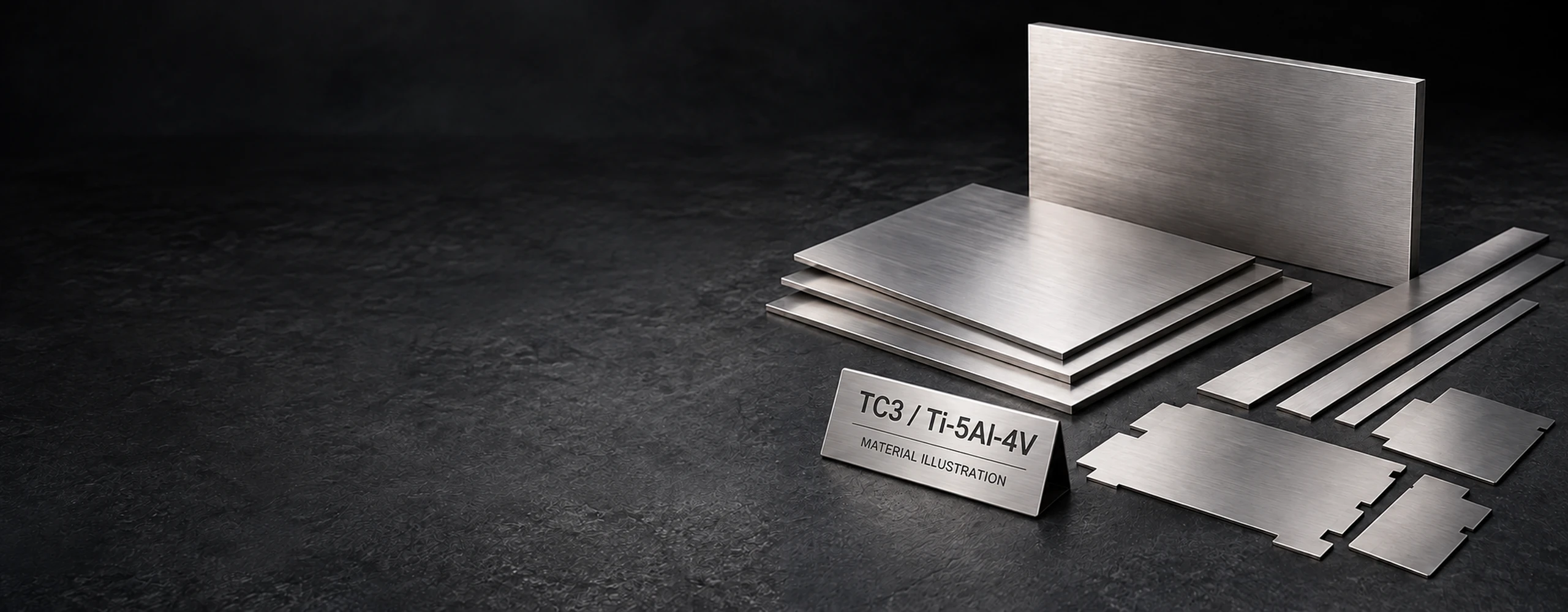
TC3 / Ti-5Al-4V · Alpha-beta titanium alloy
TC3 / Ti-5Al-4V. Wide sheet, with the usable area defined.
Source TC3 sheet and forming blanks with clear width, gauge, cold-rolled surface and nesting requirements, keeping the Ti-5Al-4V identity distinct from TC4.
Start with a specification, drawing or application. We’ll help identify the details still needed.
Material review. Supply coordination.
One contact in Baoji, China.
TC3 / Ti-5Al-4VTi-5Al-4V
Alpha-beta titanium alloyWide thin sheet & forming stock
One contact20 years of founder experience · 100+ Baoji factories
01 / Product forms
Find your TC3 product.
Choose a material form or application. Send the dimensions, service conditions and required records so we can match the manufacturing route to your order.
01 / 06
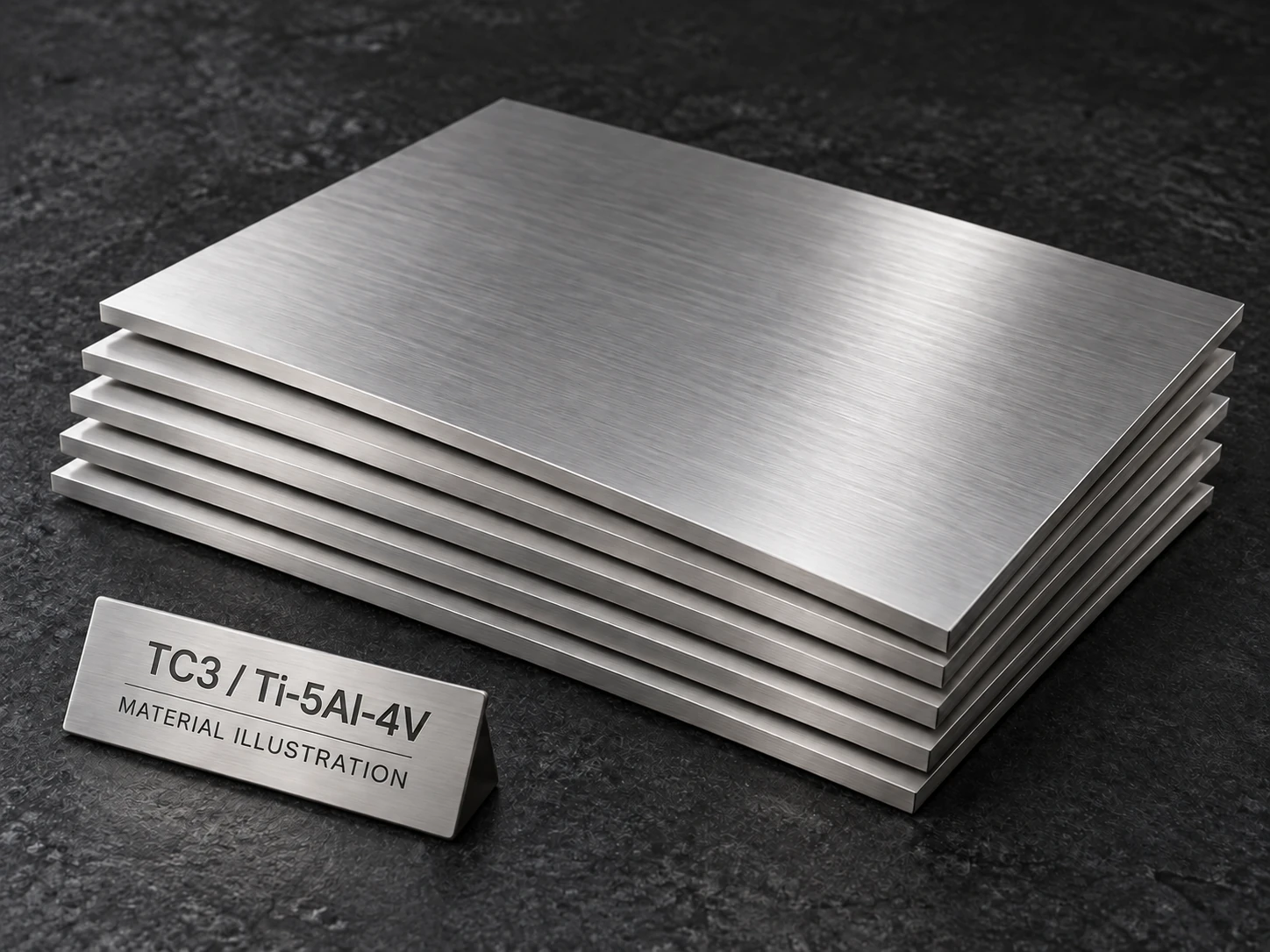
TC3 / Ti-5Al-4V
TC3 wide titanium sheet
Thin flat stock for wide panel layouts and forming programmes.
- Specification
- Approved grade-specific product specification, drawing revision and delivery condition; confirm supply feasibility.
- Size & delivery
- Gauge, minimum usable width, length and permitted edge trim.
- Manufacturing review
- Review cold-rolled surface, delivered condition and the required nesting orientation.
- Inspection priorities
- Thickness map, flatness, surface acceptance and directional properties.
02 / 06
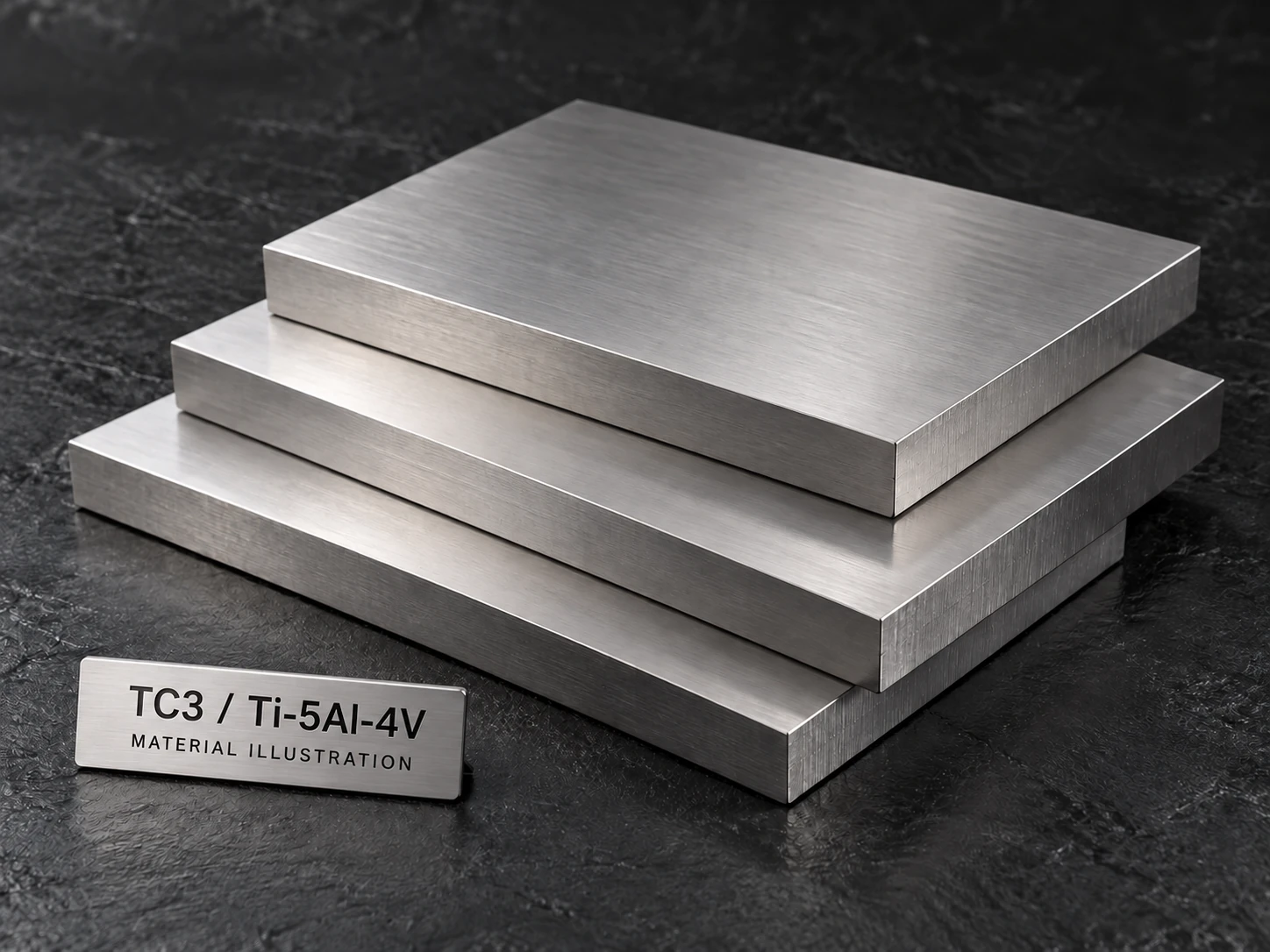
TC3 / Ti-5Al-4V
TC3 titanium plate
Flat stock for thicker forming or machining requirements where the approved drawing selects TC3.
- Specification
- Approved grade-specific product specification, drawing revision and delivery condition; confirm supply feasibility.
- Size & delivery
- Thickness, useful dimensions, flatness and cutting allowance.
- Manufacturing review
- Confirm the product route and condition for the actual section rather than extrapolating thin-sheet results.
- Inspection priorities
- Section-specific material tests, surface condition and heat-to-piece identity.
03 / 06
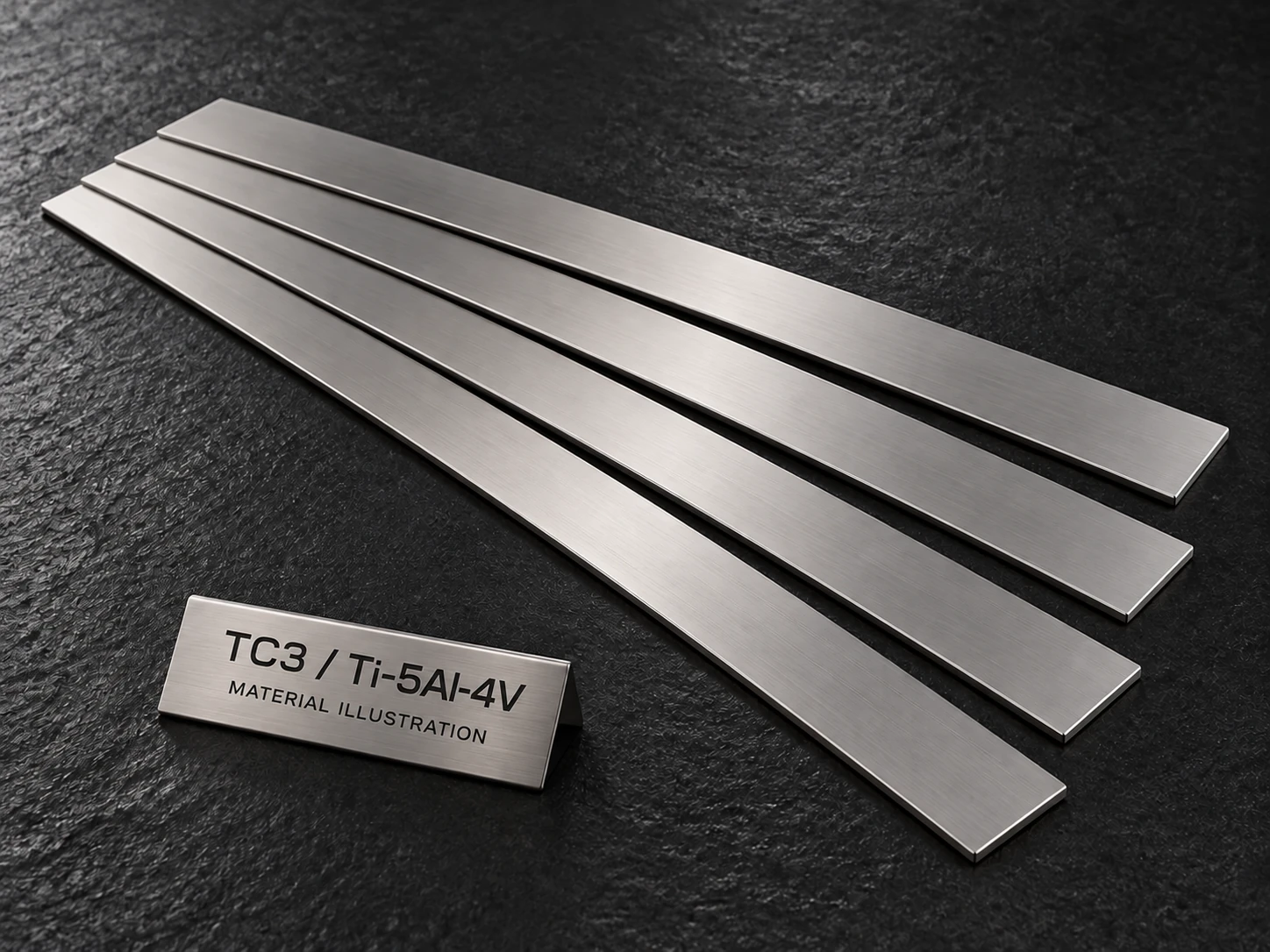
TC3 / Ti-5Al-4V
TC3 cut sheet strips
Sheet-derived strips for narrow parts and forming development.
- Specification
- Approved grade-specific product specification, drawing revision and delivery condition; confirm supply feasibility.
- Size & delivery
- Width, length, edge finish, camber and gauge tolerance.
- Manufacturing review
- Maintain the specified relationship between strip direction and sheet rolling direction.
- Inspection priorities
- Edge integrity, width variation and identity after cutting.
04 / 06
TC3 / Ti-5Al-4V
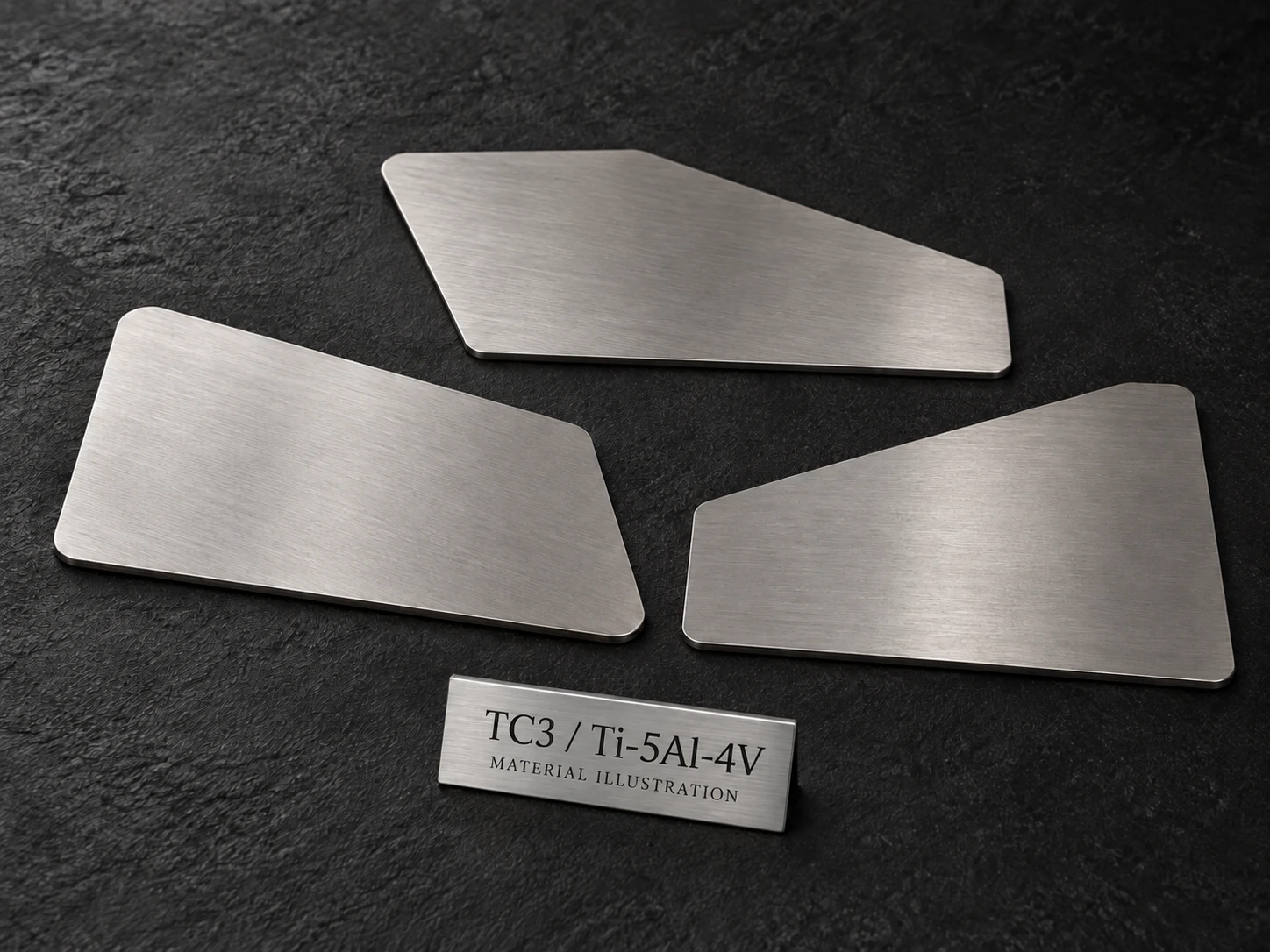
TC3 forming blanks
Profile-cut flat blanks nested around the approved material direction and trim requirements.
- Specification
- Approved grade-specific product specification, drawing revision and delivery condition; confirm supply feasibility.
- Size & delivery
- CAD outline, useful area, datum marks and final trim allowance.
- Manufacturing review
- Specify cutting method and edge preparation; review blank yield against the usable sheet width.
- Inspection priorities
- Profile accuracy, orientation marking and critical-surface protection.
05 / 06
TC3 / Ti-5Al-4V
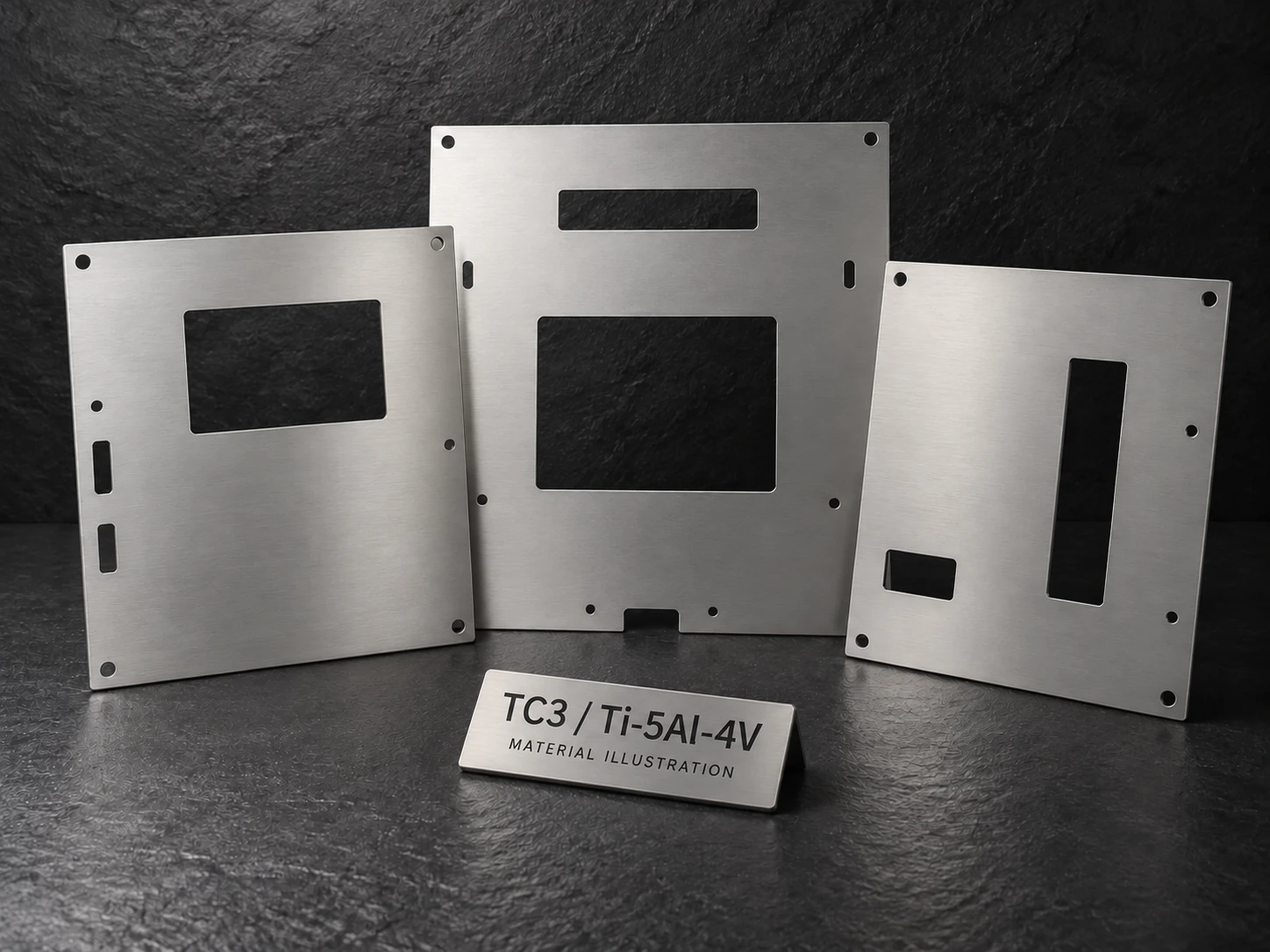
TC3 matched panel blanks
Drawing-based sets of flat panels for a controlled forming and assembly programme.
- Specification
- Approved grade-specific product specification, drawing revision and delivery condition; confirm supply feasibility.
- Size & delivery
- Panel list, gauge, cutouts, matched dimensions and quantity per set.
- Manufacturing review
- Resolve common-heat requirements, nesting restrictions and the supplied fabrication stage.
- Inspection priorities
- Piece identification, dimensional records and certificate reconciliation for each panel set.
06 / 06
TC3 / Ti-5Al-4V
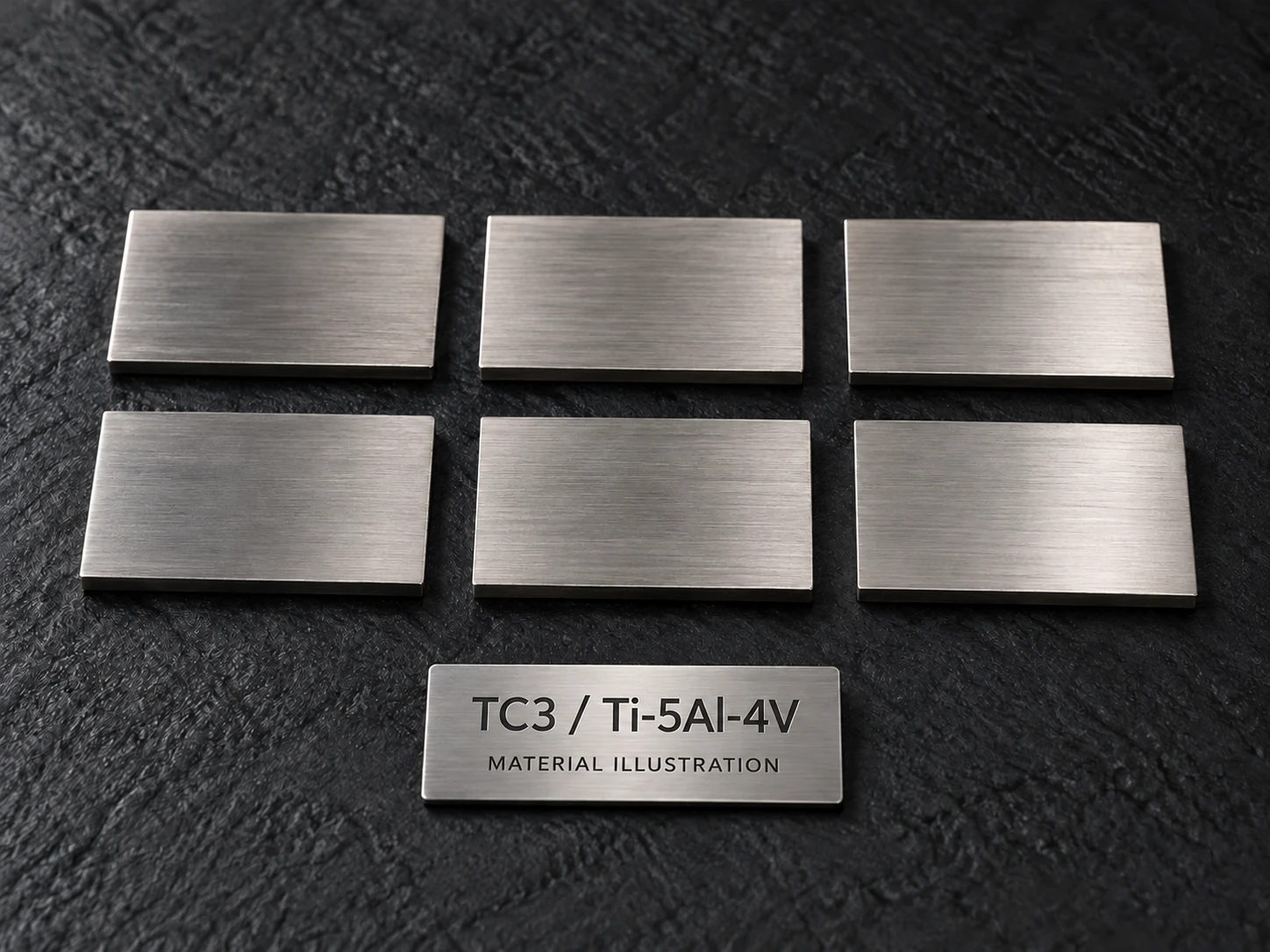
TC3 forming-test coupon stock
Representative sheet retained for bend, surface and process qualification.
- Specification
- Approved grade-specific product specification, drawing revision and delivery condition; confirm supply feasibility.
- Size & delivery
- Gauge, direction, specimen location and quantity.
- Manufacturing review
- Use material representative of the ordered width and condition.
- Inspection priorities
- Record the source sheet, surface state and agreed forming or mechanical test criteria.
Images illustrate material forms and application possibilities. Reference markings identify specification options; they do not establish dual certification, stock availability or approval of finished equipment.
Define the shape. Share the service.
These details help turn a material enquiry into a comparable quotation.
01 / Drawing review
Wide-panel material procurement
Wide TC3 sheet and nested forming blanks. Agree useful dimensions, flatness and the surface zones that must pass inspection before the cutting plan is released.
Discuss your drawing02 / Drawing review
Cold-rolled surface requirements
Sheet and panel blanks with designated critical surfaces. Inspect against the agreed criteria and confirm remaining gauge after permitted repair or cleanup.
Discuss your drawing03 / Drawing review
Formed sheet structures
Sheet, strips and profile-cut blanks. Agree representative trials where needed, including cracks, thinning, shape and surface acceptance after forming.
Discuss your drawing02 / Material identity
What is TC3 / Ti-5Al-4V titanium?
TC3 is the Chinese Ti-5Al-4V alloy. This page focuses on wide-sheet procurement: useful panel width, thickness uniformity, surface quality and blank orientation can determine whether a delivery suits the forming plan. Manufacturer research includes TC3 in wide thin-sheet production, but published example dimensions are not a stock catalogue. Confirm the exact size, condition and acceptance route for each enquiry.
Specify the exact standard edition, form and delivery condition. Nominal chemistry is only one part of an order; strength, microstructure, dimensional acceptance and traceability also need to be defined.
| Review item | Order basis | What to confirm |
|---|---|---|
| Usable width | Accepted nesting envelope | Account for edge trim, excluded surface zones and permitted blank orientation. |
| Gauge uniformity | Measurement across useful area | Define minimum or nominal thickness, tolerance basis and the reporting grid. |
| Cold-rolled surface | Explicit finish and defect criteria | Agree scratch, pit, repair and critical-surface limits instead of relying on the finish description alone. |
| Forming behaviour | Condition and blank direction | Connect the ordered state with bend geometry, trim allowance and representative trial requirements. |
| Grade identity | TC3-specific certificate and order | Keep Ti-5Al-4V distinct from TC4; document any proposed substitution before supply. |
| Selected element · wt % | Reference composition |
|---|---|
| Aluminium · Al | 4.5–6.0 |
| Vanadium · V | 3.5–4.5 |
| Iron · Fe | 0.30 max |
| Oxygen · O | 0.15 max |
| Titanium · Ti | Balance |
Selected composition limits, wt %, from GB/T 3620.1-2016. Use the complete ordered standard for all impurity, residual-element and analysis requirements.
TC3 versus TC4 / Ti-6Al-4V
TC3 is identified as Ti-5Al-4V, while TC4 belongs to the Ti-6Al-4V family. Specify the intended grade explicitly and compare complete limits before discussing any substitution.
Nominal width versus usable width
Edge trim, surface exclusions and blank orientation can reduce the area available for nesting. State the minimum usable rectangle rather than relying on overall width alone.
Cold-rolled finish versus ready-to-form condition
A cold-rolled surface describes one aspect of the product. Heat treatment, structure, flatness and edge condition must also suit the forming route.
Research dimensions versus supply commitment
A published manufacturing example demonstrates a route at its stated conditions. Current size feasibility, minimum quantities and delivery timing require a separate quotation.
03 / Application priorities
TC3 in application.
Review each main use through its service conditions, material choice, manufacturing route and acceptance plan. These are sourcing discussions; approved drawings and qualification requirements govern the final component.
Application review / 01
Wide-panel material procurement
The economic value of wide sheet is the usable panel area it provides. Edge losses and orientation restrictions can change the required mill size and the number of sheets needed.
Products & manufacturing
Wide TC3 sheet and nested forming blanks.
Service & design review
Send the panel layout, minimum usable width, edge exclusions, rolling-direction rules and annual or batch quantities.
Purchase & inspection priorities
Agree useful dimensions, flatness and the surface zones that must pass inspection before the cutting plan is released.
Application review / 02
Cold-rolled surface requirements
A forming or visible panel surface needs an explicit defect and finish specification. The words cold rolled do not define the depth or extent of every acceptable mark.
Products & manufacturing
Sheet and panel blanks with designated critical surfaces.
Service & design review
State whether the surface is functional, cosmetic or both; define scratch, pit, local repair and protective-film requirements where applicable.
Purchase & inspection priorities
Inspect against the agreed criteria and confirm remaining gauge after permitted repair or cleanup.
Application review / 03
Formed sheet structures
The part geometry determines whether the supplied sheet is suitable for the intended forming sequence. Incoming material and post-forming acceptance should be connected in the purchase review.
Products & manufacturing
Sheet, strips and profile-cut blanks.
Service & design review
Provide bend radii, draw features, edge returns, forming direction and any later heat treatment or joining.
Purchase & inspection priorities
Agree representative trials where needed, including cracks, thinning, shape and surface acceptance after forming.
Application review / 04
Nesting and directional control
Rotating a blank to improve yield can change its relationship to the rolling direction. That decision should follow the drawing and approved forming plan.
Products & manufacturing
Marked sheet and cut blank sets.
Service & design review
Identify permitted orientations, grain-direction markings, trim zones and the nesting priority when several parts share a sheet.
Purchase & inspection priorities
Verify orientation before cutting and transfer identification to every blank without marking a prohibited final surface.
Application review / 05
Gauge uniformity across the width
For a large panel, a single edge measurement may not describe the thickness available across the forming area. The measurement plan should reflect where the critical material will be used.
Products & manufacturing
Wide sheet and representative widthwise test stock.
Service & design review
Specify nominal or minimum gauge, tolerance basis, sampling grid and critical panel zones. Identify post-forming minimum wall requirements separately.
Purchase & inspection priorities
Agree thickness mapping and reporting, then relate any forming trial measurements to the same source-sheet locations.
Application review / 06
TC3 identity and substitution review
TC3 and TC4 should remain separate purchase descriptions. Similar aluminium-vanadium alloy names do not eliminate differences in chemical limits and approved processing.
Products & manufacturing
Heat-identified TC3 sheet and trial blanks.
Service & design review
Provide the original drawing grade, chemistry and product specifications, condition and reason for any proposed alternative.
Purchase & inspection priorities
Require a documented comparison and design approval before substitution; reconcile certificate grade and heat identity at receipt.
Application review / 07
Panel flatness and handling
Thin wide sheet can become difficult to nest, form or inspect if it is damaged during handling. Flatness and packing requirements should be included before dispatch.
Products & manufacturing
Full sheets and cut panel sets.
Service & design review
State the flatness definition, support and measurement conditions, lifting constraints and surface-protection requirements.
Purchase & inspection priorities
Agree receipt inspection, separation materials and packing that avoids edge damage and surface imprinting.
Application review / 08
New-width forming trials
A change in sheet width or source deserves a controlled review when it affects the established forming plan. A trial should preserve the actual gauge, condition and orientation.
Products & manufacturing
Trial wide sheets, blanks and companion coupons.
Service & design review
Identify the differences from the accepted material, the trial geometry and the process features that must remain representative.
Purchase & inspection priorities
Compare dimensional and surface records, directional tests and the agreed forming outcome before approving repeat orders.
Material references and applicable product standards are listed below. Select the delivery condition and acceptance plan for the specific product and approved application.
TC3 procurement checklist
Connect the application to the material order.
A useful specification connects the intended component, the supplied stock and the acceptance evidence. Share the drawing and known requirements first.
Define the application
Send the panel layout, minimum usable width, edge exclusions, rolling-direction rules and annual or batch quantities.
Define the supplied stage
Wide TC3 sheet and nested forming blanks. Distinguish raw stock, converted blanks and finished parts. Define who controls subsequent processing.
Define the acceptance evidence
Agree useful dimensions, flatness and the surface zones that must pass inspection before the cutting plan is released.
Example: a useful TC3 material enquiry
TC3 wide titanium sheet; required dimensions and quantity; standard and drawing revision; delivery condition; intended downstream process; mechanical, structural and dimensional acceptance; traceability, destination and required date.
Identify the approved product specification and any project-specific qualification. The grade designation and chemistry standard alone do not define component acceptance.
Discuss your material requirement ↗04 / Standards & documentation
Match the standard
to the product.
Choose the specification by product form, material condition and application. Identify the required edition on the order; a chemistry standard alone does not define a finished forging or component.
| Product / review | International / project route | Chinese reference | Clarify before quotation |
|---|---|---|---|
| Identity & chemistry | Approved product and project specification | GB/T 3620.1-2016View PDF ↗ | Review the complete chemical limits and product requirements; nominal alloy names do not establish automatic interchangeability. |
| Wide titanium sheet research · CN102489507A | Wide titanium sheet research · CN102489507APublisher reference ↗ | Compare the complete ordered Chinese requirements | Western Titanium manufacturing disclosure, published 2012-06-13. Includes TC3 production examples; dimensions and results belong to those examples, not a standing supply range. |
| CN102489507A · English translation | Project and product requirements remain separately defined | CN102489507A · English translationView PDF ↗ | Manufacture of wide titanium alloy sheet. Original publication: 2012-06-13. Examples 3 and 4 specifically use TC3 / Ti-5Al-4V; wide sheet and cold-rolled surface research. Also covers TC4 examples, so it is not a TC3-only specification. English reference translation; original Chinese publication controls. Not a purchase specification. |
| Drawing-based blanks & parts | Approved drawing and controlled manufacturing plan | Agreed product / project specification | Define the supply stage, conversion route, heat treatment, structure, NDT, dimensions and traceability. Material certification is separate from finished component qualification. |
Agree the order basis.
The purchase order must identify the required revision, grade, product form, condition and inspection. Reference documents do not replace design approval, manufacturing qualification or application-specific acceptance.
Request the controlled specification revision for your order. Any substitution, equivalence or dual-certification claim requires a documented comparison and agreement.
05 / Order coordination
Know the scope
before ordering.
Our founder’s 20 years in titanium inform the questions we ask before quotation and the supply options we review with you.
A quotation you can evaluate
Agree the grade, standard edition, dimensions, tolerance, condition and quantity before comparing prices.
- Identify whether inspection, samples and tooling are included.
- Confirm packaging, transport and delivery terms.
- Record items that still need technical confirmation.
Acceptance agreed before supply
Confirm material identity, delivery condition, heat-to-piece traceability, dimensional checks and required testing before production. For converted parts, define inspection after forging, heat treatment and machining, including the specified microstructure and NDT scope.
Independent inspection can be discussed with its scope, timing, acceptance criteria and cost agreed for the order.
Delivery with clear milestones
Review the proposed lead time, approvals, production sequence and dispatch requirements. For several product forms, coordinate document and packing readiness together.
Material substitutions and technical changes require written approval. A schedule deviation should identify the impact, decisions needed and next steps.
One contact when an issue arises
Contact TiHubs with the order reference, affected items and supporting photos or inspection records.
We record the issue, review it against the agreed requirements and coordinate the next steps with the relevant manufacturing parties.
01 / Material identity
Material records
Grade, standard, test results and heat or batch identity matched to the supplied items.
02 / Agreed acceptance
Inspection records
Dimensional and testing records for the agreed scope, including critical drawing requirements.
03 / Ready for dispatch
Dispatch records
Item identification, packing list, protective packaging and required shipment documents.
06 / Questions before sourcing
Before you specify
TC3 / Ti-5Al-4V.
A clear material designation is the beginning. Product form, specification revision, material condition and acceptance complete the requirement.
A useful first enquiry
- Product and specificationProduct form, standard edition, dimensions and material condition.
- Order and deliveryQuantity, destination and any required delivery date.
- Acceptance requirementsDrawing revision, inspection, certificates and packaging.
Not every detail is finalized? Send the information you have. We can help identify the questions to resolve before quotation.
What happens next: requirement review, technical clarification, then a supply proposal and quotation.
What distinguishes this TC3 page from a TC4 page?
TC3 is the Ti-5Al-4V designation, and the purchasing focus here is wide thin sheet, usable panel area and forming requirements.
Is TC3 automatically interchangeable with TC4?
No. Compare complete chemistry, product requirements, condition and approved processing, then obtain the required design approval.
Does wide sheet mean a fixed stock width?
No. Provide the required usable width, gauge and length. Published research dimensions are not a promise of current stock or capability.
Why specify usable width rather than overall width?
Trim margins, edge defects and orientation restrictions may reduce the area that can become accepted parts.
Does cold-rolled surface mean ready to form?
Not by itself. The delivery condition, structure, flatness, edge finish and intended forming geometry also matter.
Can blanks be rotated during nesting?
Only within the drawing and forming-plan rules. Preserve the required relationship to rolling direction on every cut blank.
How should gauge variation be checked on a wide sheet?
Agree a measurement plan across the useful area, with the tolerance basis and any critical zones identified before supply.
Can I order matched panel sets?
Provide the panel list, drawings, gauge, orientation and any common-heat requirement. Cutting, marking and certificate scope are reviewed together.
What is needed for a TC3 quotation?
Send gauge, useful width and length, quantity, condition, surface and flatness criteria, nesting or forming drawings, standard editions and destination.
07 / Your next step
Start with the
requirement you have.
Send the product details, drawing or operating conditions you already know. We will identify missing information and discuss a suitable supply route before quotation.
- Requirement review
- Technical clarification
- Supply proposal and quotation
Combine materials and parts in one enquiry.
Send one list of TC3 forms, sizes and quantities. Include drawing revisions, material conditions and items that must be supplied or dispatched together.
Share the service and acceptance priorities.
Include load and temperature conditions, critical sections, required material records, process qualification, inspection, destination and timing.
Baoji, China · info@tihubs.com
Start your TC3 / Ti-5Al-4V enquiry
Send your material form, drawing or process conditions. We will help clarify the remaining requirements.
TiHubs specification library
CN102489507A · English translation
Manufacture of wide titanium alloy sheet. Original publication: 2012-06-13. Examples 3 and 4 specifically use TC3 / Ti-5Al-4V; wide sheet and cold-rolled surface research. Also covers TC4 examples, so it is not a TC3-only specification. English reference translation; original Chinese publication controls. Not a purchase specification.