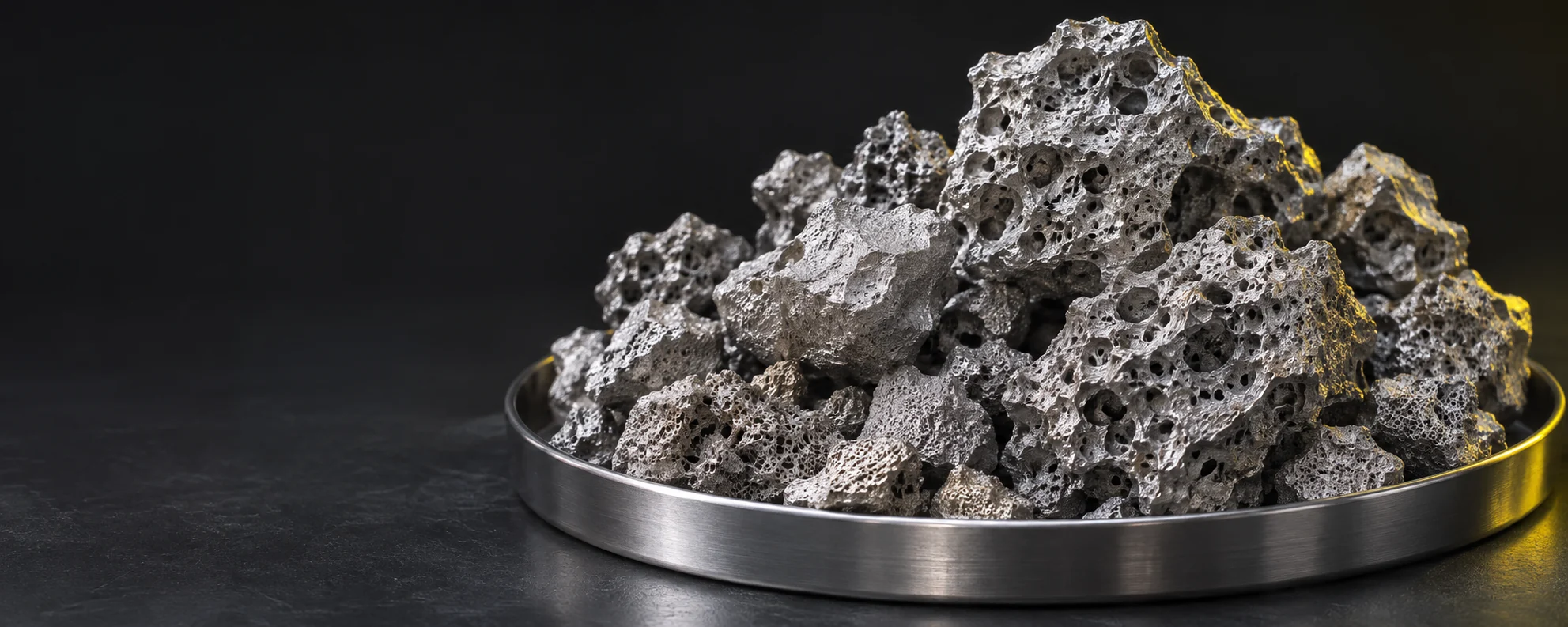
Titanium sponge for a defined melt-feed programme. Specify impurity limits, particle-size distribution and lot acceptance together, with packaging that preserves material identity through delivery.
20 years in titanium100+ Baoji factory connections
Chemistry. Particle sizing. Lot consistency.
Define the sponge supply lot
Sponge is a porous primary titanium feedstock. A size description or purity percentage alone does not define its suitability for a particular melt.
Coarse sponge
Coarse sponge
Specify upper and lower particle-size limits and the allowable fraction outside that range. The size distribution should match the receiving process rather than a visual description of large pieces.
Screen limits and test method
Oversize and fines allowances
Receiving melt-feed specification
Define your sponge
Send the operating conditions and drawing requirements. Materials, feasibility, quantity, lead time and acceptance are confirmed through project review.
Order item
Include in your enquiry
Why it matters
Feedstock specification
Sponge grade, governing standard and revision
Defines the incoming material basis
Chemistry
Required titanium and impurity limits
Matches the melt chemistry budget
Particle sizing
Screen limits, distribution and out-of-size fractions
Controls the feed fraction
Other acceptance tests
Required hardness or other specified tests
Prevents reliance on purity alone
Lot definition
Production lot, blending restrictions and traceability
Defines what a result represents
Sampling
Sample plan, sample mass and test methods
Makes lot comparisons meaningful
Packaging
Container, seal, net mass and cleanliness
Preserves the delivery condition
Release documents
Analysis, sizing report and handling information
Supports receiving and controlled use
Your starting specification.
Include sponge specification, impurity limits, size distribution, lot quantity, sampling plan and container requirements.
Dimensions, availability and acceptance criteria are confirmed in the quotation and order documents. Product photographs illustrate the supply format.
Start with the feedstock specification
Commercial sponge descriptions are not wrought-product grades. Retain the exact sponge specification and the receiving melt requirements.
Grade 1, Grade 2 and alloy-product pages describe downstream materials; they are not interchangeable sponge acceptance categories.
Applications, with conditions
The process, operating environment and required outcome help define the structure, materials and acceptance scope.
Titanium melting programmes
A melt operator needs feedstock chemistry and particle sizing that fit the approved charge specification. Coordinate sponge acceptance with the receiving melt route; do not infer final alloy performance from sponge purity.
What to sendApproved feedstock specification, impurity budget and lot size.
Alloy-development trials
Small trials should preserve the same sampling discipline as production orders. Define the trial objective and the variables being compared so the result can inform a later supply specification.
What to sendTrial chemistry, sample plan, representative quantity and acceptance criteria.
Repeat feedstock procurement
Repeated orders benefit from explicit limits on lot mixing, container mass and change notification. Agree how analytical results and sizing records accompany every shipment.
What to sendAnnual programme, lot restrictions, release sequence and required records.
Qualify the lot, not the appearance
The porous structure identifies the material form; it does not establish chemistry, particle distribution or acceptance for a melt programme.
Screen fraction · sample identity · container net mass · lot traceability
Order geometry schematic; not a dimensional product drawing.
Agree the feedstock limits
Use the receiving melt specification to define chemistry, sizing and additional test requirements. A nominal purity value should not replace individual impurity limits.
Plan representative sampling
State the lot boundary and sampling method. Keep sample and test identification with the original container or lot so analytical results can be traced.
Review the screened fraction
Specify the size test method and the limits for fines and oversize material. Any special fraction requires its own quotation and acceptance plan.
Release protected containers
Confirm net mass, seals, marking and handling documentation. The receiving facility should follow the supplied storage and handling requirements.
Inspection, agreed upfront
Specify the tests and documents that your receiving inspection needs. Scope, sampling and acceptance levels belong in the order.
Dimensional inspection illustration / agreed scope and acceptance
Order documentationTiHubs
Traceable from heat to shipment.
Material identificationGrade + specification
Batch identificationHeat / lot reference
Inspection scopeAgreed tests & results
Shipment identificationMarks + packing list
Illustrative document checklist. Not a certificate or test report.
01Chemistry
Check ordered impurity limits and analysis methods.
Lot analysis02Size distribution
Record screen fractions and permitted deviations.
Sizing report03Specified properties
Include hardness or other tests only on the agreed basis.
Method + limits04Representative sample
Link sampling records to the production lot.
Sampling plan05Clean delivery
Review contamination, container condition and sealing.
Packing acceptance06Traceable release
Match container labels, mass and reports.
Lot + shipment
Titanium Sponge references
Reference documents for sponge procurement. Confirm product scope, grade, delivery condition and the edition required by your order.
TiHubs coordinates titanium sourcing through a local manufacturer network. Your specification guides the supplier review, technical discussion and delivery requirements.
Confirm grade, dimensions, state, quantity and the purpose of the stock.
Review the supply route
Discuss manufacturing, finishing, inspection and documentation with the relevant supplier.
Agree the commercial scope
Confirm the quotation, lead time, acceptance requirements and delivery terms.
Coordinate inspection & delivery
Follow the agreed checks, marking, packing and shipment documentation.
Before you order
Answers to the details that make your titanium sponge enquiry easier to review.
TITANIUM SPONGE · BAOJI SOURCING
Send your specification.
Titanium sponge for a defined melt-feed programme. Specify impurity limits, particle-size distribution and lot acceptance together, with packaging that preserves material identity through delivery.
You do not need to finalize every detail before contacting us.
TiHubs
Talk to TiHubs
Ask about titanium materials, grades or custom parts.
Enter your email to start chatting.
We use your email to respond to your enquiry. Your conversation is stored on this website.
Our team is away right now. Leave your enquiry and we will follow up by email.