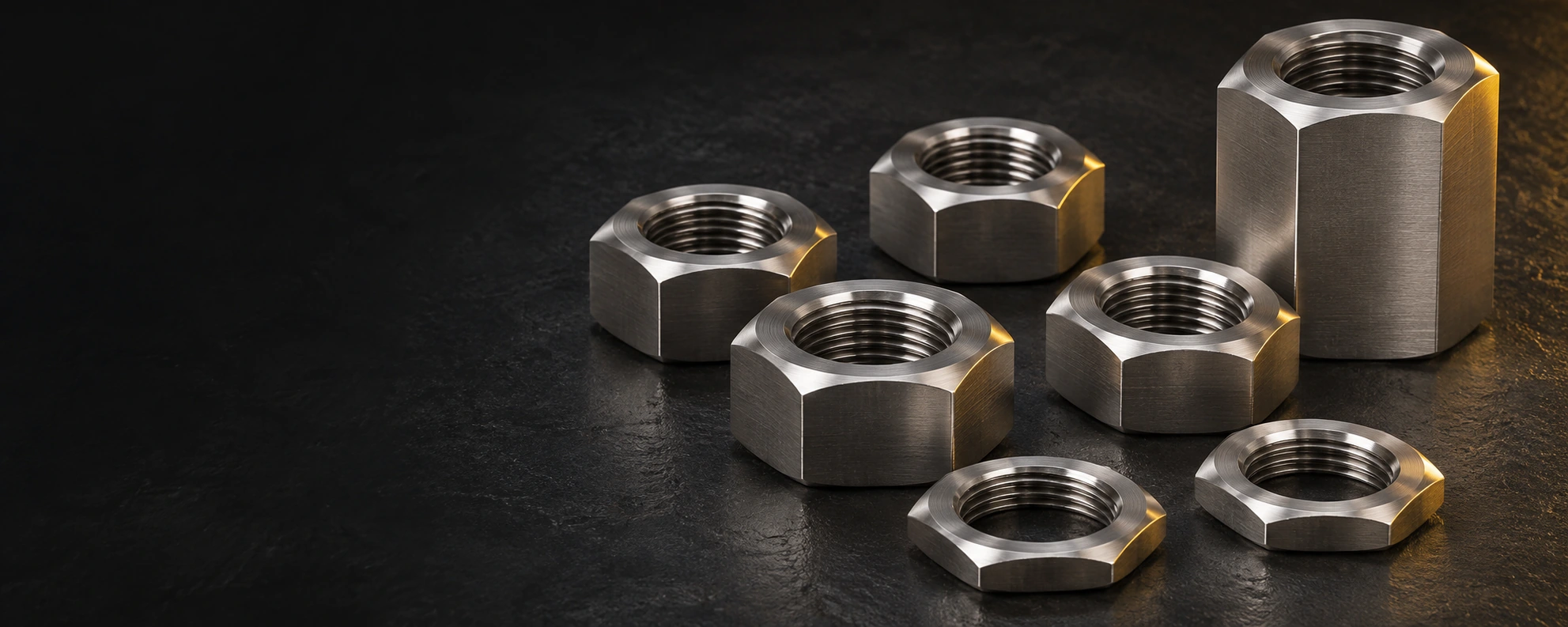
Titanium nuts specified around the mating bolt and the joint. Define internal threads, nut geometry, material and finished-nut acceptance before choosing a set.
20 years in titanium100+ Baoji factory connections
Internal threads. Engagement. Assembly matching.
Choose the nut geometry
Nut height, bearing face and wrench clearance affect the connection. Keep the specified geometry and mechanical acceptance together.
Standard hex nuts
Standard hex nuts
Provide the dimensional standard or drawing and full internal-thread callout. State nut height, width across flats and bearing-face requirements where they are controlled by the assembly.
Internal thread diameter, pitch and tolerance
Nut height and width across flats
Material and finished-nut acceptance basis
Define your nuts
Send the dimensions you need. Feasibility, minimum order and lead time are confirmed against the grade, size, condition and quantity.
Order item
Include in your enquiry
Why it matters
Product acceptance
Finished-nut standard, edition and test basis
Defines the required nut performance
Alloy & condition
Titanium grade and material condition
Preserves the engineering selection
Internal thread
Metric / inch, size, pitch and fit class
Controls compatibility with the mating fastener
Nut geometry
Style, height, across-flats and chamfers
Defines engagement and tool clearance
Bearing interface
Face condition, washer and joint contact details
Controls the contact arrangement
Mating hardware
Bolt / stud material and required properties
Thread fit alone does not prove suitability
Surface requirements
Burrs, cleanliness, finish and approved lubricant
Supports the agreed assembly procedure
Quantity & evidence
Pieces, sets, proof / gauge records and marking
Supports receiving and traceability
Your starting specification.
Include titanium grade, nut style, thread size × pitch and fit, height, mating bolt specification, quantity, finish and test requirements.
Dimensions, availability and acceptance criteria are confirmed in the quotation and order documents. Product photographs illustrate the supply format.
Start with the grade
Explore a material guide, then tell us the exact designation required by your drawing or purchase specification.
Chinese designations and international names are reference routes, not automatic substitutes. Grade, product specification, condition and acceptance requirements must be agreed together.
The intended component and operating environment help define the material, delivery condition and acceptance scope.
Piping and equipment stud assemblies
Nut selection should be coordinated with the stud specification and the approved joint requirements. Identify each component material and the gasket or bearing arrangement where it affects assembly; do not select a nut solely because it turns onto the stud.
What to sendStud specification, joint drawing, nut acceptance basis and washer requirements.
Restricted-clearance connections
Low-height or custom-height nuts can be reviewed when the assembly drawing defines their role. Tool access, bearing area and effective thread engagement need to be addressed together with the required properties and installation procedure.
What to sendClearance envelope, thread engagement, bearing face and approved assembly arrangement.
Repeat hardware and maintenance sets
Keep nut sizes and lots segregated in mixed orders. A tagged BOM can include the mating bolt, washer and spare quantities, with the drawing revision and material identity visible on each package.
What to sendBOM, matching bolt details, repeat quantities, lot grouping and package labels.
Match the nut to the joint
A nut is an internally threaded component with its own acceptance requirements. Define those requirements before matching the hardware.
Nut machining illustration / internal thread and bearing geometry
INTERNAL THREAD · NUT HEIGHT · ACROSS FLATS · BEARING FACE
Order geometry schematic; not a dimensional product drawing.
Select the correct acceptance route
ASTM F467 addresses specified nonferrous nuts within its scope; metric orders require the applicable metric specification and edition. Confirm that the chosen alloy and nut type are covered. Keep dimensional and finished-property requirements explicit.
Define internal-thread inspection
State the complete thread designation and tolerance class, then agree gauging and sampling. Include thread length, entry chamfer and burr requirements so the nut can be checked in its delivered condition.
Review engagement and mating properties
Match the required nut properties and effective engagement with the bolt or stud. Thin, tall and standard nuts are not automatic substitutes. A common alloy name or freely turning thread does not establish joint performance.
Coordinate finish and handling
Agree surface condition and any approved coating or lubricant with the assembly requirements. Protect threads from damage and contamination, and keep the material and test records connected to each package.
Inspection, agreed upfront
Specify the tests and documents that your receiving inspection needs. Scope, sampling and acceptance levels belong in the order.
Dimensional inspection illustration / agreed scope and acceptance
Order documentationTiHubs
Traceable from heat to shipment.
Material identificationGrade + specification
Batch identificationHeat / lot reference
Inspection scopeAgreed tests & results
Shipment identificationMarks + packing list
Illustrative document checklist. Not a certificate or test report.
01Alloy & identity
Keep nut material and manufacturing lot connected to the ordered records.
Grade + condition + lot02Internal thread
Verify the specified thread tolerance and agreed gauge acceptance.
TiHubs coordinates titanium sourcing through a local manufacturer network. Your specification guides the supplier review, technical discussion and delivery requirements.
Confirm grade, dimensions, state, quantity and the purpose of the stock.
Review the supply route
Discuss manufacturing, finishing, inspection and documentation with the relevant supplier.
Agree the commercial scope
Confirm the quotation, lead time, acceptance requirements and delivery terms.
Coordinate inspection & delivery
Follow the agreed checks, marking, packing and shipment documentation.
Before you order
Answers to the details that make your titanium nuts enquiry easier to review.
TITANIUM NUTS · BAOJI SOURCING
Send your specification.
Titanium nuts specified around the mating bolt and the joint. Define internal threads, nut geometry, material and finished-nut acceptance before choosing a set.
You do not need to finalize every detail before contacting us.
TiHubs
Talk to TiHubs
Ask about titanium materials, grades or custom parts.
Enter your email to start chatting.
We use your email to respond to your enquiry. Your conversation is stored on this website.
Our team is away right now. Leave your enquiry and we will follow up by email.