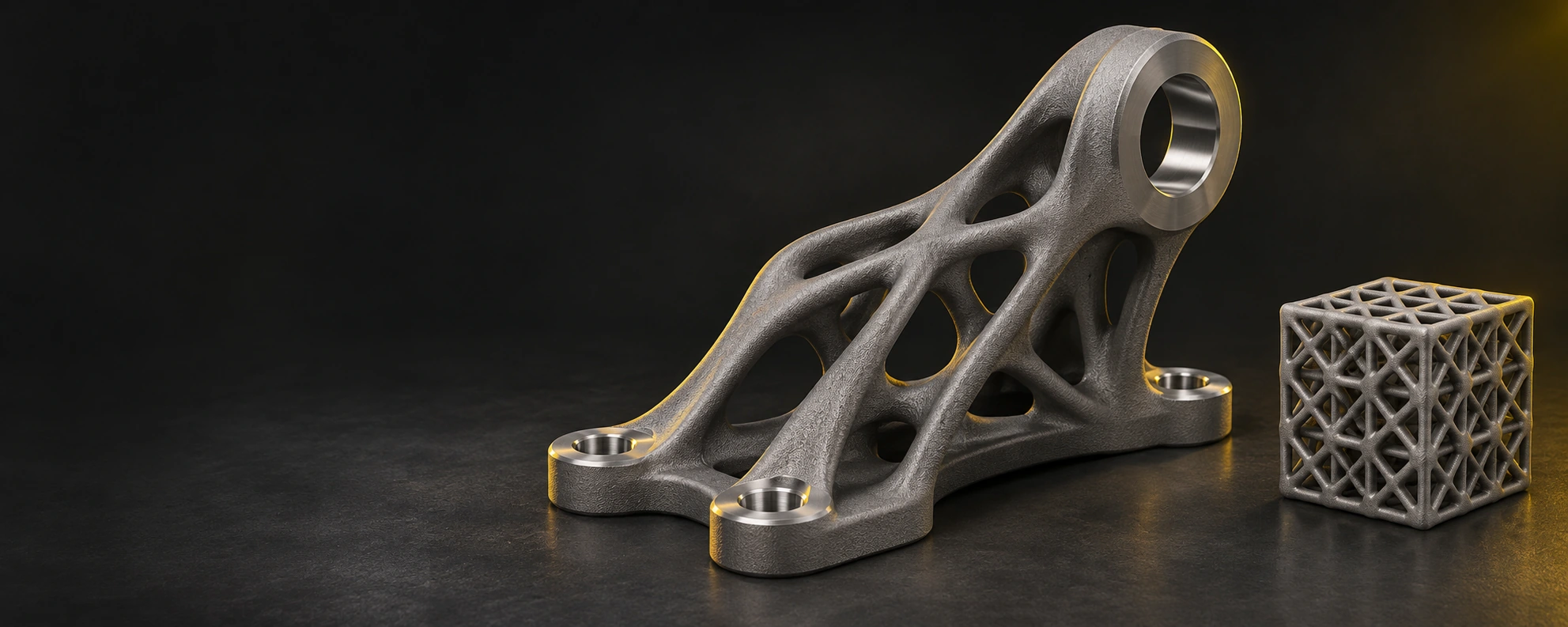
Titanium additive manufacturing parts for controlled project delivery. Connect the model and build route to post-processing, critical interfaces and inspection before confirming a production scope.
20 years in titanium100+ Baoji factory connections
Build plan. Post-processing. Part acceptance.
Define the printed component
Complex geometry is only the starting point. Build direction, support access, powder or wire removal, finishing and inspection must fit the intended component.
Lightweight brackets
Lightweight brackets
Send the controlled model and drawing, identifying critical mounting faces and loads. Geometry optimization and structural validation are separate tasks and should not be assumed from a printable model.
Model and drawing revision
Critical mounting interfaces
Design and validation responsibility
Define your additive manufacturing parts
Send the operating conditions and drawing requirements. Materials, feasibility, quantity, lead time and acceptance are confirmed through project review.
Order item
Include in your enquiry
Why it matters
Controlled design
Model, drawing, revision and units
Defines the intended component
AM route
Powder-bed or wire-based process and required specification
Identifies the applicable manufacturing basis
Material
Alloy, feedstock controls and chemistry limits
Sets material and process inputs
Build plan
Orientation, supports and critical zones
Connects geometry to production review
Post-processing
Thermal operations, support removal and machining
Defines the delivered condition
Surface and cleaning
Roughness, internal access and residual-material limits
Controls usable surfaces and passages
Inspection
Dimensions, NDT, coupons and acceptance criteria
Establishes part-level evidence
Qualification scope
Trial quantity, approvals and production change control
Separates development from approved supply
Your starting specification.
Include model and drawing revision, alloy, AM process, quantity, post-processing, critical interfaces and part acceptance requirements.
Dimensions, availability and acceptance criteria are confirmed in the quotation and order documents. Product photographs illustrate the supply format.
Match the alloy to the AM route
ASTM F2924 and F3001 address specified titanium powder-bed-fusion components. They are not universal approvals for every titanium printing process.
Wrought material standards and alloy names do not automatically qualify an additively manufactured part. Confirm the process-specific specification.
Applications, with conditions
The process, operating environment and required outcome help define the structure, materials and acceptance scope.
Industrial lightweight components
A printed bracket can be reviewed against a defined design, but its loading and fatigue requirements belong to the engineering specification. Agree build and inspection evidence relevant to the actual duty.
What to sendLoad context, validated drawing, critical surfaces and acceptance plan.
Complex flow-path components
Internal geometry should be designed with cleaning and inspection access in mind. Specify passage acceptance, pressure or leak checks and connection finishing rather than relying only on an external dimensional report.
What to sendFlow-path model, medium, cleaning access and test requirements.
Development and qualification lots
For an evolving design, separate prototype objectives from production acceptance. Define the representative build, specimen plan and revision freeze needed before repeat supply.
What to sendTrial goal, build quantity, specimen requirements and approval milestones.
Plan the finished part, not just the build
Feedstock certification does not establish finished-part conformity. The build record, post-processing and inspection plan need to remain connected to each delivered item.
Printed bracket on build plate illustration / support-removal planning
Build direction · support access · machining datums · critical inspection zones
Order geometry schematic; not a dimensional product drawing.
Review manufacturability
Check model integrity, feature access and the proposed AM route. Identify unsupported or enclosed geometry that needs a specific production and inspection plan.
Agree the build and material controls
Define alloy, feedstock traceability, orientation and required build records. Confirm qualification responsibilities before representing a trial route as approved production.
Specify post-processing
List thermal operations, support removal, cleaning and machining with their required sequence. Distinguish as-built dimensions from finished tolerances.
Release part-level evidence
Link dimensions, test coupons, NDT and required material records to the build and delivered parts. Agree change notification for subsequent orders.
Inspection, agreed upfront
Specify the tests and documents that your receiving inspection needs. Scope, sampling and acceptance levels belong in the order.
Dimensional inspection illustration / agreed scope and acceptance
Order documentationTiHubs
Traceable from heat to shipment.
Material identificationGrade + specification
Batch identificationHeat / lot reference
Inspection scopeAgreed tests & results
Shipment identificationMarks + packing list
Illustrative document checklist. Not a certificate or test report.
01Build identity
Link feedstock lot, build record and part revision.
Traceable manufacturing record02Chemistry and condition
Verify the specified alloy and final processing state.
Material acceptance03Critical dimensions
Inspect finished datums and interfaces.
Drawing-based report04Internal integrity
Use agreed NDT and acceptance zones where required.
Method + coverage05Surface and cleaning
Check support removal, roughness and internal cleanliness scope.
Delivered condition06Qualification evidence
Retain required coupons, reports and approvals.
Build-to-release package
Titanium Additive Manufacturing Parts references
Use the official process-specific scope references below and the contractual standard edition. Feedstock PDFs in the download centre do not replace finished-part requirements.
TiHubs coordinates titanium sourcing through a local manufacturer network. Your specification guides the supplier review, technical discussion and delivery requirements.
Confirm grade, dimensions, state, quantity and the purpose of the stock.
Review the supply route
Discuss manufacturing, finishing, inspection and documentation with the relevant supplier.
Agree the commercial scope
Confirm the quotation, lead time, acceptance requirements and delivery terms.
Coordinate inspection & delivery
Follow the agreed checks, marking, packing and shipment documentation.
Before you order
Answers to the details that make your titanium additive manufacturing parts enquiry easier to review.
TITANIUM ADDITIVE MANUFACTURING PARTS · BAOJI SOURCING
Send your specification.
Titanium additive manufacturing parts for controlled project delivery. Connect the model and build route to post-processing, critical interfaces and inspection before confirming a production scope.
You do not need to finalize every detail before contacting us.
TiHubs
Talk to TiHubs
Ask about titanium materials, grades or custom parts.
Enter your email to start chatting.
We use your email to respond to your enquiry. Your conversation is stored on this website.
Our team is away right now. Leave your enquiry and we will follow up by email.