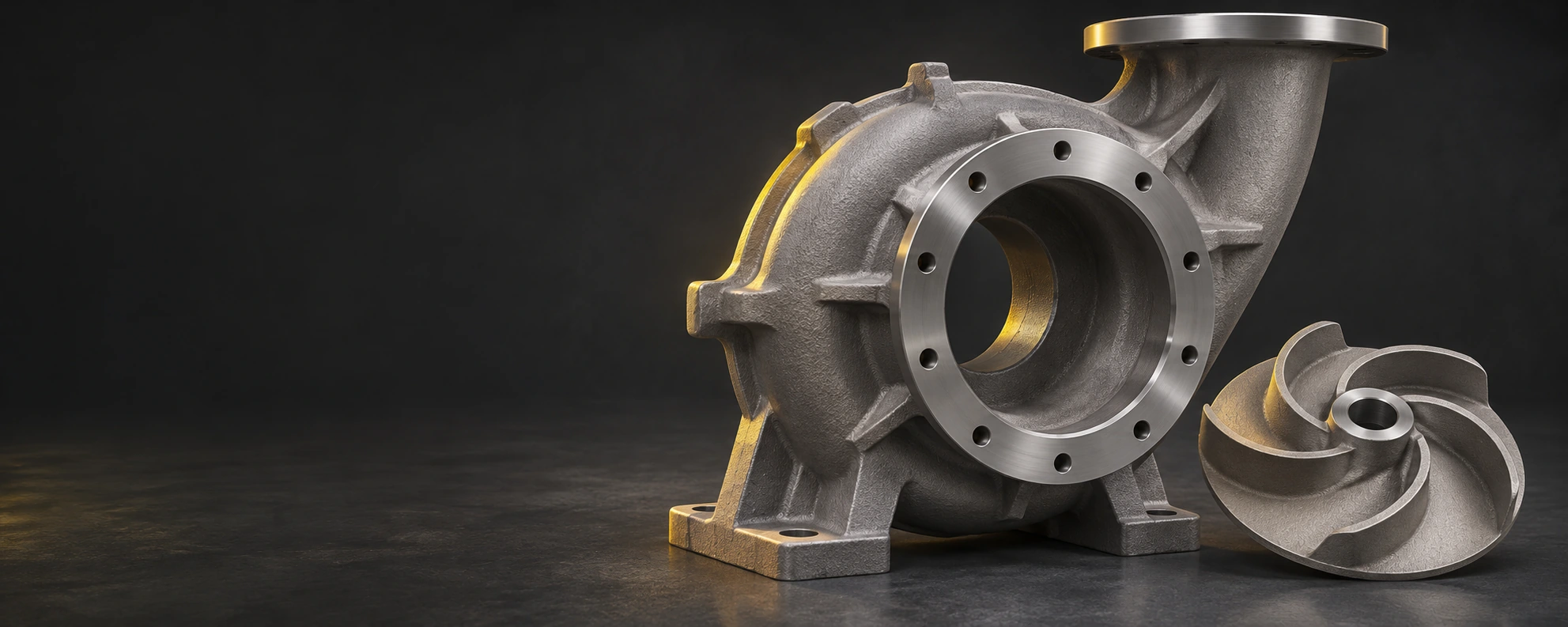
Titanium castings for drawing-defined industrial components. Separate the cast shape from finished machining, then agree material grade, critical inspection zones and acceptance before tooling or production.
As-cast geometry, machining allowance and finished interfaces need separate definitions. Feasibility depends on the drawing, alloy and required inspection route.
Housings and bodies
Housings and bodies
Provide the casting and finished-part drawings where available. Identify fluid-contact surfaces, minimum walls and connection interfaces, with any pressure-boundary requirements clearly marked.
Wall and passage geometry
Connection and sealing faces
Material and service requirements
Define your castings
Send the operating conditions and drawing requirements. Materials, feasibility, quantity, lead time and acceptance are confirmed through project review.
Order item
Include in your enquiry
Why it matters
Casting material
Casting grade, standard and edition
Avoids substituting a wrought grade callout
Drawing and model
Revision, dimensions, datums and critical features
Defines the component geometry
Allowance
As-cast envelope and machining stock by surface
Supports subsequent machining
Service conditions
Medium, temperature, loading and pressure context
Informs material and design review
Delivery condition
As-cast / heat-treated state and finishing scope
Sets the accepted production stage
Inspection zones
NDT method, extent, stage and acceptance level
Makes integrity requirements measurable
Repair policy
Permitted repairs, approval and reinspection
Controls deviations before release
Release documents
Material record, dimensional report and traceability
Connects the casting to its acceptance evidence
Your starting specification.
Include casting grade, drawing and model revision, quantity, machining allowance, delivery condition, inspection zones and repair requirements.
Dimensions, availability and acceptance criteria are confirmed in the quotation and order documents. Product photographs illustrate the supply format.
Use a casting-specific designation
ASTM B367 uses casting grade designations such as C-2, C-3 and C-5. Do not replace these with wrought-product grade names without a technical review.
Related alloy chemistry does not establish identical processing, mechanical properties or acceptance. Use the casting standard and drawing together.
Applications, with conditions
The process, operating environment and required outcome help define the structure, materials and acceptance scope.
Process pumps and valve bodies
Corrosion-service castings require a material selected for the actual medium and operating conditions. Pressure design, connection dimensions and casting integrity requirements should be identified separately.
What to sendService medium, temperature, body drawing and pressure-design basis.
Industrial impellers
Impeller procurement should define blade geometry, machined interfaces and functional inspection. Balance requirements, where applicable, need a specified method and acceptance criterion.
What to sendModel, operating context, critical interfaces and balance requirement.
Complex machining blanks
A near-net casting can be reviewed where geometry makes a solid-stock route inefficient. Evaluate tooling, quantity, minimum walls and machining access before choosing the production route.
What to sendFinished-part model, allowance map, batch size and machining strategy.
Agree the casting plan before tooling
A useful quotation separates tooling, cast geometry, finishing and inspection. Each stage should be tied to a controlled drawing revision.
Order geometry schematic; not a dimensional product drawing.
Review geometry and route
Provide controlled drawings and model files. Identify thin walls, internal passages, critical surfaces and the intended casting or finishing route for feasibility review.
Separate blank and finished dimensions
Agree the as-cast envelope, machining stock and datums. Keep finished tolerances assigned to the operation that will create them.
Specify integrity and repair controls
Mark inspection zones and define the NDT method, extent and acceptance criteria. State repair restrictions, approval requirements and reinspection before production.
Approve the release evidence
Agree first-article and repeat-lot records, including chemistry, condition, dimensions and any required integrity checks. Preserve casting identity through machining and packing.
Inspection, agreed upfront
Specify the tests and documents that your receiving inspection needs. Scope, sampling and acceptance levels belong in the order.
Dimensional inspection illustration / agreed scope and acceptance
Order documentationTiHubs
Traceable from heat to shipment.
Material identificationGrade + specification
Batch identificationHeat / lot reference
Inspection scopeAgreed tests & results
Shipment identificationMarks + packing list
Illustrative document checklist. Not a certificate or test report.
01Casting grade
Verify the casting-specific designation and chemistry.
Heat + casting specification02Geometry
Check the delivered envelope, walls and datums.
Drawing revision03Surface integrity
Agree visible surface defects and finishing criteria.
Defined surface acceptance04Internal inspection
Apply the ordered NDT method and zones.
Extent + acceptance level05Repair control
Record approved repairs and required reinspection.
Approval + traceability06Final interfaces
Check machined features and supplied documentation.
Dimensional release
Titanium Castings references
Reference documents for castings procurement. Confirm product scope, grade, delivery condition and the edition required by your order.
TiHubs coordinates titanium sourcing through a local manufacturer network. Your specification guides the supplier review, technical discussion and delivery requirements.
Confirm grade, dimensions, state, quantity and the purpose of the stock.
Review the supply route
Discuss manufacturing, finishing, inspection and documentation with the relevant supplier.
Agree the commercial scope
Confirm the quotation, lead time, acceptance requirements and delivery terms.
Coordinate inspection & delivery
Follow the agreed checks, marking, packing and shipment documentation.
Before you order
Answers to the details that make your titanium castings enquiry easier to review.
TITANIUM CASTINGS · BAOJI SOURCING
Send your specification.
Titanium castings for drawing-defined industrial components. Separate the cast shape from finished machining, then agree material grade, critical inspection zones and acceptance before tooling or production.
You do not need to finalize every detail before contacting us.
TiHubs
Talk to TiHubs
Ask about titanium materials, grades or custom parts.
Enter your email to start chatting.
We use your email to respond to your enquiry. Your conversation is stored on this website.
Our team is away right now. Leave your enquiry and we will follow up by email.