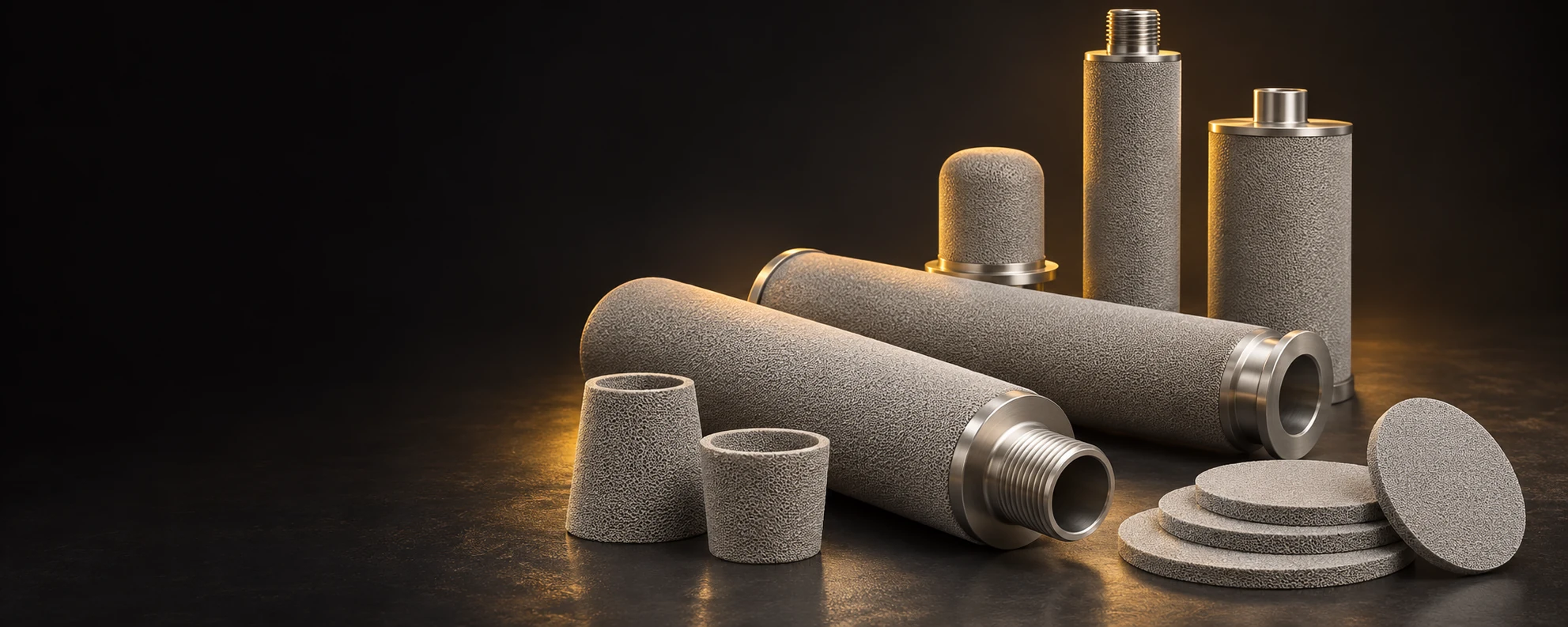
Porous titanium filter elements specified around the process. Define what must be retained, the required flow and the permitted pressure drop, then agree the element and acceptance method.
20 years in titanium100+ Baoji factory connections
Retention. Flow resistance. Process compatibility.
Select the filtration element
Geometry and pore structure are reviewed with the fluid, solids load and cleaning cycle. Element supply and complete filter-housing supply are separate scopes.
Tubular filter elements
Tubular filter elements
Provide element OD, ID, effective filtering length and the sealing interface. State flow direction and whether reverse-flow cleaning is intended, together with the allowable differential pressures.
Element drawing and effective filter area
End fittings, seals and flow direction
Forward / reverse differential-pressure limits
Define your filters
Send the operating conditions and drawing requirements. Materials, feasibility, quantity, lead time and acceptance are confirmed through project review.
Order item
Include in your enquiry
Why it matters
Process fluid
Composition, phase, viscosity and temperature
Defines compatibility and flow context
Solids challenge
Particle distribution, concentration and required removal
Establishes the filtration objective
Retention rating
Efficiency, particle size and test method
Makes a micron claim meaningful
Flow resistance
Flow rate, clean pressure drop and terminal limit
Connects area to operating performance
Pressure limits
Forward / reverse differential and system pressure
Separates element loading from housing design
Element geometry
Dimensions, effective area, ends and seals
Controls installation and bypass prevention
Cleaning cycle
Backwash / cleaning media, temperatures and frequency
Defines reuse and compatibility requirements
Acceptance package
Sampling, test methods, reports and clean packaging
Establishes reproducible lot release
Your starting specification.
Include Fluid, temperature, required retention / efficiency, flow, pressure-drop limits, element drawing, cleaning conditions and quantity.
Dimensions, availability and acceptance criteria are confirmed in the quotation and order documents. Product photographs illustrate the supply format.
Start with the grade
Explore a material guide, then tell us the exact designation required by your drawing or purchase specification.
Chinese designations and international names are reference routes, not automatic substitutes. Grade, product specification, condition and acceptance requirements must be agreed together.
The process, operating environment and required outcome help define the structure, materials and acceptance scope.
Liquid process filtration
Select an element against the actual liquid viscosity, temperature and solids loading. A clean-flow result alone does not establish how the element will behave as a filter cake develops.
What to sendFluid properties, particle challenge, flow and acceptable operating pressure drop.
Gas filtration and process service
Gas conditions, flow basis and contamination load affect element selection. Specify whether reported volume is at actual or reference conditions and define the required retention evidence.
What to sendGas composition, pressure / temperature, flow basis and particle-removal requirement.
Replacement and pilot projects
Replacement drawings establish fit, while a process trial can establish performance under actual conditions. Define a representative trial and acceptance criteria before treating a new element as equivalent.
What to sendExisting interface, operating history, cleaning cycle and trial acceptance plan.
Define performance before pore size
A useful filter specification connects particle removal, flow resistance and mechanical limits. Each requires a stated test basis.
Porous element assembly illustration / end interface and cleanliness
Element OD + ID + length · sealing seat · effective filter area · flow direction
Order geometry schematic; not a dimensional product drawing.
Agree the rating language
Specify the particle size, removal efficiency and challenge / measurement method. Nominal pore size, bubble-point results and filtration efficiency describe different characteristics.
Match area and resistance
Review clean flow versus pressure drop at stated fluid conditions. Include allowable terminal pressure drop and required flow as loading increases; agree a trial where process data are insufficient.
Check cleaning and interfaces
Define forward and reverse pressure limits, cleaning media and temperature. Review porous material, end fittings, joints and seals together, including possible bypass paths.
Release with reproducible evidence
Agree the lot definition, sampling and required dimensional, permeability, retention or integrity checks. Keep test conditions with the results so receiving inspection can interpret them.
Inspection, agreed upfront
Specify the tests and documents that your receiving inspection needs. Scope, sampling and acceptance levels belong in the order.
Dimensional inspection illustration / agreed scope and acceptance
Order documentationTiHubs
Traceable from heat to shipment.
Material identificationGrade + specification
Batch identificationHeat / lot reference
Inspection scopeAgreed tests & results
Shipment identificationMarks + packing list
Illustrative document checklist. Not a certificate or test report.
01Material traceability
Identify porous material and separate end-fitting materials.
Composition + lot identity02Installation geometry
Check dimensions, ends, sealing seats and effective area.
TiHubs coordinates titanium sourcing through a local manufacturer network. Your specification guides the supplier review, technical discussion and delivery requirements.
Confirm grade, dimensions, state, quantity and the purpose of the stock.
Review the supply route
Discuss manufacturing, finishing, inspection and documentation with the relevant supplier.
Agree the commercial scope
Confirm the quotation, lead time, acceptance requirements and delivery terms.
Coordinate inspection & delivery
Follow the agreed checks, marking, packing and shipment documentation.
Before you order
Answers to the details that make your titanium filters enquiry easier to review.
TITANIUM FILTERS · BAOJI SOURCING
Send your specification.
Porous titanium filter elements specified around the process. Define what must be retained, the required flow and the permitted pressure drop, then agree the element and acceptance method.
You do not need to finalize every detail before contacting us.
TiHubs
Talk to TiHubs
Ask about titanium materials, grades or custom parts.
Enter your email to start chatting.
We use your email to respond to your enquiry. Your conversation is stored on this website.
Our team is away right now. Leave your enquiry and we will follow up by email.