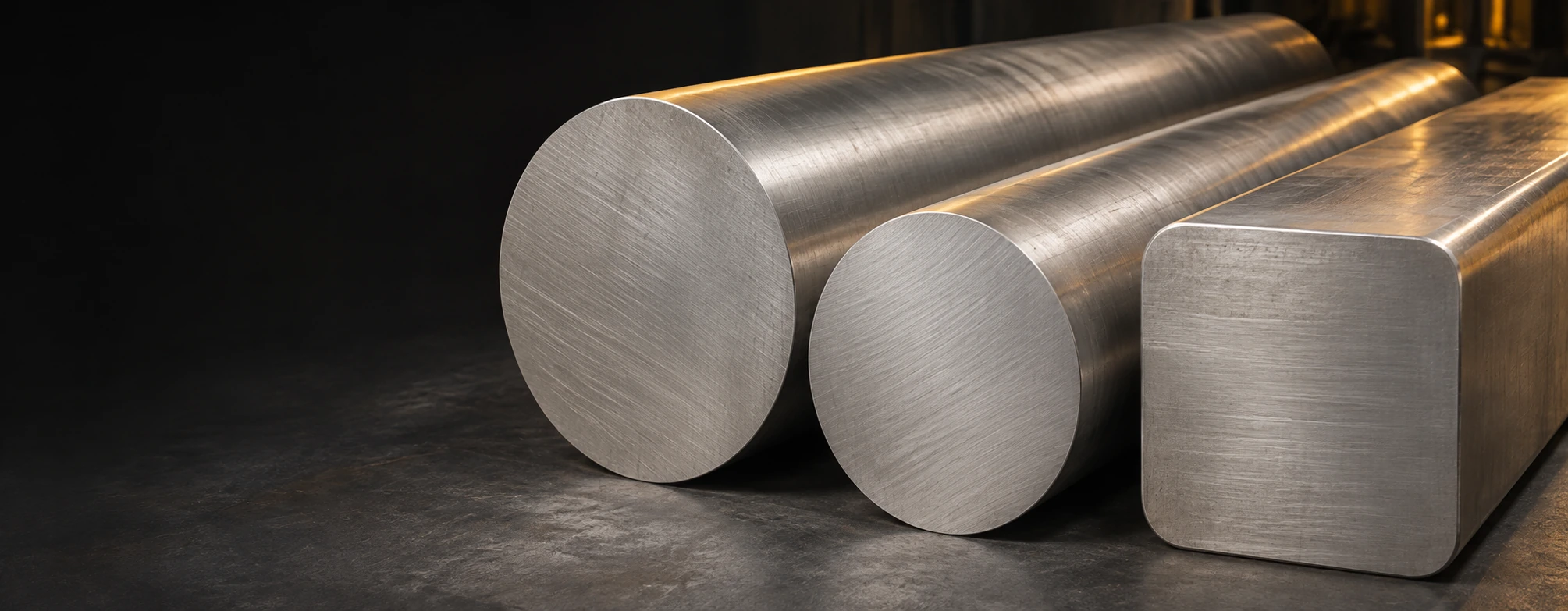
Titanium forging billets and cut charges for subsequent forming or machining. Match the starting section, material history and inspection condition to the process that comes next.
20 years in titanium100+ Baoji factory connections
Starting section. Cut weight. Process continuity.
Choose your starting stock
Billet procurement should begin with the next operation. Specify whether the stock will be reheated and forged or used as a machining blank, then agree the applicable acceptance basis.
Round forging billets
Round forging billets
State diameter, supplied length and delivery condition for the planned forging route. Include any customer requirements for material history, surface conditioning and test evidence before the stock is cut into charges.
Diameter, length and dimensional tolerances
Required material history and delivery condition
Subsequent forging route and acceptance specification
Define your billets
Send the dimensions you need. Feasibility, minimum order and lead time are confirmed against the grade, size, condition and quantity.
Order item
Include in your enquiry
Why it matters
Intended use
Subsequent forging or direct machining
Determines the supply and test basis
Material identity
Grade, standard, edition and material history
Preserves the engineering callout
Starting section
Round diameter or rectangular section × length
Defines the supplied geometry
Cut charges
Weight / length target and controlling tolerance
Supports repeatable process loading
Surface condition
Conditioning, skin removal and cut-face requirements
Defines stock preparation
Delivery state
Thermal condition and any structure criteria
Aligns feedstock with the next operation
Inspection basis
UT stage, coverage, sampling and acceptance
Defines what is verified before forming
Traceability & packing
Heat / lot continuity, piece marks and crop rules
Keeps identity after cutting
Your starting specification.
Include grade, intended forging / machining use, billet section × length, cut weight, quantity, surface condition and inspection requirements.
Dimensions, availability and acceptance criteria are confirmed in the quotation and order documents. Product photographs illustrate the supply format.
Start with the grade
Explore a material guide, then tell us the exact designation required by your drawing or purchase specification.
Chinese designations and international names are reference routes, not automatic substitutes. Grade, product specification, condition and acceptance requirements must be agreed together.
The intended component and operating environment help define the material, delivery condition and acceptance scope.
Feedstock for downstream forging
When billets will be reheated and forged, the starting stock specification and the finished-forging acceptance are separate requirements. Share the downstream process and any customer-approved material history, structure or testing requirements so the supply route can be reviewed before production.
What to sendBillet specification, final forging route, process approval needs and material-history requirements.
Repeat cut-charge programs
Consistent charge planning needs an agreed basis for cut weight, length and permitted end condition. State which requirement controls acceptance, how material is segregated by heat and whether crop losses or sample pieces are included in the ordered quantity.
What to sendCharge schedule, controlling weight / length tolerances, crop rules and heat segregation.
Large machining blanks
Some projects use billet-shaped stock directly for machining. Identify this use explicitly and specify the applicable properties, inspection and delivery condition. A certificate for forging feedstock should not be assumed to establish the requirements of a finished machined component.
What to sendFinished drawing, material standard, machining allowance, delivery state and required test evidence.
Connect billet to the next operation
The useful billet is more than a nominal section. Its history, preparation, cut plan and traceability should remain clear through subsequent processing.
Billet cutting illustration / charge length and identity transfer
Order geometry schematic; not a dimensional product drawing.
Choose the acceptance basis
Identify whether the order is for forging stock or machining material. State the required product standard, condition, sampling and evidence for that supplied state.
Plan section and cut weight
Provide section and length plus the target charge weight where relevant. Agree the controlling tolerance, end crops and test pieces before calculating the usable number of charges.
Define preparation and history
Specify surface conditioning, cut-face preparation and any required material processing records. Remelting, deformation or structure requirements should come from the customer specification rather than be inferred from appearance.
Transfer identity after cutting
Maintain heat / lot and piece identity when a billet is divided. Agree how test records, cutting records and package lists link the delivered charges to their parent stock.
Inspection, agreed upfront
Specify the tests and documents that your receiving inspection needs. Scope, sampling and acceptance levels belong in the order.
Ultrasonic inspection illustration / agreed scope and acceptance
Order documentationTiHubs
Traceable from heat to shipment.
Material identificationGrade + specification
Batch identificationHeat / lot reference
Inspection scopeAgreed tests & results
Shipment identificationMarks + packing list
Illustrative document checklist. Not a certificate or test report.
01Material & history
Check the required grade and specified material-history evidence.
Callout + agreed records02Section & cut length
Measure the delivered stock and controlling charge dimensions.
Section + length tolerance03Charge weight
Apply the agreed weight basis where it is an order requirement.
TiHubs coordinates titanium sourcing through a local manufacturer network. Your specification guides the supplier review, technical discussion and delivery requirements.
Confirm grade, dimensions, state, quantity and the purpose of the stock.
Review the supply route
Discuss manufacturing, finishing, inspection and documentation with the relevant supplier.
Agree the commercial scope
Confirm the quotation, lead time, acceptance requirements and delivery terms.
Coordinate inspection & delivery
Follow the agreed checks, marking, packing and shipment documentation.
Before you order
Answers to the details that make your titanium billets enquiry easier to review.
TITANIUM BILLETS · BAOJI SOURCING
Send your specification.
Titanium forging billets and cut charges for subsequent forming or machining. Match the starting section, material history and inspection condition to the process that comes next.
You do not need to finalize every detail before contacting us.
TiHubs
Talk to TiHubs
Ask about titanium materials, grades or custom parts.
Enter your email to start chatting.
We use your email to respond to your enquiry. Your conversation is stored on this website.
Our team is away right now. Leave your enquiry and we will follow up by email.