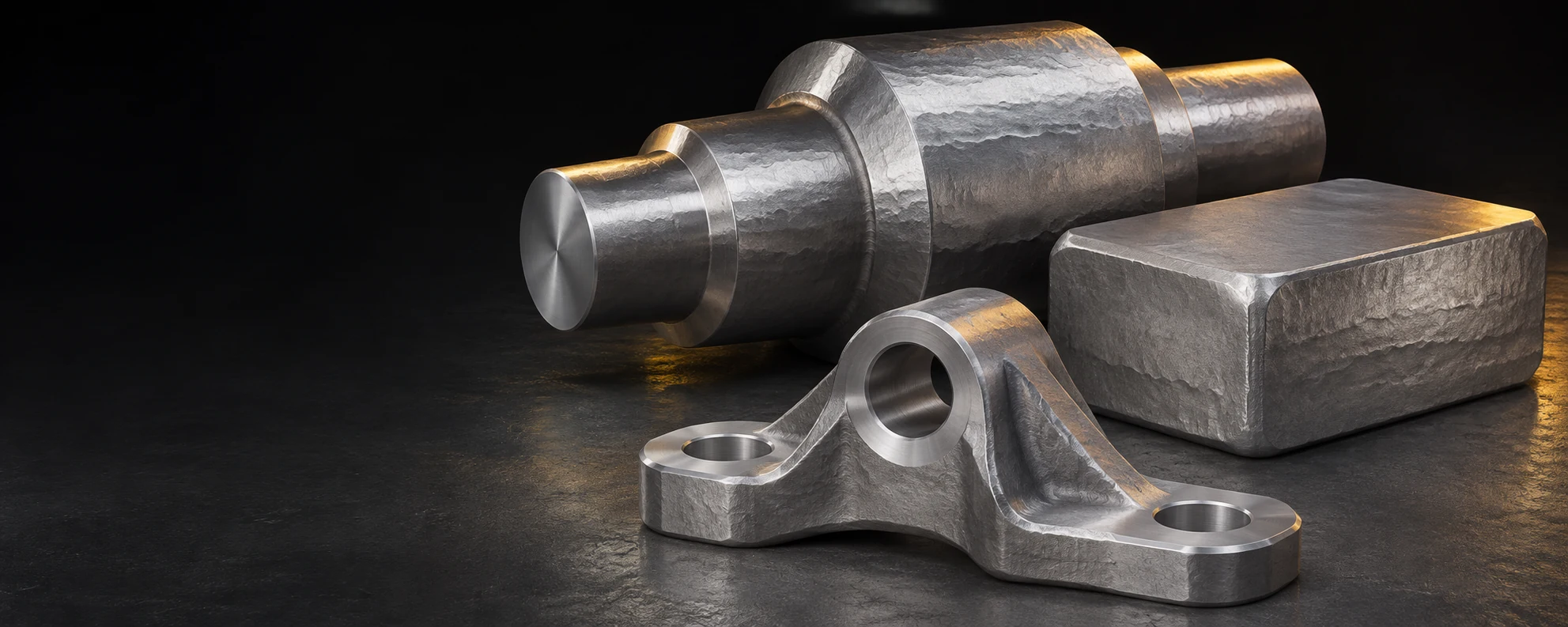
Titanium forgings for drawing-based components and equipment parts. Align the blank shape, machining allowance, heat treatment and inspection plan before production.
The right blank starts with the finished component. Compare the shape, quantity and acceptance requirements before selecting a forging and finishing route.
Open-die forgings
Open-die forgings
Blocks and simple sections can provide a practical machining envelope for project quantities. Specify the finished-part outline and the required delivered blank; agree the stock left on each critical surface.
Blank envelope, finished drawing and quantity
Material condition and machining stock by surface
Required reference faces and inspection stage
Define your forgings
Send the dimensions you need. Feasibility, minimum order and lead time are confirmed against the grade, size, condition and quantity.
Order item
Include in your enquiry
Why it matters
Material callout
Grade, product standard, edition and condition
Defines the acceptance basis
Blank geometry
Blank drawing plus finished-part drawing
Separates supply size from final geometry
Machining stock
Allowance on each face and critical feature
Preserves the cleanup envelope
Forging route
Required process or permitted alternatives
Aligns geometry and production planning
Heat treatment
Required delivery state and evidence
Links properties to the supplied condition
Test specimens
Location, direction and test-piece allowance
Reserves representative test material
NDT & surface
Method, coverage, level and inspection stage
Makes defect acceptance explicit
Quantity & delivery
Pieces, identification, packing and destination
Supports release and handling
Your starting specification.
Include grade, blank and finished drawings, quantity, machining allowance, heat treatment and ndt requirements.
Dimensions, availability and acceptance criteria are confirmed in the quotation and order documents. Product photographs illustrate the supply format.
Start with the grade
Explore a material guide, then tell us the exact designation required by your drawing or purchase specification.
Chinese designations and international names are reference routes, not automatic substitutes. Grade, product specification, condition and acceptance requirements must be agreed together.
The intended component and operating environment help define the material, delivery condition and acceptance scope.
Pump and valve component blanks
Drawing-based bodies, shafts and other process-equipment parts need enough stock for the final flow passages, sealing faces and connections. Include service conditions with the engineering material callout and agree what machining is included in the delivered forging.
What to sendBlank and component drawings, critical sealing areas, service conditions and inspection specification.
Structural machining preforms
Where a customer drawing calls for a forging, the material route, heat treatment and test plan form part of the procurement requirement. Discuss test orientation and critical sections before selecting the blank shape. Supply to an aerospace or other qualified program requires its own approvals.
What to sendCustomer material specification, critical sections, test direction and approval requirements.
Custom equipment and project parts
Low-volume custom parts benefit from a clear division between forging, rough machining and final machining. Define the accepted blank envelope and who releases each stage, particularly when additional tests or witness points could affect the schedule.
What to sendQuantity, delivered machining stage, datum scheme, witness points and target delivery.
Plan the blank before the cut
Forging and machining should share one drawing-based plan: usable stock, material condition, test material and inspection access.
Forging route illustration / shape and subsequent machining scope
BLANK ENVELOPE · MACHINING STOCK · DATUMS · TEST MATERIAL
Order geometry schematic; not a dimensional product drawing.
Blank and final drawings
Identify the drawing revision and the delivered state. Agree allowances at bores, shoulders, faces and transitions rather than applying one generic allowance everywhere.
Heat-treatment sequence
State the required delivery condition and any approved sequence. Confirm when heat treatment, rough machining and acceptance tests occur; avoid assuming that every alloy follows the same cycle.
Test material and direction
Reserve test stock and identify specimen locations and orientation before cutting or machining removes it. Use the applicable specification to define lot and sampling requirements.
Inspection access
Agree the surface preparation and geometry needed for the chosen NDT method. Define acceptance levels and reporting at the stage where the inspection is performed.
Inspection, agreed upfront
Specify the tests and documents that your receiving inspection needs. Scope, sampling and acceptance levels belong in the order.
Ultrasonic inspection illustration / agreed scope and acceptance
Order documentationTiHubs
Traceable from heat to shipment.
Material identificationGrade + specification
Batch identificationHeat / lot reference
Inspection scopeAgreed tests & results
Shipment identificationMarks + packing list
Illustrative document checklist. Not a certificate or test report.
01Grade & traceability
Retain the original material callout and connect every forging to its heat and lot.
Specification + piece identity02Blank dimensions
Inspect the delivered envelope, reference faces and stated allowance requirements.
Blank drawing + datums03Heat-treatment state
Confirm the ordered condition and any required processing records.
TiHubs coordinates titanium sourcing through a local manufacturer network. Your specification guides the supplier review, technical discussion and delivery requirements.
Confirm grade, dimensions, state, quantity and the purpose of the stock.
Review the supply route
Discuss manufacturing, finishing, inspection and documentation with the relevant supplier.
Agree the commercial scope
Confirm the quotation, lead time, acceptance requirements and delivery terms.
Coordinate inspection & delivery
Follow the agreed checks, marking, packing and shipment documentation.
Before you order
Answers to the details that make your titanium forgings enquiry easier to review.
TITANIUM FORGINGS · BAOJI SOURCING
Send your specification.
Titanium forgings for drawing-based components and equipment parts. Align the blank shape, machining allowance, heat treatment and inspection plan before production.
You do not need to finalize every detail before contacting us.
TiHubs
Talk to TiHubs
Ask about titanium materials, grades or custom parts.
Enter your email to start chatting.
We use your email to respond to your enquiry. Your conversation is stored on this website.
Our team is away right now. Leave your enquiry and we will follow up by email.