Baoji High-tech Zone, ChinaTitanium sourcing · One contact


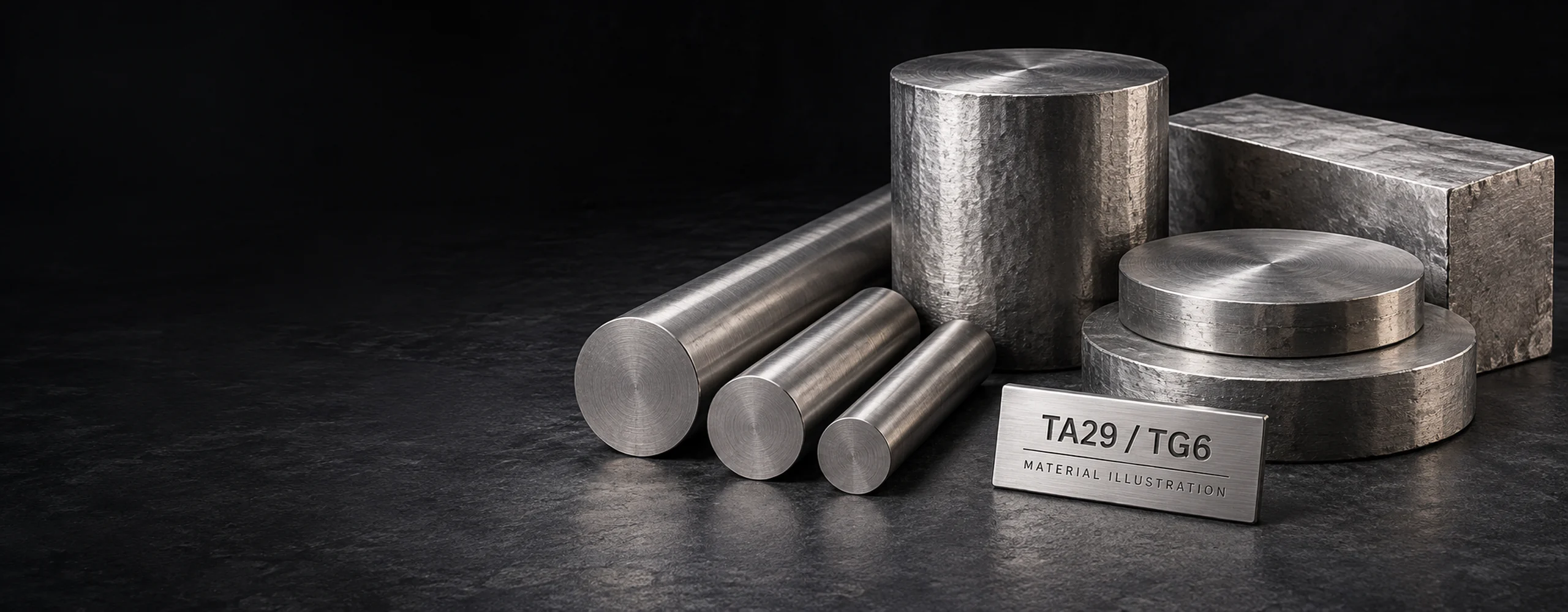
TA29 / TG6 · Near-alpha high-temperature titanium alloy
TA29 / TG6. Specify the stock around thermal duty.
Enquire about TA29 / TG6 bar and forging stock for high-temperature compressor development, with creep, thermal exposure and section-specific inspection defined before quotation.
Start with a specification, drawing or application. We’ll help identify the details still needed.
Material review. Supply coordination.
One contact in Baoji, China.
TA29 / TG6Ti-5.8Al-4Sn-4Zr-0.7Nb-1.5Ta-0.4Si-0.06C
Near-alpha high-temperature titanium alloyHigh-temperature compressor & blisk forging stock
One contact20 years of founder experience · 100+ Baoji factories
01 / Product forms
Find your TA29 product.
Choose a material form or application. Send the dimensions, service conditions and required records so we can match the manufacturing route to your order.
01 / 06
TA29 / TG6
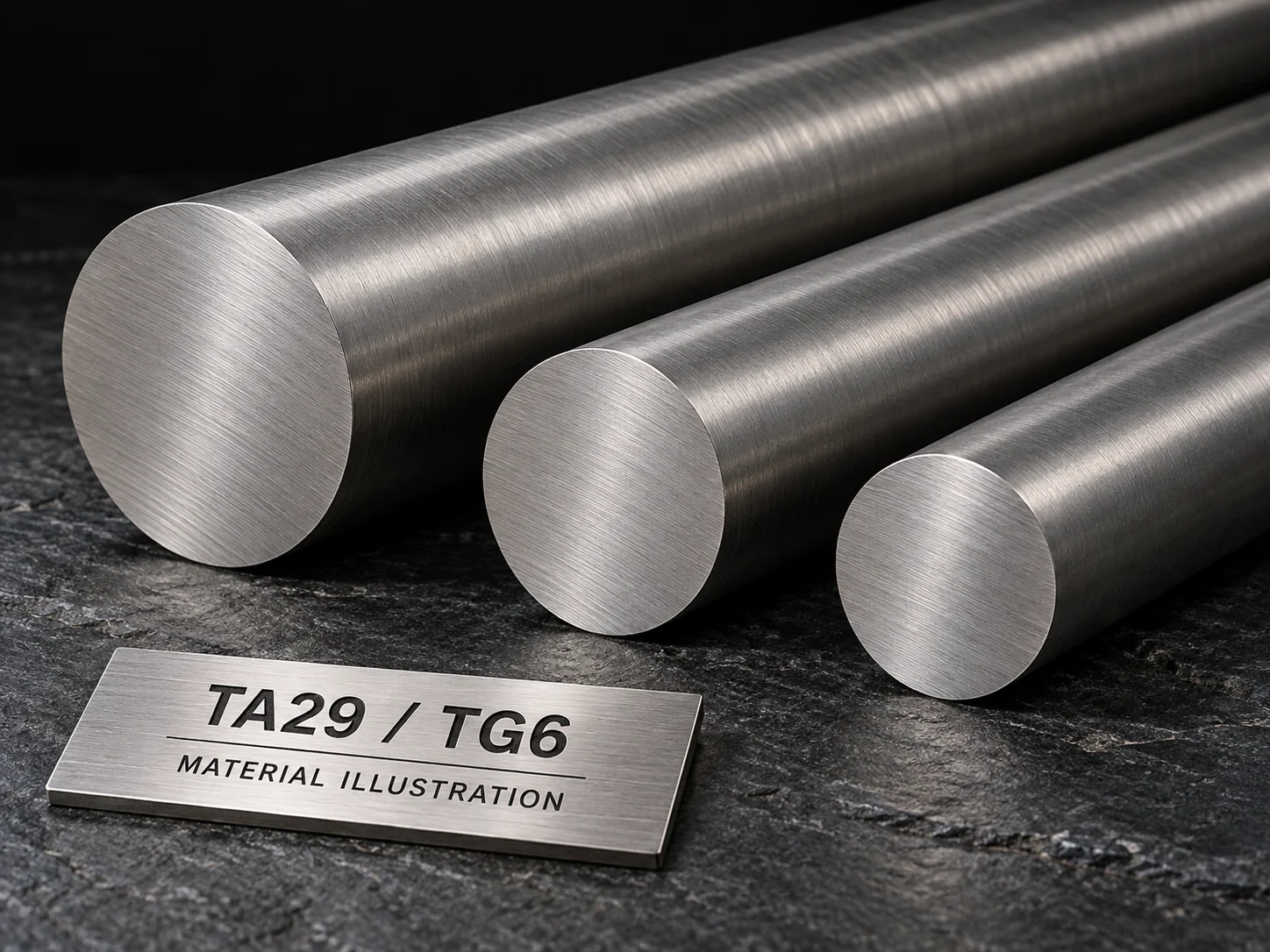
TA29 high-temperature alloy bar
Round bar for machining trials, forging conversion and drawing-defined component stock.
- Specification
- Approved grade-specific product specification, drawing revision and delivery condition; confirm supply feasibility.
- Size & delivery
- Diameter, usable length, straightness, machining allowance and delivery condition.
- Manufacturing review
- Relate the incoming structure and reduction history to the downstream forging or machining route.
- Inspection priorities
- Heat identity, full chemistry, agreed macrostructure, ultrasonic examination and representative mechanical testing.
02 / 06
TA29 / TG6
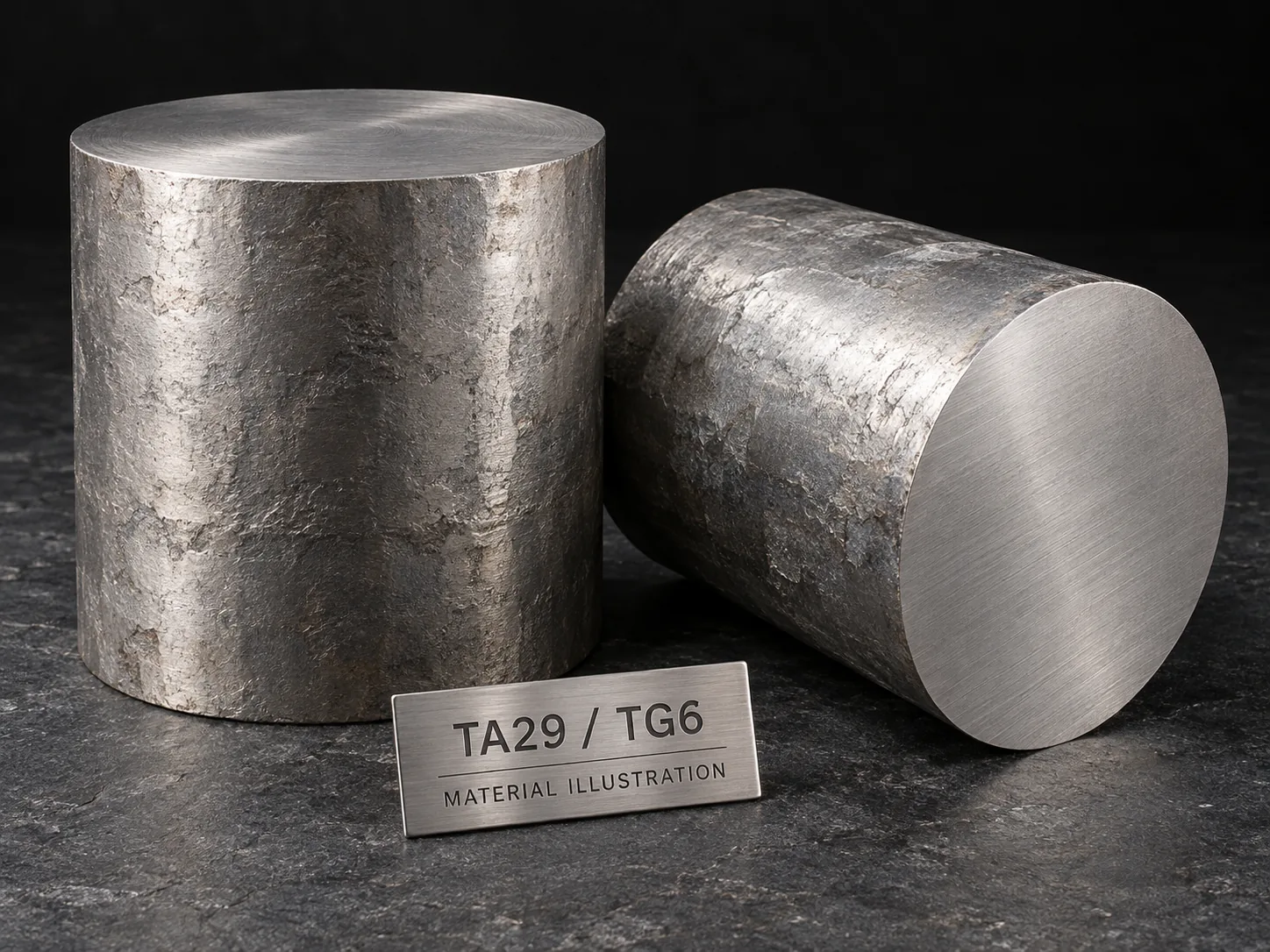
TA29 forging billet
Billet for a defined hot-working programme and high-temperature component development.
- Specification
- Approved grade-specific product specification, drawing revision and delivery condition; confirm supply feasibility.
- Size & delivery
- Billet envelope, end cropping, surface conditioning and required conversion allowance.
- Manufacturing review
- Identify the conversion stage, target component zones and the process qualification owned by the downstream forger.
- Inspection priorities
- Internal soundness, structure uniformity and traceable billet-to-forging identification.
03 / 06
TA29 / TG6
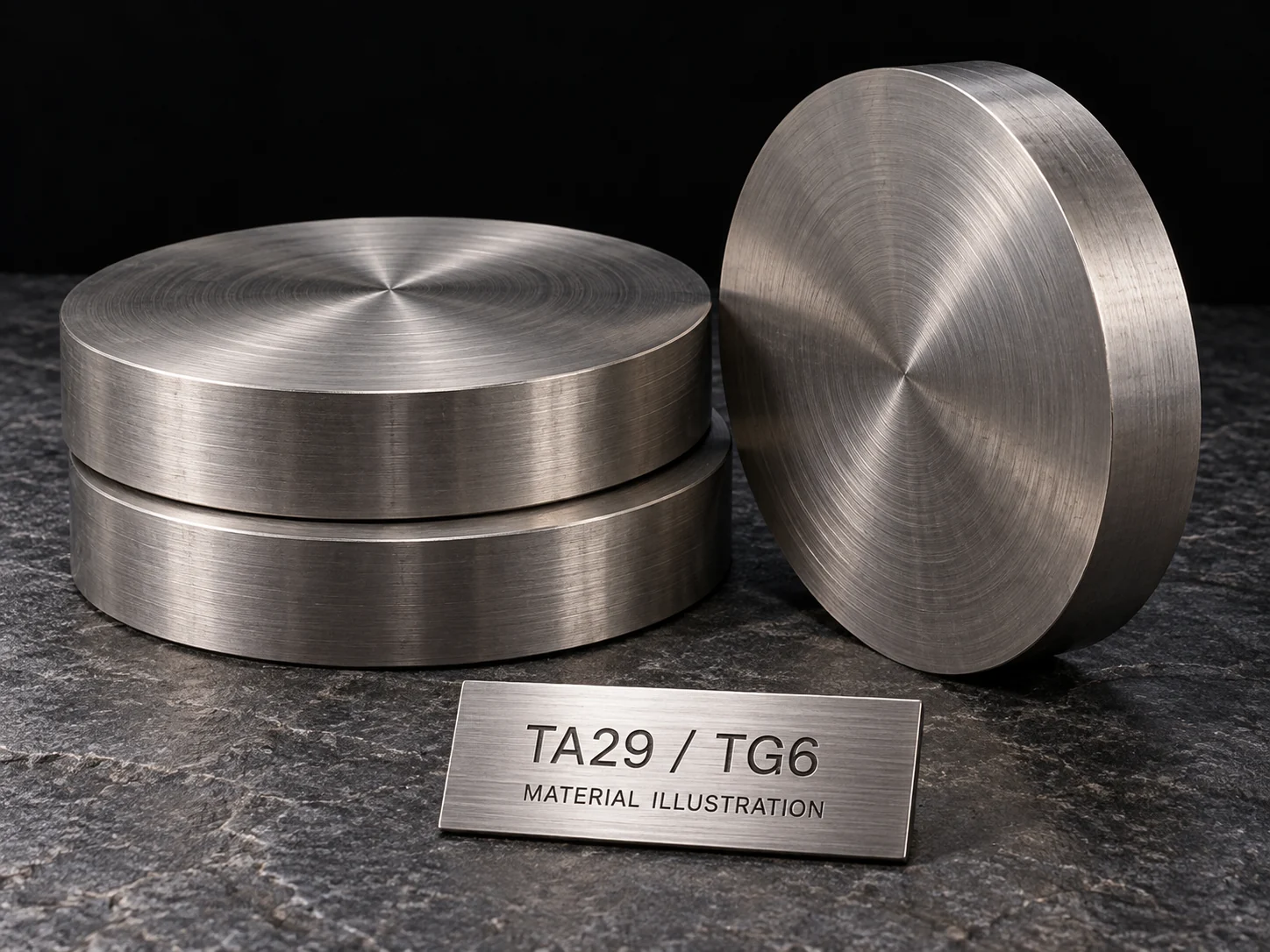
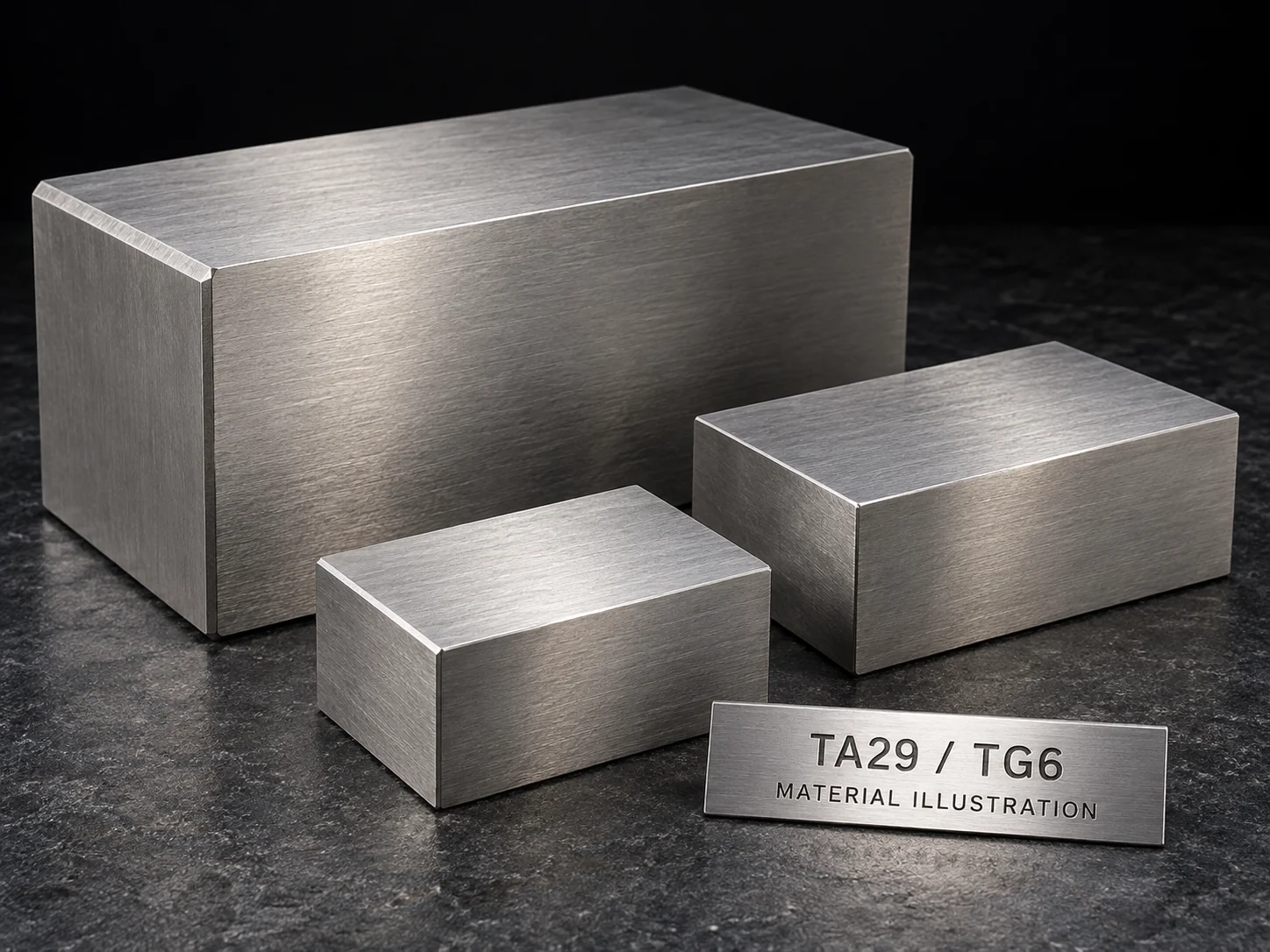
TA29 disc forging blanks
Disc-shaped stock for compressor-disc and integral-blisk development enquiries.
- Specification
- Approved grade-specific product specification, drawing revision and delivery condition; confirm supply feasibility.
- Size & delivery
- Outer diameter, hub and rim envelope, section transitions and sacrificial test material.
- Manufacturing review
- Discuss the required radial and through-section structure, machining sequence and approved heat treatment.
- Inspection priorities
- Define sampling at hub, web and rim where required, NDT coverage and dimensional allowance after treatment.
04 / 06
TA29 / TG6
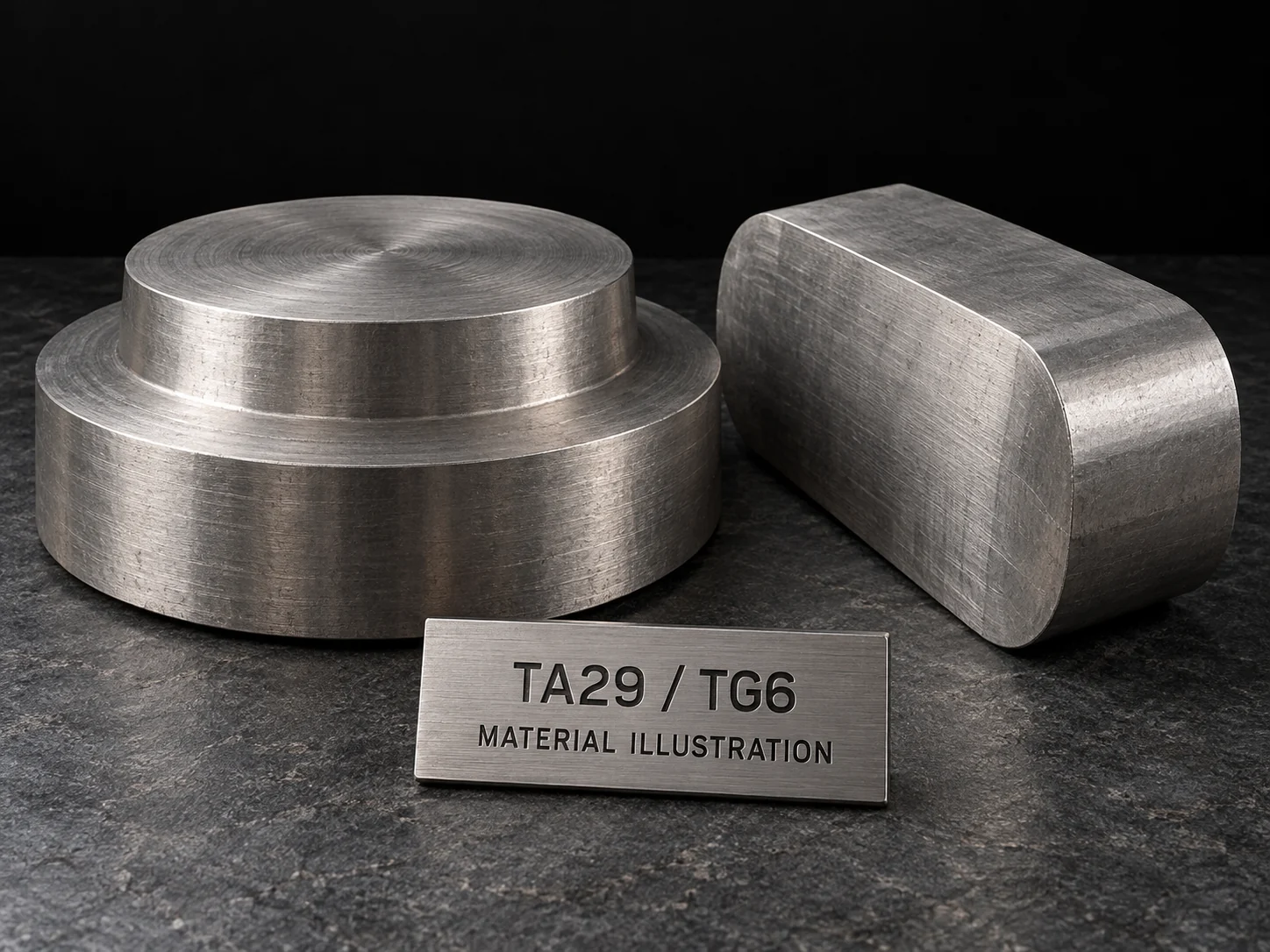
TA29 cut machining blanks
Cut pieces with clear orientation and enough material for component machining.
- Specification
- Approved grade-specific product specification, drawing revision and delivery condition; confirm supply feasibility.
- Size & delivery
- Final blank dimensions, saw allowance, orientation marking and piece quantities.
- Manufacturing review
- Preserve the parent-bar or forging identity through cutting and reserve material for any required tests.
- Inspection priorities
- Cut-face condition, dimensional checks, orientation and certificate linkage for every supplied piece.
05 / 06
TA29 / TG6
TA29 forged preform enquiries
Drawing-based preforms for review with the intended component manufacturer.
- Specification
- Approved grade-specific product specification, drawing revision and delivery condition; confirm supply feasibility.
- Size & delivery
- Provide the preform and finished-part drawings, minimum sections and datum scheme.
- Manufacturing review
- Compare the proposed material distribution with forging feasibility, inspection access and removal allowance.
- Inspection priorities
- Agree the supplied manufacturing stage, structure acceptance and inspection after each contracted operation.
06 / 06
TA29 / TG6
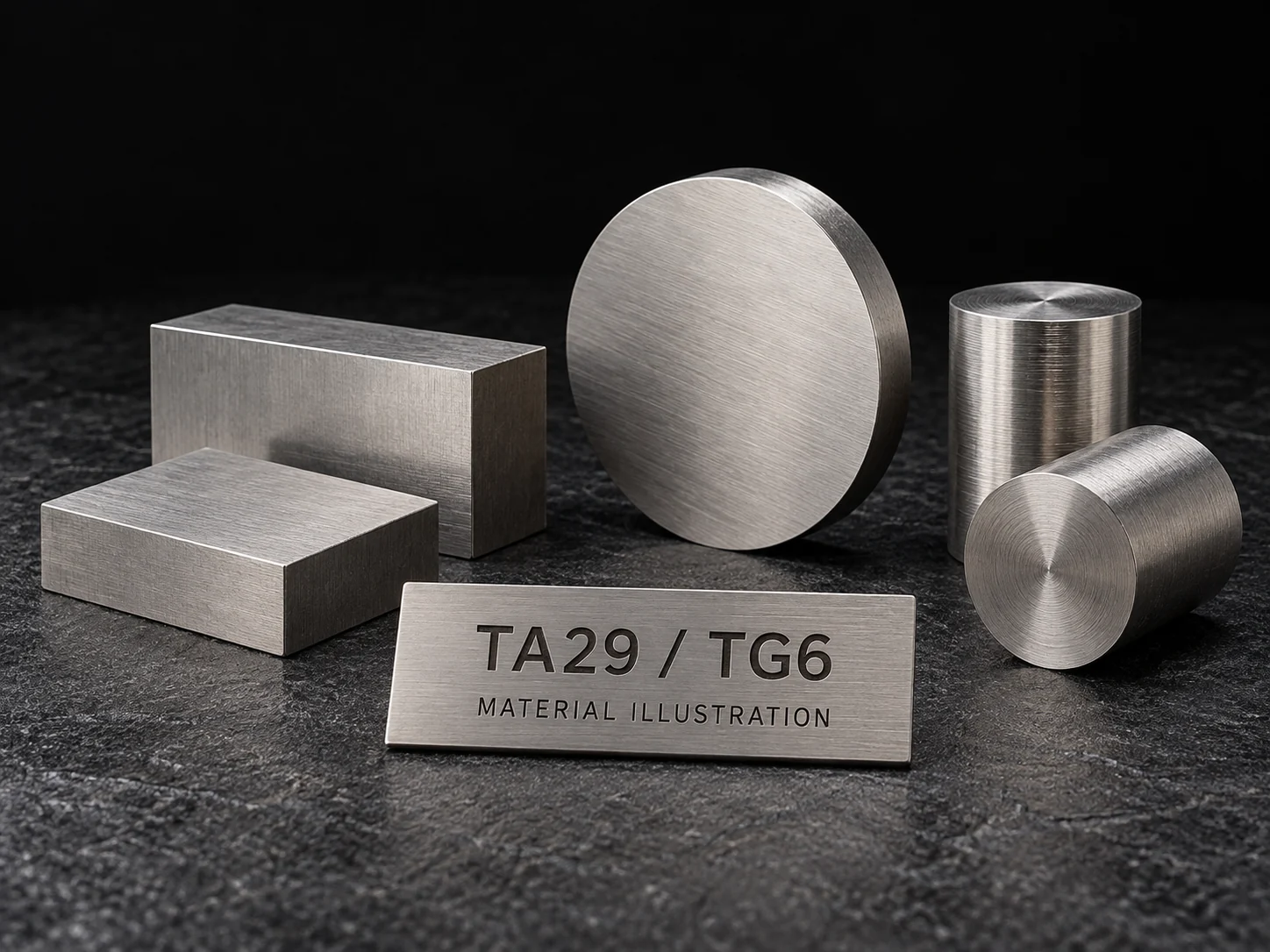
TA29 thermal-test stock
Representative stock for creep, thermal exposure and other approved qualification tests.
- Specification
- Approved grade-specific product specification, drawing revision and delivery condition; confirm supply feasibility.
- Size & delivery
- Specimen blanks, extraction positions, direction, quantity and retained reference material.
- Manufacturing review
- Match the tested heat, section and condition to the proposed production route.
- Inspection priorities
- Define test temperature, stress, duration, atmosphere and reporting; retain the full material and treatment history.
Images illustrate material forms and application possibilities. Reference markings identify specification options; they do not establish dual certification, stock availability or approval of finished equipment.
Define the shape. Share the service.
These details help turn a material enquiry into a comparable quotation.
01 / Drawing review
Compressor-disc development
Bar, billet and disc forging blanks to the approved development drawing. Agree location-specific testing, grain-flow review, internal examination and traceability through conversion.
Discuss your drawing02 / Drawing review
Integral-blisk forging stock
Disc blanks and drawing-based preforms with machining and test allowance. Define zone-specific samples, structure examination and acceptable variation before the forging envelope is fixed.
Discuss your drawing03 / Drawing review
Creep-controlled thermal duty
Same-heat bar or forging stock and dedicated thermal-test blanks. Document specimen orientation, condition, exposure history and measurement method; distinguish research comparisons from contractual minima.
Discuss your drawing02 / Material identity
What is TA29 titanium?
TA29, also reported as TG6, is a Chinese near-alpha titanium alloy developed for the 600 °C class of aero-engine material research. Its purchasing focus is the connection between high-temperature duty, forging microstructure and the component acceptance plan. Published development work covers bar and integral-blisk forgings. A temperature-class description is not a universal allowable service temperature, and research results do not certify a particular supplied heat.
Specify the exact standard edition, form and delivery condition. Nominal chemistry is only one part of an order; strength, microstructure, dimensional acceptance and traceability also need to be defined.
| Review item | Order basis | What to confirm |
|---|---|---|
| Thermal duty | Temperature, stress and exposure time | Use the approved design basis; a 600 °C development class is not a universal operating limit. |
| Creep response | Specified stress / temperature / duration | Define allowable strain and specimen basis separately from tensile acceptance. |
| Thermal stability | Properties after relevant exposure | Agree exposure schedule, post-exposure tests and representative material condition. |
| Forging zones | Hub, web, rim or blade-related regions | Locate samples and structure checks relative to the final component rather than using an unspecified forging average. |
| Surface and environment | Actual hot-service conditions | Review oxidation, cleanup allowance and finishing; no burn-resistance approval is implied. |
| Selected element · wt % | Reference composition |
|---|---|
| Aluminium · Al | 5.8 nominal |
| Tin · Sn | 4.0 nominal |
| Zirconium · Zr | 4.0 nominal |
| Niobium · Nb | 0.7 nominal |
| Tantalum · Ta | 1.5 nominal |
| Silicon · Si | 0.4 nominal |
| Carbon · C | 0.06 nominal |
| Titanium · Ti | Balance |
Nominal composition, wt %, reported in the cited BIAM research. These figures identify the alloy family; they are not acceptance limits. Order the complete TA29 chemistry specification, including impurities and analysis tolerances.
TA29 and TG6
Published Chinese research identifies TA29 with the TG6 development name. Put TA29, the ordered specification and its edition on the purchase order; retain TG6 as a search and drawing cross-reference.
TA29 and other high-temperature grades
TA33 / Ti60, IMI834 and Ti-1100 are separate alloys. Similar temperature-class discussion does not establish chemical or procurement equivalence.
Mill stock and engine hardware
A bar or forging blank is an input to an approved manufacturing route. Engine approval, life assessment and finished-part release remain separate requirements.
03 / Application priorities
TA29 in application.
Review each main use through its service conditions, material choice, manufacturing route and acceptance plan. These are sourcing discussions; approved drawings and qualification requirements govern the final component.
Application review / 01
Compressor-disc development
Disc material selection brings thermal duty together with cyclic loading. A TA29 enquiry should identify where the final part is hottest and where it carries the greatest stress.
Products & manufacturing
Bar, billet and disc forging blanks to the approved development drawing.
Service & design review
Provide speed and load envelopes, temperature distribution, transient conditions and the responsible design authority. State whether the order covers stock, a preform or a machined part.
Purchase & inspection priorities
Agree location-specific testing, grain-flow review, internal examination and traceability through conversion.
Application review / 02
Integral-blisk forging stock
A blisk combines a disc body with blade regions whose service demands can differ. The material order should preserve the distinction between the starting forging and the final machined geometry.
Products & manufacturing
Disc blanks and drawing-based preforms with machining and test allowance.
Service & design review
Identify blade, transition and disc zones, the intended microstructure strategy and the approved forging and thermal route. A published demonstration is not a qualification for another geometry.
Purchase & inspection priorities
Define zone-specific samples, structure examination and acceptable variation before the forging envelope is fixed.
Application review / 03
Creep-controlled thermal duty
A short tensile test cannot describe strain accumulated during sustained high-temperature loading. Creep requirements need their own agreed test conditions and acceptance criterion.
Products & manufacturing
Same-heat bar or forging stock and dedicated thermal-test blanks.
Service & design review
State stress, temperature, exposure time, allowable strain and whether the component sees dwell periods or changing loads. Tie the test to the approved design basis.
Purchase & inspection priorities
Document specimen orientation, condition, exposure history and measurement method; distinguish research comparisons from contractual minima.
Application review / 04
Thermal-stability evaluation
Exposure can change the balance of strength, ductility and microstructure. Qualification should examine the material after the exposure that matters to the component.
Products & manufacturing
Representative cut blanks and test material from the proposed forging section.
Service & design review
Define the exposure schedule and the properties to be measured afterwards, including any room-temperature ductility or toughness requirements.
Purchase & inspection priorities
Keep before-and-after samples traceable to the same heat and treatment lot and agree the structure and mechanical acceptance plan.
Application review / 05
Thermomechanical fatigue projects
Repeated starts, stops and temperature gradients introduce a different evaluation problem from constant-temperature strength. The relevant evidence depends on the actual component duty.
Products & manufacturing
Production-representative forging stock and fatigue-test blanks.
Service & design review
Provide the cyclic duty, dwell history, critical surfaces and whether assessment concerns material specimens or a component demonstration.
Purchase & inspection priorities
Agree test geometry, surface condition, sampling direction and reporting. Define how machining and surface treatment enter the qualification.
Application review / 06
High-temperature surface assessment
Oxidation and surface damage can affect the usable section and subsequent fatigue performance. Surface requirements belong alongside the bulk material specification.
Products & manufacturing
Bar, disc blanks and coupons with the agreed surface preparation.
Service & design review
State atmosphere, temperature, exposure duration, cleaning and any coating or finishing route. TA29 should not be presented as inherently burn-proof.
Purchase & inspection priorities
Specify the accepted surface state, removal allowance after thermal processing and any project-required exposure or surface examination.
Application review / 07
Machining of complex forged stock
Heavy stock removal can reveal distortion or alter the relationship between test material and the final section. A clear stock-to-part plan helps preserve useful acceptance evidence.
Products & manufacturing
Disc blanks, cut blocks and preforms with controlled datums.
Service & design review
Provide machining stages, critical wall sections and intermediate stress-relief requirements approved for the part. Identify the surfaces reserved for final inspection.
Purchase & inspection priorities
Agree dimensional checks at the contracted stage, residual allowance, identification transfer and any inspection repeated after machining.
Application review / 08
Qualification lots and repeat orders
A development lot becomes useful only when its process and test records can support a controlled repeat order. The purchase package should identify which features must remain consistent.
Products & manufacturing
Traceable billet, bar and representative test stock from the agreed route.
Service & design review
Freeze the material specification, processing stage, test plan and drawing revision. Review any proposed change in melt route, section size or heat treatment before production.
Purchase & inspection priorities
Require heat-to-piece records, test-location maps, nonconformance reporting and retention of the agreed qualification evidence.
Material references and applicable product standards are listed below. Select the delivery condition and acceptance plan for the specific product and approved application.
TA29 procurement checklist
Connect the application to the material order.
A useful specification connects the intended component, the supplied stock and the acceptance evidence. Share the drawing and known requirements first.
Define the application
Provide speed and load envelopes, temperature distribution, transient conditions and the responsible design authority. State whether the order covers stock, a preform or a machined part.
Define the supplied stage
Bar, billet and disc forging blanks to the approved development drawing. Distinguish raw stock, converted blanks and finished parts. Define who controls subsequent processing.
Define the acceptance evidence
Agree location-specific testing, grain-flow review, internal examination and traceability through conversion.
Example: a useful TA29 material enquiry
TA29 high-temperature alloy bar; required dimensions and quantity; standard and drawing revision; delivery condition; intended downstream process; mechanical, structural and dimensional acceptance; traceability, destination and required date.
Identify the approved product specification and any project-specific qualification. The grade designation and chemistry standard alone do not define component acceptance.
Discuss your material requirement ↗04 / Standards & documentation
Match the standard
to the product.
Choose the specification by product form, material condition and application. Identify the required edition on the order; a chemistry standard alone does not define product acceptance or application approval.
| Product / review | International / project route | Chinese reference | Clarify before quotation |
|---|---|---|---|
| Identity & chemistry | Approved product and project specification | GB/T 3620.1-2016View PDF ↗ | Review the complete chemical limits and product requirements; nominal alloy names do not establish automatic interchangeability. |
| TA29 / TG6 identification · BIAM review | TA29 / TG6 identification · BIAM reviewPublisher reference ↗ | Compare the complete ordered Chinese requirements | Journal of Aeronautical Materials, 2024. Identifies TA29 / TG6 in the high-temperature alloy development context; no direct foreign equivalence is implied. |
| TA29 bar and blisk development · BIAM | TA29 bar and blisk development · BIAMPublisher reference ↗ | Compare the complete ordered Chinese requirements | Journal of Materials Engineering, 2016. Primary research on high-temperature titanium development and TA29 bar/blisk processing. |
| TA29 dual-microstructure blisk research | TA29 dual-microstructure blisk researchPublisher reference ↗ | Compare the complete ordered Chinese requirements | Journal of Materials Engineering, 2018. Supports zone-specific structure and forging discussion; reported results are not delivery guarantees. |
| Drawing-based blanks & parts | Approved drawing and controlled manufacturing plan | Agreed product / project specification | Define the supply stage, conversion route, heat treatment, structure, NDT, dimensions and traceability. Material certification is separate from finished component qualification. |
Agree the order basis.
The purchase order must identify the required revision, grade, product form, condition and inspection. Reference documents do not replace design approval, manufacturing qualification or application-specific acceptance.
Request the controlled specification revision for your order. Any substitution, equivalence or dual-certification claim requires a documented comparison and agreement.
05 / Order coordination
Know the scope
before ordering.
Our founder’s 20 years in titanium inform the questions we ask before quotation and the supply options we review with you.
A quotation you can evaluate
Agree the grade, standard edition, dimensions, tolerance, condition and quantity before comparing prices.
- Identify whether inspection, samples and tooling are included.
- Confirm packaging, transport and delivery terms.
- Record items that still need technical confirmation.
Acceptance agreed before supply
Confirm material identity, delivery condition, heat-to-piece traceability, dimensional checks and required testing before production. For converted parts, define inspection after forging, heat treatment and machining, including the specified microstructure and NDT scope.
Independent inspection can be discussed with its scope, timing, acceptance criteria and cost agreed for the order.
Delivery with clear milestones
Review the proposed lead time, approvals, production sequence and dispatch requirements. For several product forms, coordinate document and packing readiness together.
Material substitutions and technical changes require written approval. A schedule deviation should identify the impact, decisions needed and next steps.
One contact when an issue arises
Contact TiHubs with the order reference, affected items and supporting photos or inspection records.
We record the issue, review it against the agreed requirements and coordinate the next steps with the relevant manufacturing parties.
01 / Material identity
Material records
Grade, standard, test results and heat or batch identity matched to the supplied items.
02 / Agreed acceptance
Inspection records
Dimensional and testing records for the agreed scope, including critical drawing requirements.
03 / Ready for dispatch
Dispatch records
Item identification, packing list, protective packaging and required shipment documents.
06 / Questions before sourcing
Before you specify
TA29 / TG6.
A clear material designation is the beginning. Product form, specification revision, material condition and acceptance complete the requirement.
A useful first enquiry
- Product and specificationProduct form, standard edition, dimensions and material condition.
- Order and deliveryQuantity, destination and any required delivery date.
- Acceptance requirementsDrawing revision, inspection, certificates and packaging.
Not every detail is finalized? Send the information you have. We can help identify the questions to resolve before quotation.
What happens next: requirement review, technical clarification, then a supply proposal and quotation.
Are TA29 and TG6 used for the same alloy?
The cited research identifies TA29 with the TG6 development name. Use the exact ordered specification and revision to resolve the complete composition and acceptance requirements.
Is TA29 equivalent to a common ASTM grade?
No direct ASTM or US grade equivalence is asserted here. Comparable high-temperature use does not make different alloys interchangeable.
Does 600 °C mean every TA29 part can operate there?
No. It is a research and development temperature class. Stress, duration, atmosphere, geometry, condition and the approved design-property basis determine suitability.
Which forms are the first enquiry priority?
Bar, forging billet and disc or preform stock. Availability and processing scope must be reviewed against the drawing and inspection plan.
Can a tensile certificate replace creep testing?
No. Where creep is an acceptance requirement, specify its temperature, stress, duration, specimen basis and allowable result separately.
Does the page offer certified finished blisks?
The page concerns material and forging-stock enquiries. Finished engine hardware requires its own manufacturing, inspection and approval route.
Why specify sample positions in a forging?
Hub, web, rim and blade-related regions may have different section and processing histories. Sampling should represent the zones required by the approved design.
Is TA29 a burn-resistant titanium alloy?
This page makes no burn-resistance qualification. Temperature capability, oxidation behaviour and titanium-fire evaluation are different questions.
What should I send for a TA29 quotation?
Send the product stage, drawing, dimensions, quantity, specification editions, thermal duty, treatment condition, test locations, NDT scope and delivery destination.
07 / Your next step
Start with the
requirement you have.
Send the product details, drawing or operating conditions you already know. We will identify missing information and discuss a suitable supply route before quotation.
- Requirement review
- Technical clarification
- Supply proposal and quotation
Combine materials and parts in one enquiry.
Send one list of TA29 forms, sizes and quantities. Include drawing revisions, material conditions and items that must be supplied or dispatched together.
Share the service and acceptance priorities.
Include load and temperature conditions, critical sections, required material records, process qualification, inspection, destination and timing.
Baoji, China · info@tihubs.com
Start your TA29 / TG6 enquiry
Send your material form, drawing or process conditions. We will help clarify the remaining requirements.