Baoji High-tech Zone, ChinaTitanium sourcing · One contact


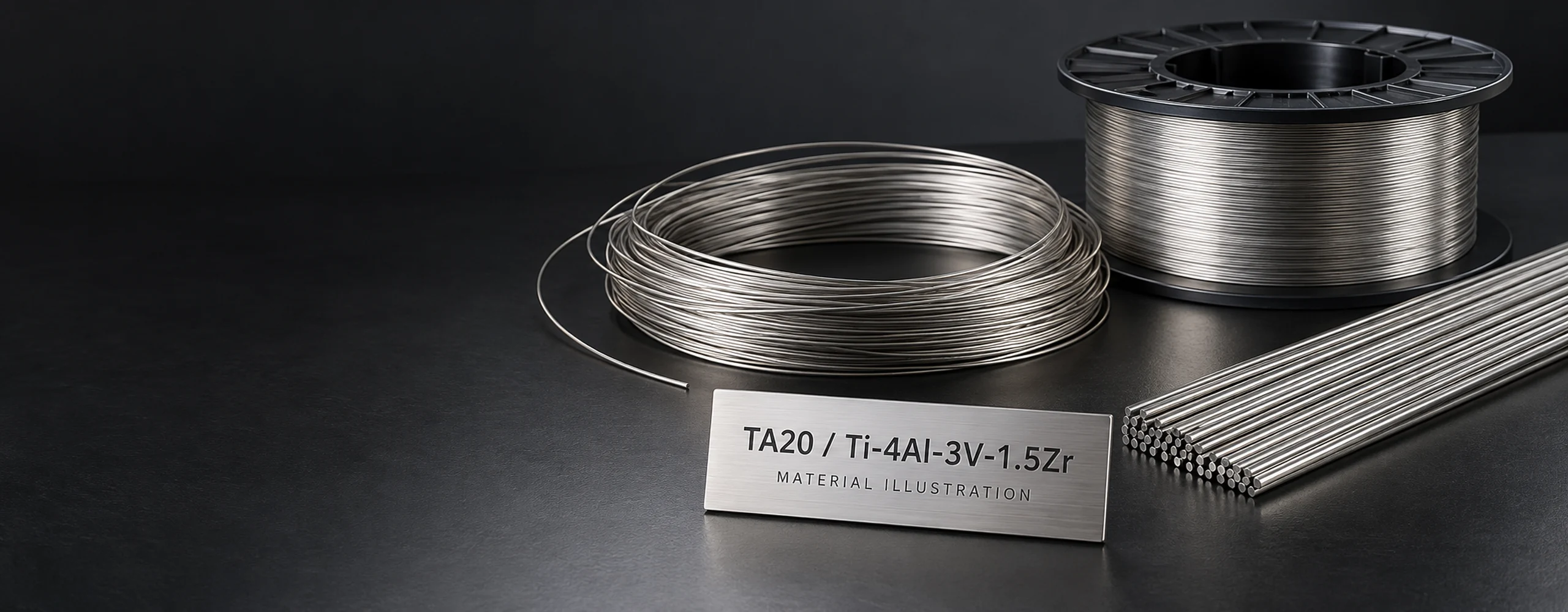
TA20 Titanium Alloy Welding Wire · Titanium alloy welding filler
TA20 Titanium Alloy Welding Wire. Filler wire specified for the joint.
Source TA20 welding wire in coils, spools or straight lengths. Define the approved welding procedure, feed format and cleanliness requirements before selecting the supply lot.
Start with a specification, drawing or application. We’ll help identify the details still needed.
Material review. Supply coordination.
One contact in Baoji, China.
TA20 Titanium Alloy Welding WireTi-4Al-3V-1.5Zr · nominal wt %
Titanium alloy welding fillerWelding filler, feed consistency & joint qualification
One contact20 years of founder experience · 100+ Baoji factories
01 / Product forms
Find your TA20 product.
Choose a material form or application. Send the dimensions, service conditions and required records so we can match the manufacturing route to your order.
01 / 06
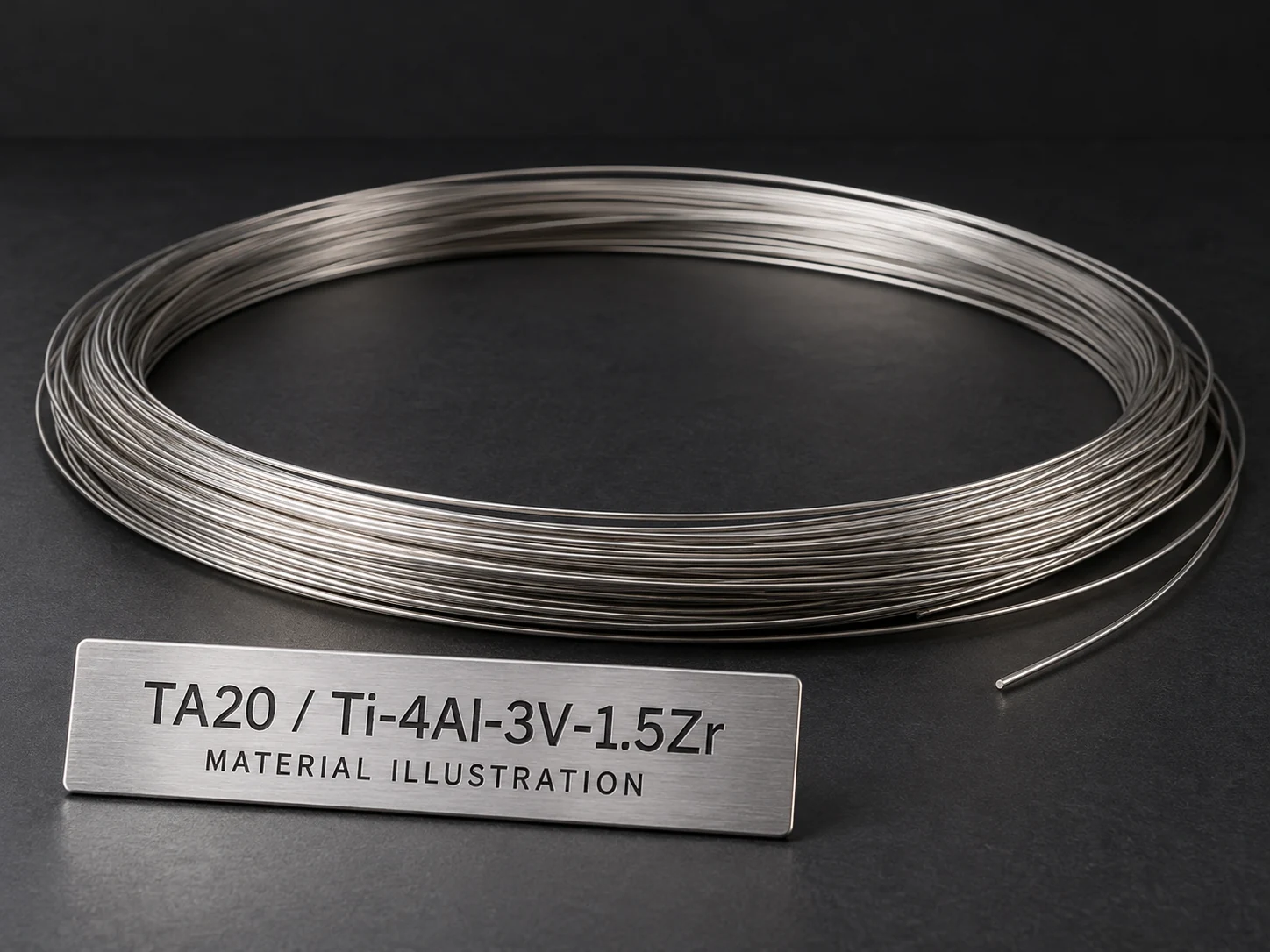
TA20 Titanium Alloy Welding Wire
TA20 welding-wire coils
Loose coils for conversion or a feed system with an agreed payoff arrangement.
- Specification
- Approved TA20 filler specification and welding procedure; define chemical and surface acceptance.
- Size & delivery
- Wire diameter and ovality, coil inner and outer diameter, unit mass and usable length.
- Manufacturing review
- Clarify whether the receiving process will respool, straighten or feed the coil directly.
- Inspection priorities
- Surface condition, freedom from tangles, lot segregation and package integrity.
02 / 06
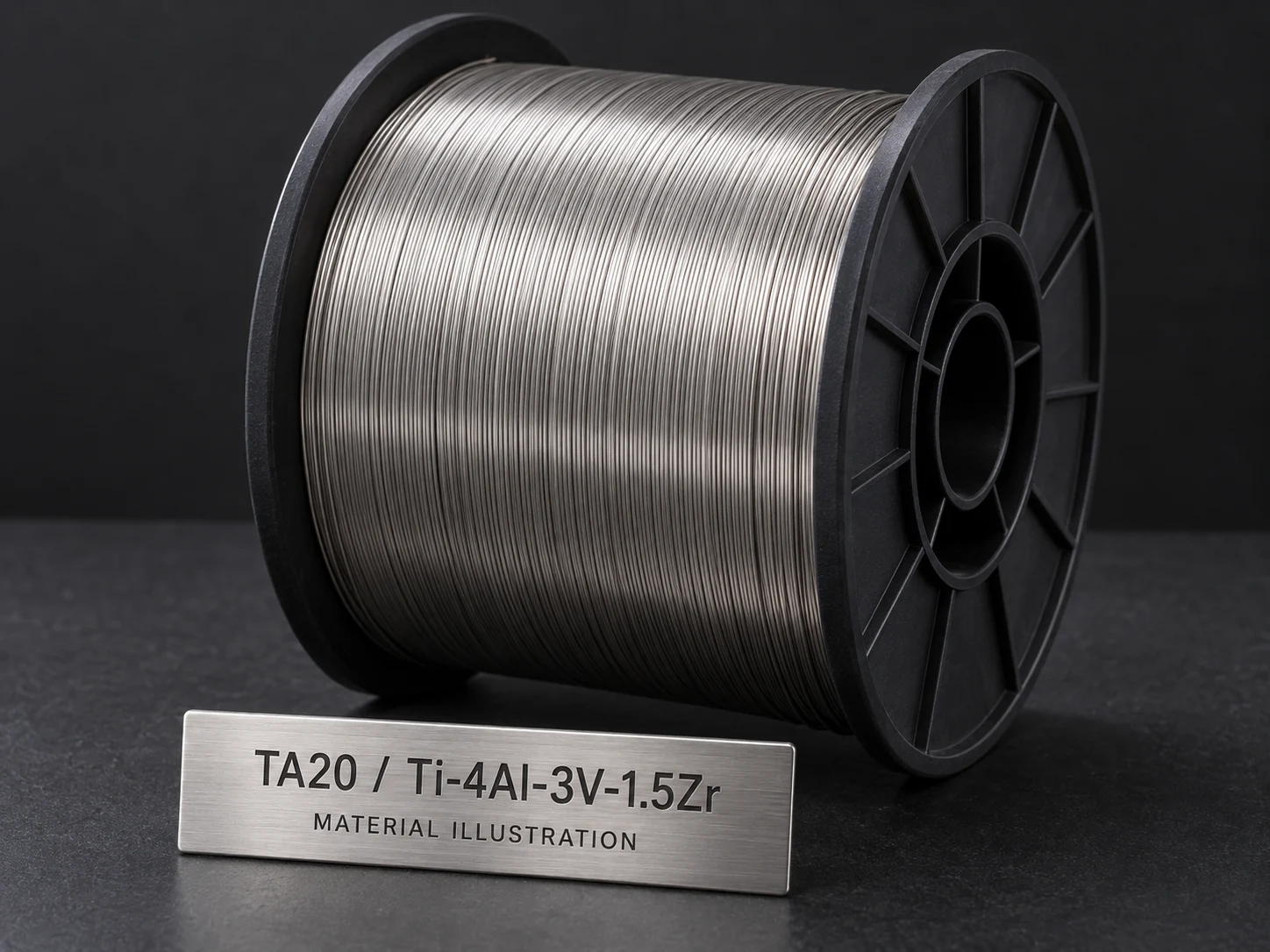
TA20 Titanium Alloy Welding Wire
TA20 machine-feed spools
Spool-mounted filler for a specified mechanized feeding setup.
- Specification
- Approved grade-specific product specification, drawing revision and delivery condition; confirm supply feasibility.
- Size & delivery
- Spool drawing, bore and flange dimensions, wire diameter, net mass and winding direction.
- Manufacturing review
- Review payoff tension, cast and helix, crossover control and compatibility with the feeder.
- Inspection priorities
- Winding quality, stable feed during the agreed trial, identification and protected ends.
03 / 06
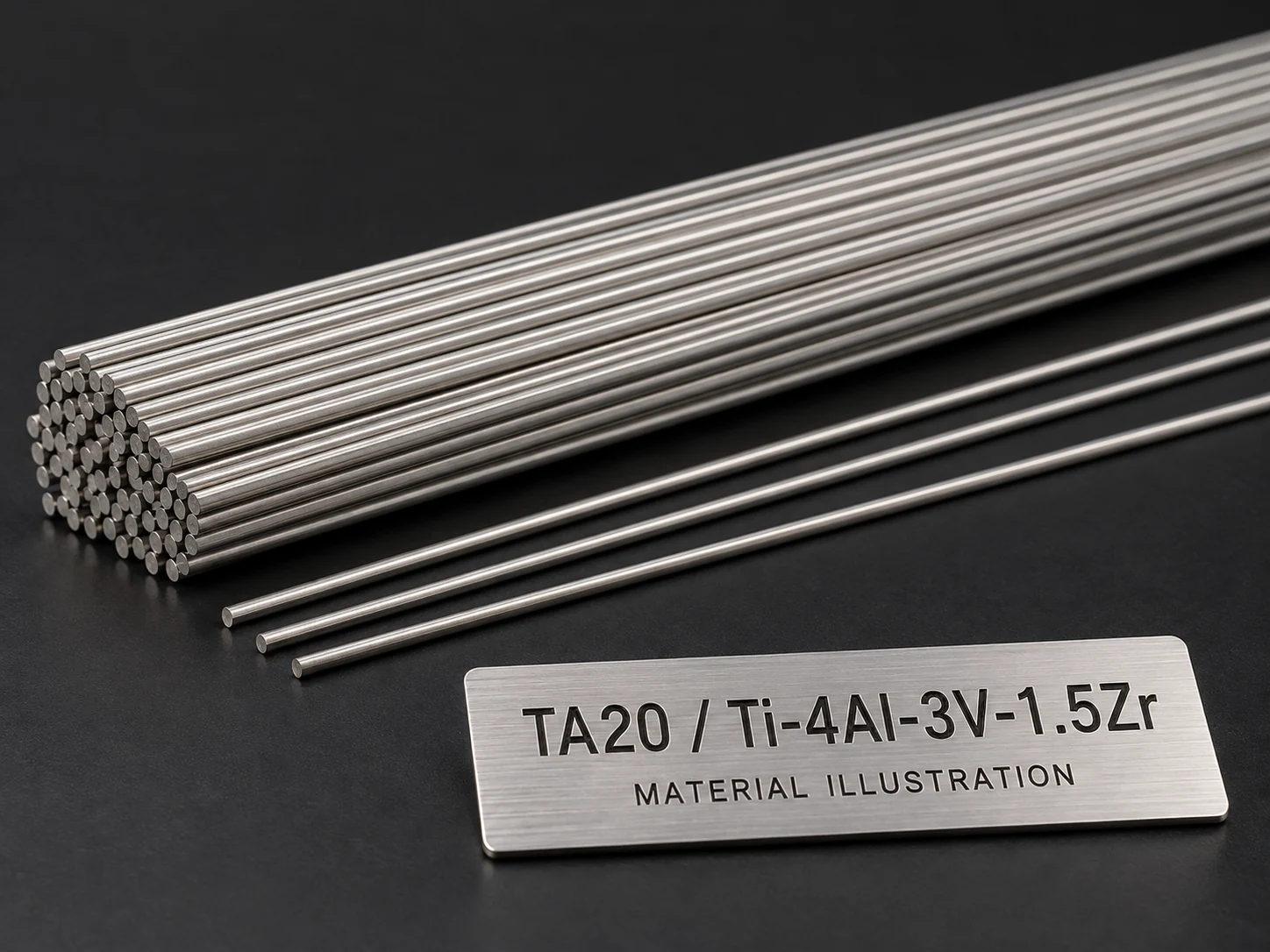
TA20 Titanium Alloy Welding Wire
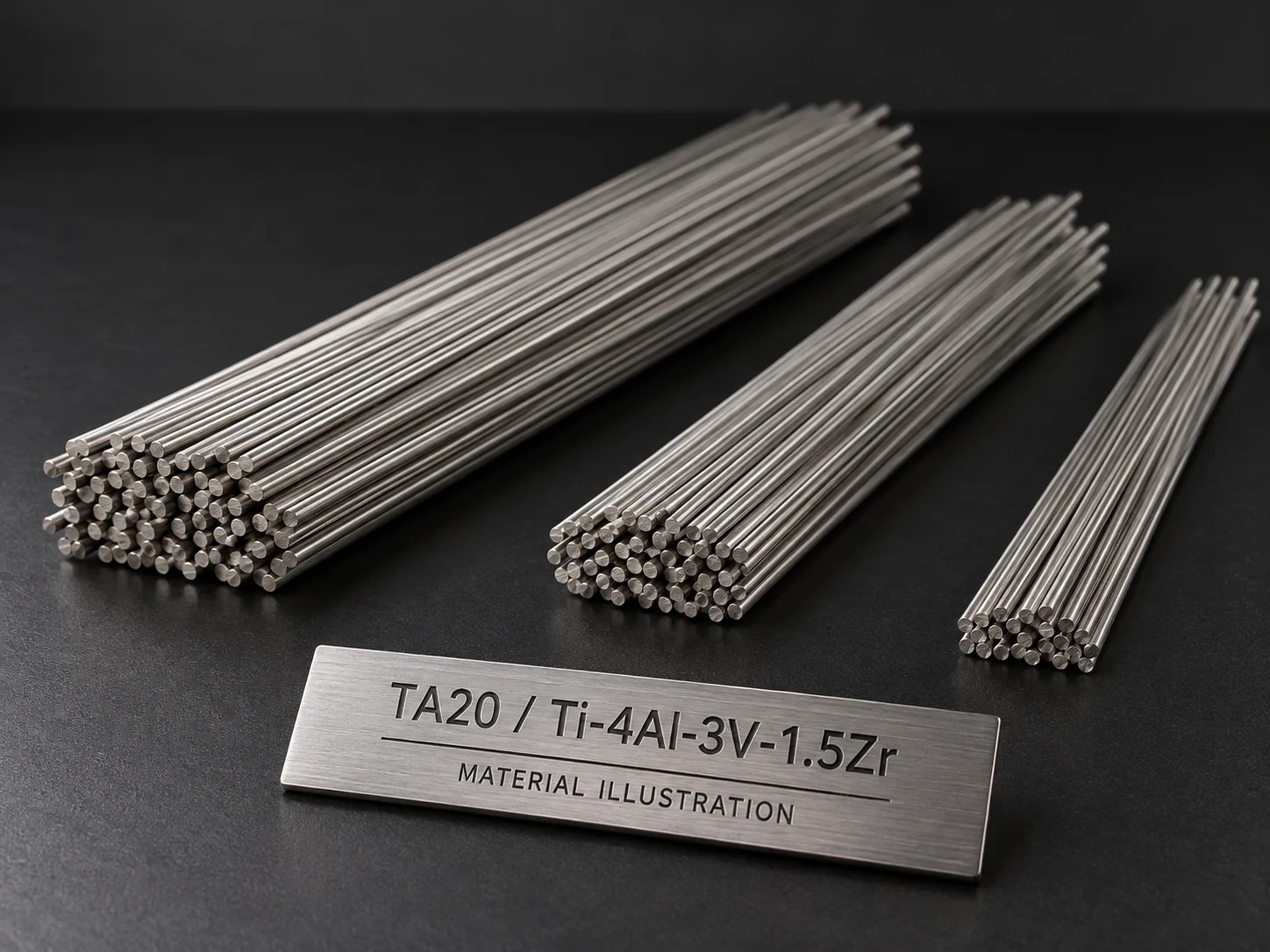
TA20 straight TIG filler rods
Straight filler lengths for manual or mechanized TIG operations under the approved procedure.
- Specification
- Approved grade-specific product specification, drawing revision and delivery condition; confirm supply feasibility.
- Size & delivery
- Diameter, rod length, straightness, end condition and bundle quantity.
- Manufacturing review
- Coordinate rod handling, cleaning and storage with the welding procedure.
- Inspection priorities
- Surface cleanliness, diameter, end burrs and heat/lot identification.
04 / 06
TA20 Titanium Alloy Welding Wire
TA20 cut filler lengths
Shorter cut pieces for constrained access or a defined production cell.
- Specification
- Approved grade-specific product specification, drawing revision and delivery condition; confirm supply feasibility.
- Size & delivery
- Cut length, length tolerance, end preparation, quantity and packaging increments.
- Manufacturing review
- Review cutting and cleaning sequence so preparation does not introduce contamination.
- Inspection priorities
- Length consistency, burrs, surface damage and traceability after subdivision.
05 / 06
TA20 Titanium Alloy Welding Wire
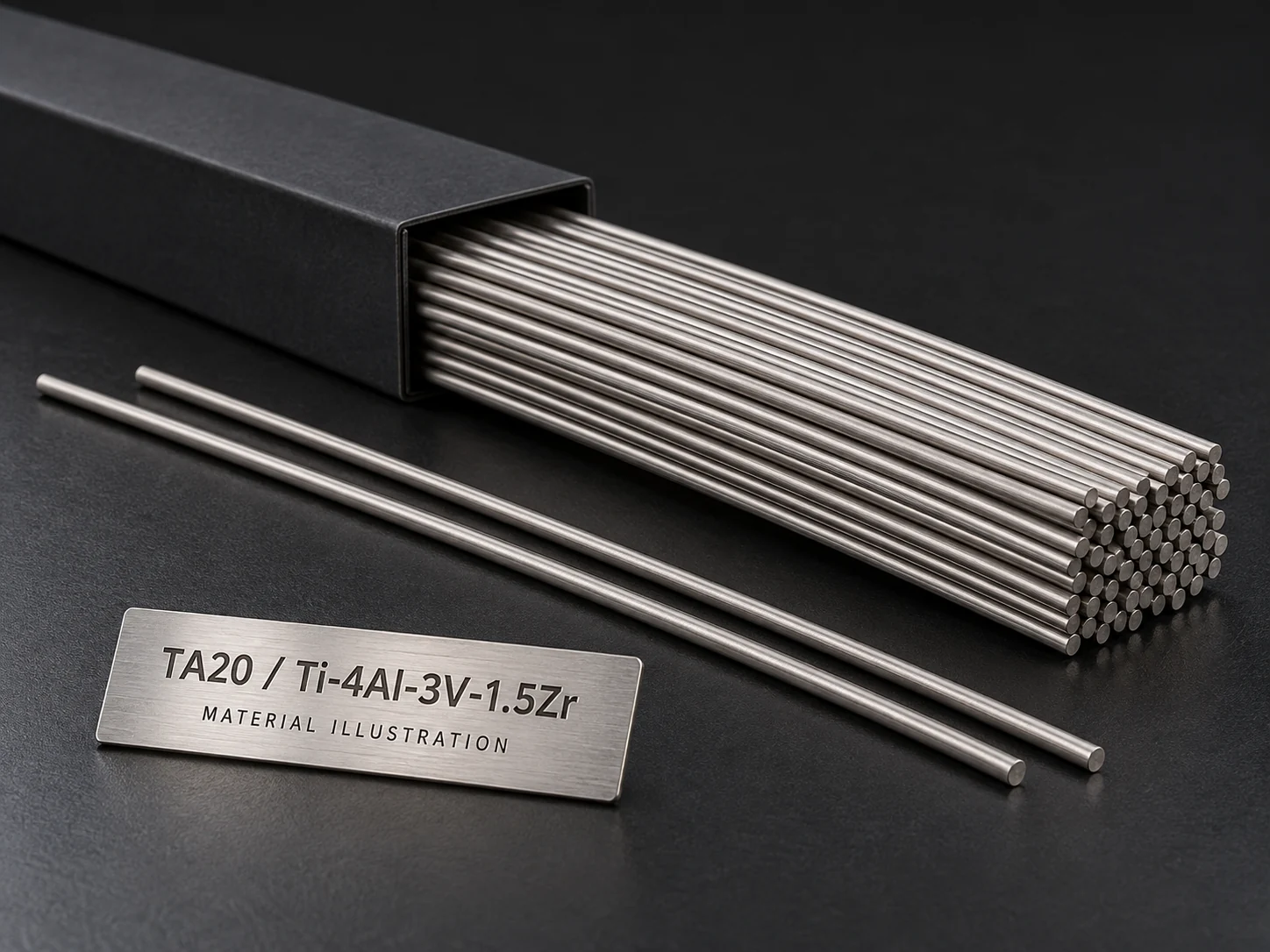
TA20 protected rod bundles
Separated, labelled bundles where the receiving workflow requires small controlled issue quantities.
- Specification
- Approved grade-specific product specification, drawing revision and delivery condition; confirm supply feasibility.
- Size & delivery
- Rod dimensions, count per bundle, protective sleeve or container and label fields.
- Manufacturing review
- Agree how opened bundles are stored and how different heats are kept apart.
- Inspection priorities
- Correct labels, sealed condition, clean contact materials and reconciliation to certificates.
06 / 06
TA20 Titanium Alloy Welding Wire
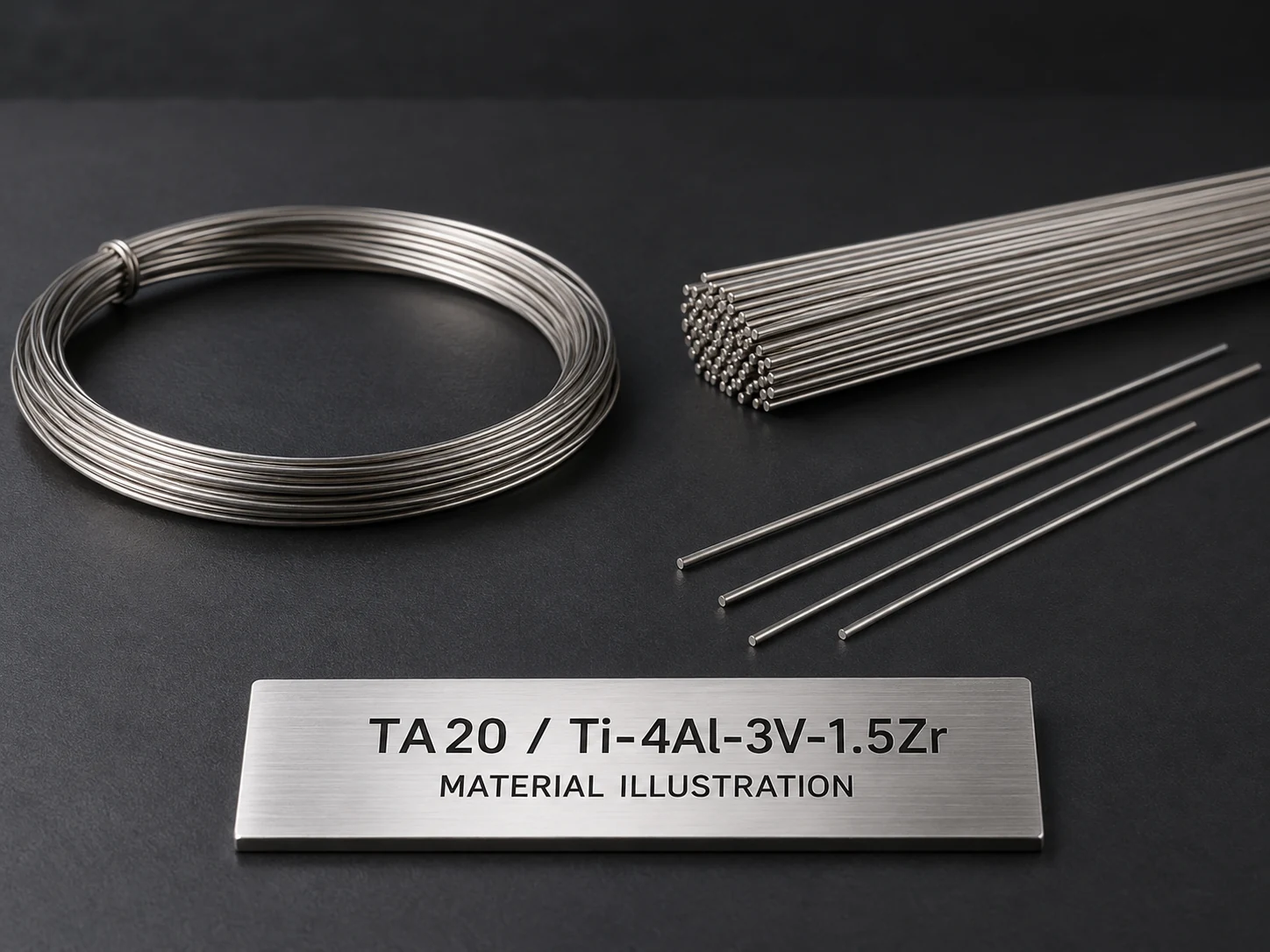
TA20 qualification wire samples
Representative filler samples reserved for welding trials and incoming verification.
- Specification
- Approved grade-specific product specification, drawing revision and delivery condition; confirm supply feasibility.
- Size & delivery
- Actual production diameter and format, sample quantity and retained-sample requirement.
- Manufacturing review
- Define parent material, joint geometry and the intended trial before selecting the sample lot.
- Inspection priorities
- Link sample chemistry, surface route and thermal condition to the proposed production supply.
Images illustrate material forms and application possibilities. Reference markings identify specification options; they do not establish dual certification, stock availability or approval of finished equipment.
Define the shape. Share the service.
These details help turn a material enquiry into a comparable quotation.
01 / Drawing review
Procedure-qualified titanium joints
Coiled wire, spools or straight rods selected for the approved welding process. Agree filler certification and the procedure-qualification evidence separately from completed-weld acceptance.
Discuss your drawing02 / Drawing review
Mechanized wire feeding
Machine-feed spools, or loose coils for an agreed payoff system. Use a representative payoff trial where required; record tangles, crossovers, slippage and surface damage.
Discuss your drawing03 / Drawing review
Manual TIG access
Straight TIG rods and drawing-defined cut lengths. Check straightness and ends; protect cleaned filler from contact with unsuitable surfaces before use.
Discuss your drawing02 / Material identity
What is TA20 titanium?
TA20 is a Chinese titanium-alloy welding-wire designation associated with Ti-4Al-3V-1.5Zr. Its procurement task is different from buying structural bar or general-purpose wire: the filler must match the approved parent-material and joining procedure. Published research identifies TA20 as an established filler, while also explaining why it cannot automatically deliver matching strength for every high-strength parent alloy.
Specify the exact standard edition, form and delivery condition. Nominal chemistry is only one part of an order; strength, microstructure, dimensional acceptance and traceability also need to be defined.
| Review item | Order basis | What to confirm |
|---|---|---|
| Filler identity | Approved filler specification | Verify full TA20 chemistry and impurity limits; a general mill-wire certificate is not sufficient by itself. |
| Feed behavior | Machine-specific delivery format | Define diameter, ovality, cast, helix, spool interfaces and acceptable payoff behavior. |
| Surface and handling | Welding cleanliness plan | Agree surface condition, protected packaging, storage and any allowed reconditioning. |
| Joint performance | Qualified welding procedure | Separate filler release from weld strength, ductility, toughness and joint examination. |
| Consumable traceability | Heat-to-package-to-joint records | Keep package IDs, opened-lot controls and retained samples connected to the welding job. |
| Selected element · wt % | Reference composition |
|---|---|
| Aluminium · Al | 4 nominal |
| Vanadium · V | 3 nominal |
| Zirconium · Zr | 1.5 nominal |
| Titanium · Ti | Balance |
Nominal composition, wt %, identifies the TA20 alloy family. It is not a substitute for the complete ordered filler specification, impurity limits and certified heat analysis.
TA20 and general titanium wire
A mill-wire grade or product standard does not by itself establish approved welding-filler use. Order the exact filler identity, condition and inspection requirements.
TA20 and Ti-6Al-4V filler
These are different nominal chemistries. A change in filler can change deposited-metal and joint behavior; the welding authority must approve any substitution.
Parent metal and filler acceptance
A certificate for the filler establishes incoming material evidence. Weld-procedure qualification, shielding, operator control and joint inspection remain separate.
United States reference
No direct US filler classification is claimed here. Supply the specified classification or approved procedure for a documented comparison.
03 / Application priorities
TA20 in application.
Review each main use through its service conditions, material choice, manufacturing route and acceptance plan. These are sourcing discussions; approved drawings and qualification requirements govern the final component.
Application review / 01
Procedure-qualified titanium joints
TA20 should enter a welding procedure as a specified filler, with the parent material and required joint properties already identified. Selecting wire by nominal chemistry alone leaves the most important joining questions unresolved.
Products & manufacturing
Coiled wire, spools or straight rods selected for the approved welding process.
Service & design review
Provide parent grades and conditions, thicknesses, joint geometry, restraint, service and any post-weld treatment.
Purchase & inspection priorities
Agree filler certification and the procedure-qualification evidence separately from completed-weld acceptance.
Application review / 02
Mechanized wire feeding
A stable wire supply helps the welding cell maintain a repeatable feed path. Diameter alone does not describe whether a spool will run reliably through the actual equipment.
Products & manufacturing
Machine-feed spools, or loose coils for an agreed payoff system.
Service & design review
Supply spool interfaces, guide path, feed speed range, allowable cast and helix and the handling sequence.
Purchase & inspection priorities
Use a representative payoff trial where required; record tangles, crossovers, slippage and surface damage.
Application review / 03
Manual TIG access
Manual filler handling favors clear rod identification and a practical length for the joint access. Long exposed rods or mixed bundles can undermine an otherwise controlled welding operation.
Products & manufacturing
Straight TIG rods and drawing-defined cut lengths.
Service & design review
Define access restrictions, rod handling, clean working length and the operator issue quantity.
Purchase & inspection priorities
Check straightness and ends; protect cleaned filler from contact with unsuitable surfaces before use.
Application review / 04
Multi-pass and thick joints
A filler that performs acceptably in one test joint may not establish the strength of a thicker multi-pass assembly. Published TA20 background specifically cautions against assuming strength matching for every high-strength titanium alloy.
Products & manufacturing
Procedure-approved filler in the required feeding format, with retained samples.
Service & design review
Review dilution, pass sequence, heat input, interpass practice and the full thermal history with the welding authority.
Purchase & inspection priorities
Specify joint strength, ductility, toughness and examination requirements for representative qualification material.
Application review / 05
Contamination-sensitive fabrication
Titanium filler cleanliness must be controlled from preparation through the welding station. A bright appearance alone cannot establish acceptable interstitial content or freedom from harmful residues.
Products & manufacturing
Protected rods or sealed spools with documented handling.
Service & design review
State the required chemical limits, cleaning acceptance, storage conditions and any permitted reconditioning procedure.
Purchase & inspection priorities
Review full heat analysis, surface condition and packaging; qualify any cleaning change before production.
Application review / 06
Weld-development trials
A useful trial reproduces the actual wire diameter, delivery format and lot condition. A convenient sample from a different processing route may answer the wrong question.
Products & manufacturing
Representative wire samples and small identified spool or rod lots.
Service & design review
Define the test joint, sample plan, laboratory requirements and the decision that the trial must support.
Purchase & inspection priorities
Keep filler, parent metal, weld parameters and test results connected in one qualification record.
Application review / 07
Repair and restricted-access work
A repair needs the responsible engineering authority to specify the filler and allowable process. TA20 availability does not itself approve a repair to a structural or pressure component.
Products & manufacturing
Short cut filler or clean rod bundles, subject to the approved repair procedure.
Service & design review
Supply the parent-material history, defect-removal scope, remaining wall, access and final inspection plan.
Purchase & inspection priorities
Separate material release from repair authorization and completed-component acceptance.
Application review / 08
Lot-controlled welding consumables
Several small packages may be consumed across shifts, cells or sites. The material-control plan should make it possible to trace a welded assembly to the filler lot without relying on a loose outer label.
Products & manufacturing
Labelled spools, protected bundles and retained wire samples.
Service & design review
Specify package numbering, issue records, opened-package handling and rules against mixing lots.
Purchase & inspection priorities
Reconcile heat certificates, package labels, issued quantities and retained samples before closing the job.
Material references and applicable product standards are listed below. Select the delivery condition and acceptance plan for the specific product and approved application.
TA20 procurement checklist
Connect the application to the material order.
A useful specification connects the intended component, the supplied stock and the acceptance evidence. Share the drawing and known requirements first.
Define the application
Provide parent grades and conditions, thicknesses, joint geometry, restraint, service and any post-weld treatment.
Define the supplied stage
Coiled wire, spools or straight rods selected for the approved welding process. Distinguish raw stock, converted blanks and finished parts. Define who controls subsequent processing.
Define the acceptance evidence
Agree filler certification and the procedure-qualification evidence separately from completed-weld acceptance.
Example: a useful TA20 material enquiry
TA20 welding-wire coils; required dimensions and quantity; standard and drawing revision; delivery condition; intended downstream process; mechanical, structural and dimensional acceptance; traceability, destination and required date.
Identify the approved product specification and any project-specific qualification. The grade designation and chemistry standard alone do not define component acceptance.
Discuss your material requirement ↗04 / Standards & documentation
Match the standard
to the product.
Choose the specification by product form, material condition and application. Identify the required edition on the order; a chemistry standard alone does not define product acceptance or application approval.
| Product / review | International / project route | Chinese reference | Clarify before quotation |
|---|---|---|---|
| Identity & chemistry | Approved product and project specification | GB/T 3620.1-2016View PDF ↗ | Review the complete chemical limits and product requirements; nominal alloy names do not establish automatic interchangeability. |
| TA20 welding-filler background · CN100393473C | TA20 welding-filler background · CN100393473CPublisher reference ↗ | Compare the complete ordered Chinese requirements | The 2008 patent identifies TA20 in its background. Its newly invented Mo/Nb/Hf-bearing filler is a different composition; its reported results are not TA20 guarantees. |
| Drawing-based blanks & parts | Approved drawing and controlled manufacturing plan | Agreed product / project specification | Define the supply stage, conversion route, heat treatment, structure, NDT, dimensions and traceability. Material certification is separate from finished component qualification. |
Agree the order basis.
The purchase order must identify the required revision, grade, product form, condition and inspection. Reference documents do not replace design approval, manufacturing qualification or application-specific acceptance.
Request the controlled specification revision for your order. Any substitution, equivalence or dual-certification claim requires a documented comparison and agreement.
05 / Order coordination
Know the scope
before ordering.
Our founder’s 20 years in titanium inform the questions we ask before quotation and the supply options we review with you.
A quotation you can evaluate
Agree the grade, standard edition, dimensions, tolerance, condition and quantity before comparing prices.
- Identify whether inspection, samples and tooling are included.
- Confirm packaging, transport and delivery terms.
- Record items that still need technical confirmation.
Acceptance agreed before supply
Confirm filler identity, delivery condition, heat-to-package traceability, diameter and surface results before production. Define coil, spool or straight-rod acceptance, cleanliness, protected handling and any procedure-specific weld tests in the order.
Independent inspection can be discussed with its scope, timing, acceptance criteria and cost agreed for the order.
Delivery with clear milestones
Review the proposed lead time, approvals, production sequence and dispatch requirements. For several product forms, coordinate document and packing readiness together.
Material substitutions and technical changes require written approval. A schedule deviation should identify the impact, decisions needed and next steps.
One contact when an issue arises
Contact TiHubs with the order reference, affected items and supporting photos or inspection records.
We record the issue, review it against the agreed requirements and coordinate the next steps with the relevant manufacturing parties.
01 / Material identity
Material records
Grade, standard, test results and heat or batch identity matched to the supplied items.
02 / Agreed acceptance
Inspection records
Dimensional and testing records for the agreed scope, including critical drawing requirements.
03 / Ready for dispatch
Dispatch records
Item identification, packing list, protective packaging and required shipment documents.
06 / Questions before sourcing
Before you specify
TA20 Titanium Alloy Welding Wire.
A clear material designation is the beginning. Product form, specification revision, material condition and acceptance complete the requirement.
A useful first enquiry
- Product and specificationProduct form, standard edition, dimensions and material condition.
- Order and deliveryQuantity, destination and any required delivery date.
- Acceptance requirementsDrawing revision, inspection, certificates and packaging.
Not every detail is finalized? Send the information you have. We can help identify the questions to resolve before quotation.
What happens next: requirement review, technical clarification, then a supply proposal and quotation.
What is TA20 welding wire?
TA20 is a Chinese titanium-alloy filler designation associated with nominal Ti-4Al-3V-1.5Zr. Order the complete filler specification and approved joining requirements.
Is TA20 the same as Ti-6Al-4V wire?
No. The nominal compositions differ, and a filler substitution requires a documented welding-procedure review.
Does TA20 match the strength of every titanium parent alloy?
No. Joint strength depends on filler, dilution, procedure and heat treatment. Published background notes limitations when TA20 is used with some high-strength parent alloys.
Which delivery format should I choose?
Use spools or coils for a compatible feed system, and straight or cut rods for the approved manual process. State machine and handling requirements in the RFQ.
Can a general mill-wire certificate qualify welding use?
Not by itself. The ordered filler specification, chemical limits, condition, surface acceptance and welding procedure must all be addressed.
What spool information is needed?
Provide the spool drawing or standard, bore and flange dimensions, net mass, winding direction, wire diameter and any cast or helix limits.
Is visible brightness enough to accept the wire?
No. Review quantitative chemistry, cleanliness criteria, surface integrity and protected handling, rather than appearance alone.
Can small quantities be supplied for a weld trial?
A trial-lot enquiry can be reviewed. Specify the actual production diameter, format and qualification scope; availability and minimum quantity are confirmed per order.
What should a TA20 RFQ contain?
Include parent material, approved filler specification and procedure, wire dimensions and format, quantity, surface and packaging requirements, tests and destination.
07 / Your next step
Start with the
requirement you have.
Send the product details, drawing or operating conditions you already know. We will identify missing information and discuss a suitable supply route before quotation.
- Requirement review
- Technical clarification
- Supply proposal and quotation
Combine materials and parts in one enquiry.
Send one list of TA20 forms, sizes and quantities. Include drawing revisions, material conditions and items that must be supplied or dispatched together.
Share the service and acceptance priorities.
Include load and temperature conditions, critical sections, required material records, process qualification, inspection, destination and timing.
Baoji, China · info@tihubs.com
Start your TA20 Titanium Alloy Welding Wire enquiry
Send your material form, drawing or process conditions. We will help clarify the remaining requirements.