Baoji High-tech Zone, ChinaTitanium sourcing · One contact



TA17 / Ti-4Al-2V · Marine titanium alloy
TA17 / Ti-4Al-2V. Plate for welded marine structures.
Source TA17 sheet, plate and cut blanks for non-pressure-bearing marine fabrications, with rolling direction, forming condition and weld preparation defined from the drawing.
Start with a specification, drawing or application. We’ll help identify the details still needed.
Material review. Supply coordination.
One contact in Baoji, China.
TA17 / Ti-4Al-2VTi-4Al-2V · nominal wt %
Marine titanium alloyNon-pressure-bearing marine sheet structures
One contact20 years of founder experience · 100+ Baoji factories
01 / Product forms
Find your TA17 product.
Choose a material form or application. Send the dimensions, service conditions and required records so we can match the manufacturing route to your order.
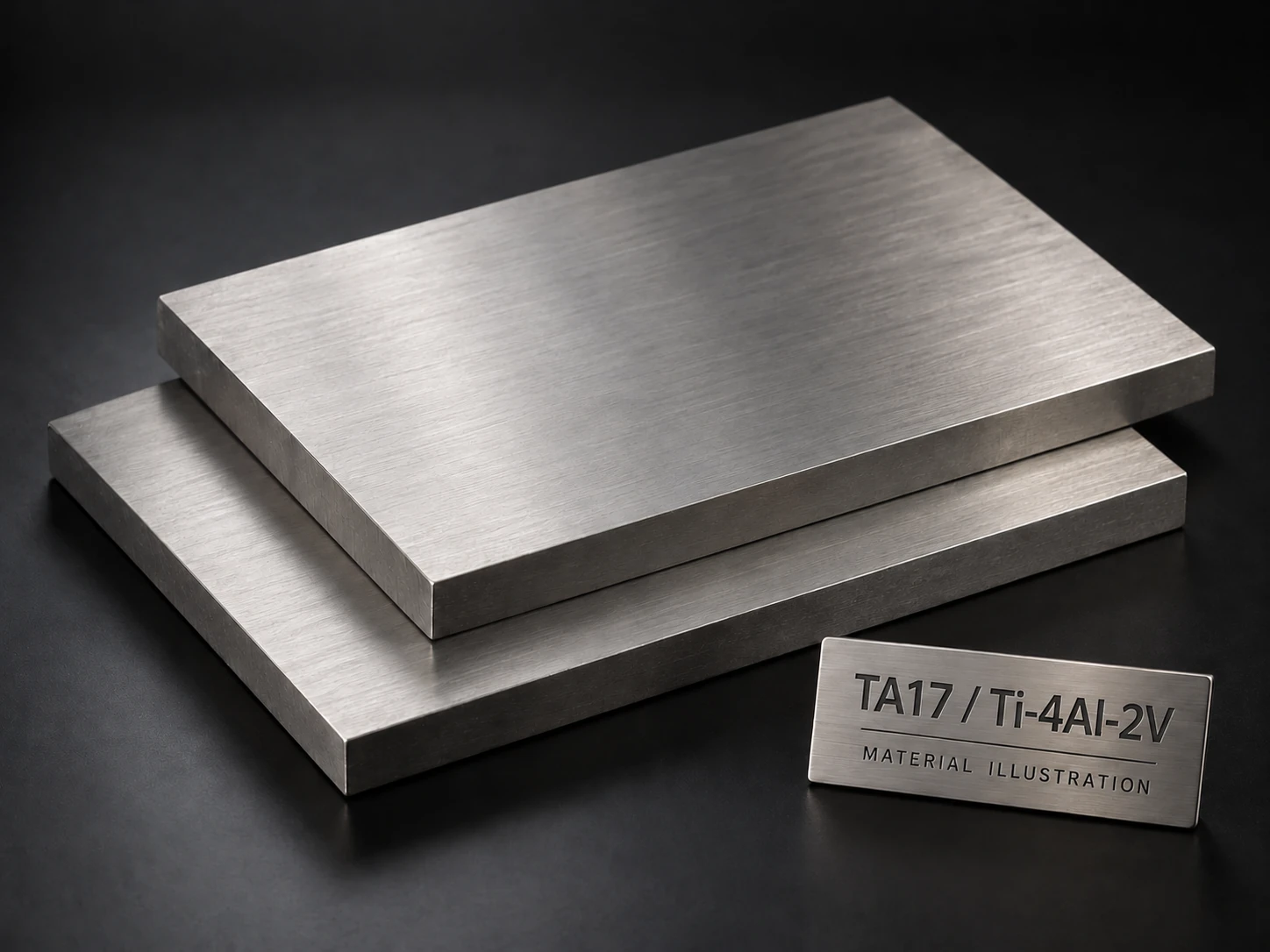
01 / 06
TA17 / Ti-4Al-2V
TA17 titanium plate
Flat stock for marine structural fabrication where the drawing specifically calls for TA17.
- Specification
- Approved grade-specific product specification, drawing revision and delivery condition; confirm supply feasibility.
- Size & delivery
- Thickness, width, length, flatness, rolling direction and usable edge allowance.
- Manufacturing review
- Identify welded joints, machined zones and the finished section remaining after preparation.
- Inspection priorities
- Thickness map, surface condition, directional mechanical results and any specified internal examination.
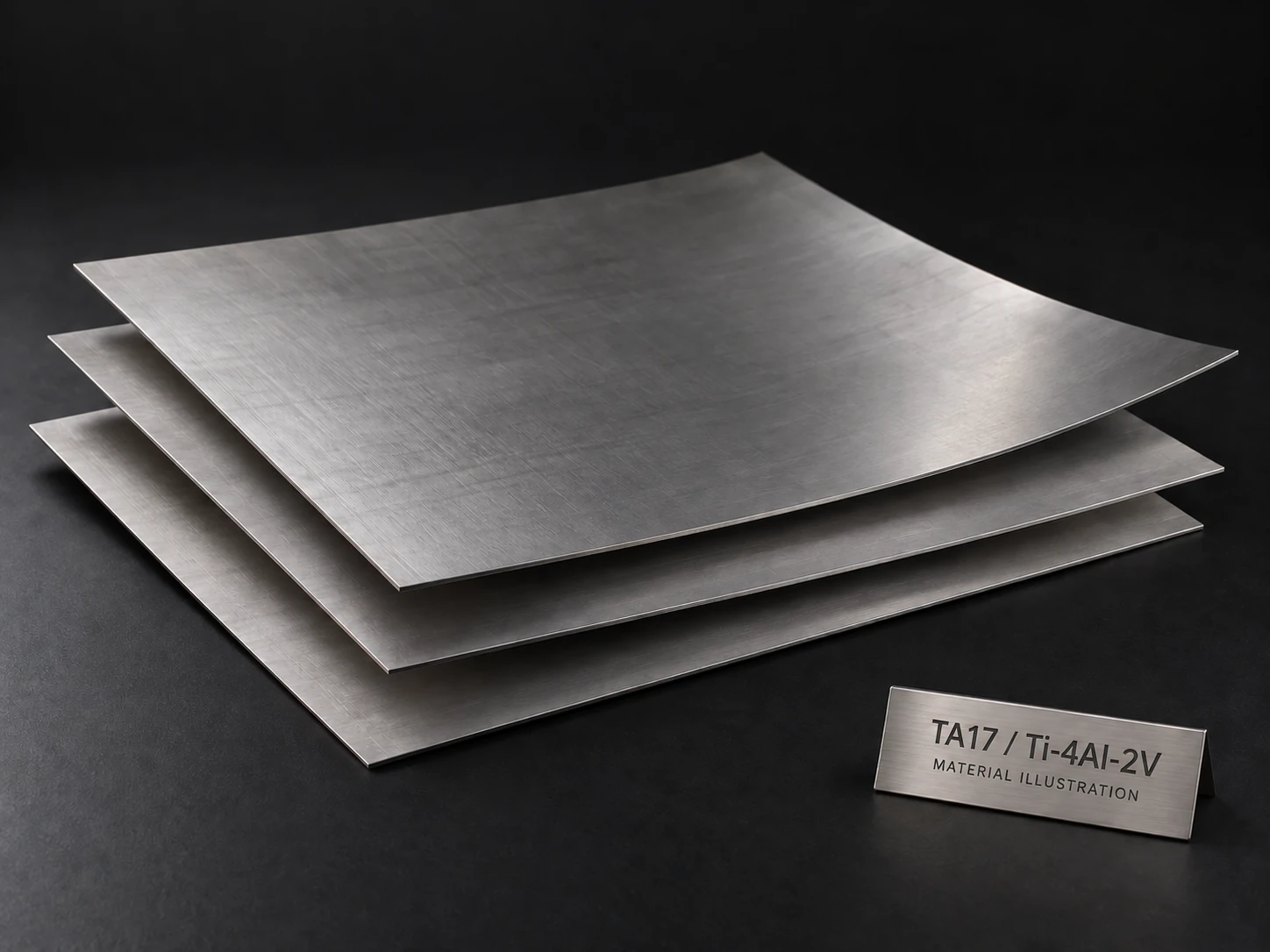
02 / 06
TA17 / Ti-4Al-2V
TA17 titanium sheet
Lighter-gauge sheet enquiries for formed non-pressure panels and covers.
- Specification
- Approved grade-specific product specification, drawing revision and delivery condition; confirm supply feasibility.
- Size & delivery
- Thickness tolerance, panel size, flatness and permitted surface finish.
- Manufacturing review
- Provide bend radii, forming direction, draw geometry and any post-forming thermal requirement.
- Inspection priorities
- Surface defects, edge quality and a forming evaluation representative of the ordered thickness.
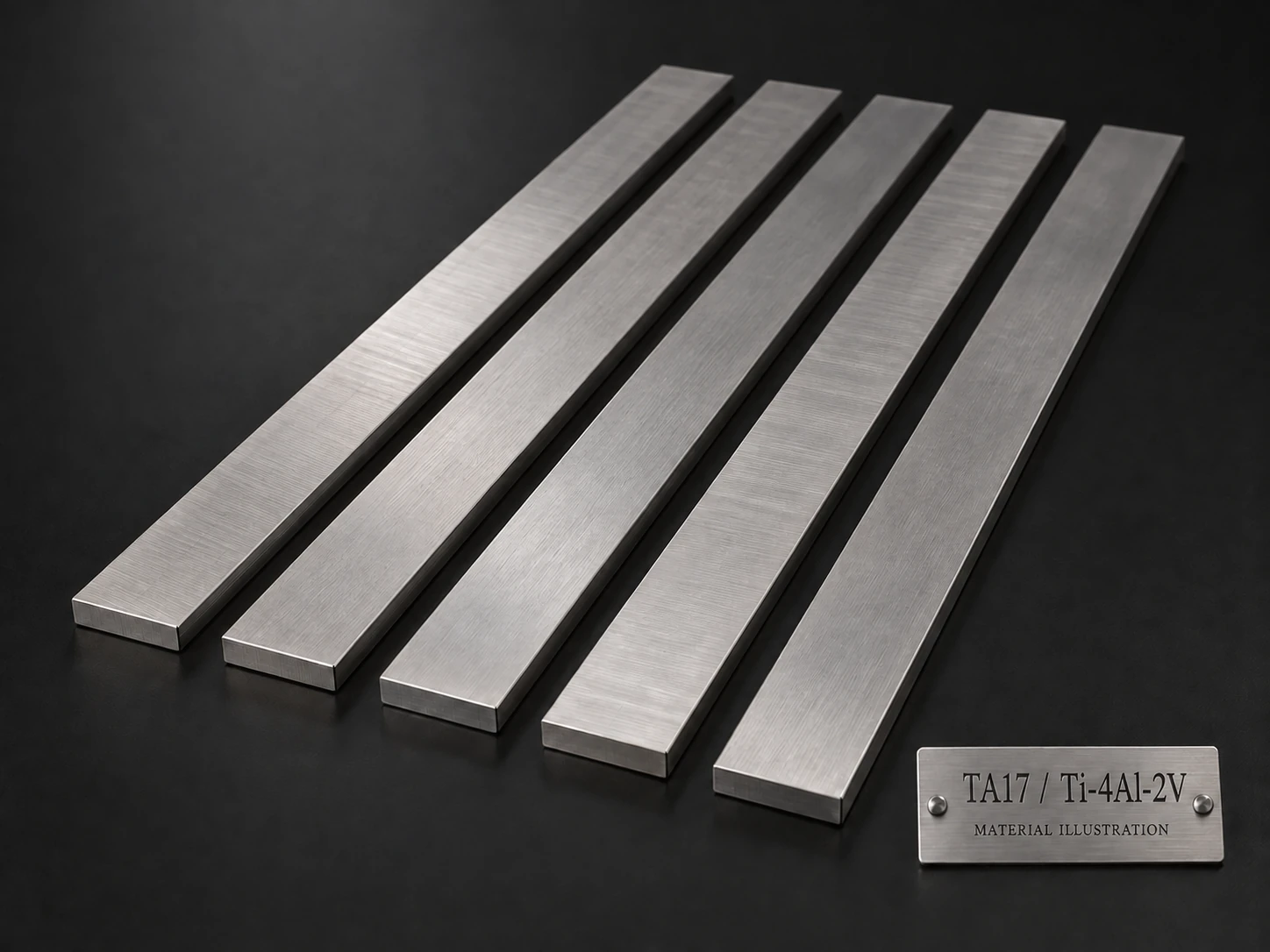
03 / 06
TA17 / Ti-4Al-2V
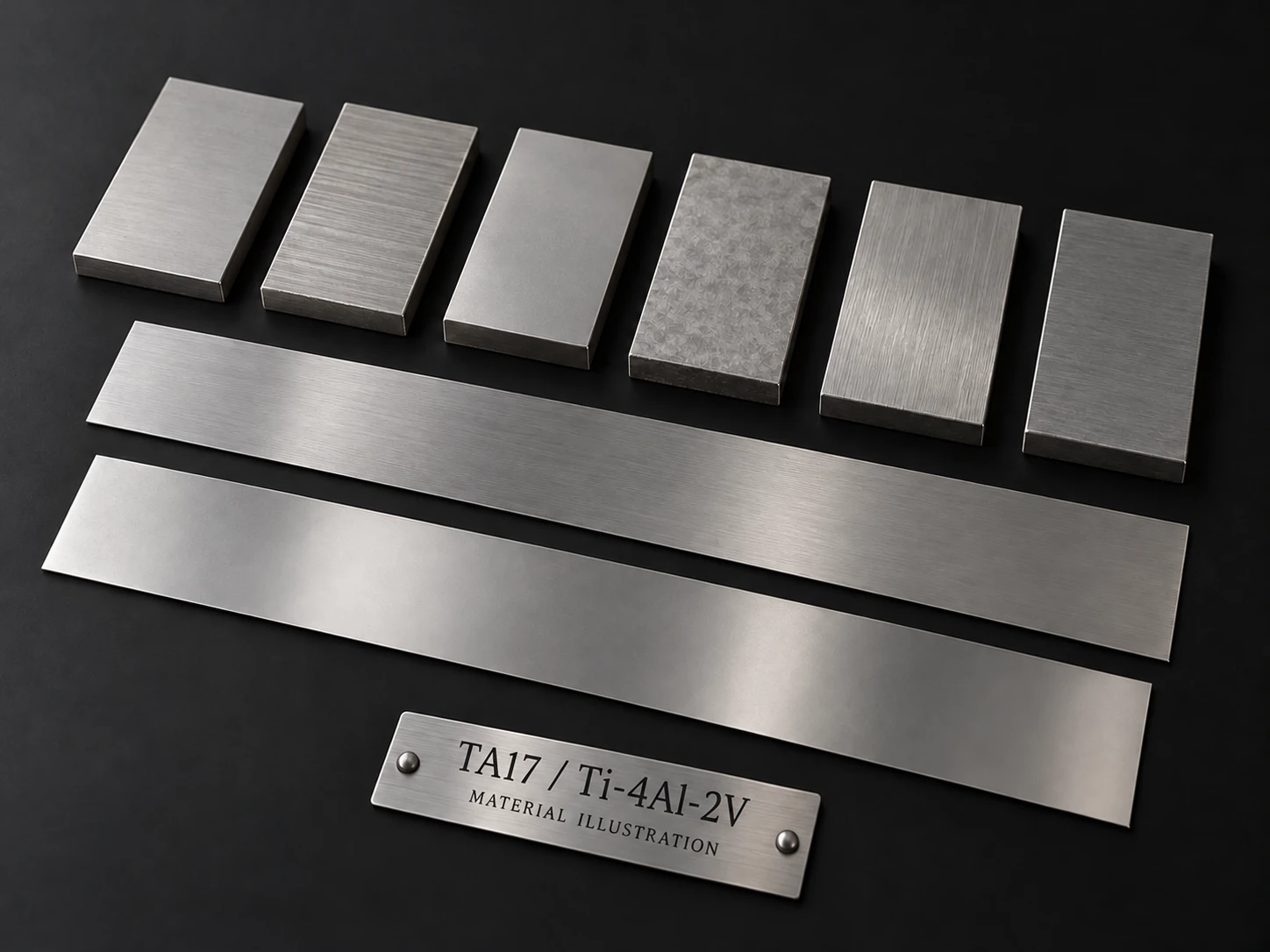
TA17 cut plate strips
Plate-derived strips for welded stiffeners, edge details and fabrication fit-up.
- Specification
- Approved grade-specific product specification, drawing revision and delivery condition; confirm supply feasibility.
- Size & delivery
- Strip width, length, thickness, straightness and edge allowance.
- Manufacturing review
- Define the strip direction relative to rolling and any cold bending before assembly.
- Inspection priorities
- Cut quality, dimensional consistency and identification transferred from the parent plate.
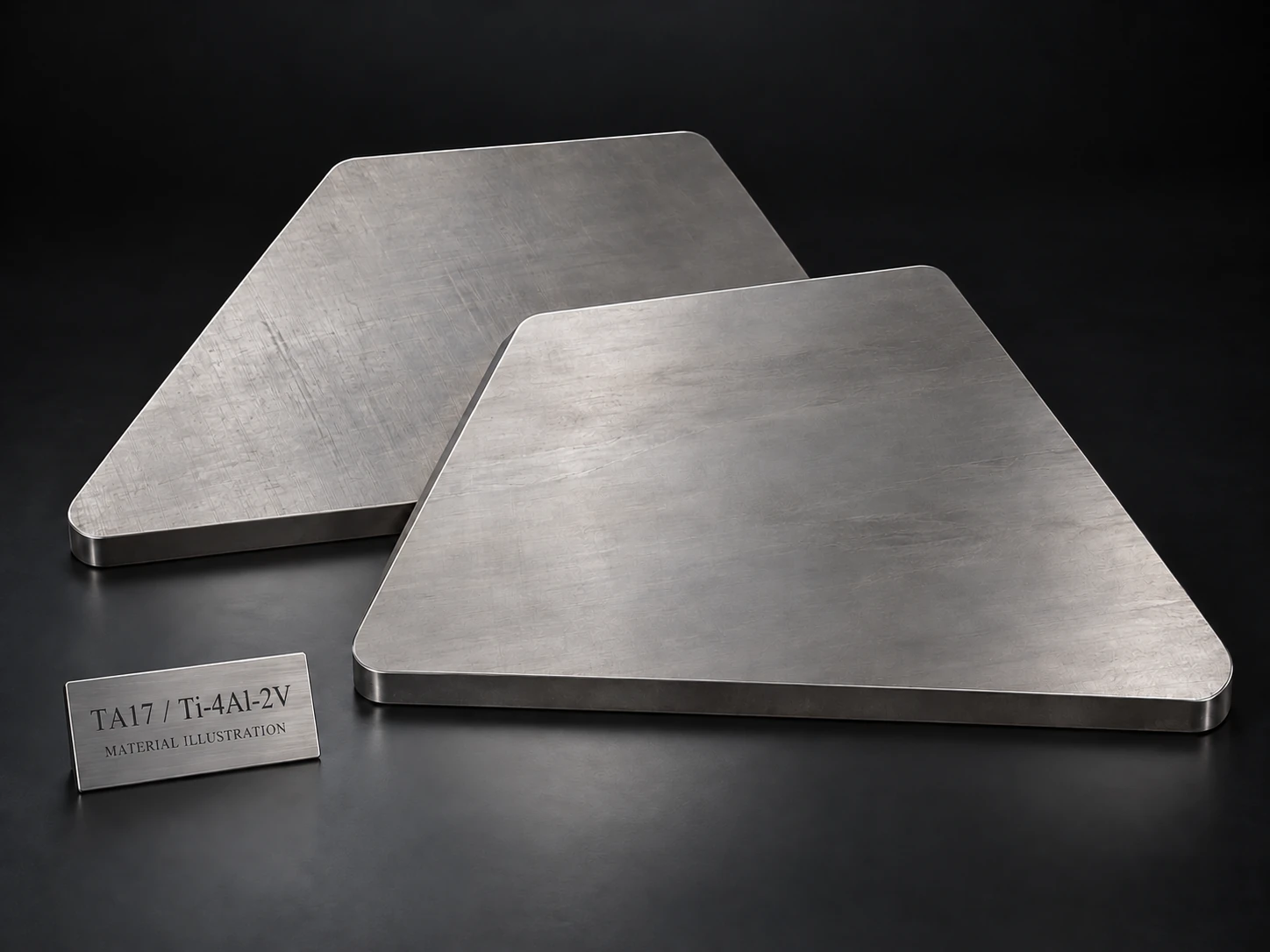
04 / 06
TA17 / Ti-4Al-2V
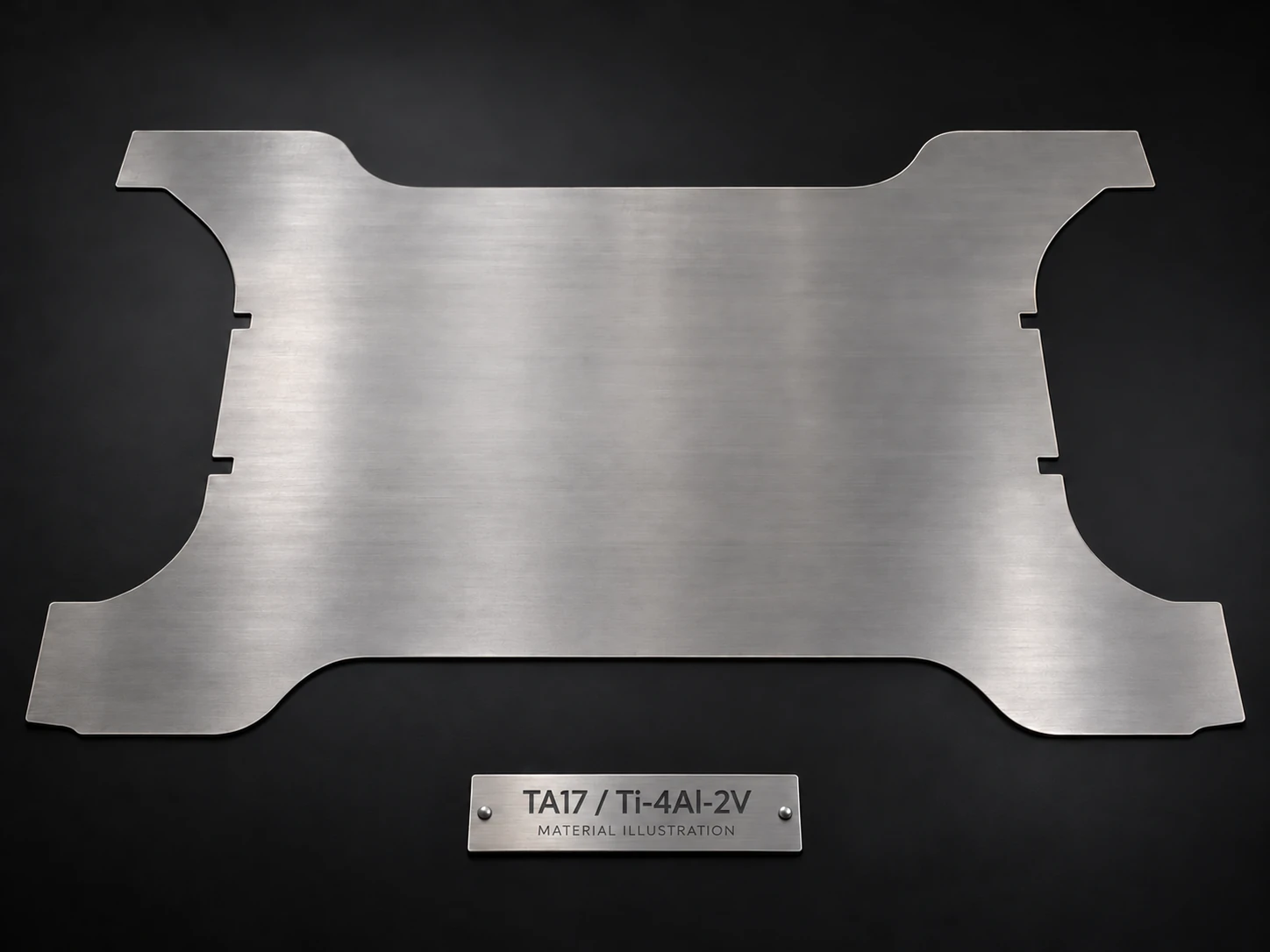
TA17 profiled flat blanks
Drawing-cut flat blanks that preserve enough material for subsequent forming and joint preparation.
- Specification
- Approved grade-specific product specification, drawing revision and delivery condition; confirm supply feasibility.
- Size & delivery
- DXF or drawing revision, contour tolerance, nesting direction and finish allowance.
- Manufacturing review
- Agree cutting route and treatment of the cut edge before bending or welding.
- Inspection priorities
- Contour checks, edge damage and retained plate-to-blank traceability.
05 / 06
TA17 / Ti-4Al-2V
TA17 forming-stock enquiries
Material blanks for curved or flanged marine details, quoted against the planned fabrication stage.
- Specification
- Approved grade-specific product specification, drawing revision and delivery condition; confirm supply feasibility.
- Size & delivery
- Developed blank size, trim margin, final contour and critical thickness.
- Manufacturing review
- Specify whether the request is flat stock or a converted blank; forming capability is reviewed separately.
- Inspection priorities
- Incoming plate acceptance plus the agreed dimensional and surface inspection after any conversion.
06 / 06
TA17 / Ti-4Al-2V
TA17 weld and forming coupons
Representative plate pieces for process qualification and material evaluation.
- Specification
- Approved grade-specific product specification, drawing revision and delivery condition; confirm supply feasibility.
- Size & delivery
- Production-intent thickness, condition, rolling orientation and specimen allowance.
- Manufacturing review
- Define the trial joint or forming geometry and reserve material for the required tests.
- Inspection priorities
- Identify parent heat and plate, specimen position and processing history.
Images illustrate material forms and application possibilities. Reference markings identify specification options; they do not establish dual certification, stock availability or approval of finished equipment.
Define the shape. Share the service.
These details help turn a material enquiry into a comparable quotation.
01 / Drawing review
Non-pressure-bearing marine panels
Sheet, plate and cut flat blanks under the approved drawing. Agree material condition, directional tests, surface limits and final assembly inspection without implying pressure-hull qualification.
Discuss your drawing02 / Drawing review
Welded frames and stiffeners
Plate strips and profiled blanks for a drawing-approved fabrication. Verify edge condition and fit-up before joining; specify separate weld examination and assembly dimensional checks.
Discuss your drawing03 / Drawing review
Formed covers and access details
Sheet and flat forming blanks with defined trim allowance. Evaluate representative material and inspect cracks, thinning and contour at the agreed manufacturing stage.
Discuss your drawing02 / Material identity
What is TA17 / Ti-4Al-2V titanium?
TA17 is identified by the nominal composition Ti-4Al-2V. Original producer research describes its use in non-pressure-bearing marine structures and emphasizes weldability and seawater-corrosion resistance. The focus of this page is plate-based fabrication: usable flat stock, controlled forming, clean joint preparation and evidence for the supplied material. A marine application description does not establish pressure-hull approval or a direct American equivalent.
Specify the exact standard edition, form and delivery condition. Nominal chemistry is only one part of an order; strength, microstructure, dimensional acceptance and traceability also need to be defined.
| Review item | Order basis | What to confirm |
|---|---|---|
| Plate geometry | Fabrication drawing | Specify thickness, flatness, usable edges and allowances for cutting and joint preparation. |
| Directional behavior | Rolling orientation and sampling | State longitudinal and transverse requirements and mark the direction before cutting blanks. |
| Forming acceptance | Representative production thickness | Define bend or draw geometry and inspect edge integrity, thinning and contour at the agreed stage. |
| Weld preparation | Qualified fabrication procedure | Agree clean surfaces, edge condition, fit-up and separate weld inspection requirements. |
| Marine application scope | Non-pressure structural design | Keep incoming plate release separate from pressure-boundary approval and completed-assembly acceptance. |
| Selected element · wt % | Reference composition |
|---|---|
| Aluminium · Al | 4 nominal |
| Vanadium · V | 2 nominal |
| Titanium · Ti | Balance |
| Other elements | Complete ordered composition limits apply |
Nominal composition, wt %, is shown for alloy identification. Use the complete ordered chemistry and plate specification for acceptance; nominal values are not minimum or maximum limits.
TA17 and TC4
The nominal aluminium and vanadium contents differ. The informal description of TA17 as a lower-alloyed Ti-Al-V material does not permit substitution for TC4.
Non-pressure structure and pressure boundary
This page prioritizes non-pressure-bearing fabrications. Pressure boundaries require a separately approved design, material specification and qualification route.
Plate certificate and welded assembly
A plate certificate does not establish weld quality, assembly distortion or joint properties. Define incoming stock and fabrication acceptance separately.
TA17 and TA23 / Ti70
TA17 here serves plate-based structural fabrication. TA23 enquiries on this site focus on complex-formed acoustic covers; the grades and project requirements remain distinct.
03 / Application priorities
TA17 in application.
Review each main use through its service conditions, material choice, manufacturing route and acceptance plan. These are sourcing discussions; approved drawings and qualification requirements govern the final component.
Application review / 01
Non-pressure-bearing marine panels
TA17 plate can be reviewed for marine structures that are not pressure boundaries. The order should identify the panel function and fabrication route before dimensions and test requirements are finalized.
Products & manufacturing
Sheet, plate and cut flat blanks under the approved drawing.
Service & design review
State load cases, exposed surfaces, supporting arrangement and whether the panel is welded or mechanically attached.
Purchase & inspection priorities
Agree material condition, directional tests, surface limits and final assembly inspection without implying pressure-hull qualification.
Application review / 02
Welded frames and stiffeners
A plate-based frame combines several cut pieces whose fit and condition influence weld preparation. Keeping the parent-plate identity through cutting helps preserve useful material records.
Products & manufacturing
Plate strips and profiled blanks for a drawing-approved fabrication.
Service & design review
Provide joint layout, strip orientation, weld access, distortion limits and the controlled welding procedure.
Purchase & inspection priorities
Verify edge condition and fit-up before joining; specify separate weld examination and assembly dimensional checks.
Application review / 03
Formed covers and access details
Curved or flanged covers need a blank that can reach its final shape while retaining the required thickness and surface. The forming operation should be part of the material enquiry.
Products & manufacturing
Sheet and flat forming blanks with defined trim allowance.
Service & design review
Supply bend radii, local strain areas, rolling direction and any sealing or attachment interfaces.
Purchase & inspection priorities
Evaluate representative material and inspect cracks, thinning and contour at the agreed manufacturing stage.
Application review / 04
Clean weld preparation
Surface contamination or poorly prepared edges can compromise a fabrication even when the alloy certificate is correct. Define the condition of the stock delivered to the welding operation.
Products & manufacturing
Plate and cut pieces with agreed edge preparation and protective packaging.
Service & design review
Specify cleaning, storage, handling and joint preparation under the fabricator’s procedure. Identify surfaces that require protection until welding.
Purchase & inspection priorities
Check visible surface and edge condition, traceability and the release criteria for fabrication; weld qualification remains a separate requirement.
Application review / 05
Directional plate acceptance
A formed panel may place its important bend or load direction across the rolling direction. A generic tensile statement does not show how the ordered plate was sampled.
Products & manufacturing
Sheet and plate marked with rolling direction and specimen locations.
Service & design review
Define longitudinal and transverse requirements, test orientation and sampling position for the actual thickness.
Purchase & inspection priorities
Link each result to the plate and ordered condition; resolve any direction-specific forming requirement before cutting.
Application review / 06
Marine surface and interface review
Seawater exposure is only one part of a fabricated assembly. Crevices, attachment metals, cleaning and stagnant areas should be reviewed alongside the plate selection.
Products & manufacturing
Plate-based panels, attachment blanks and representative coupons.
Service & design review
Describe the environment, dissimilar-metal contacts, coatings and maintenance or cleaning exposure.
Purchase & inspection priorities
Set project-specific corrosion or interface evaluation where required; do not replace it with a general seawater-resistance claim.
Application review / 07
Cutting and nesting coordination
A useful material quotation includes the usable yield of the required blanks. Plate dimensions, rolling orientation and edge losses can change the number of parts recovered from a sheet.
Products & manufacturing
Full plates, cut strips or nested drawing blanks.
Service & design review
Send a part list with quantities, orientation restrictions, cutting allowance and any common-heat requirement.
Purchase & inspection priorities
Agree the nesting and identification plan, then reconcile delivered blanks with the parent-plate certificate and cut list.
Application review / 08
Fabrication qualification samples
First-article samples should represent the material that will enter production. Trials on another thickness or condition may not establish the result for a complex welded panel.
Products & manufacturing
Matched plate coupons and production-intent forming blanks.
Service & design review
Specify the trial route, test owner, required weld or forming results and retained sample quantity.
Purchase & inspection priorities
Record the incoming condition, processing sequence and final inspection so the approved basis can be carried into the production order.
Material references and applicable product standards are listed below. Select the delivery condition and acceptance plan for the specific product and approved application.
TA17 procurement checklist
Connect the application to the material order.
A useful specification connects the intended component, the supplied stock and the acceptance evidence. Share the drawing and known requirements first.
Define the application
State load cases, exposed surfaces, supporting arrangement and whether the panel is welded or mechanically attached.
Define the supplied stage
Sheet, plate and cut flat blanks under the approved drawing. Distinguish raw stock, converted blanks and finished parts. Define who controls subsequent processing.
Define the acceptance evidence
Agree material condition, directional tests, surface limits and final assembly inspection without implying pressure-hull qualification.
Example: a useful TA17 material enquiry
TA17 titanium plate; required dimensions and quantity; standard and drawing revision; delivery condition; intended downstream process; mechanical, structural and dimensional acceptance; traceability, destination and required date.
Identify the approved product specification and any project-specific qualification. The grade designation and chemistry standard alone do not define component acceptance.
Discuss your material requirement ↗04 / Standards & documentation
Match the standard
to the product.
Choose the specification by product form, material condition and application. Identify the required edition on the order; a chemistry standard alone does not define a finished forging or component.
| Product / review | International / project route | Chinese reference | Clarify before quotation |
|---|---|---|---|
| Identity & chemistry | Approved product and project specification | GB/T 3620.1-2016View PDF ↗ | Review the complete chemical limits and product requirements; nominal alloy names do not establish automatic interchangeability. |
| TA17 plate research · CN121518855B | TA17 plate research · CN121518855BPublisher reference ↗ | Compare the complete ordered Chinese requirements | Hunan Xiangtou Goldsky, 2026 publication. Supports the plate and non-pressure marine application context; patent results are not universal supply guarantees. |
| GB/T 3621-2022 · plate specification reference | GB/T 3621-2022 · plate specification referencePublisher reference ↗ | Compare the complete ordered Chinese requirements | The original plate research references GB/T 3621-2022. Obtain and review the complete controlled product standard for the specific order. |
| Drawing-based blanks & parts | Approved drawing and controlled manufacturing plan | Agreed product / project specification | Define the supply stage, conversion route, heat treatment, structure, NDT, dimensions and traceability. Material certification is separate from finished component qualification. |
Agree the order basis.
The purchase order must identify the required revision, grade, product form, condition and inspection. Reference documents do not replace design approval, manufacturing qualification or application-specific acceptance.
Request the controlled specification revision for your order. Any substitution, equivalence or dual-certification claim requires a documented comparison and agreement.
05 / Order coordination
Know the scope
before ordering.
Our founder’s 20 years in titanium inform the questions we ask before quotation and the supply options we review with you.
A quotation you can evaluate
Agree the grade, standard edition, dimensions, tolerance, condition and quantity before comparing prices.
- Identify whether inspection, samples and tooling are included.
- Confirm packaging, transport and delivery terms.
- Record items that still need technical confirmation.
Acceptance agreed before supply
Confirm material identity, delivery condition, heat-to-piece traceability, dimensional checks and required testing before production. For converted parts, define inspection after forging, heat treatment and machining, including the specified microstructure and NDT scope.
Independent inspection can be discussed with its scope, timing, acceptance criteria and cost agreed for the order.
Delivery with clear milestones
Review the proposed lead time, approvals, production sequence and dispatch requirements. For several product forms, coordinate document and packing readiness together.
Material substitutions and technical changes require written approval. A schedule deviation should identify the impact, decisions needed and next steps.
One contact when an issue arises
Contact TiHubs with the order reference, affected items and supporting photos or inspection records.
We record the issue, review it against the agreed requirements and coordinate the next steps with the relevant manufacturing parties.
01 / Material identity
Material records
Grade, standard, test results and heat or batch identity matched to the supplied items.
02 / Agreed acceptance
Inspection records
Dimensional and testing records for the agreed scope, including critical drawing requirements.
03 / Ready for dispatch
Dispatch records
Item identification, packing list, protective packaging and required shipment documents.
06 / Questions before sourcing
Before you specify
TA17 / Ti-4Al-2V.
A clear material designation is the beginning. Product form, specification revision, material condition and acceptance complete the requirement.
A useful first enquiry
- Product and specificationProduct form, standard edition, dimensions and material condition.
- Order and deliveryQuantity, destination and any required delivery date.
- Acceptance requirementsDrawing revision, inspection, certificates and packaging.
Not every detail is finalized? Send the information you have. We can help identify the questions to resolve before quotation.
What happens next: requirement review, technical clarification, then a supply proposal and quotation.
What is the main TA17 application focus?
This page focuses on sheet and plate for non-pressure-bearing marine structures, with forming and welded-fabrication requirements defined by the project.
Is TA17 equivalent to TC4?
No automatic equivalence is claimed. TA17 has nominal Ti-4Al-2V chemistry, whereas TC4 belongs to the Ti-6Al-4V family.
Can TA17 be ordered for a pressure hull from this page?
A pressure boundary needs a separately approved design and material route. The non-pressure structural scope described here does not provide that approval.
Which plate details should be on the RFQ?
Specify thickness, width, length, flatness, rolling direction, usable edges, condition, quantity and the controlling product specification.
Why record rolling direction?
It connects the cut layout, bend direction and mechanical sampling to the actual plate. State any longitudinal and transverse acceptance requirements.
Does the plate certificate qualify the weld?
No. Welding procedure qualification, joint examination and assembly acceptance are separate from the incoming plate certificate.
Can drawing-cut blanks be supplied?
They can be reviewed against your contour file, tolerances, orientation and cutting allowance. Confirm the cut-edge condition needed before forming or welding.
Should samples use the production thickness?
Yes, where the trial is intended to demonstrate that production route. Match thickness, condition, surface and rolling orientation as closely as the qualification plan requires.
What is needed for a complete TA17 quotation?
Send the non-pressure component function, plate or sheet sizes, drawings, forming and welding route, standard editions, inspection plan, quantity and delivery requirements.
07 / Your next step
Start with the
requirement you have.
Send the product details, drawing or operating conditions you already know. We will identify missing information and discuss a suitable supply route before quotation.
- Requirement review
- Technical clarification
- Supply proposal and quotation
Combine materials and parts in one enquiry.
Send one list of TA17 forms, sizes and quantities. Include drawing revisions, material conditions and items that must be supplied or dispatched together.
Share the service and acceptance priorities.
Include load and temperature conditions, critical sections, required material records, process qualification, inspection, destination and timing.
Baoji, China · info@tihubs.com
Start your TA17 / Ti-4Al-2V enquiry
Send your material form, drawing or process conditions. We will help clarify the remaining requirements.