Baoji High-tech Zone, ChinaTitanium sourcing · One contact



TC1 / Ti-2Al-1.5Mn · Low-alloy alpha-beta titanium
TC1 / Ti-2Al-1.5Mn. Sheet metal made around the forming route.
Specify TC1 sheet and strip for pressed panels, bent details and welded fabrication, with ductility, edges and forming direction addressed before quotation.
Start with a specification, drawing or application. We’ll help identify the details still needed.
Material review. Supply coordination.
One contact in Baoji, China.
TC1 / Ti-2Al-1.5MnTi-2Al-1.5Mn
Low-alloy alpha-beta titaniumPressed sheet, bends & welded details
One contact20 years of founder experience · 100+ Baoji factories
01 / Product forms
Find your TC1 product.
Choose a material form or application. Send the dimensions, service conditions and required records so we can match the manufacturing route to your order.
01 / 06
TC1 / Ti-2Al-1.5Mn
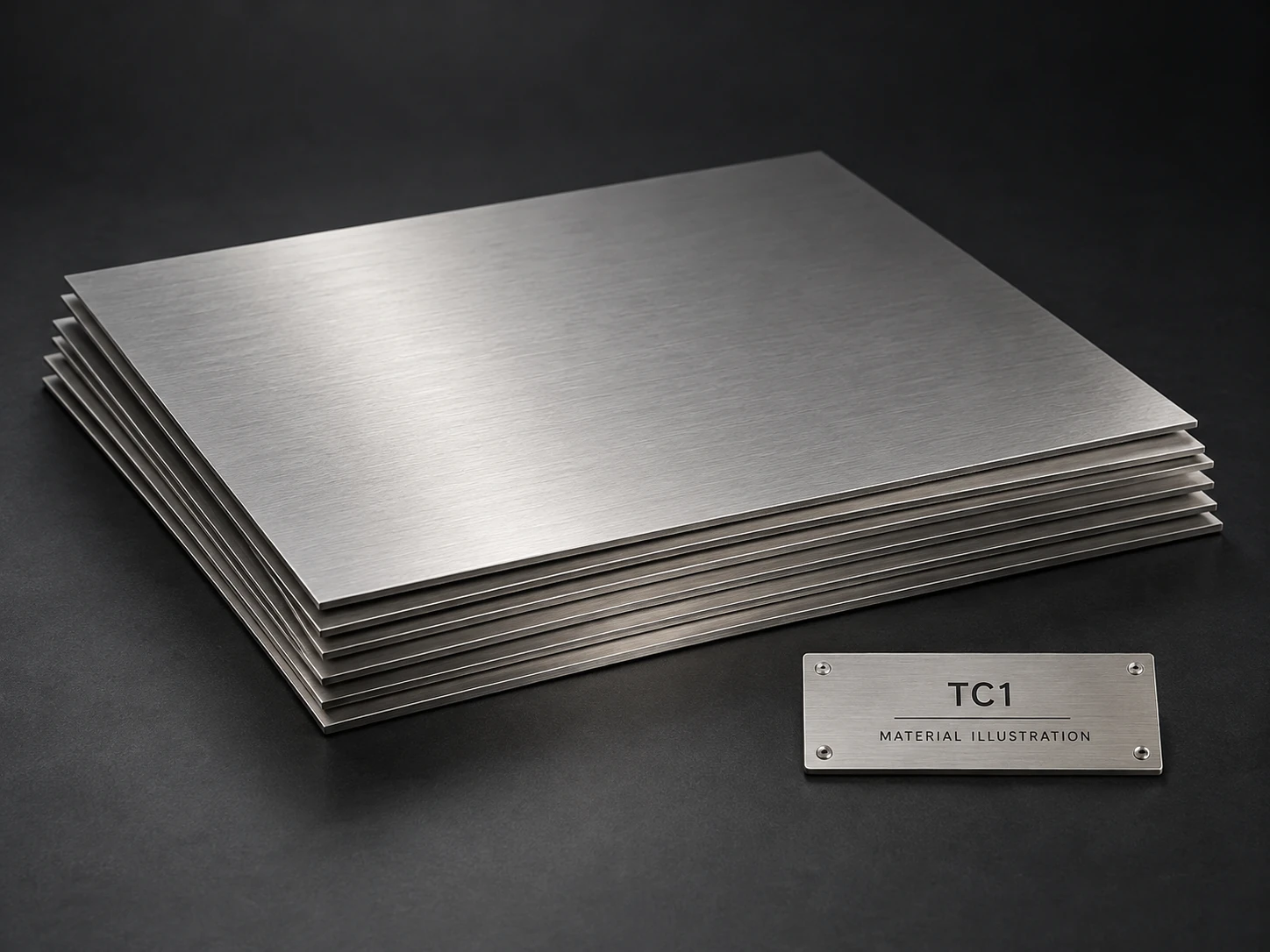
TC1 forming sheet
Primary stock for pressed and bent sheet-metal parts.
- Specification
- Approved grade-specific product specification, drawing revision and delivery condition; confirm supply feasibility.
- Size & delivery
- Thickness, blank size, flatness, direction and surface finish.
- Manufacturing review
- Provide the forming sequence and smallest radii.
- Inspection priorities
- Directional ductility, bend tests where required and scratch limits.
02 / 06
TC1 / Ti-2Al-1.5Mn
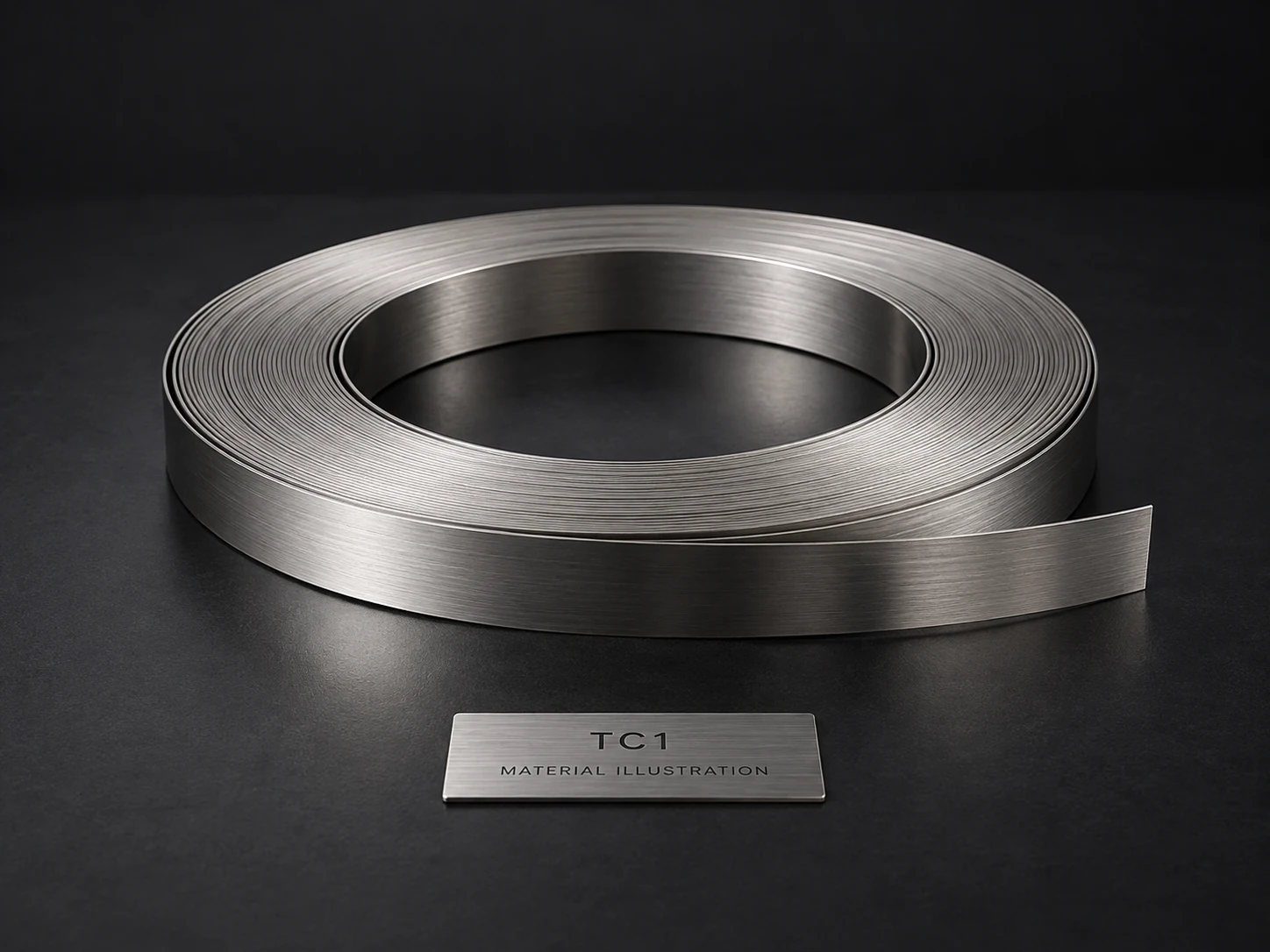
TC1 titanium strip
Narrow stock for repeated bends and small sheet-metal details.
- Specification
- Approved grade-specific product specification, drawing revision and delivery condition; confirm supply feasibility.
- Size & delivery
- Width, thickness, coil size, camber and edge condition.
- Manufacturing review
- Match strip direction and edge preparation to the tooling feed.
- Inspection priorities
- Width consistency, burrs, edge cracks and coil identification.

03 / 06
TC1 / Ti-2Al-1.5Mn
TC1 pressed-panel enquiries
Illustrative shallow panels for drawing-approved stamping or forming.
- Specification
- Approved grade-specific product specification, drawing revision and delivery condition; confirm supply feasibility.
- Size & delivery
- Depth, radii, flange width, trim stock and minimum wall.
- Manufacturing review
- Review tooling, lubrication, springback and any intermediate annealing.
- Inspection priorities
- Thinning, wrinkles, cracking and profile after release from the tool.
04 / 06
TC1 / Ti-2Al-1.5Mn
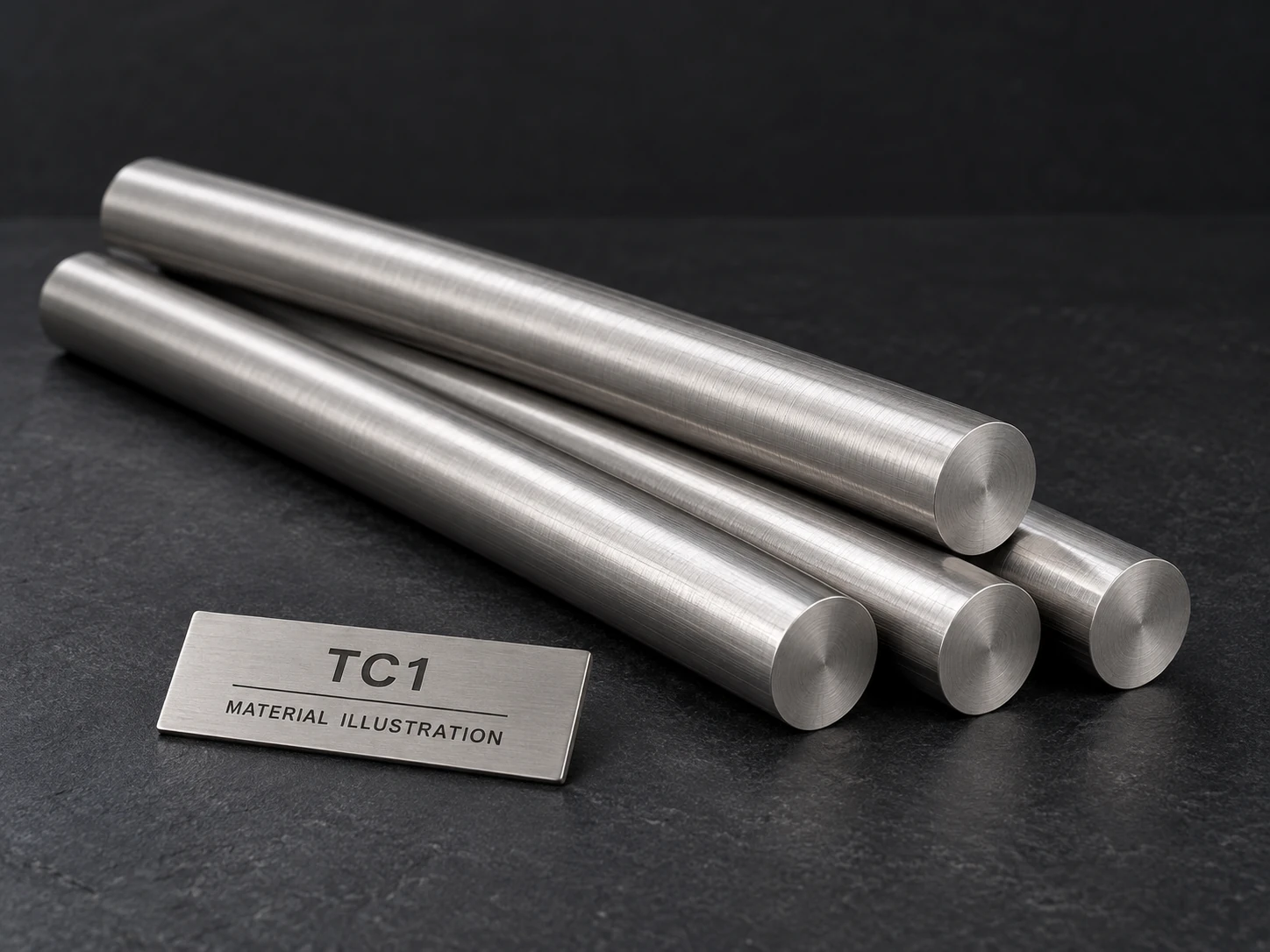
TC1 titanium bar
Round stock for matching machined details where TC1 is explicitly required.
- Specification
- Approved grade-specific product specification, drawing revision and delivery condition; confirm supply feasibility.
- Size & delivery
- Diameter, length, straightness and usable machining stock.
- Manufacturing review
- Confirm that the bar specification and condition suit the actual component.
- Inspection priorities
- Chemistry, size-specific properties and surface acceptance.
05 / 06
TC1 / Ti-2Al-1.5Mn
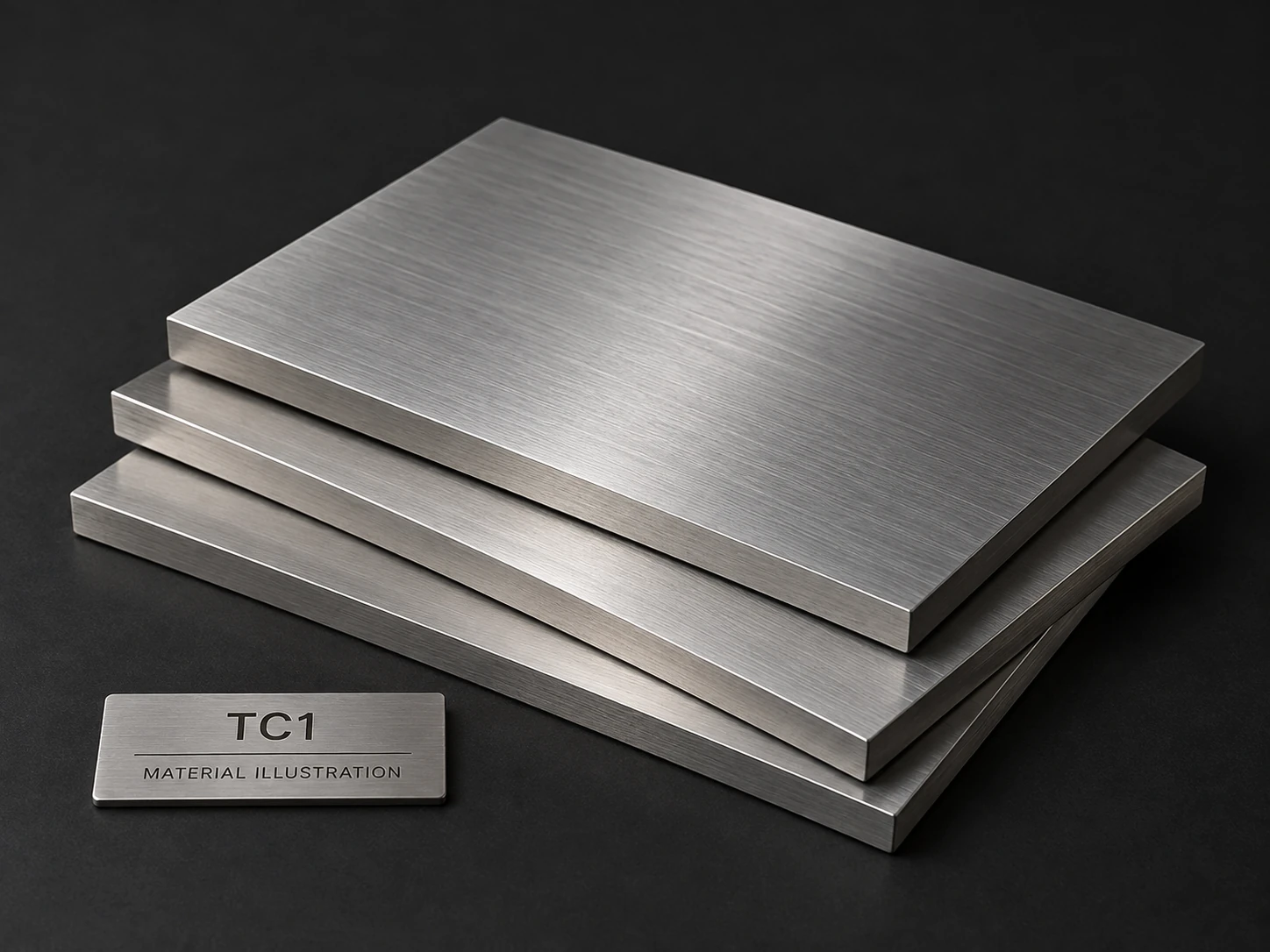
TC1 flat cut blanks
Rectangular or drawing-cut flat stock for controlled downstream fabrication.
- Specification
- Approved grade-specific product specification, drawing revision and delivery condition; confirm supply feasibility.
- Size & delivery
- Thickness, outline, edge allowance and orientation marking.
- Manufacturing review
- Choose cutting and edge-finishing methods compatible with subsequent bends.
- Inspection priorities
- Cut-edge condition, flatness and retained material identity.
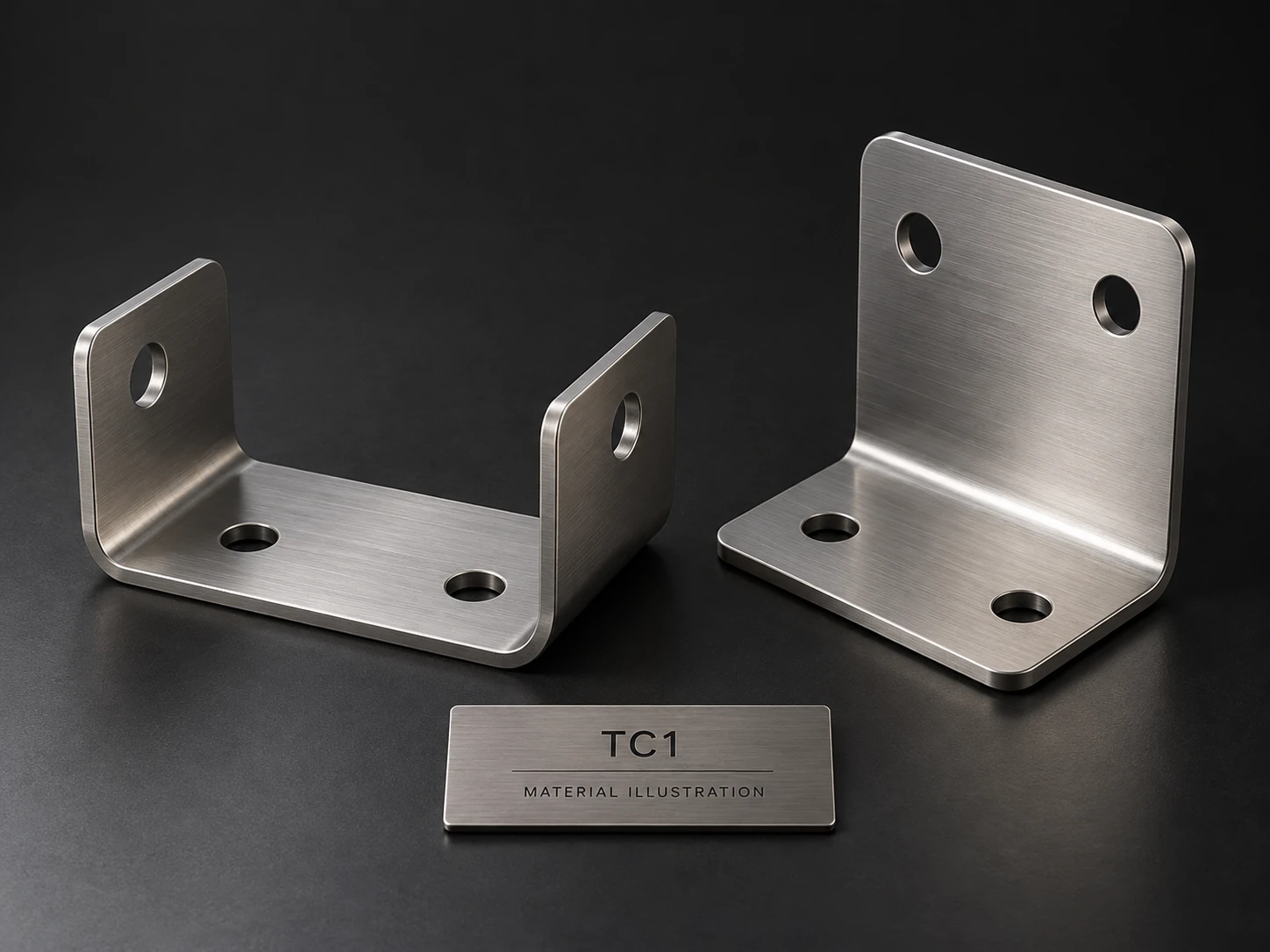
06 / 06
TC1 / Ti-2Al-1.5Mn
TC1 bent bracket enquiries
Simple flanged and bent sheet details prepared to a supplied drawing.
- Specification
- Approved grade-specific product specification, drawing revision and delivery condition; confirm supply feasibility.
- Size & delivery
- Bend angle, flange dimensions, hole datums and tolerance.
- Manufacturing review
- Agree bend sequence and whether holes are made before or after forming.
- Inspection priorities
- Angular springback, cracks at edges and final hole-to-datum dimensions.
Images illustrate material forms and application possibilities. Reference markings identify specification options; they do not establish dual certification, stock availability or approval of finished equipment.
Define the shape. Share the service.
These details help turn a material enquiry into a comparable quotation.
01 / Drawing review
Shallow pressed panels
Sheet and cut forming blanks. Use representative forming trials and inspect thinning, wrinkles and cracks at the most strained locations.
Discuss your drawing02 / Drawing review
Bent flanges and brackets
Strip, flat blanks and bent bracket enquiries. Check bend surfaces and final angles after springback; include hole position where it affects assembly.
Discuss your drawing03 / Drawing review
Resistance spot-welded sheet
Sheet coupons and cut assembly blanks. Agree weld nugget and joint-strength checks under the approved procedure, plus final assembly dimensions.
Discuss your drawing02 / Material identity
What is TC1 / Ti-2Al-1.5Mn titanium?
TC1 is the low-alloy Ti-2Al-1.5Mn system. This page is built around sheet-metal conversion: obtaining a usable blank, managing bends and drawn features, and preserving quality through joining. National designation tables place TC1 in the alpha-beta group; some technical literature describes its low beta content as near-alpha. Use the actual product condition and tests rather than the class name as a forming guarantee.
Specify the exact standard edition, form and delivery condition. Nominal chemistry is only one part of an order; strength, microstructure, dimensional acceptance and traceability also need to be defined.
| Review item | Order basis | What to confirm |
|---|---|---|
| Formability | Bend or press route | Define bend radius, strain direction, tooling contact and permitted surface damage. |
| Sheet surface | Forming and finishing allowance | Review scratches, edge condition and surface preparation where thin sheet will be highly strained. |
| Directional properties | Rolling direction on the drawing | Relate test orientation and blank nesting to the direction of bending and structural loading. |
| Joining performance | Qualified sheet joint | Assess spot-weld or other joint procedures at the actual gauge and overlap geometry. |
| Final shape | Springback and trim stage | Specify datums, profile tolerance and inspection after forming and trimming. |
| Selected element · wt % | Reference composition |
|---|---|
| Aluminium · Al | 1.0–2.5 |
| Manganese · Mn | 0.7–2.0 |
| Iron · Fe | 0.30 max |
| Oxygen · O | 0.15 max |
| Hydrogen · H | 0.012 max |
| Titanium · Ti | Balance |
Selected composition limits, wt %, from GB/T 3620.1-2016. Use the complete ordered standard for all impurity, residual-element and analysis requirements.
TC1 versus TC2
TC2 contains more aluminium. Similar manganese-alloy names do not make their forming windows or mechanical requirements identical.
TC1 versus Grade 1
TC1 is an alloy; ASTM Grade 1 is commercially pure titanium. The shared numeral is not an equivalence.
Formability versus final strength
A thin formed panel can be governed by ductility and local thinning rather than the highest available tensile strength. Specify the approved balance.
Blank quality versus assembly quality
An accepted sheet still needs controlled cutting, forming and joining. Inspect the final part at the stage required by the drawing.
03 / Application priorities
TC1 in application.
Review each main use through its service conditions, material choice, manufacturing route and acceptance plan. These are sourcing discussions; approved drawings and qualification requirements govern the final component.
Application review / 01
Shallow pressed panels
TC1 sheet procurement should begin with the part depth and radii. These features determine the blank quality and forming evidence more directly than a generic alloy description.
Products & manufacturing
Sheet and cut forming blanks.
Service & design review
Specify draw depth, corner radii, rolling direction and permissible intermediate treatments.
Purchase & inspection priorities
Use representative forming trials and inspect thinning, wrinkles and cracks at the most strained locations.
Application review / 02
Bent flanges and brackets
The bend edge and material direction can control whether a repeatable flange is obtained. Identify the geometry before selecting a convenient sheet size.
Products & manufacturing
Strip, flat blanks and bent bracket enquiries.
Service & design review
Provide radius, angle, flange width, edge finish and grain-direction restrictions.
Purchase & inspection priorities
Check bend surfaces and final angles after springback; include hole position where it affects assembly.
Application review / 03
Resistance spot-welded sheet
Published research studies Ti-2Al-1.5Mn spot welds, but experimental machine settings are not transferable production instructions. The actual stack-up needs a qualified joining plan.
Products & manufacturing
Sheet coupons and cut assembly blanks.
Service & design review
Define thickness stack, overlap, electrode access, joint spacing and surface preparation.
Purchase & inspection priorities
Agree weld nugget and joint-strength checks under the approved procedure, plus final assembly dimensions.
Application review / 04
Light fabricated covers
A cover may be driven by shape, vibration and attachment fit rather than high static load. TC1 enquiries should state those functional requirements explicitly.
Products & manufacturing
Formed sheet, flanged panels and small brackets.
Service & design review
Identify supports, local openings, fastening method, temperature and vibration exposure.
Purchase & inspection priorities
Inspect profile, edges and attachment locations; define component testing separately from sheet release.
Application review / 05
Cut-edge preparation for forming
A damaged or heavily burred edge can initiate a crack during bending. Buying a finished blank should therefore include the edge condition, not just the outline.
Products & manufacturing
Slit strip and drawing-cut sheet blanks.
Service & design review
State cutting route restrictions, burr limits, deburring and any required edge radius.
Purchase & inspection priorities
Inspect critical edges before forming and maintain orientation marks through nesting and cutting.
Application review / 06
Tooling and springback trials
A new panel geometry often needs representative material for tooling adjustment. A trial should reproduce the intended thickness and supplied condition.
Products & manufacturing
Small sheet lots and test blanks with production-representative records.
Service & design review
Provide trial geometry, controlled variables, dimensional targets and the approval process.
Purchase & inspection priorities
Record springback and defect locations, then carry the accepted stock condition into recurring orders.
Application review / 07
Joined panel dimensional control
Joining can change a formed panel that was dimensionally acceptable on its own. Fixture datums and inspection stages should follow the complete assembly sequence.
Products & manufacturing
Pressed panels and matched flat details.
Service & design review
Identify seam order, restraint, trimming stage and accessible measurement datums.
Purchase & inspection priorities
Check the assembly after joining and any specified thermal operation, including mating-hole alignment.
Application review / 08
Low-volume legacy sheet parts
Older TC1 drawings may require a small quantity of unusual thickness or temper. Start with the original material callout and determine a viable, documented supply route.
Products & manufacturing
Sheet, strip and matching bar enquiries.
Service & design review
Share the full drawing revision, old specification, quantity and permissible substitution process.
Purchase & inspection priorities
Resolve certification and representative tests before committing to an alternative thickness or condition.
Material references and applicable product standards are listed below. Select the delivery condition and acceptance plan for the specific product and approved application.
TC1 procurement checklist
Connect the application to the material order.
A useful specification connects the intended component, the supplied stock and the acceptance evidence. Share the drawing and known requirements first.
Define the application
Specify draw depth, corner radii, rolling direction and permissible intermediate treatments.
Define the supplied stage
Sheet and cut forming blanks. Distinguish raw stock, converted blanks and finished parts. Define who controls subsequent processing.
Define the acceptance evidence
Use representative forming trials and inspect thinning, wrinkles and cracks at the most strained locations.
Example: a useful TC1 material enquiry
TC1 forming sheet; required dimensions and quantity; standard and drawing revision; delivery condition; intended downstream process; mechanical, structural and dimensional acceptance; traceability, destination and required date.
Identify the approved product specification and any project-specific qualification. The grade designation and chemistry standard alone do not define component acceptance.
Discuss your material requirement ↗04 / Standards & documentation
Match the standard
to the product.
Choose the specification by product form, material condition and application. Identify the required edition on the order; a chemistry standard alone does not define a finished forging or component.
| Product / review | International / project route | Chinese reference | Clarify before quotation |
|---|---|---|---|
| Identity & chemistry | Approved product and project specification | GB/T 3620.1-2016View PDF ↗ | Review the complete chemical limits and product requirements; nominal alloy names do not establish automatic interchangeability. |
| Ti-2Al-1.5Mn spot-weld research | Ti-2Al-1.5Mn spot-weld researchPublisher reference ↗ | Compare the complete ordered Chinese requirements | Primary joining research; experimental settings and joint results are not universal manufacturing limits. |
| Drawing-based blanks & parts | Approved drawing and controlled manufacturing plan | Agreed product / project specification | Define the supply stage, conversion route, heat treatment, structure, NDT, dimensions and traceability. Material certification is separate from finished component qualification. |
Agree the order basis.
The purchase order must identify the required revision, grade, product form, condition and inspection. Reference documents do not replace design approval, manufacturing qualification or application-specific acceptance.
Request the controlled specification revision for your order. Any substitution, equivalence or dual-certification claim requires a documented comparison and agreement.
05 / Order coordination
Know the scope
before ordering.
Our founder’s 20 years in titanium inform the questions we ask before quotation and the supply options we review with you.
A quotation you can evaluate
Agree the grade, standard edition, dimensions, tolerance, condition and quantity before comparing prices.
- Identify whether inspection, samples and tooling are included.
- Confirm packaging, transport and delivery terms.
- Record items that still need technical confirmation.
Acceptance agreed before supply
Confirm material identity, delivery condition, heat-to-piece traceability, dimensional checks and required testing before production. For converted parts, define inspection after forging, heat treatment and machining, including the specified microstructure and NDT scope.
Independent inspection can be discussed with its scope, timing, acceptance criteria and cost agreed for the order.
Delivery with clear milestones
Review the proposed lead time, approvals, production sequence and dispatch requirements. For several product forms, coordinate document and packing readiness together.
Material substitutions and technical changes require written approval. A schedule deviation should identify the impact, decisions needed and next steps.
One contact when an issue arises
Contact TiHubs with the order reference, affected items and supporting photos or inspection records.
We record the issue, review it against the agreed requirements and coordinate the next steps with the relevant manufacturing parties.
01 / Material identity
Material records
Grade, standard, test results and heat or batch identity matched to the supplied items.
02 / Agreed acceptance
Inspection records
Dimensional and testing records for the agreed scope, including critical drawing requirements.
03 / Ready for dispatch
Dispatch records
Item identification, packing list, protective packaging and required shipment documents.
06 / Questions before sourcing
Before you specify
TC1 / Ti-2Al-1.5Mn.
A clear material designation is the beginning. Product form, specification revision, material condition and acceptance complete the requirement.
A useful first enquiry
- Product and specificationProduct form, standard edition, dimensions and material condition.
- Order and deliveryQuantity, destination and any required delivery date.
- Acceptance requirementsDrawing revision, inspection, certificates and packaging.
Not every detail is finalized? Send the information you have. We can help identify the questions to resolve before quotation.
What happens next: requirement review, technical clarification, then a supply proposal and quotation.
Is TC1 commercially pure titanium?
No. TC1 is Ti-2Al-1.5Mn and must not be confused with ASTM Grade 1.
Why does this page prioritize sheet forming?
The purchasing emphasis is on usable sheet and strip for pressing, bends and joined fabrication, where ductility and surface condition are central.
Is TC1 classified as near-alpha or alpha-beta?
The national chemistry table places it in the alpha-beta group; some literature uses near-alpha terminology. The ordered composition and product condition govern acceptance.
Can TC2 replace TC1 in the same tooling?
Not without review. Composition, strength, ductility and springback can differ, so the material and process change need approval.
What is the minimum bend radius?
It depends on thickness, condition, direction and tooling. Use the specified product requirement or a representative approved trial.
Why include rolling direction on cut blanks?
It preserves the relationship between material direction, bends and specified test orientation after nesting and cutting.
Can published spot-welding parameters be used directly?
No. Thickness stack, equipment, electrodes and preparation differ. Qualify the actual joining procedure.
What causes forming rejects besides the grade?
Edge damage, scratches, thickness variation, unsuitable condition, tooling and process sequence can all matter.
What should a TC1 panel RFQ contain?
Send the blank and final drawing, thickness, direction, radii, supplied condition, joining route, quantity and final inspection criteria.
07 / Your next step
Start with the
requirement you have.
Send the product details, drawing or operating conditions you already know. We will identify missing information and discuss a suitable supply route before quotation.
- Requirement review
- Technical clarification
- Supply proposal and quotation
Combine materials and parts in one enquiry.
Send one list of TC1 forms, sizes and quantities. Include drawing revisions, material conditions and items that must be supplied or dispatched together.
Share the service and acceptance priorities.
Include load and temperature conditions, critical sections, required material records, process qualification, inspection, destination and timing.
Baoji, China · info@tihubs.com
Start your TC1 / Ti-2Al-1.5Mn enquiry
Send your material form, drawing or process conditions. We will help clarify the remaining requirements.