Baoji High-tech Zone, ChinaTitanium sourcing · One contact


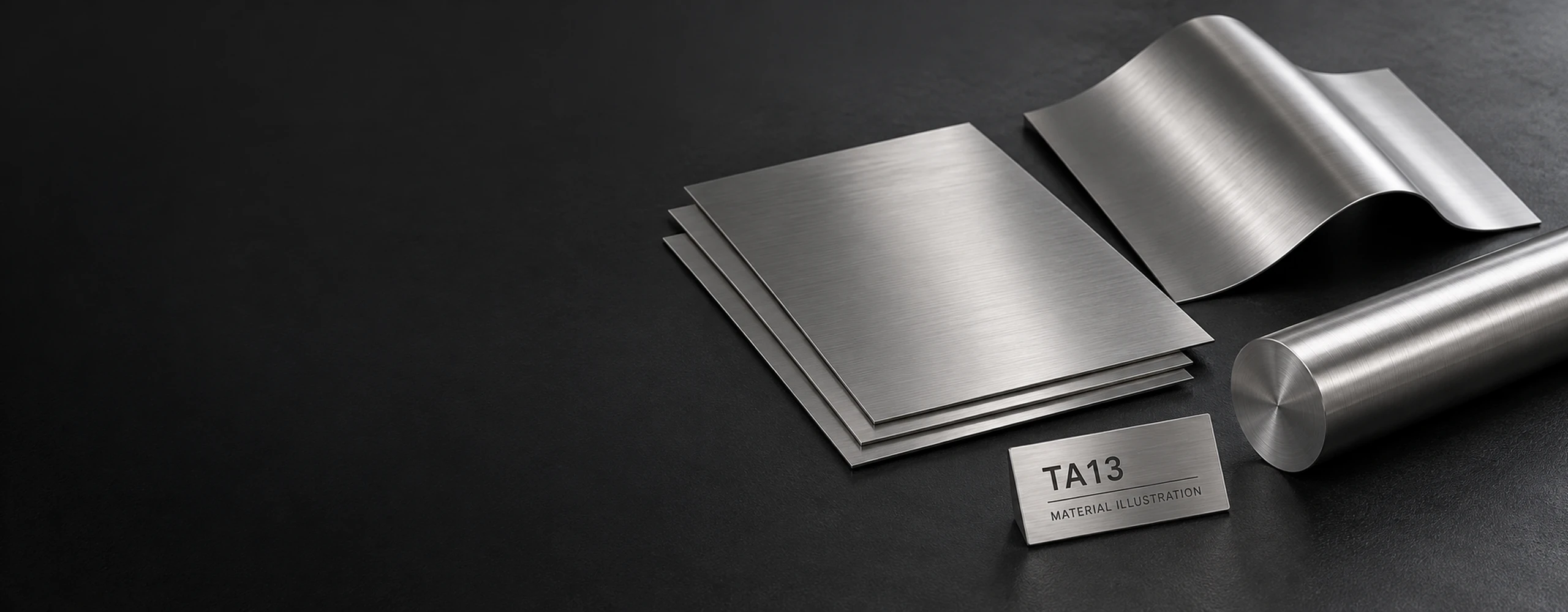
TA13 / Ti-2.5Cu · Alpha / near-alpha titanium alloy
TA13 / Ti-2.5Cu. Form first. Define the final condition.
Explore TA13 sheet, strip and formed blanks with the starting temper, forming sequence and final ageing requirement separated clearly.
Start with a specification, drawing or application. We’ll help identify the details still needed.
Material review. Supply coordination.
One contact in Baoji, China.
TA13 / Ti-2.5CuTi-2.5Cu
Alpha / near-alpha titanium alloyCold-formed sheet & aged fabricated parts
One contact20 years of founder experience · 100+ Baoji factories
01 / Product forms
Find your TA13 product.
Choose a material form or application. Send the dimensions, service conditions and required records so we can match the manufacturing route to your order.
01 / 06
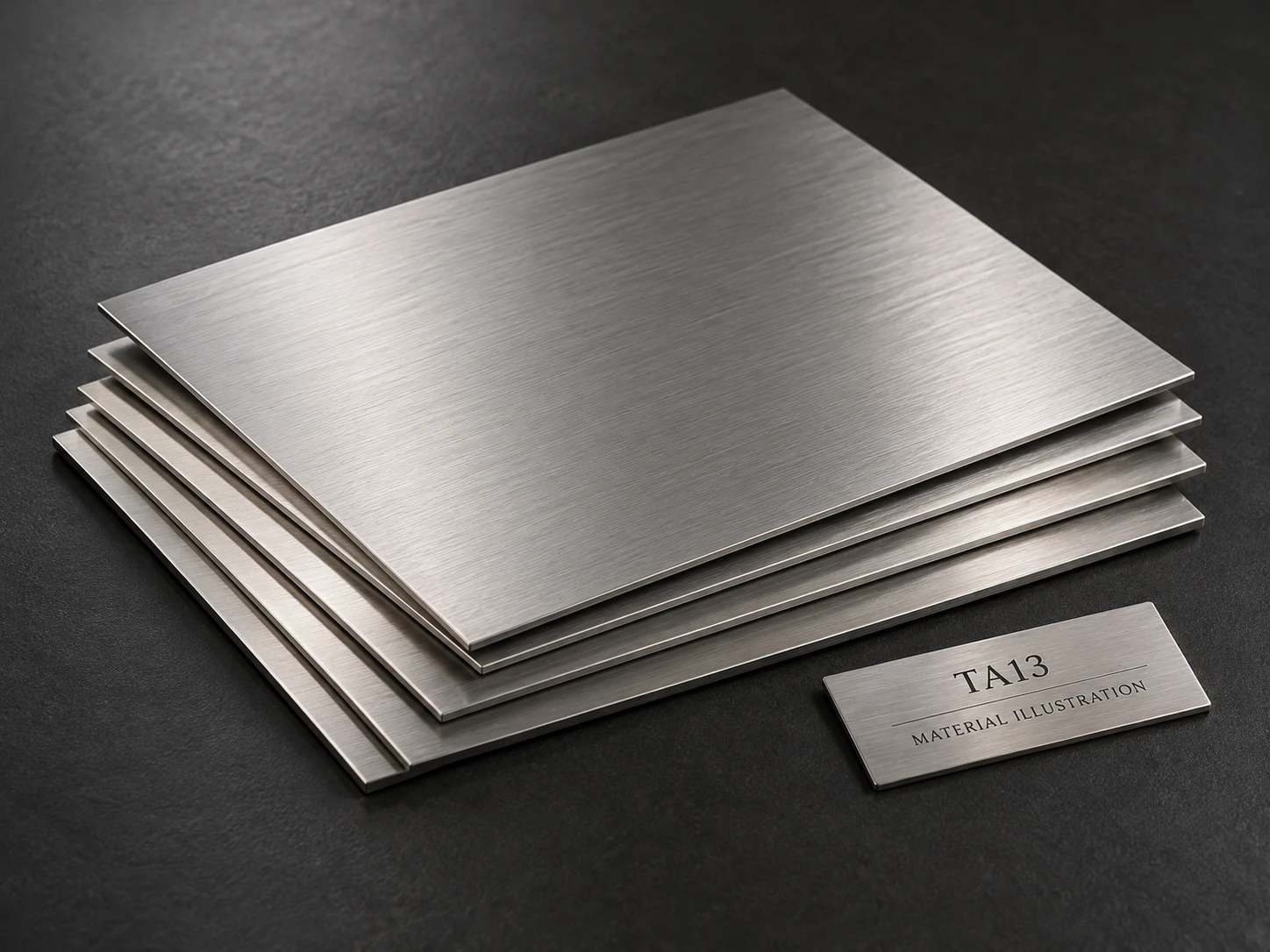
TA13 / Ti-2.5Cu
TA13 titanium sheet
The main entry point for formed panels and fabricated details requiring the Ti-2.5Cu system.
- Specification
- Approved grade-specific product specification, drawing revision and delivery condition; confirm supply feasibility.
- Size & delivery
- Thickness, width, length, flatness and grain direction.
- Manufacturing review
- State the condition used for forming and whether ageing follows.
- Inspection priorities
- Surface quality, thickness and specified directional tensile or bend tests.
02 / 06
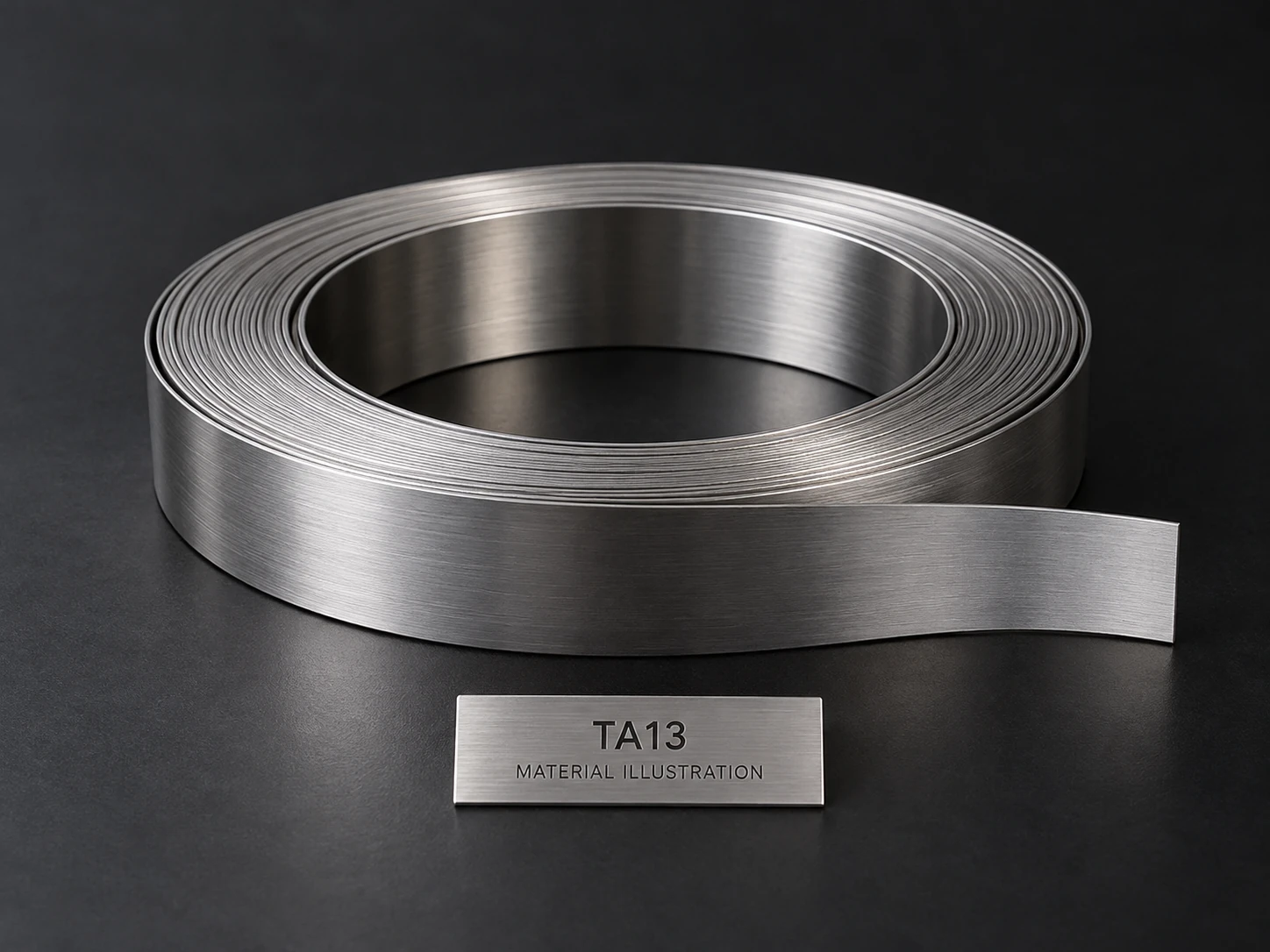
TA13 / Ti-2.5Cu
TA13 titanium strip
Narrow flat stock for repeated formed details and trimmed fabrication blanks.
- Specification
- Approved grade-specific product specification, drawing revision and delivery condition; confirm supply feasibility.
- Size & delivery
- Width, thickness, edge finish, coil geometry and length.
- Manufacturing review
- Review slitting, edge preparation and the intended bend sequence.
- Inspection priorities
- Edge defects, width consistency, camber and forming performance.
03 / 06
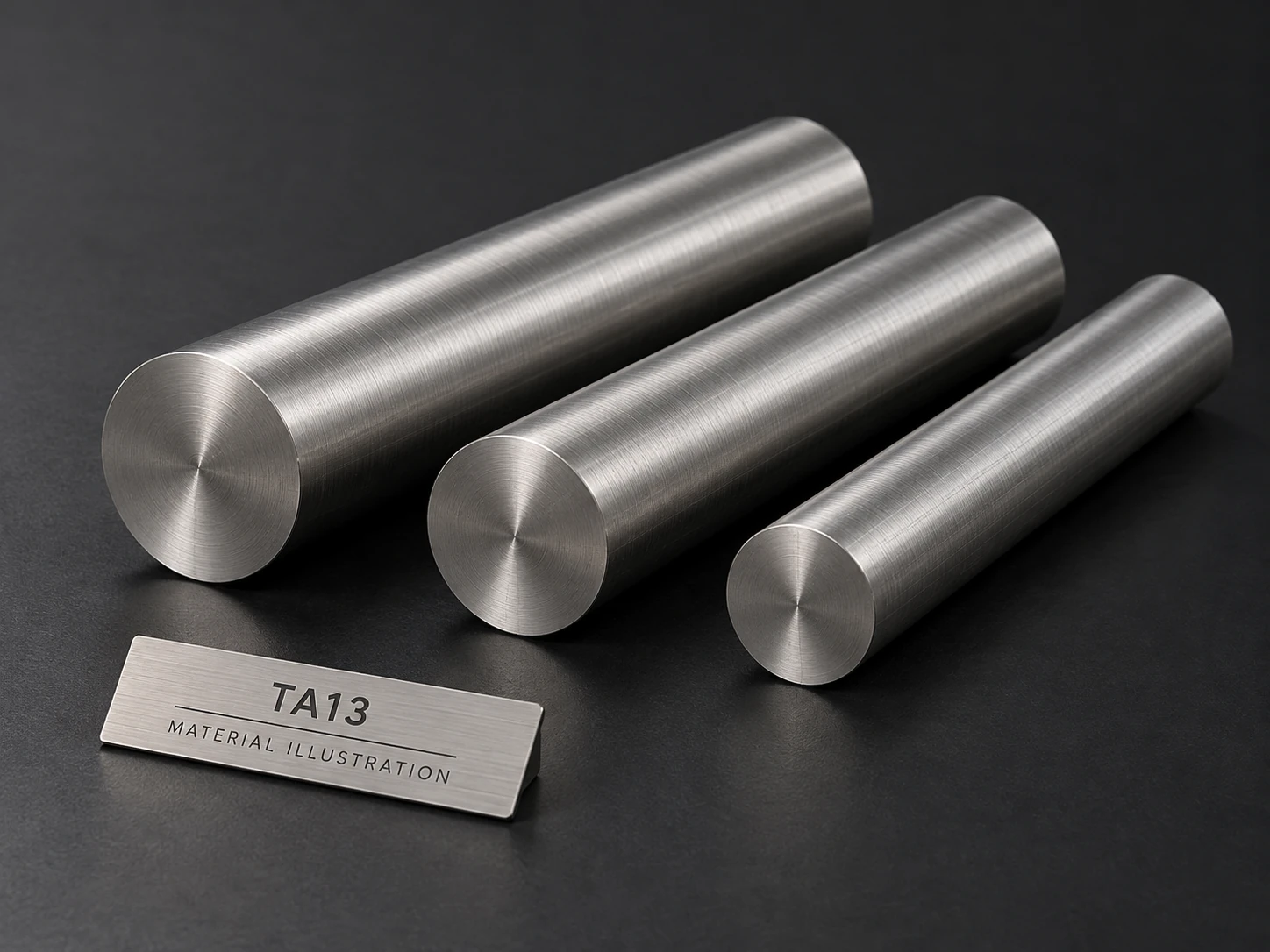
TA13 / Ti-2.5Cu
TA13 titanium bar
Round stock for machined details or conversion routes specifically approved in Ti-2.5Cu.
- Specification
- Approved grade-specific product specification, drawing revision and delivery condition; confirm supply feasibility.
- Size & delivery
- Diameter, length, straightness and machining allowance.
- Manufacturing review
- Identify the final thermal state and any subsequent joining.
- Inspection priorities
- Condition-specific mechanical results and full material identity.
04 / 06
TA13 / Ti-2.5Cu
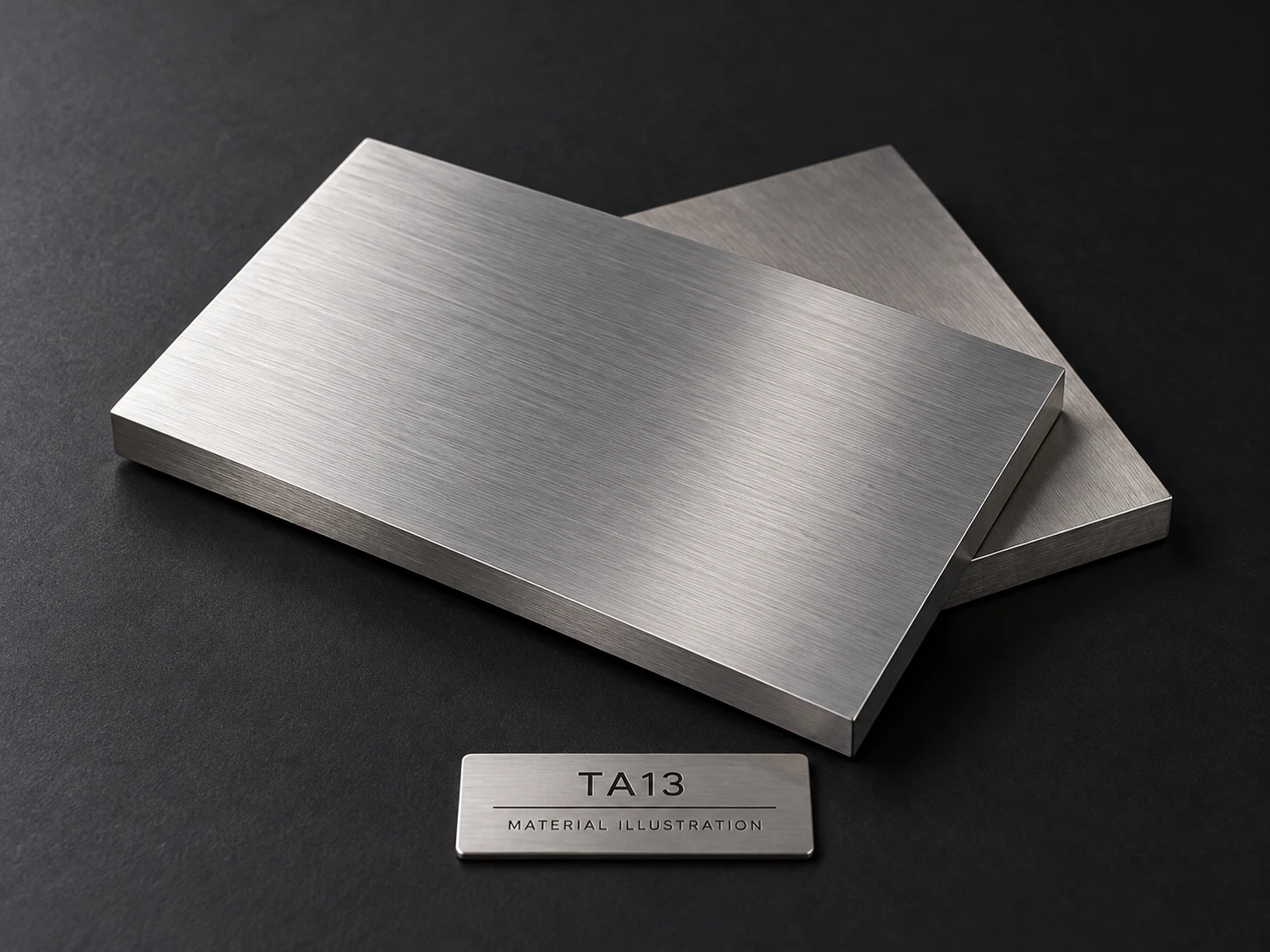
TA13 plate and flat blanks
Thicker flat stock for approved machining and fabrication enquiries.
- Specification
- Approved grade-specific product specification, drawing revision and delivery condition; confirm supply feasibility.
- Size & delivery
- Thickness, usable area, flatness and cutting allowance.
- Manufacturing review
- Plan stock removal and final thermal processing together.
- Inspection priorities
- Directional properties, dimensional envelope and specified internal tests.
05 / 06
TA13 / Ti-2.5Cu
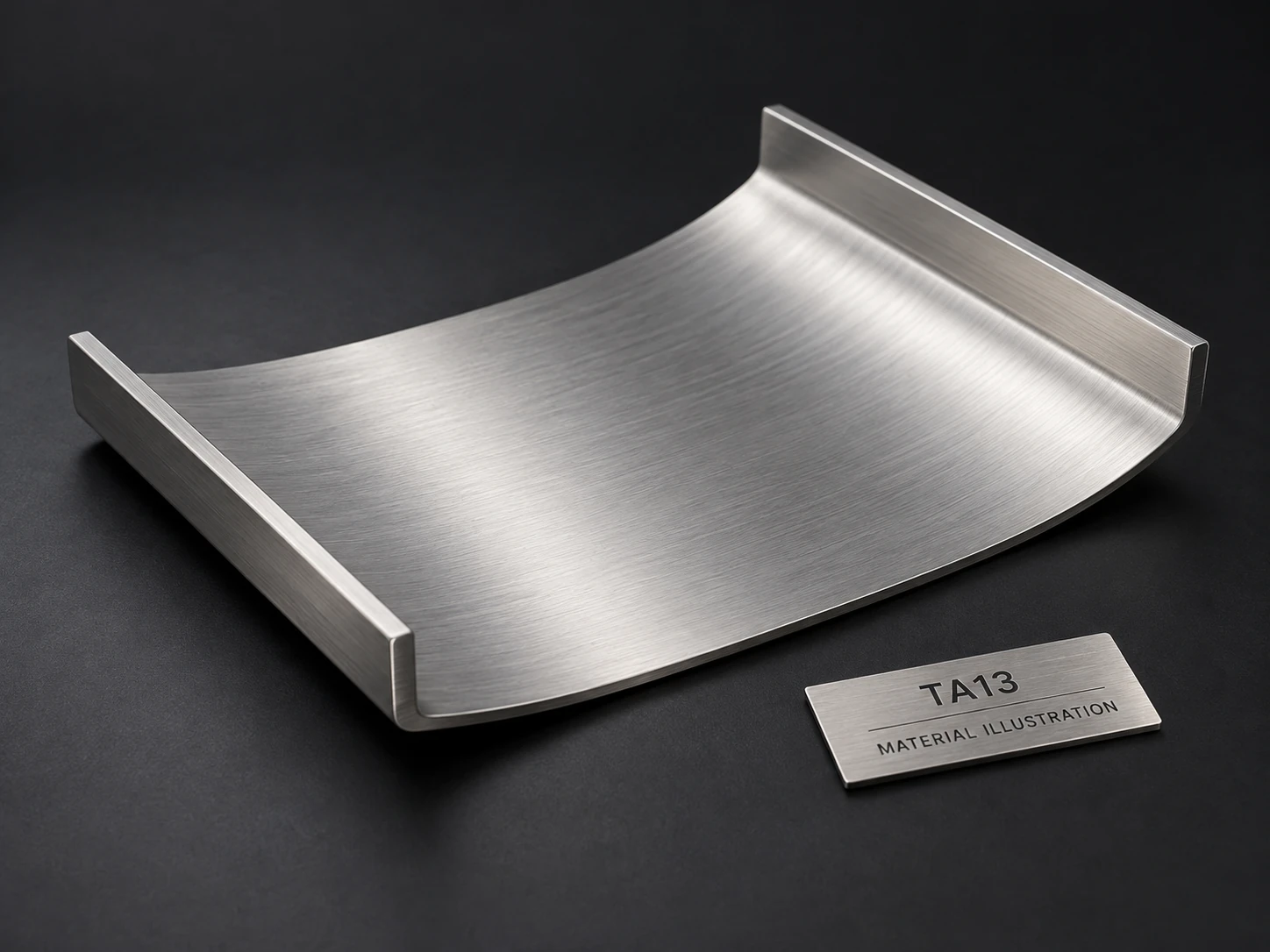
TA13 formed-panel enquiries
Illustrative shallow formed panels for a defined blank-to-part process.
- Specification
- Approved grade-specific product specification, drawing revision and delivery condition; confirm supply feasibility.
- Size & delivery
- Profile, flange geometry, radii, trim allowance and wall limits.
- Manufacturing review
- Review forming, joining and ageing as a controlled sequence.
- Inspection priorities
- Thickness distribution, cracking, profile and final-condition properties.
06 / 06
TA13 / Ti-2.5Cu
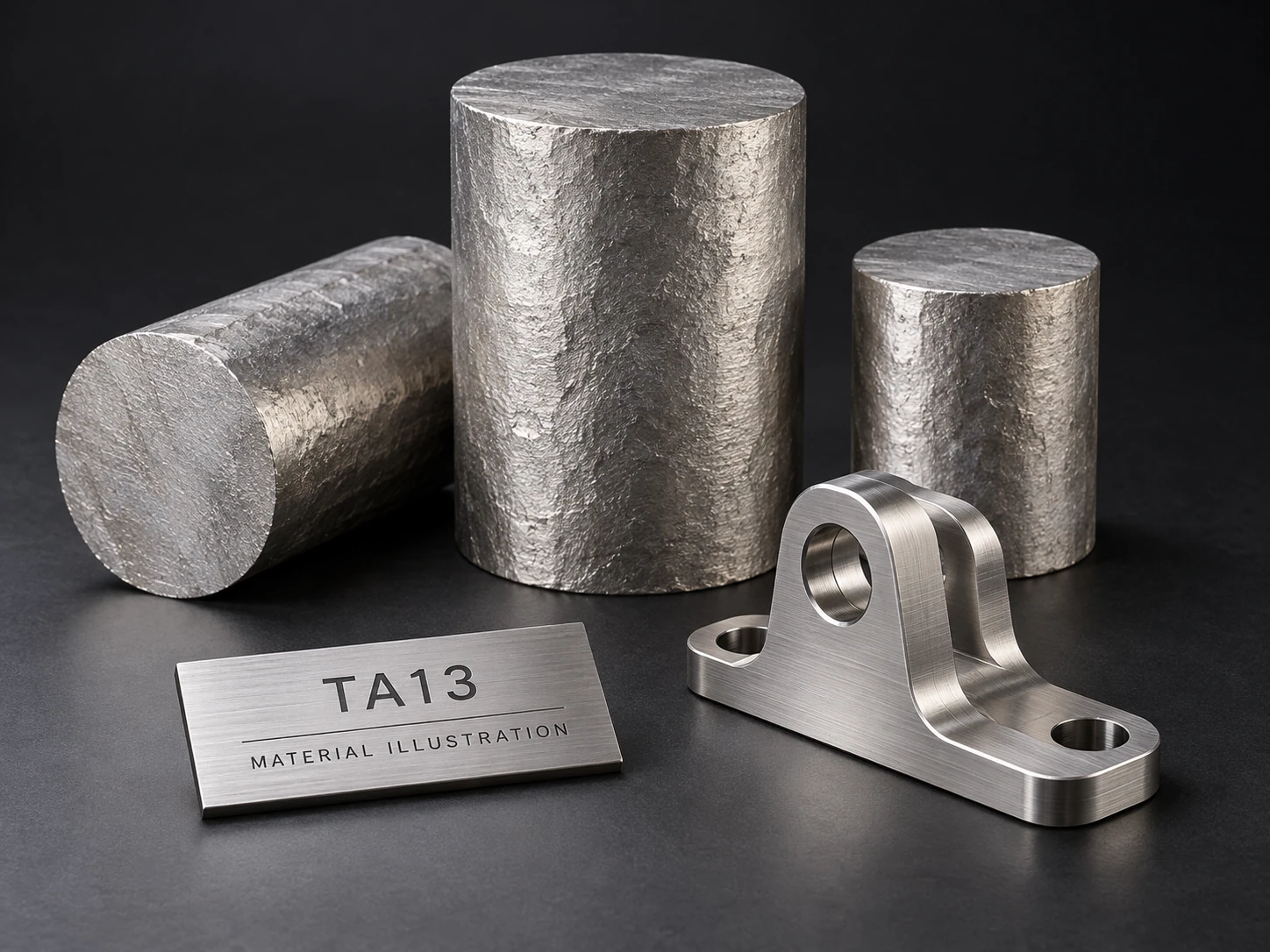
TA13 forging and machining blanks
Project-specific conversion stock and rough blanks where the drawing calls for TA13.
- Specification
- Approved grade-specific product specification, drawing revision and delivery condition; confirm supply feasibility.
- Size & delivery
- Rough envelope, datums, final section and sample quantity.
- Manufacturing review
- Confirm the permitted forging or machining route and heat-treatment ownership.
- Inspection priorities
- Structure, surface integrity and traceable final-condition release.
Images illustrate material forms and application possibilities. Reference markings identify specification options; they do not establish dual certification, stock availability or approval of finished equipment.
Define the shape. Share the service.
These details help turn a material enquiry into a comparable quotation.
01 / Drawing review
Cold-formed aerospace panels
Sheet, strip and trimmed forming blanks. Inspect incoming stock and then verify thinning, cracks and profile after forming.
Discuss your drawing02 / Drawing review
Duct and casing fabrication
Sheet and drawing-controlled curved panels. Agree surface quality, joint inspection, profile and the required component validation.
Discuss your drawing03 / Drawing review
Forming followed by ageing
Soft-condition sheet or stock with a defined subsequent ageing plan. Require final-condition tests after the specified process, not only the incoming stock certificate.
Discuss your drawing02 / Material identity
What is TA13 / Ti-2.5Cu titanium?
TA13 is the Ti-2.5Cu alloy system. Its distinctive procurement theme is forming in a relatively soft condition and defining any subsequent age-hardening step. The Ti-2.5Cu family has a documented history in fabricated aerospace parts, including duct-related applications. This is an industrial forming-material page; copper content alone does not establish antibacterial performance or medical approval.
Specify the exact standard edition, form and delivery condition. Nominal chemistry is only one part of an order; strength, microstructure, dimensional acceptance and traceability also need to be defined.
| Review item | Order basis | What to confirm |
|---|---|---|
| Forming condition | Delivery state before forming | Select the ordered condition around bend, draw or press operations rather than final strength alone. |
| Age-hardening response | Approved process and test stage | Separate incoming-stock acceptance from verification after the customer’s forming and ageing cycle. |
| Sheet geometry | Thickness and directional behavior | Specify thickness tolerance, flatness, surface condition and specimen orientation. |
| Thermal distortion | Finished panel tolerance | Allow for shape changes through heat treatment; identify checking fixtures and measurement stages. |
| Duct and panel service | Approved duty and joint design | Confirm vibration, temperature exposure and joint requirements for the actual fabricated part. |
| Selected element · wt % | Reference composition |
|---|---|
| Copper · Cu | 2.0–3.0 |
| Iron · Fe | 0.20 max |
| Oxygen · O | 0.20 max |
| Carbon · C | 0.08 max |
| Hydrogen · H | 0.010 max |
| Titanium · Ti | Balance |
Selected composition limits, wt %, from GB/T 3620.1-2016. Use the complete ordered standard for all impurity, residual-element and analysis requirements.
TA13 versus commercially pure titanium
The copper-bearing alloy offers a different strengthening response. Do not transfer a pure-titanium forming or annealing specification without review.
Annealed versus aged material
A forming blank and a finished aged part may have different property requirements. Name both conditions and the responsible processing stage.
TA13 versus TIMETAL 230
TIMETAL 230 is a producer reference for the Ti-2.5Cu family. Its datasheet does not certify a Chinese TA13 order or establish identical residual-element limits.
Fabrication material versus medical claim
TA13 chemistry is not evidence of implant approval, validated antimicrobial action or medical-device suitability.
03 / Application priorities
TA13 in application.
Review each main use through its service conditions, material choice, manufacturing route and acceptance plan. These are sourcing discussions; approved drawings and qualification requirements govern the final component.
Application review / 01
Cold-formed aerospace panels
The Ti-2.5Cu family is attractive where a softer starting condition supports forming before final strengthening. The approved part still determines the acceptable blank and process.
Products & manufacturing
Sheet, strip and trimmed forming blanks.
Service & design review
Provide radii, draw depth, rolling direction, tooling and the final thermal condition.
Purchase & inspection priorities
Inspect incoming stock and then verify thinning, cracks and profile after forming.
Application review / 02
Duct and casing fabrication
Producer literature documents Ti-2.5Cu in gas-turbine bypass duct fabrication. A TA13 project needs its own drawing and material qualification rather than a transferred application claim.
Products & manufacturing
Sheet and drawing-controlled curved panels.
Service & design review
Define airflow surfaces, seams, attachments, thermal exposure and vibration requirements.
Purchase & inspection priorities
Agree surface quality, joint inspection, profile and the required component validation.
Application review / 03
Forming followed by ageing
The order of operations is central to this alloy family. Buying material already in a high-strength condition may complicate a route intended to form first.
Products & manufacturing
Soft-condition sheet or stock with a defined subsequent ageing plan.
Service & design review
Identify delivered state, forming strain, joining sequence and the owner of each thermal operation.
Purchase & inspection priorities
Require final-condition tests after the specified process, not only the incoming stock certificate.
Application review / 04
Welded sheet details
A weld changes local thermal history and can influence the properties expected after ageing. Joining and heat treatment should be planned as one fabrication sequence.
Products & manufacturing
Sheet, strip and matching drawing-based details.
Service & design review
Supply joint design, shielding and cleaning requirements, restraint and permitted post-weld processing.
Purchase & inspection priorities
Define weld examination and joint-property acceptance in the final delivered state.
Application review / 05
Moderately heated fabricated parts
The Ti-2.5Cu family has elevated-temperature applications, but a temperature mentioned in a datasheet is not a universal design limit for TA13.
Products & manufacturing
Formed sheet and machined details under the approved specification.
Service & design review
State metal temperature, duration, stress, cycles and the allowed permanent deformation.
Purchase & inspection priorities
Specify the applicable hot-property or exposure tests and connect them to the actual condition.
Application review / 06
Strip-fed bracket production
For repeated small brackets, edge quality and strip geometry can affect forming consistency and scrap. The purchase should describe the process input that the tooling needs.
Products & manufacturing
Slit strip and cut-to-length flat blanks.
Service & design review
Give feed direction, bend radius, hole sequence, edge finish and intermediate treatments.
Purchase & inspection priorities
Check camber, width, burrs and representative formed pieces against the agreed trial.
Application review / 07
Dimensional control after thermal treatment
A formed panel may change shape through joining and ageing. Machining and trim allowances should leave a practical route to the final dimensions.
Products & manufacturing
Pre-trimmed panels and rough machining blanks.
Service & design review
Identify fixture datums, critical profile, permissible correction and the stage of final trimming.
Purchase & inspection priorities
Inspect final profile and wall thickness after the last required thermal operation.
Application review / 08
Legacy Ti-2.5Cu specification review
An older drawing may cite a producer or national specification different from current TA13 purchasing language. Preserve the original requirements while resolving the supply route.
Products & manufacturing
Sheet, bar and conversion stock in the documented form.
Service & design review
Provide the original specification, revision, condition and approved substitution procedure.
Purchase & inspection priorities
Compare chemistry, residuals, properties and tests before accepting a new source or designation.
Material references and applicable product standards are listed below. Select the delivery condition and acceptance plan for the specific product and approved application.
TA13 procurement checklist
Connect the application to the material order.
A useful specification connects the intended component, the supplied stock and the acceptance evidence. Share the drawing and known requirements first.
Define the application
Provide radii, draw depth, rolling direction, tooling and the final thermal condition.
Define the supplied stage
Sheet, strip and trimmed forming blanks. Distinguish raw stock, converted blanks and finished parts. Define who controls subsequent processing.
Define the acceptance evidence
Inspect incoming stock and then verify thinning, cracks and profile after forming.
Example: a useful TA13 material enquiry
TA13 titanium sheet; required dimensions and quantity; standard and drawing revision; delivery condition; intended downstream process; mechanical, structural and dimensional acceptance; traceability, destination and required date.
Identify the approved product specification and any project-specific qualification. The grade designation and chemistry standard alone do not define component acceptance.
Discuss your material requirement ↗04 / Standards & documentation
Match the standard
to the product.
Choose the specification by product form, material condition and application. Identify the required edition on the order; a chemistry standard alone does not define a finished forging or component.
| Product / review | International / project route | Chinese reference | Clarify before quotation |
|---|---|---|---|
| Identity & chemistry | Approved product and project specification | GB/T 3620.1-2016View PDF ↗ | Review the complete chemical limits and product requirements; nominal alloy names do not establish automatic interchangeability. |
| TIMETAL 230 · Ti-2.5Cu producer reference | TIMETAL 230 · Ti-2.5Cu producer referencePublisher reference ↗ | Compare the complete ordered Chinese requirements | Producer information on the alloy family and forming/ageing concept. Chinese TA13 acceptance remains governed by the ordered specification. |
| Drawing-based blanks & parts | Approved drawing and controlled manufacturing plan | Agreed product / project specification | Define the supply stage, conversion route, heat treatment, structure, NDT, dimensions and traceability. Material certification is separate from finished component qualification. |
Agree the order basis.
The purchase order must identify the required revision, grade, product form, condition and inspection. Reference documents do not replace design approval, manufacturing qualification or application-specific acceptance.
Request the controlled specification revision for your order. Any substitution, equivalence or dual-certification claim requires a documented comparison and agreement.
05 / Order coordination
Know the scope
before ordering.
Our founder’s 20 years in titanium inform the questions we ask before quotation and the supply options we review with you.
A quotation you can evaluate
Agree the grade, standard edition, dimensions, tolerance, condition and quantity before comparing prices.
- Identify whether inspection, samples and tooling are included.
- Confirm packaging, transport and delivery terms.
- Record items that still need technical confirmation.
Acceptance agreed before supply
Confirm material identity, delivery condition, heat-to-piece traceability, dimensional checks and required testing before production. For converted parts, define inspection after forging, heat treatment and machining, including the specified microstructure and NDT scope.
Independent inspection can be discussed with its scope, timing, acceptance criteria and cost agreed for the order.
Delivery with clear milestones
Review the proposed lead time, approvals, production sequence and dispatch requirements. For several product forms, coordinate document and packing readiness together.
Material substitutions and technical changes require written approval. A schedule deviation should identify the impact, decisions needed and next steps.
One contact when an issue arises
Contact TiHubs with the order reference, affected items and supporting photos or inspection records.
We record the issue, review it against the agreed requirements and coordinate the next steps with the relevant manufacturing parties.
01 / Material identity
Material records
Grade, standard, test results and heat or batch identity matched to the supplied items.
02 / Agreed acceptance
Inspection records
Dimensional and testing records for the agreed scope, including critical drawing requirements.
03 / Ready for dispatch
Dispatch records
Item identification, packing list, protective packaging and required shipment documents.
06 / Questions before sourcing
Before you specify
TA13 / Ti-2.5Cu.
A clear material designation is the beginning. Product form, specification revision, material condition and acceptance complete the requirement.
A useful first enquiry
- Product and specificationProduct form, standard edition, dimensions and material condition.
- Order and deliveryQuantity, destination and any required delivery date.
- Acceptance requirementsDrawing revision, inspection, certificates and packaging.
Not every detail is finalized? Send the information you have. We can help identify the questions to resolve before quotation.
What happens next: requirement review, technical clarification, then a supply proposal and quotation.
What is distinctive about TA13?
It is a Ti-2.5Cu alloy with a useful forming-and-ageing procurement theme. The starting and final conditions should be stated separately.
Does TA13 mean ASTM Grade 13?
No. ASTM Grade 13 is a different alloy system. The number alone does not establish a relationship.
Is TIMETAL 230 an automatic equivalent?
It is a useful producer reference for the Ti-2.5Cu family. Complete specifications and certification requirements must be compared.
Should I order annealed or aged sheet?
Choose according to the approved fabrication sequence. A route that forms before ageing needs a suitable starting condition.
Can a forming trial use a different thickness?
Only if the responsible manufacturer accepts it as representative. Thickness, direction and condition influence the result.
Can TA13 sheet be welded before ageing?
The approved procedure must define the sequence and final joint properties. Do not assume that any welding and ageing combination is acceptable.
Does copper make TA13 an antibacterial medical alloy?
That claim requires separate testing and regulatory evidence. This page supplies industrial material information only.
Can the datasheet temperature be used as my design limit?
No. Stress, exposure duration, condition and the governing design requirements determine suitability.
What should I send for a formed TA13 panel?
Include the blank and final geometry, thickness, rolling direction, forming and joining steps, final condition and inspection requirements.
07 / Your next step
Start with the
requirement you have.
Send the product details, drawing or operating conditions you already know. We will identify missing information and discuss a suitable supply route before quotation.
- Requirement review
- Technical clarification
- Supply proposal and quotation
Combine materials and parts in one enquiry.
Send one list of TA13 forms, sizes and quantities. Include drawing revisions, material conditions and items that must be supplied or dispatched together.
Share the service and acceptance priorities.
Include load and temperature conditions, critical sections, required material records, process qualification, inspection, destination and timing.
Baoji, China · info@tihubs.com
Start your TA13 / Ti-2.5Cu enquiry
Send your material form, drawing or process conditions. We will help clarify the remaining requirements.