Baoji High-tech Zone, ChinaTitanium sourcing · One contact


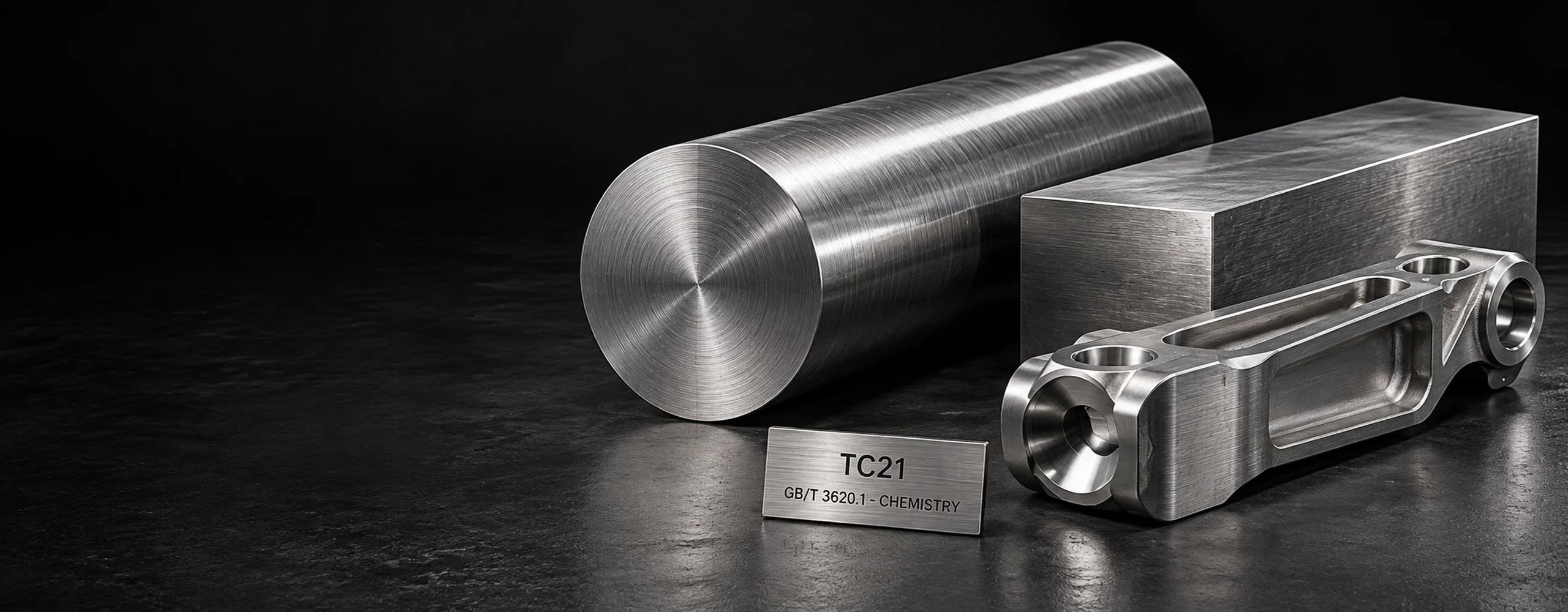
TC21 Titanium Alloy · Alpha-beta titanium alloy
TC21 Titanium Alloy. For large load-bearing structures.
Source TC21 large-diameter forged bar, structural forgings and machining blanks. Connect high-strength and damage-tolerance requirements to section size, heat treatment, microstructure and an agreed inspection plan.
Start with a specification, drawing or application. We’ll help identify the details still needed.
Material review. Supply coordination.
One contact in Baoji, China.
TC21 Titanium AlloyTi-Al-Mo-Nb-Zr-Sn-Cr alloy system
Alpha-beta titanium alloyLarge aircraft structures & damage tolerance
One contact20 years of founder experience · 100+ Baoji factories
01 / Product forms
Find your TC21 product.
Choose a material form or application. Send the dimensions, service conditions and required records so we can match the manufacturing route to your order.
01 / 06
TC21 Titanium Alloy
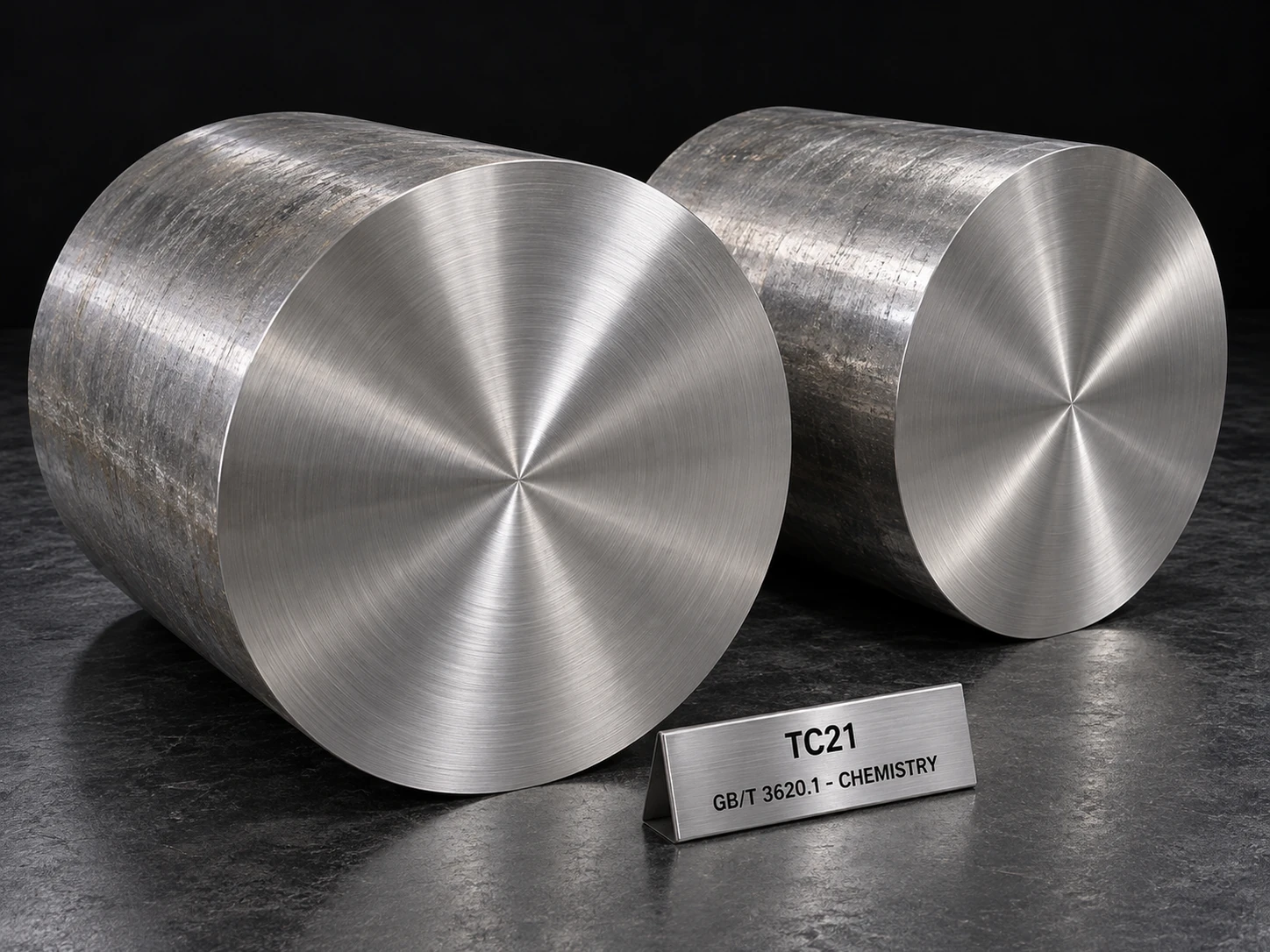
TC21 large-diameter forged bar
Forged round stock for large load-bearing components and structural machining programmes.
- Specification
- TC21 chemistry plus the approved bar or structural-stock specification and condition.
- Size & delivery
- Diameter, length, straightness, surface preparation, usable envelope and test allowance.
- Manufacturing review
- Define section-dependent processing and intended downstream machining or forging.
- Inspection priorities
- Structure, directional properties, specified toughness tests and ultrasonic coverage appropriate to the section.
02 / 06
TC21 Titanium Alloy
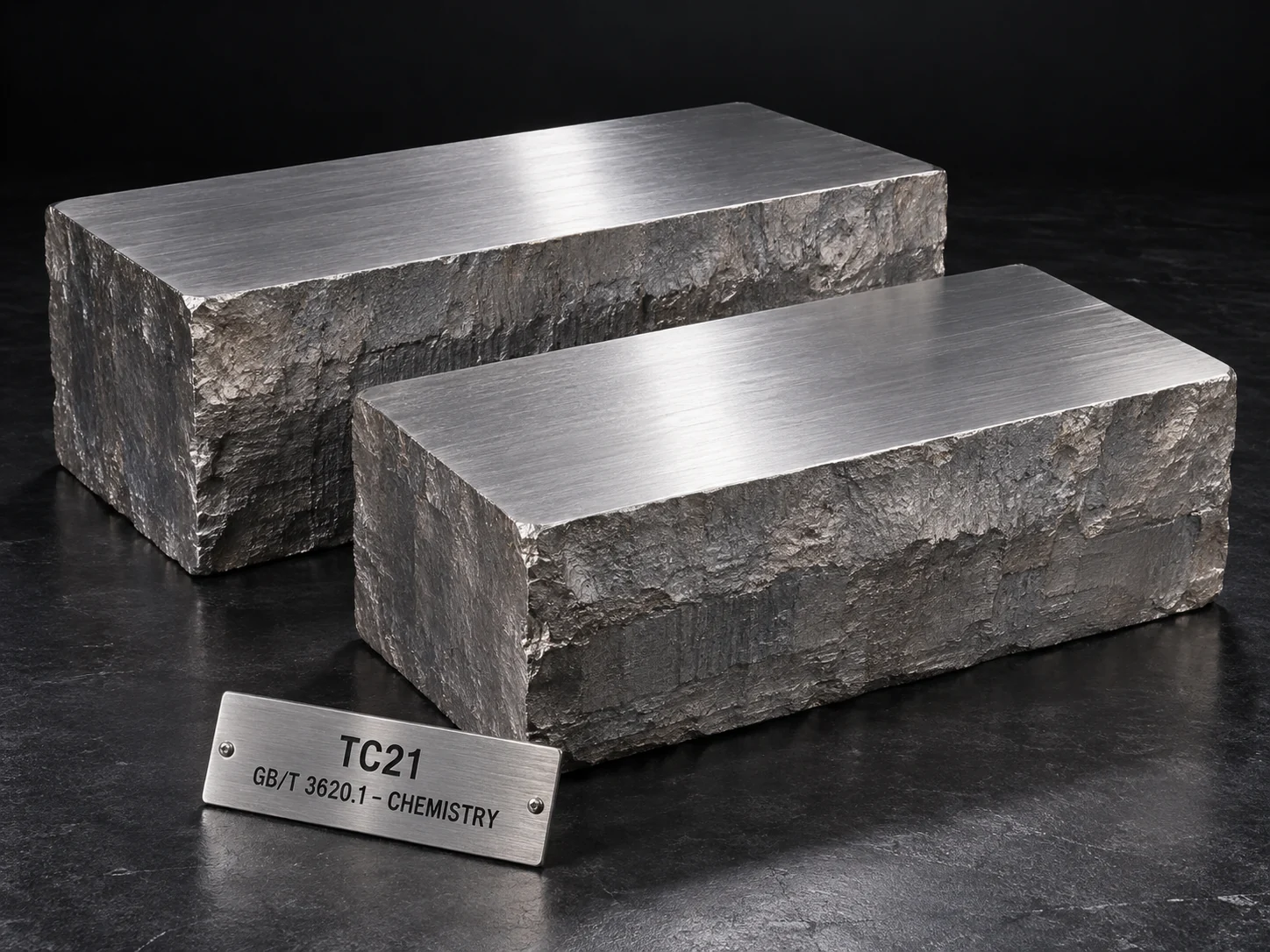
TC21 billet & preforms
Conversion stock for large structural forgings with an agreed downstream manufacturing route.
- Specification
- GB/T 3620.1 chemistry plus the approved drawing and forging specification; agree revision and delivery condition.
- Size & delivery
- Section, cut weight, length, end-crop allowance and preform geometry.
- Manufacturing review
- Share deformation sequence, final critical sections, stock utilization and required starting structure.
- Inspection priorities
- Melt and billet identity, incoming structure, surface checks and agreed NDT before conversion.
03 / 06
TC21 Titanium Alloy
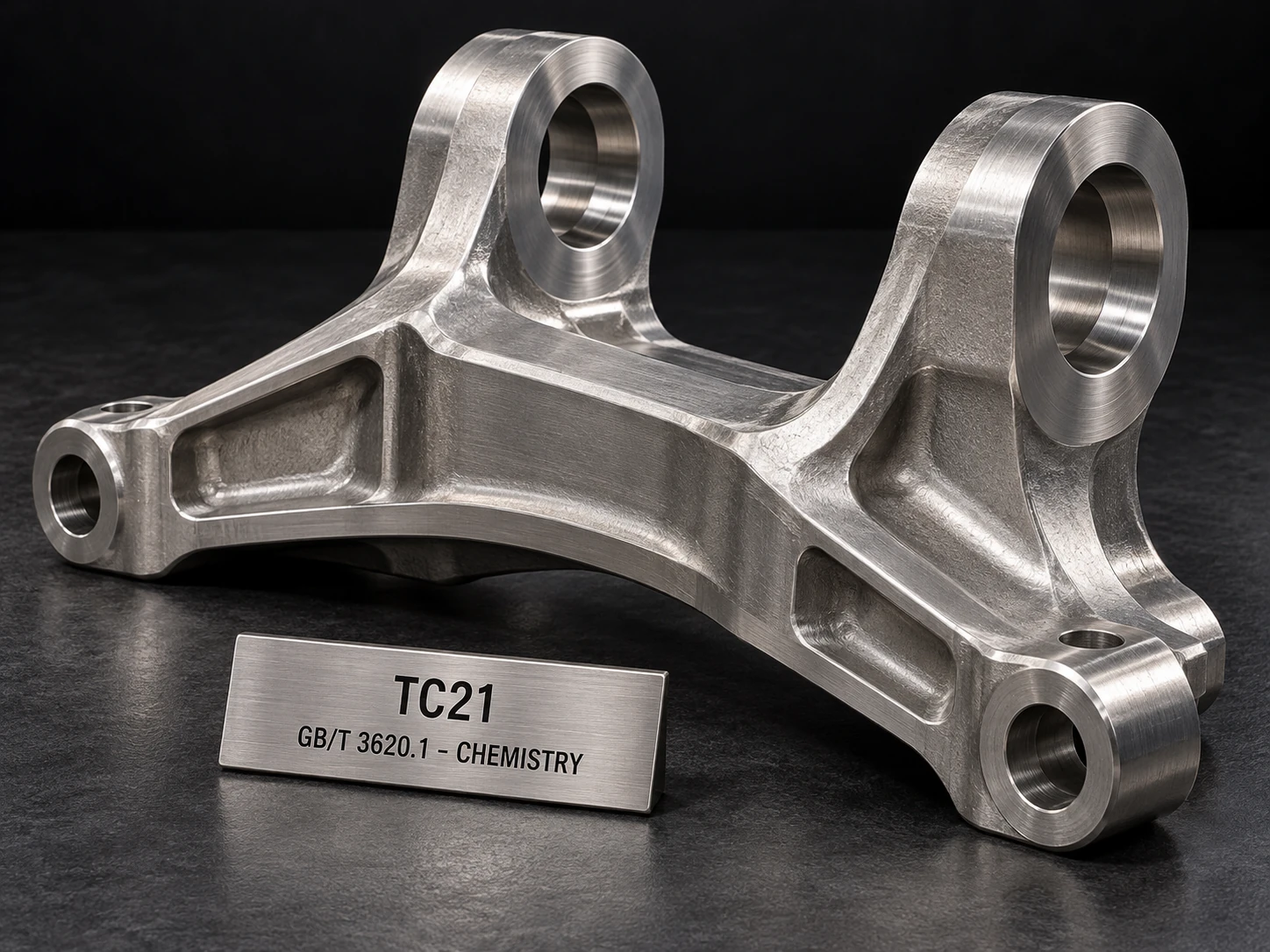
TC21 structural forgings
Near-net or oversize forgings for approved aircraft load-bearing drawings.
- Specification
- GB/T 3620.1 chemistry plus the approved drawing and forging specification; agree revision and delivery condition.
- Size & delivery
- Blank envelope, main load directions, thickest sections, datums and test prolongations.
- Manufacturing review
- Agree grain-flow objectives, thermal route, machining stages and change-control requirements.
- Inspection priorities
- Mechanical and structural acceptance, NDT, dimensional reports and full heat-to-forging traceability.
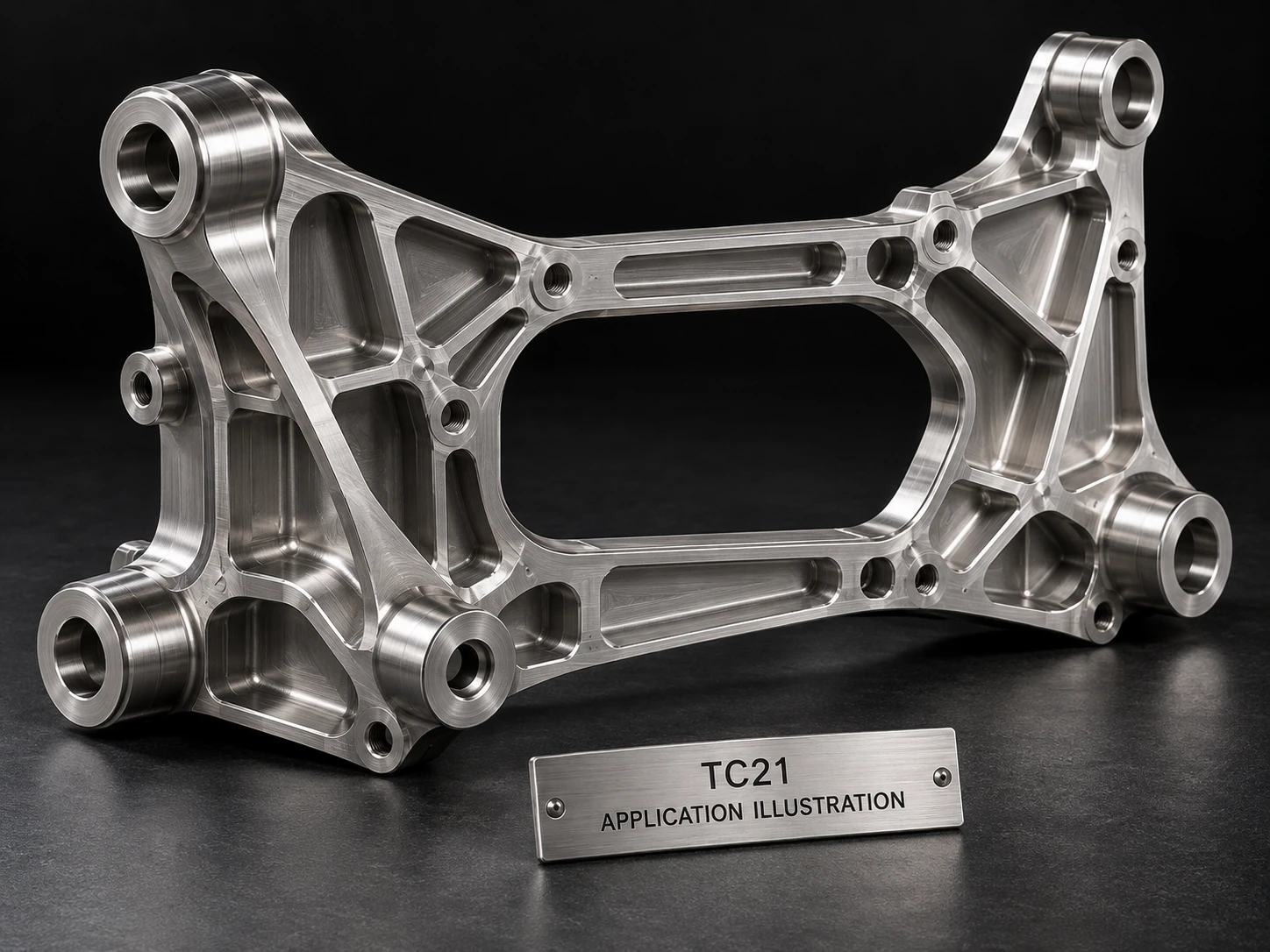
04 / 06
TC21 Titanium Alloy
TC21 frame & beam blanks
Application illustration: rough structural blanks for frames, beams and large machined load paths.
- Specification
- Released structural drawing and approved TC21 manufacturing specification.
- Size & delivery
- Rib and web geometry, pocket depth, bearing locations and machining allowance.
- Manufacturing review
- Review distortion control, roughing sequence, stabilization and final inspection access.
- Inspection priorities
- Usable dimensions, directional properties, internal examination and critical surface checks.
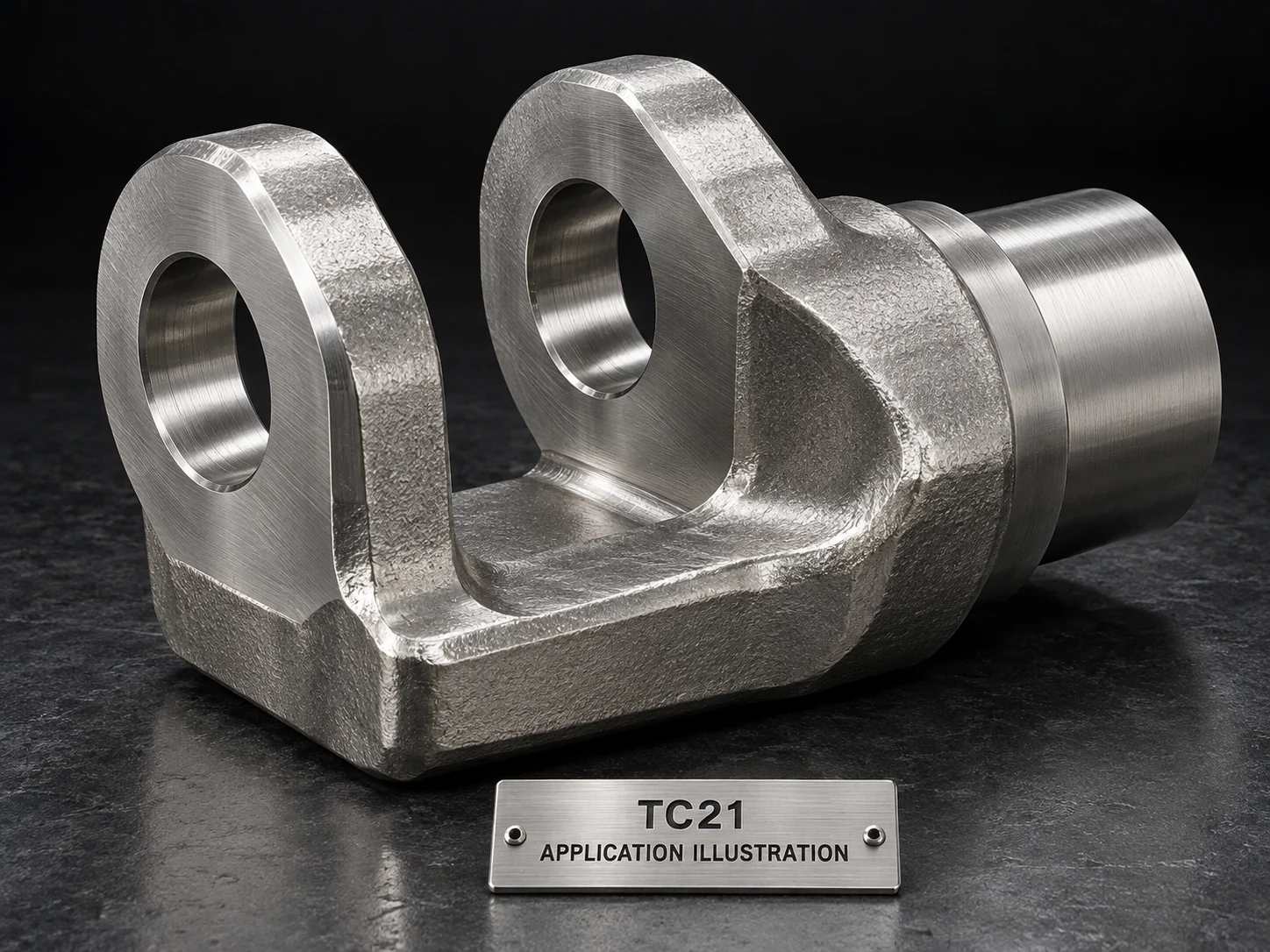
05 / 06
TC21 Titanium Alloy
TC21 lug & joint blanks
Application illustration: forged or rough-machined fittings for concentrated load-transfer features.
- Specification
- Approved drawing, material condition and permitted conversion route.
- Size & delivery
- Bore orientation, lug thickness, fillet radii, bearing surfaces and stock allowance.
- Manufacturing review
- Align the agreed grain-flow and sampling plan with the critical load path.
- Inspection priorities
- Specified toughness and directional tests, NDT and dimensional checks at the defined stages.
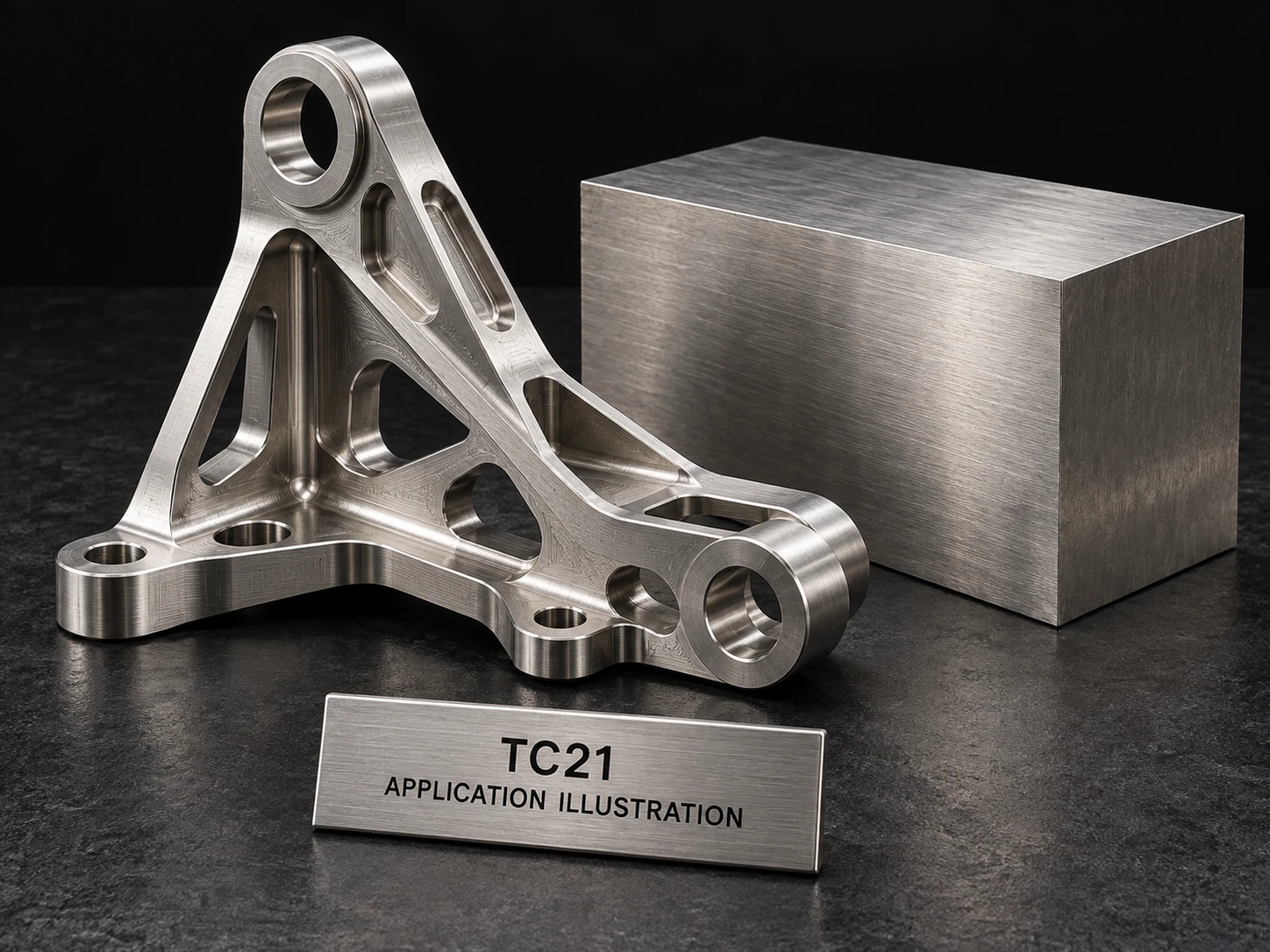
06 / 06
TC21 Titanium Alloy
TC21 custom structural blanks
Application illustration: drawing-based machining stock and near-net shapes for controlled structural programmes.
- Specification
- Drawing revision, material/process specification and delivery-stage definition.
- Size & delivery
- Envelope, datums, remaining stock, test coupons and first-article quantity.
- Manufacturing review
- Compare bar machining with forging against the same finished geometry and qualification requirements.
- Inspection priorities
- First-article inspection, process records and the specified material and component acceptance results.
Images illustrate material forms and application possibilities. Reference markings identify specification options; they do not establish dual certification, stock availability or approval of finished equipment.
Define the shape. Share the service.
These details help turn a material enquiry into a comparable quotation.
01 / Drawing review
Drawing-controlled blanks
Provide rough and finished drawings, datum positions, critical sections, machining allowance and the intended conversion route.
Discuss your drawing02 / Drawing review
Heat treatment & process sequence
Identify the required delivery condition and subsequent manufacturing steps. Agree process records, sampling stages and dimensional checks after thermal processing.
Discuss your drawing03 / Drawing review
Component inspection planning
Specify surface integrity, microstructure, NDT, dimensional acceptance and traceability. Identify which tests apply to raw material and which apply to the finished component.
Discuss your drawing02 / Material identity
What is TC21 Titanium Alloy titanium?
TC21 is a Chinese high-strength titanium alloy developed for damage-tolerant structural material applications. Large load-bearing aircraft components are a key procurement focus. Useful performance depends on the forging and heat-treatment route, section and microstructure, so the order should define strength, ductility, toughness and any crack-growth requirements together rather than rely on a single catalogue tensile value.
Specify the exact standard edition, form and delivery condition. Nominal chemistry is only one part of an order; strength, microstructure, dimensional acceptance and traceability also need to be defined.
| Review item | Order basis | What to confirm |
|---|---|---|
| Material condition | Define the ordered heat-treatment state | Tie test results to the same conversion and thermal history as the supplied product. |
| Strength and ductility | Product- and section-dependent | Specify tensile, proof strength, elongation, sampling location and test direction in the purchase requirement. |
| Microstructure | Agree acceptance limits | Review grain structure, alpha morphology, surface alpha case and metallographic sampling for the manufacturing route. |
| Fatigue and fracture | Application-specific validation | A material tensile certificate does not establish component life. Specify any fatigue, toughness or crack-growth evaluation separately. |
| Non-destructive examination | Drawing / product specification | Define method, calibration, coverage, acceptance class and reporting before production. |
| Selected element · wt % | Reference composition |
|---|---|
| Aluminium · Al | 5.50–6.80 |
| Molybdenum · Mo | 2.00–3.30 |
| Niobium · Nb | 1.20–2.20 |
| Zirconium · Zr | 1.60–2.50 |
| Tin · Sn | 1.60–2.50 |
| Chromium · Cr | 0.90–2.00 |
| Titanium · Ti | Balance |
Selected TC21 composition limits, wt %, from GB/T 3620.1-2016 Table 3. Published nominal formulas vary; use the full ordered standard, including impurity and residual limits, for acceptance.
TC21 as a Chinese grade
Keep TC21 and the required Chinese or project specification on the order. A published nominal composition is not an automatic international equivalence or ASTM grade assignment.
Strength with damage tolerance
Tensile strength, ductility, fracture toughness and fatigue crack growth address different design needs. The approved specification must define which are acceptance tests and where specimens are taken.
Compared with TC18
Both can be discussed for demanding structural procurement, but they are different alloys. A TC18 certificate or qualified process cannot release a TC21 part without an approved material change.
Section and process matter
A small coupon or thin bar does not establish the properties of a large forging. Agree representative section, specimen orientation, thermal history and location-dependent checks.
03 / Application priorities
TC21 in application.
Review each main use through its service conditions, material choice, manufacturing route and acceptance plan. These are sourcing discussions; approved drawings and qualification requirements govern the final component.
Application review / 01
Large aircraft load-bearing structures
TC21 is a priority material for enquiries involving large aircraft load-bearing structures and damage-tolerant design requirements. Frames, beams and major fittings can contain several section sizes and load directions, so the procurement specification must describe the complete blank and its process history.
Products & manufacturing
Large-diameter forged bar, structural forgings and rough-machined frame or beam blanks.
Service & design review
Provide the drawing, principal loads, critical sections, machining allowance and approved thermal route. Identify whether a near-net forging is mandatory and where test material can be retained.
Purchase & inspection priorities
Agree directional mechanical properties, structure, ultrasonic coverage and specified toughness or crack-growth testing. Preserve identity from heat through forging and machining.
Application review / 02
Damage-tolerance requirements
Damage tolerance is a design and verification requirement, not a label established by high tensile strength alone. TC21 purchasing should connect the required strength to fracture toughness, crack-growth behaviour and the inspection assumptions of the approved structure.
Products & manufacturing
Representative structural forgings and bar sections with planned test prolongations.
Service & design review
State the governing test methods, specimen orientation and location, thickness constraints and acceptance criteria. Identify which tests are qualification evidence and which are required for each production lot.
Purchase & inspection priorities
Review results as a coordinated set against the order. Do not extrapolate a published research condition or a small coupon to an unrestricted component-life claim.
Application review / 03
Lugs, clevises & major joints
Large joint fittings concentrate load around bores, fillets and transitions. A TC21 blank must support the approved load path and leave enough stock for final machining and examination.
Products & manufacturing
Forged lugs, clevises, junction fittings and oversize machining blanks.
Service & design review
Provide bore direction, bearing geometry, critical radii, section changes and grain-flow requirements. Establish the allowed conversion route and inspection stages before production.
Purchase & inspection priorities
Specify directional properties and relevant toughness tests, plus ultrasonic and surface examination. Critical final dimensions and assembly performance require separate drawing-based acceptance.
Application review / 04
Large-section forged bar
Large TC21 bar is useful when the approved part can be machined from round stock or needs a defined starting section for further conversion. Centre-to-surface consistency and sampling become substantive purchasing issues as section size increases.
Products & manufacturing
Forged rounds, cut large-diameter lengths and representative qualification stock.
Service & design review
State usable diameter, straightness, surface removal, delivery condition and the final component section. Agree sampling positions and any additional uniformity checks.
Purchase & inspection priorities
Require the specified macro/microstructure, directional tests and internal examination coverage. Compare quotations on the same test-stock and cropping allowance.
Application review / 05
Frames, beams & pocketed blanks
Deep pockets and thin webs can make machining distortion and usable stock critical to a TC21 structural order. The blank price should be evaluated together with the machining sequence and inspection access.
Products & manufacturing
Structural forgings, oversize blocks and rough-machined frame or beam blanks.
Service & design review
Provide finished CAD and drawing revisions, datums, minimum wall, pocket depths and permissible stabilization steps. Define remaining stock at each delivery stage.
Purchase & inspection priorities
Inspect the usable envelope and critical surfaces after the agreed operations. Keep material direction and heat identity visible through nesting and part separation.
Application review / 06
Heat treatment & microstructure
The balance of TC21 strength, ductility and toughness depends on the manufacturing route and resulting structure. The purchase order should identify the approved treatment and structural acceptance rather than request an undefined high-strength condition.
Products & manufacturing
Bar, billet and structural forgings in the specified delivery state.
Service & design review
Define the controlled process revision, section range, thermal records, sampling and any subsequent treatments after rough machining. Identify who authorizes process changes.
Purchase & inspection priorities
Tie mechanical and metallographic results to the actual delivered state. Include any location-dependent examination needed for the largest sections.
Application review / 07
First-article structural qualification
A new TC21 structural route should be assessed with representative geometry, section and process history. First-article planning makes the required test stock, inspection access and documentation visible before the production forging is made.
Products & manufacturing
Trial forgings, representative bar lots and retained specimens from critical locations.
Service & design review
Agree the qualification matrix, drawing revision, process controls, destructive tests, NDT and dimensional reports. Identify the approval authority and required hold points.
Purchase & inspection priorities
Record the approved route and limits of qualification. Successful trial results apply to the defined programme and do not create unrestricted aerospace certification.
Application review / 08
Recurring structural supply
Repeat TC21 orders need stable technical requirements and a reliable link between each large blank and its acceptance records. Scheduled procurement also benefits from early agreement on long-lead conversion and inspection stages.
Products & manufacturing
Controlled lots of approved bar, structural forgings and rough-machined blanks.
Service & design review
Provide part numbers, drawing and specification revisions, condition, quantities, delivery sequence and document requirements. Establish notification and approval for material-source or process changes.
Purchase & inspection priorities
Reconcile piece markings, process history, mechanical and NDT reports, dimensional results and packing lists before dispatch.
Material references and applicable product standards are listed below. Select the delivery condition and acceptance plan for the specific product and approved application.
TC21 procurement checklist
Connect the application to the material order.
A useful specification connects the intended component, the supplied stock and the acceptance evidence. Share the drawing and known requirements first.
Define the application
Provide the drawing, principal loads, critical sections, machining allowance and approved thermal route. Identify whether a near-net forging is mandatory and where test material can be retained.
Define the supplied stage
Large-diameter forged bar, structural forgings and rough-machined frame or beam blanks. Distinguish raw stock, converted blanks and finished parts. Define who controls subsequent processing.
Define the acceptance evidence
Agree directional mechanical properties, structure, ultrasonic coverage and specified toughness or crack-growth testing. Preserve identity from heat through forging and machining.
Example: a useful TC21 material enquiry
TC21 large-diameter forged bar; required dimensions and quantity; standard and drawing revision; delivery condition; intended downstream process; mechanical, structural and dimensional acceptance; traceability, destination and required date.
Identify the approved product specification and any project-specific qualification. The grade designation and chemistry standard alone do not define component acceptance.
Discuss your material requirement ↗04 / Standards & documentation
Match the standard
to the product.
Choose the specification by product form, material condition and application. Identify the required edition on the order; a chemistry standard alone does not define a finished forging or component.
| Product / review | International / project route | Chinese reference | Clarify before quotation |
|---|---|---|---|
| Identity & chemistry | Approved customer / OEM material and process specification | GB/T 3620.1-2016View PDF ↗ | Verify the full composition and ordered product requirements. A Chinese grade name alone does not establish international or dual certification. |
| Forged bar & conversion stock | Approved bar / forging-stock specification | GB/T 2965-2023View PDF ↗ | Confirm the grade, section, delivery condition, sampling and additional aerospace requirements before selecting a release basis. |
| Drawing-based blanks & parts | Approved drawing and controlled manufacturing plan | Agreed product / project specification | Define the supply stage, conversion route, heat treatment, structure, NDT, dimensions and traceability. Material certification is separate from finished component qualification. |
Agree the order basis.
The purchase order must identify the required revision, grade, product form, condition and inspection. Reference documents do not replace design approval, manufacturing qualification or application-specific acceptance.
Request the controlled specification revision for your order. Any substitution, equivalence or dual-certification claim requires a documented comparison and agreement.
05 / Order coordination
Know the scope
before ordering.
Our founder’s 20 years in titanium inform the questions we ask before quotation and the supply options we review with you.
A quotation you can evaluate
Agree the grade, standard edition, dimensions, tolerance, condition and quantity before comparing prices.
- Identify whether inspection, samples and tooling are included.
- Confirm packaging, transport and delivery terms.
- Record items that still need technical confirmation.
Acceptance agreed before supply
Confirm material identity, delivery condition, heat-to-piece traceability, dimensional checks and required testing before production. For converted parts, define inspection after forging, heat treatment and machining, including the specified microstructure and NDT scope.
Independent inspection can be discussed with its scope, timing, acceptance criteria and cost agreed for the order.
Delivery with clear milestones
Review the proposed lead time, approvals, production sequence and dispatch requirements. For several product forms, coordinate document and packing readiness together.
Material substitutions and technical changes require written approval. A schedule deviation should identify the impact, decisions needed and next steps.
One contact when an issue arises
Contact TiHubs with the order reference, affected items and supporting photos or inspection records.
We record the issue, review it against the agreed requirements and coordinate the next steps with the relevant manufacturing parties.
01 / Material identity
Material records
Grade, standard, test results and heat or batch identity matched to the supplied items.
02 / Agreed acceptance
Inspection records
Dimensional and testing records for the agreed scope, including critical drawing requirements.
03 / Ready for dispatch
Dispatch records
Item identification, packing list, protective packaging and required shipment documents.
06 / Questions before sourcing
Before you specify
TC21 Titanium Alloy.
A clear material designation is the beginning. Product form, specification revision, material condition and acceptance complete the requirement.
A useful first enquiry
- Product and specificationProduct form, standard edition, dimensions and material condition.
- Order and deliveryQuantity, destination and any required delivery date.
- Acceptance requirementsDrawing revision, inspection, certificates and packaging.
Not every detail is finalized? Send the information you have. We can help identify the questions to resolve before quotation.
What happens next: requirement review, technical clarification, then a supply proposal and quotation.
What is TC21 titanium alloy?
TC21 is a Chinese high-strength titanium alloy associated with damage-tolerant structural applications. This page focuses on large forged bar, structural forgings and machining blanks for approved load-bearing designs.
What are the main TC21 applications?
Priority enquiries include large aircraft frames, beams, lugs, joints and other load-bearing structural blanks. The exact application must follow the approved drawing, material condition and qualification requirements.
Does TC21 have one universal international equivalent?
Do not assign an international alloy or ASTM grade solely from the TC21 name. Compare the complete composition, product condition and acceptance requirements before approving any equivalence.
Why do published TC21 formulas differ?
Some references use simplified nominal formulas or describe research heats. For purchasing, use the complete chemical limits in the ordered standard and the actual heat analysis rather than a shorthand formula.
Can I order large-diameter TC21 forged bar?
Send diameter, length, condition, usable stock and inspection requirements for supply review. Large-section orders should define sampling locations, structure and internal examination coverage.
What does damage-tolerant procurement require?
Identify the approved requirements for strength, ductility, toughness, crack growth and inspection. Specify test methods, specimen direction and location, and distinguish qualification tests from routine lot acceptance.
Is a high tensile result enough to accept a TC21 forging?
No. The drawing and specification may also require microstructure, toughness, directional properties, NDT and dimensional acceptance. Results must represent the actual delivered section and condition.
Can TiHubs coordinate rough-machined structural blanks?
Yes, provide the finished drawing and required delivery stage for review. Agree forging route, thermal treatment, remaining stock, inspection and traceability before confirming the manufacturing scope.
What information is needed for a TC21 quotation?
Include product form, dimensions, quantity, drawing and specification revisions, condition, critical sections, testing, NDT, qualification requirements and destination. Identify any approved-source restrictions.
07 / Your next step
Start with the
requirement you have.
Send the product details, drawing or operating conditions you already know. We will identify missing information and discuss a suitable supply route before quotation.
- Requirement review
- Technical clarification
- Supply proposal and quotation
Combine materials and parts in one enquiry.
Send one list of TC21 forms, sizes and quantities. Include drawing revisions, material conditions and items that must be supplied or dispatched together.
Share the service and acceptance priorities.
Include load and temperature conditions, critical sections, required material records, process qualification, inspection, destination and timing.
Baoji, China · info@tihubs.com
Start your TC21 Titanium Alloy enquiry
Send your material form, drawing or process conditions. We will help clarify the remaining requirements.