Baoji High-tech Zone, ChinaTitanium sourcing · One contact


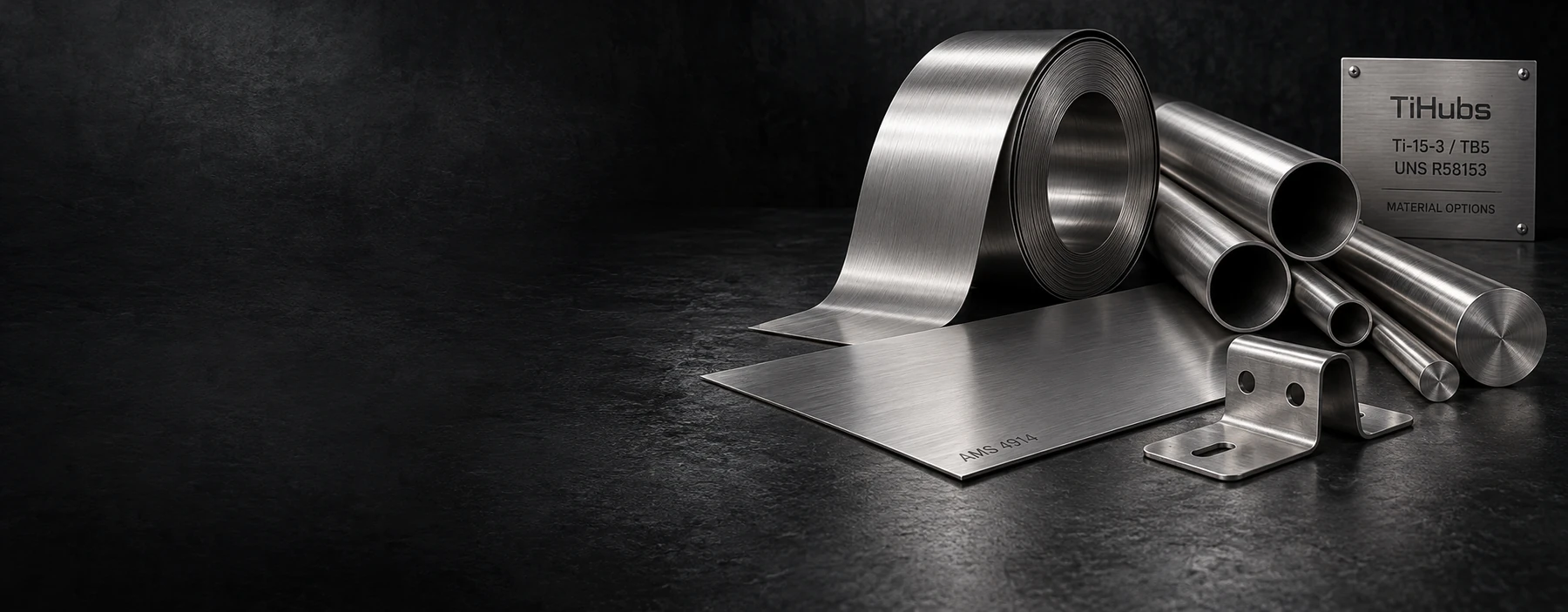
Ti-15-3 · TB5 · UNS R58153
Ti-15-3 / TB5 titanium.Form the part. Define the final condition.
Source Ti-15-3 / TB5 titanium sheet, strip and drawing-based parts with a clear forming and heat-treatment route. We coordinate material requirements, specialized tubing enquiries and agreed inspections through one technical and commercial contact in Baoji.
Start with a specification, drawing or application. We’ll help identify the details still needed.
Material review. Supply coordination.
One contact in Baoji, China.
Ti-15-3 / TB5Ti-15-3 · Ti-15V-3Cr-3Sn-3Al · UNS R58153
Defined material & conditionMatch the product, process and acceptance requirements
One contact20 years of founder experience · 100+ Baoji factories
01 / Product forms
Find your
Ti-15-3 / TB5 product.
Choose a material form or application. Send the dimensions, service conditions and required records so we can match the manufacturing route to your order.
01 / 06
Ti-15-3 / TB5 · Ti-15-3 · Ti-15V-3Cr-3Sn-3Al
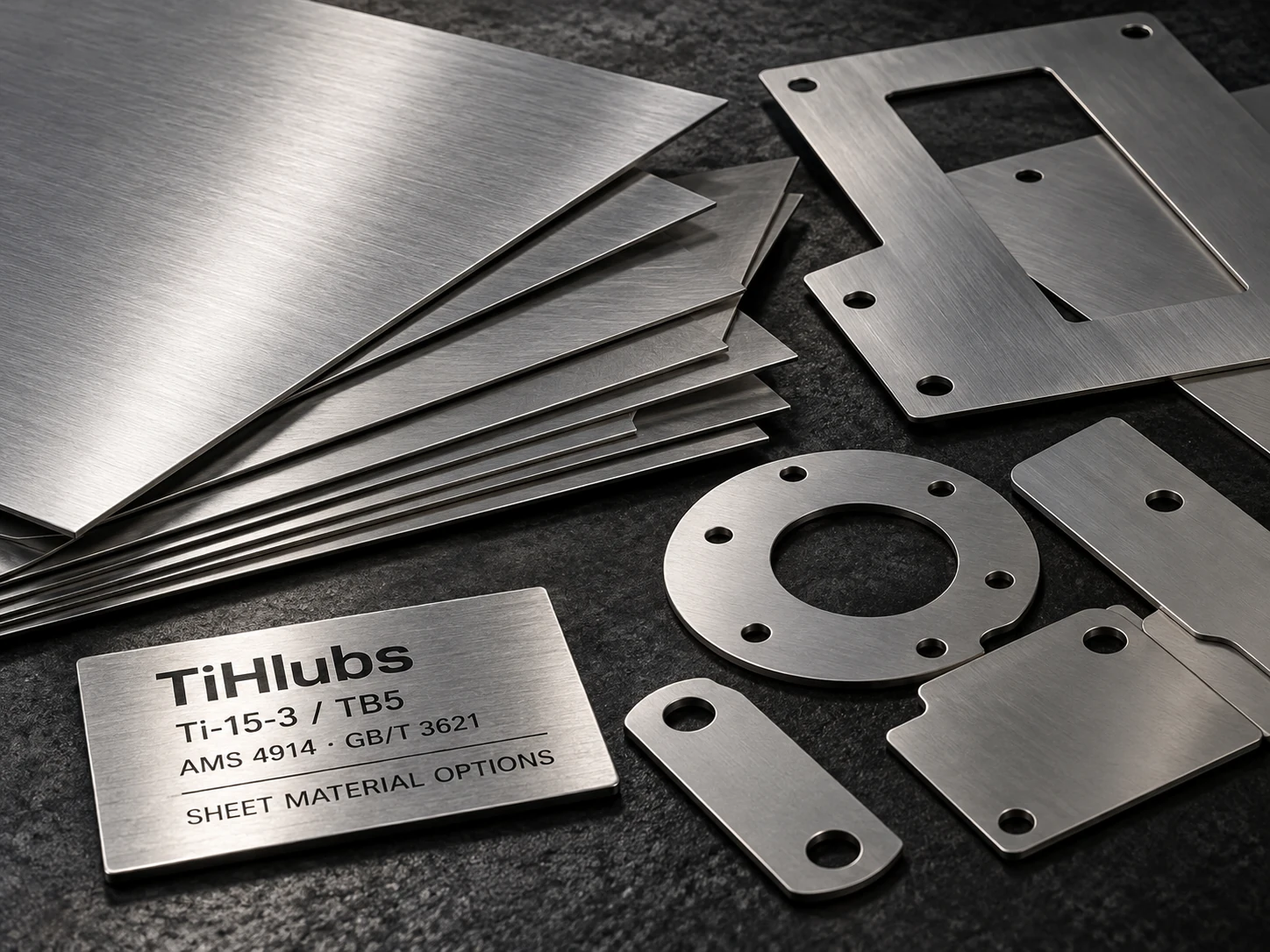
Ti-15-3 / TB5 titanium sheet & blanks
For formed sheet-metal requirements where the starting condition and final strength must be planned together. Send the flat-stock dimensions and the finished-part drawing before selecting the supply route.
- Specification
- AMS4914 for Ti-15-3 cold-rolled sheet and strip, or GB/T 3621 for TB5 sheet. Specify the revision and solution-treated delivery condition. AMS4914J covers nominal thickness up to 3.18 mm.
- Dimensions
- Thickness × width × length, tolerance, flatness, rolling direction, surface and blank outline. Thicker material needs a separately confirmed specification.
- Processing
- Forming sequence, bend radii, draw depth, joining and subsequent aging. State who controls the heat treatment and the dimensions accepted after it.
- Acceptance
- Chemistry, specified mechanical properties, grain structure where required, surface, dimensions and heat identity. Include first-article and final-condition requirements.
02 / 06
Ti-15-3 / TB5 · Ti-15-3 · Ti-15V-3Cr-3Sn-3Al
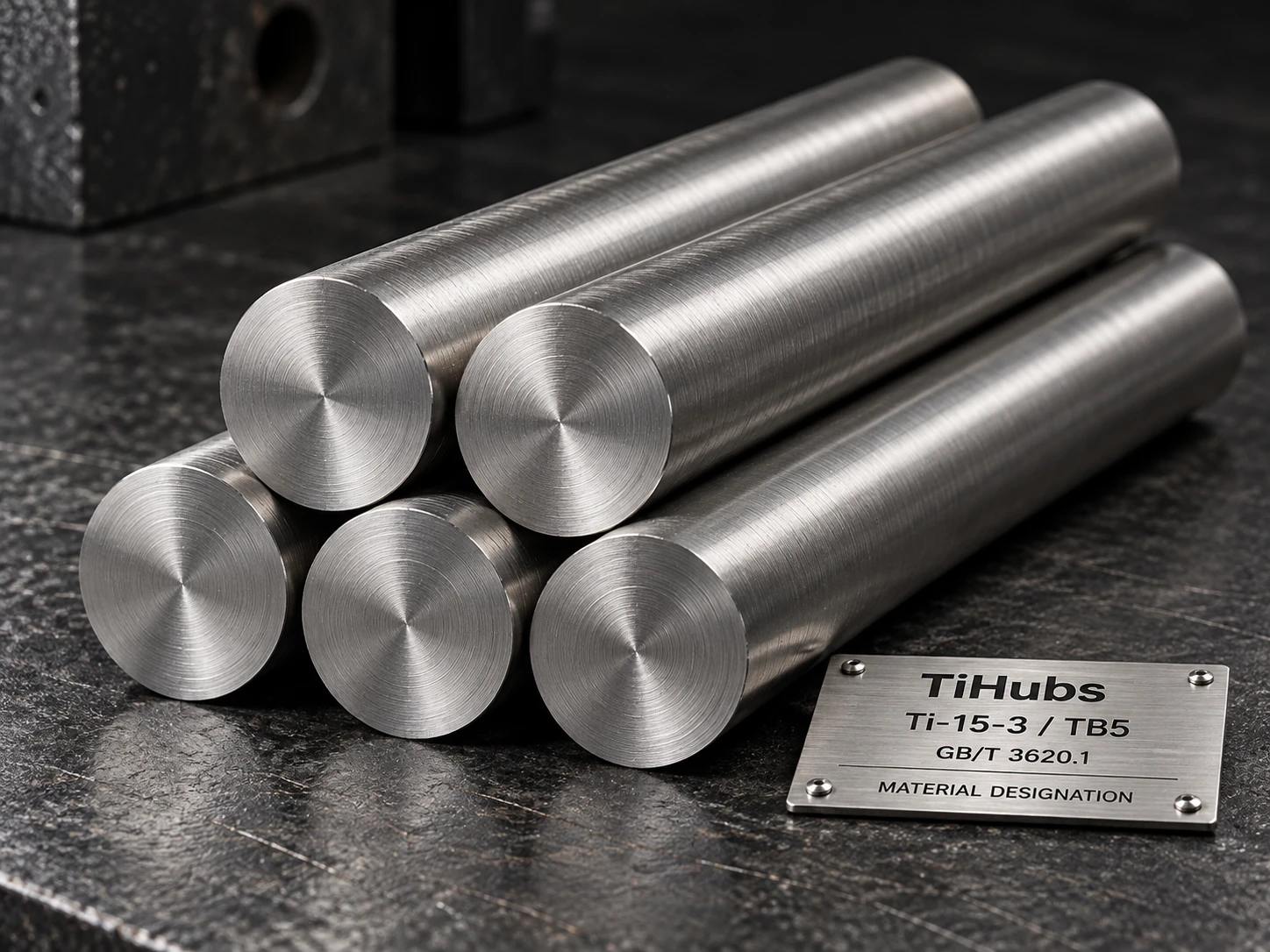
Ti-15-3 / TB5 bar & billet enquiries
Special-order starting stock for defined machining, forging or development requirements. The sheet specification is not a substitute for a bar or billet acceptance plan.
- Specification
- Use a purchaser-approved bar or billet specification. TB5 chemistry may be called out through GB/T 3620.1; GB/T 2965-2023 does not list TB5.
- Dimensions
- Diameter or section × length, quantity, surface, straightness, machining allowance and forging-stock requirements where relevant.
- Condition
- Specify solution treatment, aging or further working requirements. Identify the final component condition and which processing steps are included in the supply scope.
- Acceptance
- Agreed mechanical and structure requirements, sampling direction, material identity and NDT. Availability and feasibility are reviewed for the requested section and quantity.
03 / 06
Ti-15-3 / TB5 · Ti-15-3 · Ti-15V-3Cr-3Sn-3Al
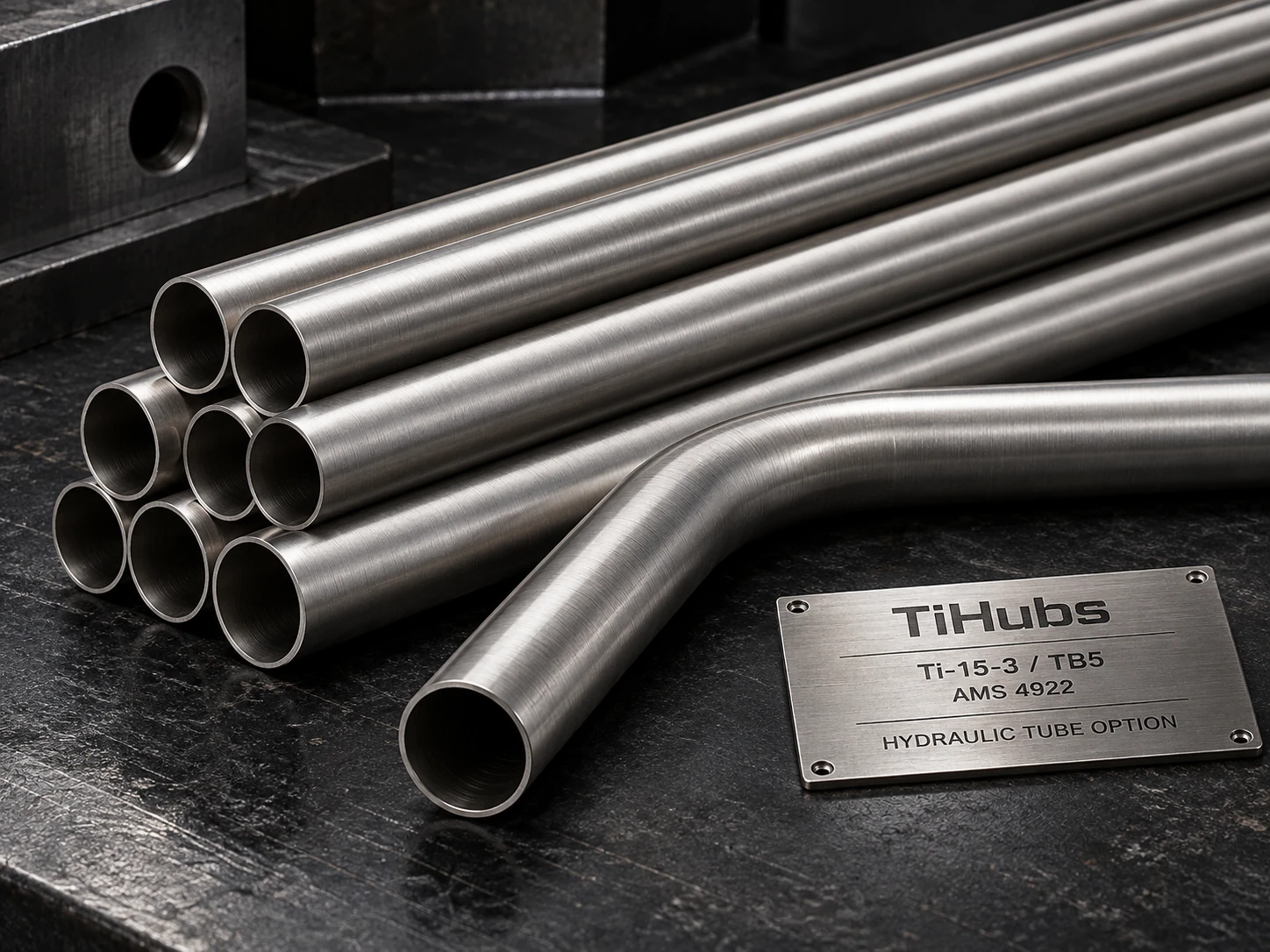
Ti-15-3 / TB5 seamless hydraulic tubing enquiries
A specialized tubing route for buyer-defined hydraulic-system requirements. Review dimensional, cold-work and heat-treatment requirements together before confirming supply feasibility.
- Specification
- AMS4922 is the Ti-15V-3Cr-3Al-3Sn seamless hydraulic-tubing route, cold worked and precipitation heat treated. State the required revision and project requirements.
- Dimensions
- Outside diameter, wall basis, tolerance, length, straightness, end condition and connection interfaces.
- Manufacturing
- Confirm the required delivery condition, any subsequent bending or end forming, surface cleanliness and restrictions on additional processing.
- Acceptance
- The specified mechanical, dimensional and hydraulic-tube tests, NDT and material records. Do not assign a generic GB/T 3624 or ASTM Grade 9 tube standard to this alloy.
04 / 06
Ti-15-3 / TB5 · Ti-15-3 · Ti-15V-3Cr-3Sn-3Al
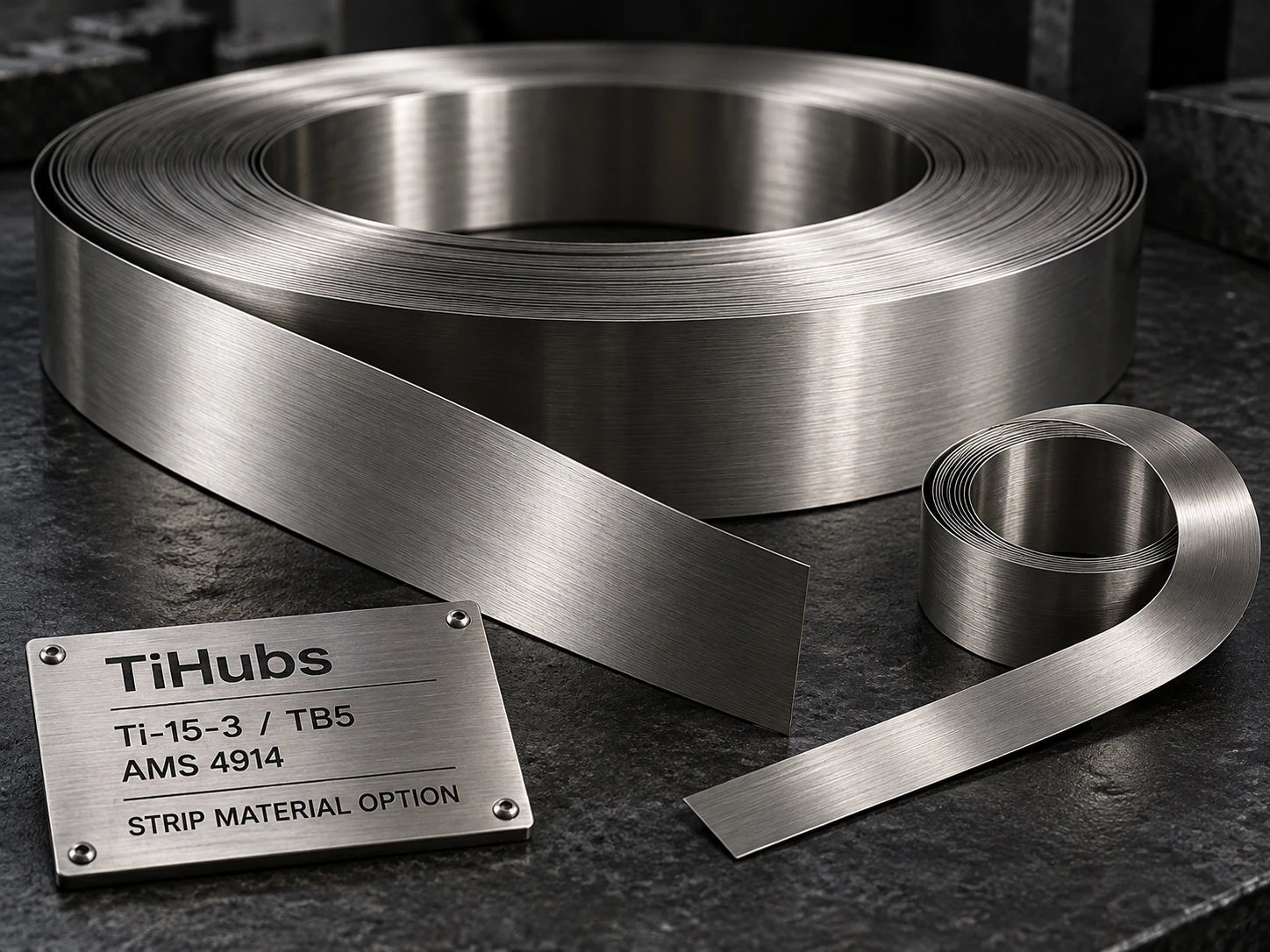
Ti-15-3 / TB5 titanium strip & coil
Strip for defined forming, spring-component and production-feed requirements. The strip width, edge and supplied condition affect the next operation as much as nominal alloy chemistry.
- Specification
- AMS4914 Ti-15-3 sheet/strip route. A Chinese TB5 strip order needs an explicitly agreed strip product specification; GB/T 3621 is the sheet reference, not an automatic strip certification.
- Supply format
- Thickness, slit width, coil mass, internal diameter, edge condition, camber and coil orientation. Define cut lengths if coil supply is unsuitable.
- Next operation
- Blanking, forming or winding sequence; burr limits, surface protection and any subsequent aging. Identify trial material and production quantities separately.
- Acceptance
- Thickness and width consistency, edges, surface, heat identity and the specified condition tests. Finished-spring load and fatigue acceptance are separate from raw-strip compliance.
05 / 06
Ti-15-3 / TB5 · Ti-15-3 · Ti-15V-3Cr-3Sn-3Al
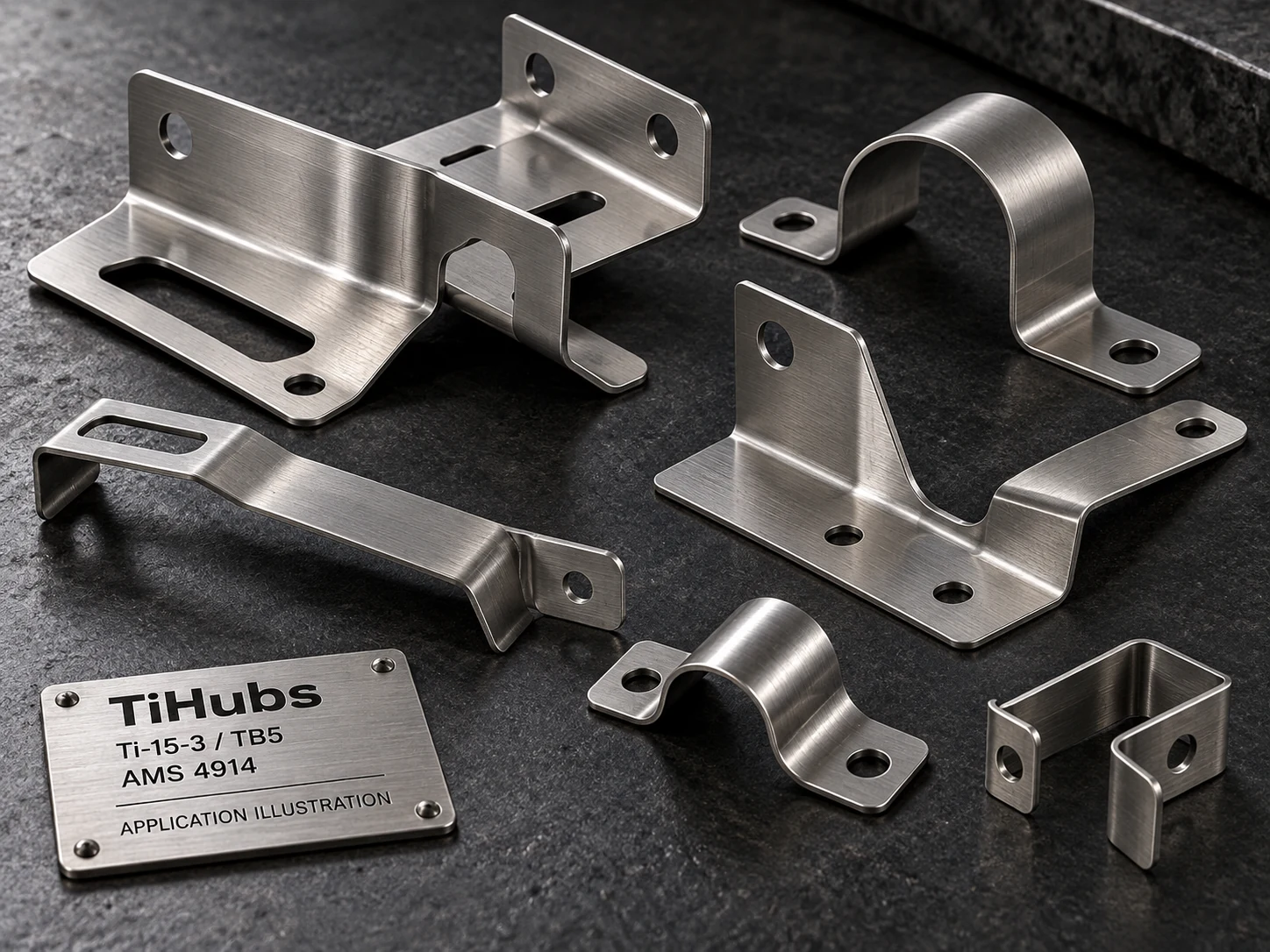
Ti-15-3 / TB5 formed aircraft brackets & clips
Application illustration: small formed sheet components, brackets and clips made to approved drawings. Material and process requirements are reviewed before any flight-critical supply commitment.
- Starting material
- Ti-15-3 sheet under the specified AMS4914 revision or a defined TB5 sheet route, with complete material and heat-treatment callouts.
- Geometry
- Radii, joggles, holes, flanges, edge condition, fit and grain direction. State whether dimensions are accepted before or after aging.
- Process plan
- Blank preparation, forming, joining if required, heat treatment and distortion control. Confirm the first-article approval and any purchaser process approvals.
- Acceptance
- Released drawing, required records, dimensions, surface and specified inspections. A material-standard designation alone does not establish airworthiness or supplier approval.
06 / 06
Ti-15-3 / TB5 · Ti-15-3 · Ti-15V-3Cr-3Sn-3Al
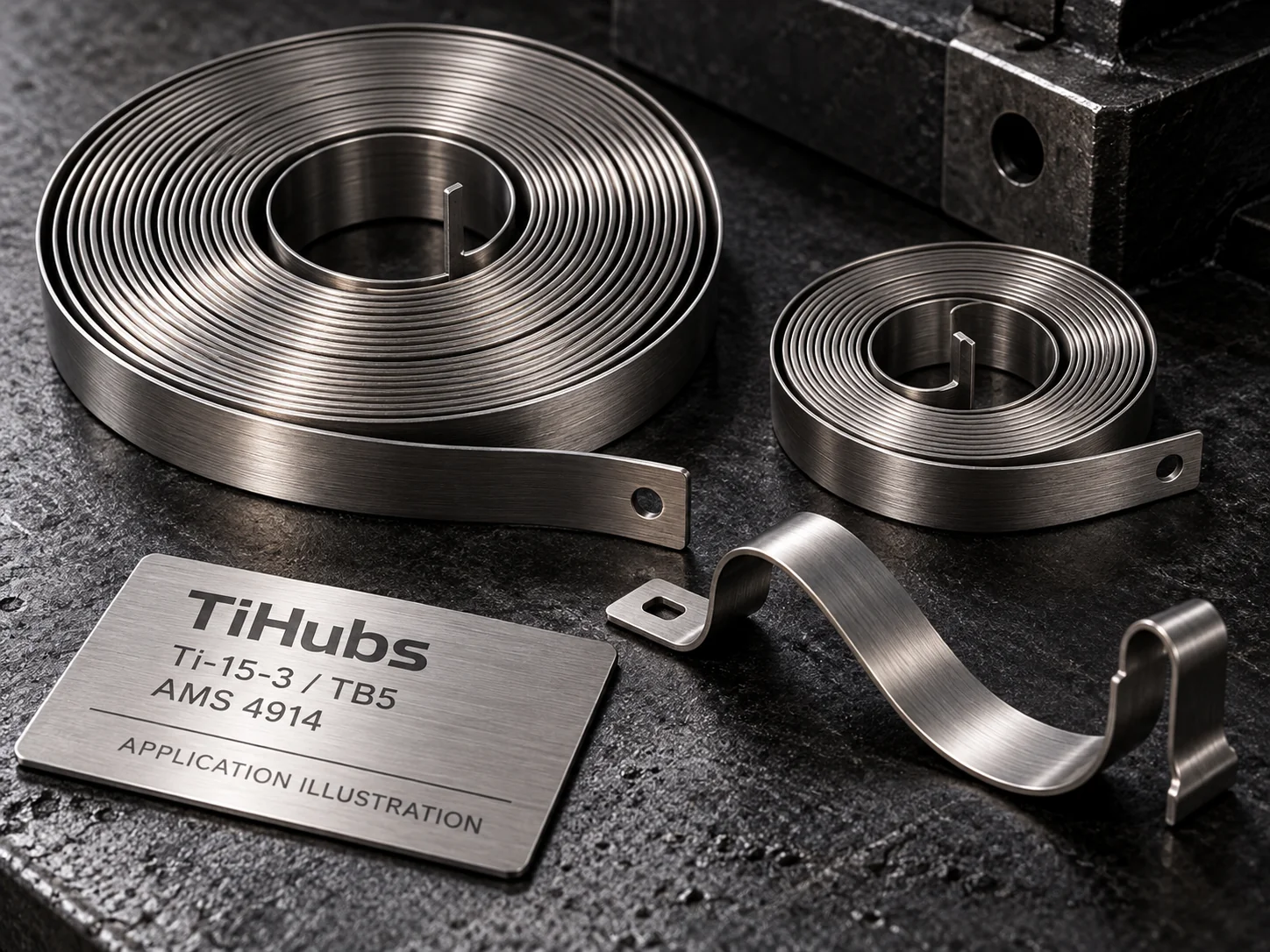
Ti-15-3 / TB5 strip spring & formed components
Application illustration: clock-type or flat-strip spring components and other formed strip parts. Define the load behavior and final heat-treated condition, not just the strip grade.
- Starting material
- Ti-15-3 strip with an agreed AMS4914 basis and purchaser requirements. TB5 use requires the corresponding chemistry, strip specification and final-condition acceptance to be agreed.
- Geometry
- Strip thickness and width, edge finish, winding or forming radii, free shape, attachment features and working envelope.
- Performance
- Force or torque through travel, preload, set, operating temperature and required cycle life. Establish the test method and acceptance limits from the component design.
- Acceptance
- Heat-treatment records, dimensions, surface and specified load, relaxation or fatigue testing. Raw-material tensile properties do not establish finished-spring performance.
Images illustrate material forms and application possibilities. Reference markings identify specification options; they do not establish dual certification, stock availability or finished-component approval.
Define the product. Share the requirement.
These details help turn your enquiry into a comparable quotation.
01 / Requirement review
Forming-led material review
Send the finished geometry and blank requirements. We review the product route, starting condition, forming allowance and dimensions controlled after heat treatment.
Discuss your requirement02 / Requirement review
Clear process responsibilities
Define cutting, forming, machining, joining, aging and inspection in the quotation. Identify any purchaser-controlled process or approval milestone.
Discuss your requirement03 / Requirement review
Records connected to the delivered item
Agree heat identity, material tests, process records, first-article evidence and final dimensions before production begins.
Discuss your requirement02 / Material identity
What is
Ti-15-3 / TB5 titanium?
Ti-15-3 is a metastable beta titanium alloy, also written Ti-15-3-3-3. TB5 is the Chinese counterpart in nominal alloy composition. The purchase specification must connect product form, delivery condition and the properties required after the final manufacturing step.
The numerical reference below is explicitly TB5 solution-treated sheet. Aged properties and specialized hydraulic-tube requirements must be specified separately.
705MPa
Lower limit of tensile-strength range
690MPa
Lower limit of proof-strength range
12%
Minimum elongation
GB/T 3621-2022 · TB5 · ST sheet · 0.8–3.2 mm
| Property or condition | Reference | Ordering implication |
|---|---|---|
| Reference scope | GB/T 3621-2022 · TB5 · ST · 0.8–3.2 mm | The numerical cards use the lower limits from this specific solution-treated sheet row, not aged-product values. |
| Specified tensile range | 705–945 MPa | The full range matters when reviewing solution-treated sheet for the next forming operation. |
| Specified proof-strength range | 690–870 MPa | For the cited TB5 sheet condition and thickness range. This is not a structural design allowable. |
| Aging after forming | Separate final-condition requirements | Aging changes the alloy response. Define the approved cycle, final properties, inspection and responsibility for any heat-treatment distortion. |
| Sheet versus hydraulic tube | Different specification and processing route | AMS4914 covers solution-treated sheet/strip; AMS4922 covers cold-worked, precipitation-heat-treated seamless hydraulic tube. Acceptance cannot be transferred between them. |
| Density reference | Approximately 4.78 g/cm³ · TIMET producer data | Useful for preliminary mass estimates; final part mass also depends on geometry, stock allowance and tolerances. |
The cited TB5 sheet row specifies tensile strength 705–945 MPa and proof strength 690–870 MPa. These are material-test requirements for that condition, not final-component design allowables.
| Element · weight % | TIMET Ti-15-3 reference | GB/T 3620.1 · TB5 |
|---|---|---|
| Vanadium · V | 14.0–16.0 | 14.0–16.0 |
| Aluminum · Al | 2.5–3.5 | 2.5–3.5 |
| Chromium · Cr | 2.5–3.5 | 2.5–3.5 |
| Tin · Sn | 2.5–3.5 | 2.5–3.5 |
| Iron · Fe | 0.25 max. | 0.25 max. |
| Oxygen · O | 0.13 max. | 0.15 max. |
| Nitrogen · N | 0.05 max. | 0.05 max. |
| Carbon · C | 0.05 max. | 0.05 max. |
| Hydrogen · H | 0.015 max. | 0.015 max. |
| Residuals · each / total | 0.10 / 0.40 max. | 0.10 / 0.30 max. |
| Titanium · Ti | Balance | Balance |
The left column is an identified producer reference, not a substitute for the ordered AMS revision. Its oxygen and total residual limits differ from the cited TB5 chemistry. Confirm every required element and analysis basis for the order.
Ti-15-3, Ti-15-3-3-3 and TB5
Ti-15-3 is shorthand for Ti-15V-3Cr-3Sn-3Al, associated with UNS R58153. TB5 is the Chinese nominal-composition counterpart. Retain the full product specification and condition because detailed chemistry and acceptance can differ.
Solution treated and aged are different
Solution-treated stock is selected with subsequent forming in mind. Aging establishes a different property condition. State the condition required at delivery and after the last operation instead of comparing values from different treatments.
Ti-15-3 and Grade 5 / TC4
These are different titanium-alloy families and processing routes. Compare the actual forming geometry, final properties, temperature, fatigue requirements and qualified manufacturing sequence before considering a change.
Ti-15-3 is not ASTM Grade 15
The numbers in Ti-15-3 describe a shorthand alloy composition, not an ASTM grade number. Do not shorten the purchase order to Grade 15 or select a generic ASTM B265 grade by a similar name.
03 / Application review
From formable stock to a defined finished part.
Plan the blank, forming sequence and final condition together. The examples below focus on the information a purchasing or engineering team needs to request Ti-15-3 / TB5 material and drawing-based work.
Application review / 01
Aircraft sheet components: plan forming and final acceptance together
Ti-15-3 / TB5 is relevant to drawing-based sheet parts where forming and final material condition need to be coordinated. For a bracket or clip, the enquiry should identify the approved material callout, geometry and process route, including whether the final dimensions are assessed before or after heat treatment.
Products to discuss
Sheet blanks and specified formed brackets, clips or supports. Identify the released drawing revision, first-article requirement and purchaser approval conditions.
What we need to review
Thickness and tolerance, rolling direction, radii, joggles, flange geometry, holes and edge finish. Define heat treatment, distortion limits, dimensions, material records and required inspections.
Application review / 02
Ducting: define the shell, seams and thermal duty
Thin sheet may be developed into a duct or shell through several forming and joining steps. A Ti-15-3 / TB5 proposal should specify which steps are included and what condition is required after them. Fit-up and inspection access should be resolved before a material quotation is treated as a finished-assembly quotation.
Products to discuss
Sheet, cut blanks and drawing-based duct or shell sections. Separate material supply, forming, weld preparation and completed subassembly work.
What we need to review
Developed geometry, wall, seams, joining method, interfaces, thermal exposure, pressure and supports. Include the approved process requirements, leak or integrity testing and final dimensional acceptance.
Application review / 03
Strip springs: order the material and performance requirements separately
For a clock-type or flat-strip spring concept, a strip grade and thickness do not fully define performance. The purchaser’s design needs to establish the force or torque behavior, working travel and service life. TiHubs can use those requirements to coordinate the material and manufacturing review before quotation.
Products to discuss
Ti-15-3 strip, trial lengths and defined formed strip components. Identify whether the scope includes winding or forming, aging, surface preparation and component testing.
What we need to review
Thickness and width, edge condition, free shape, winding radius, attachment details, preload and working travel. Agree the final heat-treated condition, load curve, set or relaxation limits and fatigue-test basis.
Application review / 04
Hydraulic tubing: preserve the specified process condition
AMS4922 identifies a specialized Ti-15-3 seamless hydraulic-tube route. It should not be treated as generic titanium pipe or assumed interchangeable with a different hydraulic-tube alloy. The quotation needs the controlling specification, processing condition, dimensions and required records for the actual system.
Products to discuss
Seamless hydraulic tubing enquiries to the specified AMS4922 revision, subject to manufacturer capability and project review. State whether bending or end preparation is also requested.
What we need to review
OD, wall basis, tolerance, lengths, ends, connection geometry, cleanliness and subsequent processing. Confirm the required tests, inspection records, batch identity and any purchaser approval conditions.
Application review / 05
Vessel and housing parts: establish the supply boundary
When reviewing Ti-15-3 / TB5 for a vessel or housing component, separate the material selection from the equipment design and qualification. The enquiry should define the shell or head geometry, attachments, joining and final condition, with clear responsibility for design and component testing.
Products to discuss
Sheet blanks, formed shell sections, heads or specified housing parts. Identify whether TiHubs is quoting raw material, a formed part or a defined welded assembly.
What we need to review
Drawing revision, thickness, minimum finished wall, forming radii, seams, pressure and temperature. Agree the applicable design requirements, welding procedures, inspections and proof or leakage tests.
Application review / 06
Production feed: control dimensions that affect the next operation
For repeat blanking or forming, the material supply description should cover width, edges, coil format and traceability as well as alloy and thickness. Agree how the stock will be handled and how trial acceptance connects to the production order. This makes quotations for Ti-15-3 / TB5 feed material more comparable.
Products to discuss
Slit strip, cut lengths and sheet blanks for a defined production route. Distinguish initial trial quantities, production lots and any reserved material requirement.
What we need to review
Thickness, width, camber, flatness, edge finish, coil ID, coil mass and surface protection. Specify condition, identification transfer, sampling and the documentation needed for each delivered lot.
Application review / 07
Specialty components: let the drawing define the material review
For lightweight sporting or industrial components, a Ti-15-3 / TB5 enquiry should identify the function and manufacturing sequence rather than rely on a general strength claim. The dimensions, final condition and performance criteria establish what a material or part supplier needs to quote.
Products to discuss
Defined sheet or strip components, bar-based parts and agreed blanks for development or production. Confirm the material route and feasible product form for the requested quantity.
What we need to review
Geometry, loads, service temperature, surface, joining and final treatment. State the critical dimensional, functional and fatigue requirements and how samples will be evaluated.
Application review / 08
Special-order stock: confirm feasibility before committing the part route
A bar, billet or machined-part request needs its own acceptance basis. The Ti-15-3 sheet specification does not cover every starting form. Review stock size, material condition, machining allowance and the tests required on the final material before fixing the supply proposal.
Products to discuss
Special-order bar or billet, trial blanks and drawing-based machining enquiries. Define whether the material will undergo further forming or heat treatment after delivery.
What we need to review
Approved product specification, section size, quantity, sampling direction, structure and NDT where required. Add drawing revision, tolerances, machining condition, final treatment and documentation.
Technical references: SAE AMS4914J · official sheet/strip scope ↗ · SAE AMS4922D · official hydraulic-tube scope ↗ · TIMETAL 15-3 · official producer reference ↗ · KOBELCO · titanium product range ↗
Purchasing checklist
Before quotation, define the condition at each stage.
A Ti-15-3 / TB5 order is clearer when the starting stock, manufacturing route and final acceptance are described together.
Material and specification
Full alloy name, product form, standard revision, dimensions, tolerance and required delivery condition.
Manufacturing sequence
Drawing revision, forming or machining steps, heat treatment, joining, tooling and who is responsible for each operation.
Final acceptance
Final condition, dimensions, mechanical or functional criteria, inspection records and first-article approvals.
A formed bracket enquiry needs two condition callouts.
An enquiry specifies Ti-15-3 sheet and a finished bracket drawing. Before quotation, clarify the condition needed for forming and the condition required after aging, together with rolling direction, radii, final hole positions and distortion limits. State which dimensions and tests are accepted after the last heat-treatment step.
Illustrative requirement-review example; not a customer case or a claim of qualified flight hardware.
Discuss your requirement04 / Standards & documentation
Match the standard
to the product.
Use the listed document for its stated purpose. Chinese PDFs are hosted on TiHubs; the TIMET PDF is an official producer reference. SAE catalogue links identify the AMS scopes and revisions without implying that the full standards are hosted here.
| Product form | ASTM / AMS / ASME route | Chinese standard route | Clarify before quotation |
|---|---|---|---|
| Alloy identity & chemistry | United States / technical referenceTIMETAL 15-3 · producer dataView PDF ↗ Ti-15-3 · Ti-15V-3Cr-3Sn-3Al · UNS R58153. The PDF is a producer reference; the ordered product specification governs. | ChinaGB/T 3620.1-2016View PDF ↗ TB5 nominal-composition counterpart. Confirm chemistry and product-analysis requirements. | Complete designation, detailed chemistry, product form and delivery condition. |
| Cold-rolled sheet | United States / technical referenceTIMETAL 15-3 · producer dataView PDF ↗ AMS4914J official scope: solution-treated sheet/strip up to 3.18 mm. The linked producer PDF is not the AMS text; see the official catalogue link below. | ChinaGB/T 3621-2022View PDF ↗ GB/T 3621-2022 includes TB5. Select the applicable thickness and ST mechanical row. | Thickness, flatness, rolling direction, surface, blank geometry and final treatment. |
| Strip & coil | United States / technical referenceTIMETAL 15-3 · producer dataView PDF ↗ AMS4914 sheet/strip route, with the required revision. Agree coil format and slit-edge requirements. | ChinaGB/T 3620.1-2016View PDF ↗ TB5 chemistry reference; agree a strip product specification separately rather than certifying strip by the sheet standard alone. | Thickness, width, edge finish, camber, coil mass, ID, condition and traceability. |
| Seamless hydraulic tube | United States / technical reference AMS4922D official scope: seamless Ti-15-3 hydraulic tubing, cold worked and precipitation heat treated. Full specification is not hosted here. | ChinaGB/T 3620.1-2016View PDF ↗ TB5 chemistry alone does not define a qualified hydraulic-tube product. Agree the actual product and project specification. | OD, wall, ends, processing condition, tests and purchaser approvals. |
| Bar, billet & special sections | United States / technical referenceTIMETAL 15-3 · producer dataView PDF ↗ Confirm an approved product-specific acceptance basis. AMS4914 is not a bar or billet specification. | ChinaGB/T 3620.1-2016View PDF ↗ GB/T 2965-2023 does not list TB5. Agree the applicable bar or billet requirements separately. | Section, condition, sampling, mechanical properties, structure and NDT. |
| Formed and heat-treated components | United States / technical referenceTIMETAL 15-3 · producer dataView PDF ↗ Starting-material specification plus the released drawing, process and final-condition requirements. | ChinaGB/T 3620.1-2016View PDF ↗GB/T 3621-2022View PDF ↗ Use the appropriate TB5 starting-material route and an agreed finished-part acceptance plan. | Forming, heat treatment, dimensional stability, joining, first articles and delivered records. |
Agree the order basis.
No unverified ASTM grade number is assigned to Ti-15-3. AMS4914 and AMS4922 describe different forms and processing conditions. Source documents and raw-material compliance do not establish a finished component’s design or aviation approval.
Use the document edition, product scope and condition specified in the purchase order. Producer technical references support discussion; they do not replace ordered product acceptance requirements.
05 / Order coordination
Know the scope
before ordering.
Our founder’s 20 years in titanium inform the questions we ask before quotation and the supply options we review with you.
A quotation you can evaluate
Agree the grade, standard edition, dimensions, tolerance, condition and quantity before comparing prices.
- Identify whether inspection, samples and tooling are included.
- Confirm packaging, transport and delivery terms.
- Record items that still need technical confirmation.
Acceptance agreed before supply
Confirm the material certificate, full grade, heat or lot identity, delivery condition, dimensional checks and required testing before supply starts. Define any process records, NDT and purchaser approval points for the ordered product.
Independent inspection can be discussed with its scope, timing, acceptance criteria and cost agreed for the order.
Delivery with clear milestones
Review the proposed lead time, approvals, production sequence and dispatch requirements. For several product forms, coordinate document and packing readiness together.
Material substitutions and technical changes require written approval. A schedule deviation should identify the impact, decisions needed and next steps.
One contact when an issue arises
Contact TiHubs with the order reference, affected items and supporting photos or inspection records.
We record the issue, review it against the agreed requirements and coordinate the next steps with the relevant manufacturing parties.
01 / Material identity
Material records
Grade, standard, test results and heat or batch identity matched to the supplied items.
02 / Agreed acceptance
Inspection records
Dimensional and testing records for the agreed scope, including critical drawing requirements.
03 / Ready for dispatch
Dispatch records
Item identification, packing list, protective packaging and required shipment documents.
06 / Questions before sourcing
Before you specify
Ti-15-3 / TB5.
A clear material designation is the beginning. Product form, specification revision, material condition and acceptance complete the requirement.
A useful first enquiry
- Product and specificationProduct form, standard edition, dimensions and material condition.
- Order and deliveryQuantity, destination and any required delivery date.
- Acceptance requirementsDrawing revision, inspection, certificates and packaging.
Not every detail is finalized? Send the information you have. We can help identify the questions to resolve before quotation.
What happens next: requirement review, technical clarification, then a supply proposal and quotation.
What is Ti-15-3 titanium, and is it the same as TB5?
Ti-15-3 is shorthand for the metastable beta alloy Ti-15V-3Cr-3Sn-3Al, associated with UNS R58153. TB5 is the Chinese nominal-composition counterpart. Order against the required product specification, edition and material condition; shared nominal alloying elements do not by themselves establish identical acceptance.
Is Ti-15-3 an ASTM Grade 15 material?
No. Ti-15-3 and Ti-15-3-3-3 are composition-based names, not abbreviations for ASTM Grade 15. Keep Ti-15-3, UNS R58153 or the agreed TB5 designation on the drawing, enquiry and material records.
Which specification should I use for sheet or strip?
AMS4914 is the Ti-15-3 cold-rolled sheet and strip route in the solution-treated condition. Its J revision covers nominal thickness up to 3.18 mm. GB/T 3621-2022 includes TB5 sheet; a Chinese strip order needs its strip product requirements agreed separately. State the required revision, dimensions and condition before quotation.
Should I order solution-treated or aged material?
Start with the approved manufacturing sequence. A forming operation may call for solution-treated stock followed by aging, while a finished component needs its specified final condition. Clarify who performs heat treatment, the approved cycle, final properties, dimensional acceptance and records. Values from different conditions should not be compared as if they describe the same product.
Can you supply Ti-15-3 hydraulic tubing?
We can review a seamless hydraulic-tubing requirement against the specified AMS4922 revision and the requested dimensions, quantity and acceptance scope. This is a cold-worked and precipitation-heat-treated tube route. Availability, manufacturer capability and any purchaser approvals must be confirmed for the actual enquiry.
Can AMS4914 also be used for bar, billet or thick plate?
AMS4914 is a sheet and strip specification with a stated thickness scope. It is not a general bar, billet or thick-plate specification. For those forms, provide the approved product specification and condition. GB/T 2965-2023 does not list TB5, so a TB5 bar enquiry also needs an explicitly agreed product acceptance basis.
Can you coordinate formed aircraft parts or strip springs?
We can review drawings and coordinate material, forming, heat treatment and agreed inspections. For aircraft parts, state the purchaser’s qualification and approval requirements. For springs, add the force or torque curve, travel and cycle-life criteria. Raw-material compliance does not establish flight approval or finished-spring performance.
Which documents and inspections can be included?
Define the required material certificate, chemistry, mechanical tests, heat-treatment records, grain or structure checks, dimensions and NDT with the enquiry. Samples, first articles and independent inspection can be discussed, with their scope, acceptance criteria, timing and costs confirmed before supply.
What determines the price, MOQ and lead time?
Product form, size, quantity, manufacturing route, heat treatment, tooling, testing and approval milestones determine the quotation. Send the specification or drawing and destination even if some details remain open. TiHubs clarifies the outstanding requirements and remains your contact for order follow-up and any issue review.
07 / Your next step
Start with the
requirement you have.
Send the product details, drawing or operating conditions you already know. We will identify missing information and discuss a suitable supply route before quotation.
- Requirement review
- Technical clarification
- Supply proposal and quotation
Combine materials and parts in one enquiry.
Send one list of Ti-15-3 / TB5 forms, sizes and quantities. Include drawing revisions and items that need to be supplied together.
Define the condition and acceptance priorities.
Include the ordered specification, final application, material condition, inspection and documentation, destination and required delivery milestones.
Baoji, China · info@tihubs.com
Start your Ti-15-3 / TB5 enquiry
Send your material form, drawing or process conditions. We will help clarify the remaining requirements.