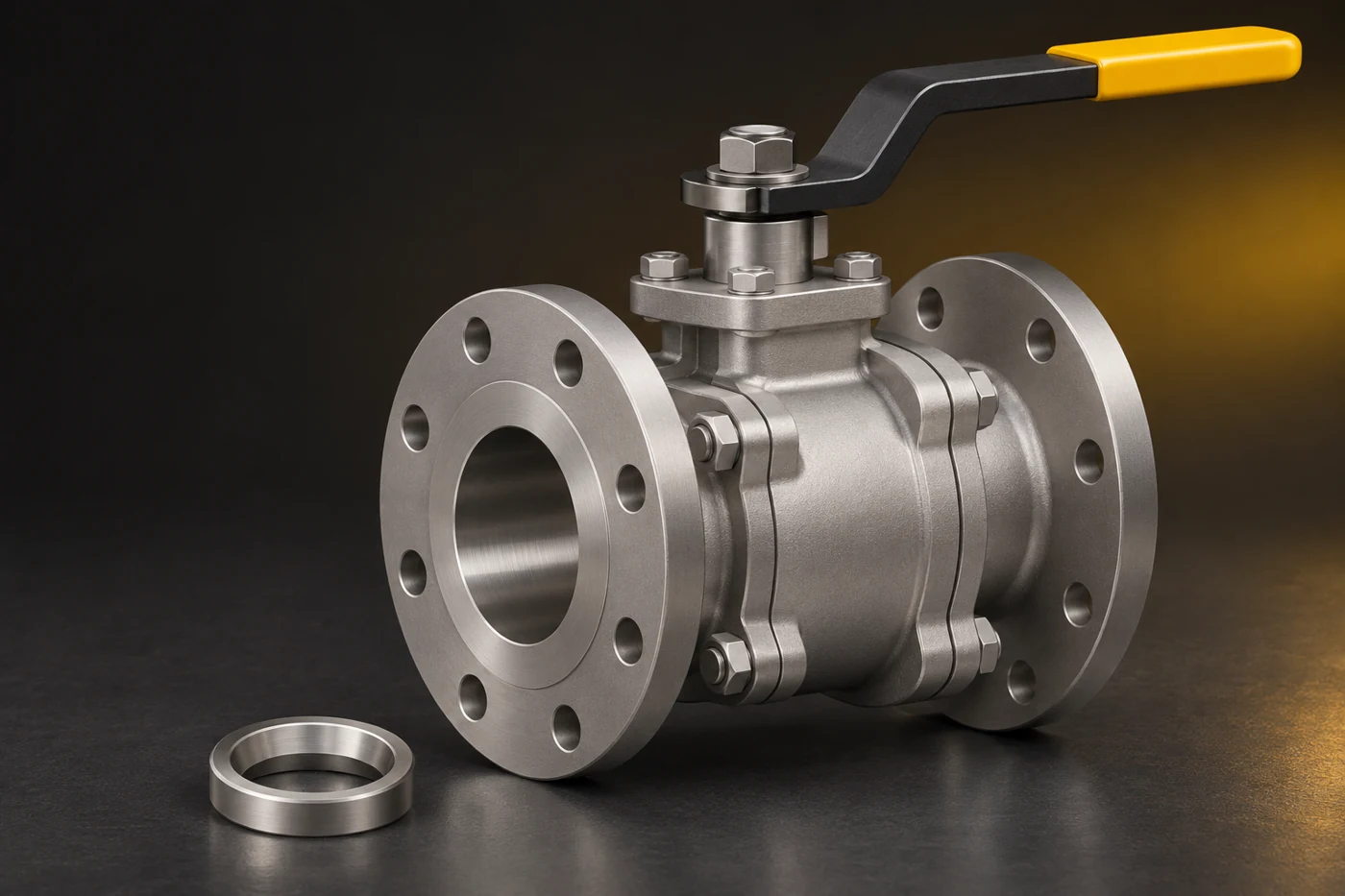
Titanium ball valve sourcing starts with the fluid, operating envelope and complete wetted-parts list. Send the valve data sheet to review the body, seats, connections, operation and acceptance package together.
20 years in titanium100+ Baoji factory connections
Service review · Wetted materials · Valve acceptance
Define the connection and operation
Choose a configuration from the piping and service requirements, then confirm its supply scope.
Flanged connections
Flanged connections
Define the flange standard, nominal size, rating designation, facing and face-to-face dimension. A matching bolt pattern alone does not establish a compatible pressure boundary. Include the mating flange and gasket requirements, the space available for installation and the access needed to remove the valve. Confirm whether mating flanges, fasteners and gaskets are included in the quotation.
Standard, size and facing
Face-to-face and access
Included mating components
Build the valve data sheet
The purchase description should identify a complete valve assembly, not only a titanium body.
Order item
Include in your enquiry
Why it matters
Service
Fluid, composition, phases, contaminants and cleaning media
Review all wetted components
Envelope
Normal, start-up, shutdown and upset conditions
Do not use one nominal temperature alone
Pressure
Design, operating and differential pressure
Establish the applicable rating basis
Flow path
Nominal size, bore and flow requirement
Confirm geometry and pressure-loss needs
Body
Material specification, grade and manufacturing route
Distinguish casting from forging
Trim
Ball, stem and other wetted metallic parts
Request a component material list
Seats and seals
Exact material and approved operating envelope
Check chemical and temperature compatibility
Ends
Standard, size, facing, thread or weld preparation
Verify mating interfaces
Operation
Manual, gear or actuator requirements
Define torque basis and fail position
Acceptance
Test standard, medium, direction and records
Make quotations comparable
Your starting specification.
Fluid and composition; normal and upset temperatures; pressure and differential pressure; nominal size and bore; end connections; body and wetted materials; seat and seal materials; operating method; leakage and pressure-test requirements; quantity and documentation.
Dimensions, material condition, quantity, testing and delivery are confirmed in the quotation and order.
Specify each material route
Cast and wrought product designations have different specification contexts. Retain the exact grade and condition required by the approved design.
Chinese designations and international names are reference routes, not automatic substitutes. Grade, product specification, condition and acceptance requirements must be agreed together.
Describe the real fluid and operating sequence so material and seat selection can be reviewed.
Process isolation
Provide the line list, fluid composition and the operating sequence. Include cleaning, flushing and shutdown exposure rather than only the steady production condition. Explain whether the valve isolates a process vessel, a branch or a maintenance section, and identify the required closure direction. Review the wider system through titanium process equipment.
What to sendValve data sheet, process envelope and isolation duty.
Skid and package integration
A compact skid adds installation and control constraints to material selection. Send the piping layout, actuator envelope, support arrangement and the space required for removal. Clarify the package boundary: valve only, operated valve, mating parts, controls or a tested assembly. These choices affect both the technical review and the delivered price.
What to sendLayout, interfaces, controls and package boundary.
Replacement valves
Record the existing nameplate, approved data sheet, end dimensions and reason for replacement. A corroded body, leaking seat and failed actuator lead to different investigations. Avoid reproducing an unsuitable specification simply because the old valve fits the pipework. Where records are incomplete, identify the unresolved material and rating questions before ordering.
What to sendOriginal records, measured interfaces and failure observations.
From service conditions to release
Use the following checks to turn a general valve enquiry into a comparable, testable order.
Illustration of a titanium ball valve; the approved data sheet defines the supplied construction.
Identify the body, ball, seats, stem and end connections on the offered assembly drawing.
Order geometry schematic; not a dimensional drawing.
Describe the whole operating envelope
A useful valve enquiry begins with the process rather than a catalogue photograph. Identify the fluid, concentration, phases, suspended solids and relevant contaminants. Record normal operation separately from start-up, cleaning, shutdown and credible upset conditions. A titanium body selected for one solution may encounter a different chemical during maintenance. The seats and stem seals also see those exposures, so the review cannot stop at the body material.
State which values are operating targets and which are design requirements. Include the pressure on both sides when differential pressure matters, the expected flow direction and the condition under which the valve must open or close. If a line can be isolated while its contents warm up, flag the trapped-fluid condition for the responsible system designer. A procurement sheet should preserve this information so an equipment supplier does not have to infer it from a single pressure value.
Provide a contact for technical clarifications and identify the document that controls the selection. When some conditions are unknown, label them as open points. An honest unresolved item is more useful than an assumed value that later becomes an unintended contractual requirement.
Define the wetted-parts boundary
Titanium ball valve does not necessarily mean that every component is titanium. Ask for a bill of materials identifying the body, end pieces, ball, stem, seats, stem seals, body seals and any wetted inserts. Separate external bolting and mounting hardware from components exposed to the process. This makes it possible to review each material against its actual exposure and avoids comparing an all-wetted-titanium proposal with a valve containing unspecified internal parts.
The drawing should show the sealing arrangement and any cavity that can retain process fluid. Consider how the valve is cleaned, drained and maintained in its installed orientation. A component that is normally dry can become exposed during leakage or cleaning, so the duty description should explain the expected service boundary. Do not accept a generic statement of chemical resistance as a substitute for the component list and operating envelope.
For a replacement, compare the proposed assembly with the existing approved materials. Any change in seat compound, stem material, body seal or surface treatment should appear in the deviation list. This is particularly important when the purchasing description names only the valve body alloy.
Keep cast and wrought specifications distinct
The public ASTM B367 scope covers titanium castings, while ASTM B381 covers titanium and titanium alloy forgings. Their grade prefixes and material identities belong to those product routes. For example, B367 C-2 is identified as UNS R52550, whereas B381 F-2 is UNS R50400. Those identifiers demonstrate why a casting certificate should not be relabeled as a wrought Grade 2 certificate. Use the contractual edition and the exact component designation.
Ask which pressure-retaining parts are cast, forged, machined from stock or fabricated. The answer determines which material records and manufacturing controls are relevant. If a proposed casting uses permitted repairs, agree the disclosure, approval and inspection requirements through the applicable specification and purchase order. Do not assume that every repair is prohibited or that every repair is acceptable without review.
A material certificate establishes only the information within its scope. It does not by itself prove a complete valve pressure rating, seat performance or compliance with every project requirement. Keep the material review connected to the valve design documents and inspection plan.
Specification roles, not a table of TiHubs stock or certified ratings.
Reference
Relevant public scope
What it does not establish alone
ASTM B367
Titanium castings
Complete valve pressure-temperature rating
ASTM B381
Titanium forgings
Seat or closure leakage acceptance
ASME B16.34
Valve design and construction requirements within scope
Suitability of an unspecified assembly for a particular fluid
API 608
Metal ball valves within its stated industrial scope
Automatic compliance of every titanium valve
Review pressure and temperature as a pair
A pressure designation cannot be separated from its material and temperature basis. ASME B16.34 addresses pressure-temperature ratings and other requirements for valves within its scope, but a generic chart copied from another material is not a titanium valve rating. Request the applicable rating document for the proposed construction and identify any limitations introduced by seats, seals or the operator. The weakest applicable limit governs the review of the complete assembly.
Compare design conditions with normal operation, including the pressure differential during opening and closure. A valve may spend most of its time at modest line pressure yet require operation against a larger differential during a process change. An actuator selection made from normal conditions alone may therefore miss the demanding event. The supplier should explain the operating basis used, including any specified margin, rather than provide an unexplained torque number.
Do not replace the project design review with a website temperature range. Where the information is insufficient, request a formal clarification before treating the quotation as technically compliant. Keep accepted limits and exclusions visible in the final data sheet.
Select seats and seals with the fluid
Seat selection affects closure behavior, operating effort, service temperature and chemical compatibility. The enquiry should identify the exact proposed material rather than only a broad polymer family when the grade or compound matters. Ask whether the supplied seats are soft or metal seated, how the sealing arrangement works and what closure acceptance is offered. Neither construction is universally superior; the required duty and acceptance criteria determine the comparison.
Particles, crystallizing fluids, cleaning chemicals and thermal cycling can change the relevant questions. Describe whether solids may enter the cavity or pass across a closing seat, whether the valve is expected to throttle, and how often it cycles. A ball valve selected for isolation should not be assumed suitable for a separate control duty without an explicit review. Where flow control is required, provide the process requirements and ask for the intended valve characteristic and operating limits.
The same discipline applies to stem packing and body seals. Confirm the material, replacement availability and any assembly requirements. A valve can retain an undamaged titanium body while becoming unusable because a small sealing component was selected against the wrong chemical or temperature.
Confirm the flow path and end connections
Nominal line size does not describe the entire flow path. State whether a full or reduced bore is required and obtain the actual bore information needed by the system designer. If pressure loss or a flow coefficient is important, request data for the offered model and configuration. Do not substitute a value from a different valve size or assume that a marketing label establishes the required internal geometry.
For flanged ends, check the standard, size, facing and face-to-face dimension together. For threaded ends, retain the complete thread designation and sealing method. For weld ends, provide the mating pipe dimensions and required preparation. Review the available wrench or welding access, actuator clearance and removal route on the installed layout. A correctly specified valve can still be difficult to maintain if surrounding equipment blocks its service envelope.
Clarify what arrives with the valve. Mating flanges, gaskets, fasteners, insulation accessories and supports should be separate quoted items when needed. This prevents two apparently similar quotations from covering different installation packages.
Connection comparison based on interface requirements; no universal pressure ranking is implied.
Connection
Information to provide
Installation question
Flanged
Flange standard, facing and face-to-face
Can the valve be removed with available clearance?
Threaded
Thread system, size and sealing method
Can the joint be assembled without loading the valve improperly?
Butt-weld or socket-weld
Pipe dimensions and end preparation
How are seats protected and installation welds accepted?
Treat operation as an assembly requirement
For a manual valve, specify the handle or gearbox arrangement, access and any locking requirement. For an actuated valve, identify the utility supply, control signal, feedback, required operating time and fail position. State the ambient environment and any applicable enclosure or hazardous-area requirements. Those requirements need supporting documentation for the actual supplied components; a valve body material certificate does not cover the actuator.
Ask how the actuator is sized for the proposed valve and service. The basis should consider the relevant breakaway, running and closing requirements, the available supply conditions and the project margin. If the operating torque changes with seat selection or service conditions, the review should reflect that change. A mounting interface that fits is only a mechanical connection, not proof that the actuator can perform the specified duty.
Agree functional testing for the assembled unit. Identify which open and closed indications are checked, whether the fail action is demonstrated and which settings are recorded. Make clear which checks occur in the workshop and which depend on the site control system. This keeps commissioning expectations aligned with the purchase scope.
Separate shell tests from closure tests
A shell pressure test and a seat leakage test answer different questions. The former addresses the pressure boundary under specified test conditions; the latter addresses leakage past the closed valve under its defined method. The order should identify the applicable standard, test medium, pressure, duration, direction and acceptance criterion instead of using the phrase pressure tested as a complete requirement. Do not invent those values from an unrelated valve catalogue.
Confirm whether testing is required in one or both directions and how any intended flow direction is marked. State whether witness or hold points apply and when records must be submitted. If an actuator is included, coordinate the pressure and leakage tests with the functional checks so the accepted assembly is identifiable. A report should link the tested valve to its serial or lot identity and record the actual result, not merely reproduce the acceptance limit.
Special requirements such as fire testing, fugitive-emission qualification or oxygen-service cleanliness need their own applicable evidence. They should never be inferred from titanium construction or a routine hydrostatic test. Include only requirements relevant to the project and verify the scope of any certificate offered.
Check corrosion assumptions and cleanliness
Titanium has useful corrosion resistance in many environments, but the process description still matters. TIMET explicitly distinguishes wet and dry chlorine behavior and warns of rapid attack in dry chlorine; it also identifies hydrofluoric acid as unsuitable for titanium. These examples show why a label such as chemical service is insufficient. They are not a substitute for a material review of the actual mixture, temperature and contamination history.
Request the specified cleanliness and preservation condition for the supplied valve. Explain whether residual test water, particles, oils or cleaning-agent residues are restricted by the application. Agree the cleaning method and verification appropriate to the project without assuming that a visually bright surface proves cleanliness. Where special cleaning is required, identify packaging and handling controls that preserve the accepted state through shipment and installation.
Review the installation materials as well as the valve. Gaskets, thread sealants, lubricants and welding operations can introduce substances or conditions absent from the original valve test. The installation plan should retain the approved material and cleanliness requirements instead of allowing unreviewed substitutions during assembly.
Compare quotations and plan maintenance
Compare proposals against the same data sheet and require a clear exception list. Check the body route, complete wetted-parts list, seats, end dimensions, operator, test package and documentation. Separate the valve price from actuator accessories, mating components, special testing and spare parts. A lower price may reflect a different construction or omitted scope rather than a more competitive offer for the same assembly.
Ask which maintenance items are replaceable and what information identifies the correct spares. Record seat and seal materials, drawing revision and assembly instructions with the valve identity. Do not assume that replacement parts from a visually similar model will fit or retain the original rating. Where future maintenance is important, include the agreed spare-parts package in the initial quotation and clarify its preservation and shelf-life requirements where applicable.
For receiving inspection, reconcile the nameplate, package identity, data sheet and test records before installation. Check end protection and visible shipping damage, then retain the records with the equipment file. If an item differs from the approved scope, resolve it before the valve is installed and the discrepancy becomes harder to inspect.
Send TiHubs the service data sheet, quantity, destination and required timing. The sourcing review can identify proposed configurations and open technical points through the Baoji supplier network. Confirm the accepted construction, documentation and delivery scope in the order; availability and suitability remain specific to the quoted assembly.
Separate the acceptance questions
Shell integrity, closure leakage, material identity and actuator function are different checks.
Illustrative valve acceptance map; no actual pressure or leakage results are represented.
Order documentationTiHubs
Traceable from heat to shipment.
Material identificationGrade + specification
Batch identificationHeat / lot reference
Inspection scopeAgreed tests & results
Shipment identificationMarks + packing list
Illustrative document checklist. Not a certificate or test report.
01Material list
Identify every wetted component and its specified material.
Component identity02Pressure boundary
Agree shell-test conditions and reporting.
Shell acceptance03Closure
Define seat-test direction and leakage criterion.
Closure acceptance04Operation
Verify the manual or actuated assembly against its duty.
Functional checks05Interfaces
Check end dimensions, facing and service clearances.
Installation fit06Release records
Connect drawings, material records and test results to the valve.
Traceable release
Use the correct technical references
A material reference supports its stated product scope. Valve design and acceptance require the applicable project documents as well.
Library PDFs may be earlier editions. Check the document cover and your contractual revision. A reference file does not certify a supplied product.
TiHubs coordinates titanium sourcing through a local manufacturer network. Your specification guides the supplier review, technical discussion and delivery requirements.
Confirm grade, dimensions, state, quantity and the purpose of the stock.
Review the supply route
Discuss manufacturing, finishing, inspection and documentation with the relevant supplier.
Agree the commercial scope
Confirm the quotation, lead time, acceptance requirements and delivery terms.
Coordinate inspection & delivery
Follow the agreed checks, marking, packing and shipment documentation.
Before you order
Resolve the service envelope and complete assembly before treating a titanium body as a finished valve specification.
TITANIUM BALL VALVES · BAOJI SOURCING
Send your specification.
Titanium ball valve sourcing starts with the fluid, operating envelope and complete wetted-parts list. Send the valve data sheet to review the body, seats, connections, operation and acceptance package together.
You do not need to finalize every detail before contacting us.
TiHubs
Talk to TiHubs
Ask about titanium materials, grades or custom parts.
Enter your email to start chatting.
We use your email to respond to your enquiry. Your conversation is stored on this website.
Our team is away right now. Leave your enquiry and we will follow up by email.