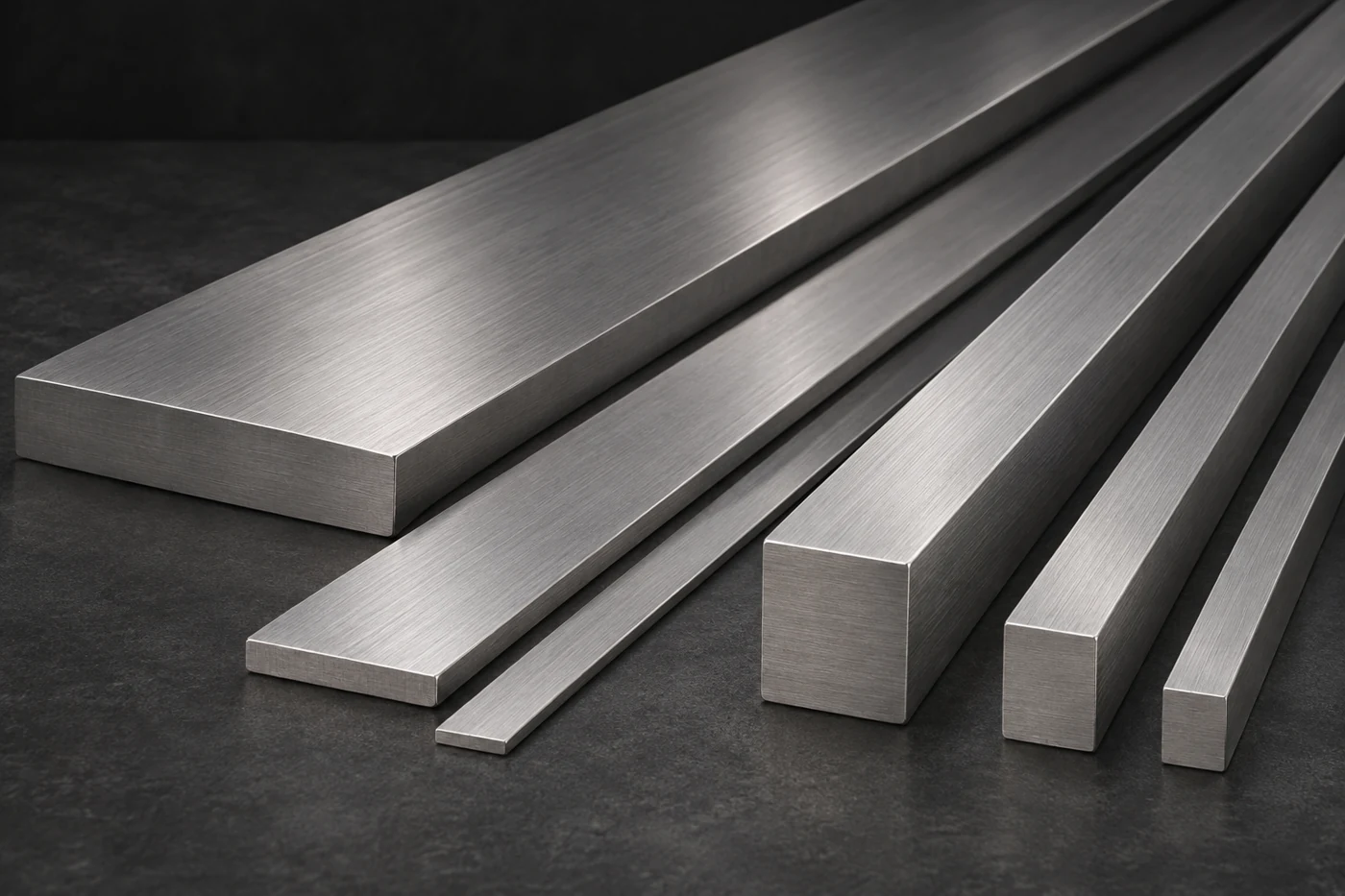
Solid rectangular and square titanium stock for drawing-controlled machining and fabrication. Send the grade, section, condition and usable dimensions so the proposed supply route can be reviewed.
Flat bar, square bar and prepared blanks serve different machining setups. Define the delivered geometry and the material route together.
Solid flat bar
Solid flat bar
Define the wide and narrow dimensions separately, with tolerances and the required corner condition. State whether the material is to be supplied as rolled or otherwise processed bar, or whether a plate-cut alternative may be reviewed. A rectangular outline does not establish the manufacturing route or product certification. Include the final machining envelope if the stock is intended for a finished component.
Separate width and thickness limits
Corner and edge requirements
Product route and certificate scope
Order the usable stock envelope
Nominal dimensions alone do not establish the material available after facing, edge preparation and clamping.
Order item
Include in your enquiry
Why it matters
Material
Grade, condition, product standard and edition
Confirm the offered route and records
Flat section
Width × thickness × length
Separate tolerance for each dimension
Square section
Side × side × length
State squareness and corner requirements
Shape control
Straightness, twist, flatness where applicable
Define the measurement basis and limits
Edges and ends
Corner radius or chamfer, burrs and end squareness
Identify critical surfaces on the drawing
Machining envelope
Usable dimensions and allowance
Include facing, holding and final stock removal
Inspection
Dimensions, condition and specified tests
Agree sampling and acceptance criteria
Delivery
Pieces or mass, traceability, packing and destination
Availability and timing confirmed by quotation
Your starting specification.
Grade and condition; solid flat or square section; width × thickness or side × side × length; tolerances, corner condition, straightness and twist; manufacturing route; machining allowance; quantity; inspection and traceability.
Supply is reviewed against the requested grade, section, condition and quantity. No size range, stock position or tolerance is implied by the illustrations. Bar and plate-cut alternatives must be identified separately.
Specify the grade and condition
These grades are enquiry options. Size availability, processing, certificates and suitability are reviewed for the actual project.
Chinese designations and international names are reference routes, not automatic substitutes. Grade, product specification, condition and acceptance requirements must be agreed together.
The section should support the intended machining or fabrication route without hiding a change in product specification.
Machined rectangular components
Provide the final drawing when the stock will become a bracket, block, spacer or other machined part. Identify datum faces, pockets, thin regions and required stock orientation. A near-net rectangular blank may change material removal and clamping, but its value depends on the complete process. For finished supply, review titanium CNC-machined parts.
What to sendFinished drawing, stock envelope, allowance and quantity.
Flat members for fabrication
State whether the strip-like piece is purchased as bar, cut plate or another approved route. Include any bending, welding or heat treatment planned after receipt. The supplied certificate describes its scope at delivery and does not automatically qualify a later assembly. If the requirement is fundamentally plate stock, use the titanium plate route for comparison.
What to sendProduct classification, fabrication sequence and final requirements.
Fixture-loaded square blanks
Define across-face dimensions, corner condition, straightness and twist when stock must load into a fixture or feeding arrangement. Explain the usable holding length and any surface restrictions. For a hollow member, use square and rectangular titanium tubing; matching the outside dimensions does not make a solid bar equivalent.
What to sendFixture interface, critical faces and solid-section drawing.
Control the route into the blank
Preserve the distinction between bar, billet and a plate-cut piece. Match documents and inspection to the material actually supplied.
AI illustration of solid cut blanks; the drawing and order define the actual delivered condition.
Order geometry schematic; not a dimensional drawing.
Identify the manufacturing route
A flat outline can result from different starting products. Ask the supplier to identify whether the offer is bar, billet-derived stock, a plate-cut piece or a prepared blank, and which specification is certified. TIMET’s product overview distinguishes titanium product forms, including rectangular bar. This supports the classification question; it does not establish TiHubs stock or processing limits.
Allow for the complete machining envelope
Specify minimum usable width, thickness and length after any agreed surface removal. Separate the ordered blank from the finished dimensions. A part that needs facing on two sides requires allowance on both relevant faces, with the actual amount agreed for the route. Record cut-end allowance, clamping needs and any restricted surface. Do not compare a rough blank with a finished-to-size piece as identical offers.
Define shape measurement and orientation
Length alone does not define straightness, and one across-face measurement does not establish an entire square section. Agree locations and the relevant geometry limits. If properties or machining behaviour depend on product orientation for the approved application, identify how orientation is preserved through cutting. Review the actual drawing rather than adding an unsupported universal tolerance.
Keep cut pieces linked to records
Agree how heat and lot identity transfer from a long length to blanks and through any subcontract processing. Confirm whether the order quantity means supplied blanks or accepted finished pieces. Retain inspection records and protect edges during packing. For a different cross section, see the general bar and rod page rather than substituting round stock without approval.
Verify the section and its identity
Dimensions, condition and traceability answer different acceptance questions. Agree the evidence before production.
AI section illustration; not a measurement result or inspection record.
Order documentationTiHubs
Traceable from heat to shipment.
Material identificationGrade + specification
Batch identificationHeat / lot reference
Inspection scopeAgreed tests & results
Shipment identificationMarks + packing list
Illustrative document checklist. Not a certificate or test report.
01Material identity
Match grade, product specification and condition to the order.
Certificate scope02Section dimensions
Check width, thickness or square sides at agreed locations.
Dimensional record03Shape and corners
Assess specified straightness, twist, squareness and edges.
Drawing requirements04Usable allowance
Verify the envelope and prepared surfaces included in supply.
Machining readiness05Additional testing
Define any required test method, sample and acceptance limit.
Project agreement06Delivery traceability
Connect pieces and package labels to heat and inspection records.
Lot release
Use the product standard that applies
ASTM B348/B348M concerns titanium bar and billet. A plate-cut route may involve a different starting-product specification. Confirm the contractual edition and the actual certification scope; the library files are references.
Library PDFs may be earlier editions. Check the document cover and your contractual revision. A reference file does not certify a supplied product.
TiHubs coordinates titanium sourcing through a local manufacturer network. Your specification guides the supplier review, technical discussion and delivery requirements.
Confirm grade, dimensions, state, quantity and the purpose of the stock.
Review the supply route
Discuss manufacturing, finishing, inspection and documentation with the relevant supplier.
Agree the commercial scope
Confirm the quotation, lead time, acceptance requirements and delivery terms.
Coordinate inspection & delivery
Follow the agreed checks, marking, packing and shipment documentation.
Before you order
Clarify the section, route and acceptance scope before comparing prices.
TITANIUM FLAT & SQUARE BAR · BAOJI SOURCING
Send your specification.
Solid rectangular and square titanium stock for drawing-controlled machining and fabrication. Send the grade, section, condition and usable dimensions so the proposed supply route can be reviewed.
You do not need to finalize every detail before contacting us.
TiHubs
Talk to TiHubs
Ask about titanium materials, grades or custom parts.
Enter your email to start chatting.
We use your email to respond to your enquiry. Your conversation is stored on this website.
Our team is away right now. Leave your enquiry and we will follow up by email.