Baoji High-tech Zone, ChinaTitanium sourcing · One contact


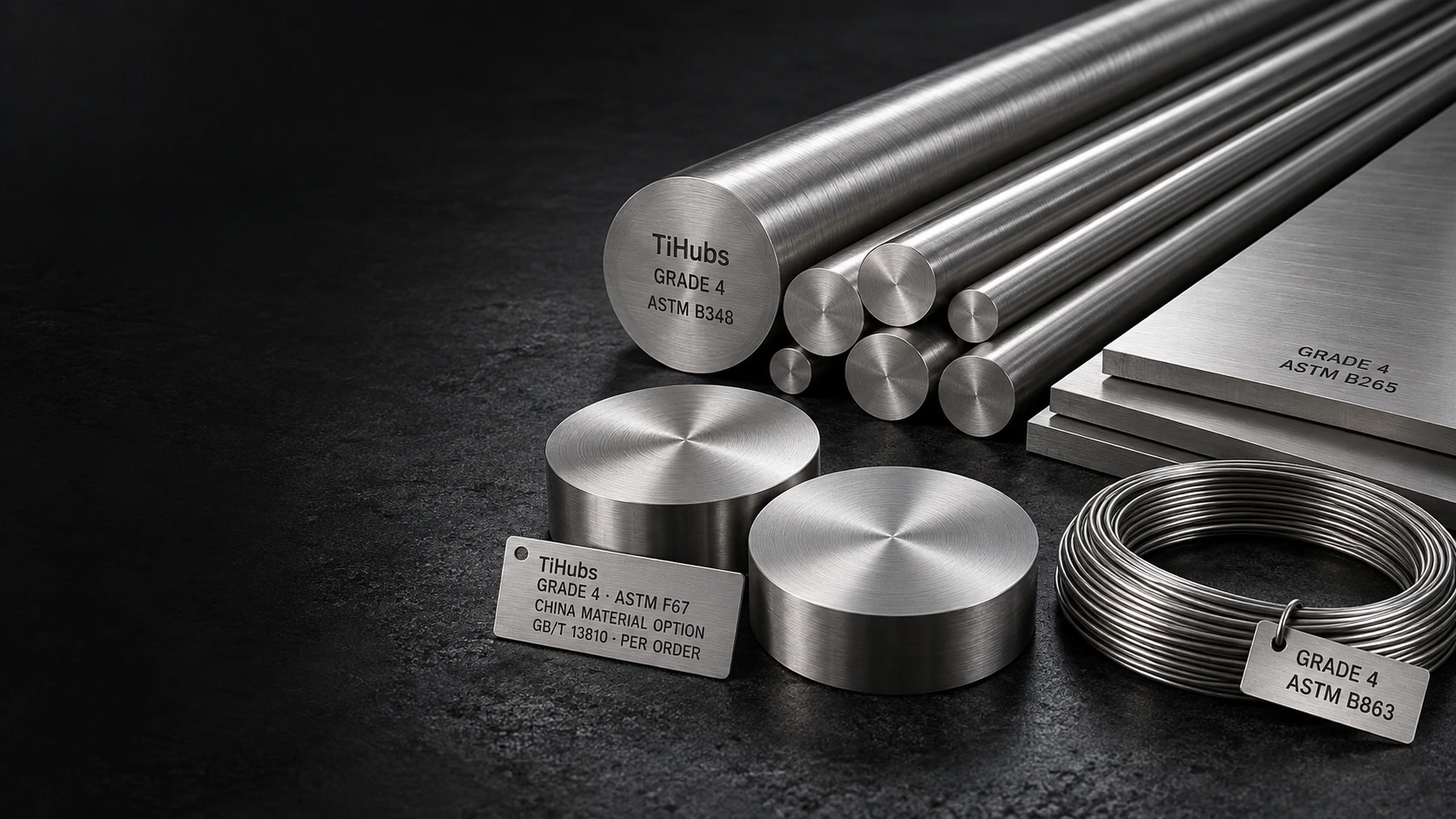
Commercially pure titanium · Baoji, China
Grade 4 / TA4 titanium.For dental manufacturing.
Source Grade 4 titanium bar, dental milling blanks, sheet and wire through one contact in Baoji. TiHubs also handles TA4 titanium enquiries, coordinating the material specification, machining stock and records your purchasing team needs.
Start with your material callout, blank drawing or application. We help clarify the product, condition and acceptance requirements before quotation.
Material review. Supply coordination.
One contact in Baoji, China.
CP titaniumGrade 4 · UNS R50700
Dental focusImplant stock, milling blanks & frameworks
One contactSpecification review to delivery coordination
01 / Product forms
Choose the stock.
Define the finished part.
Explore four material and blank options, plus two dental machining illustrations. Tell us whether you need raw stock, prepared blanks or a drawing-based manufacturing review.
01 / 06
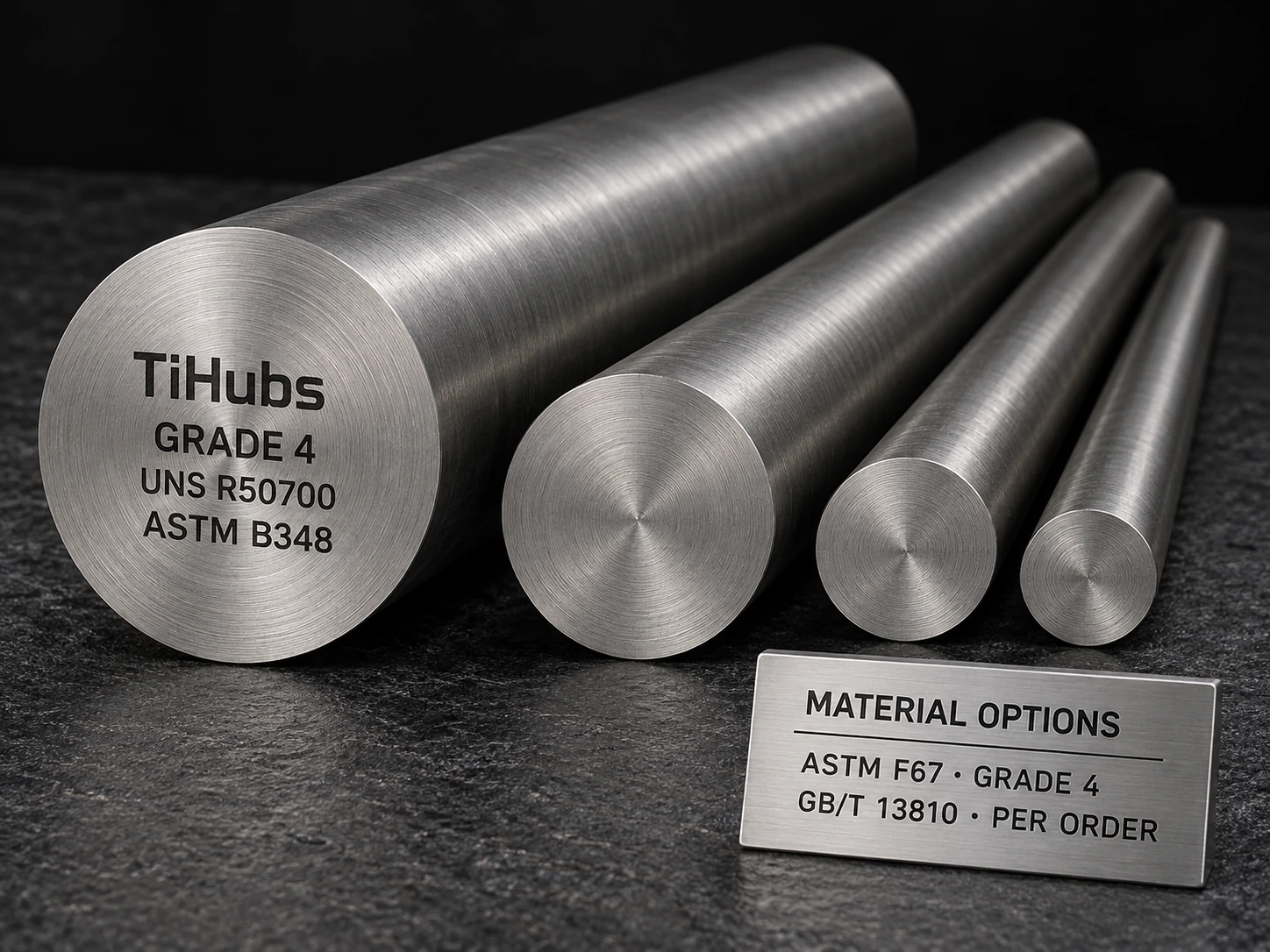
Grade 4 / TA4 titanium · Precision machining stock
Grade 4 / TA4 titanium bar & rod
Starting stock for dental implant manufacturing and precision turned components. Match the material route, condition and bar quality to your machining process.
- Specification
- For implant-material requirements: ASTM F67 Grade 4, the specified ISO 5832-2 grade, or GB/T 13810 TA4G. Industrial B348 / GB/T 2965 orders are a separate route.
- Dimensions
- Diameter or section × length; tolerance, straightness, cut lengths, machining allowance and quantity per size.
- Condition
- State annealed or the specified cold-worked condition. Agree the surface finish and feeding requirements for your turning equipment.
- Acceptance
- Heat and lot identity, chemistry, mechanical results, microstructure and any specified surface or nondestructive inspection.
02 / 06
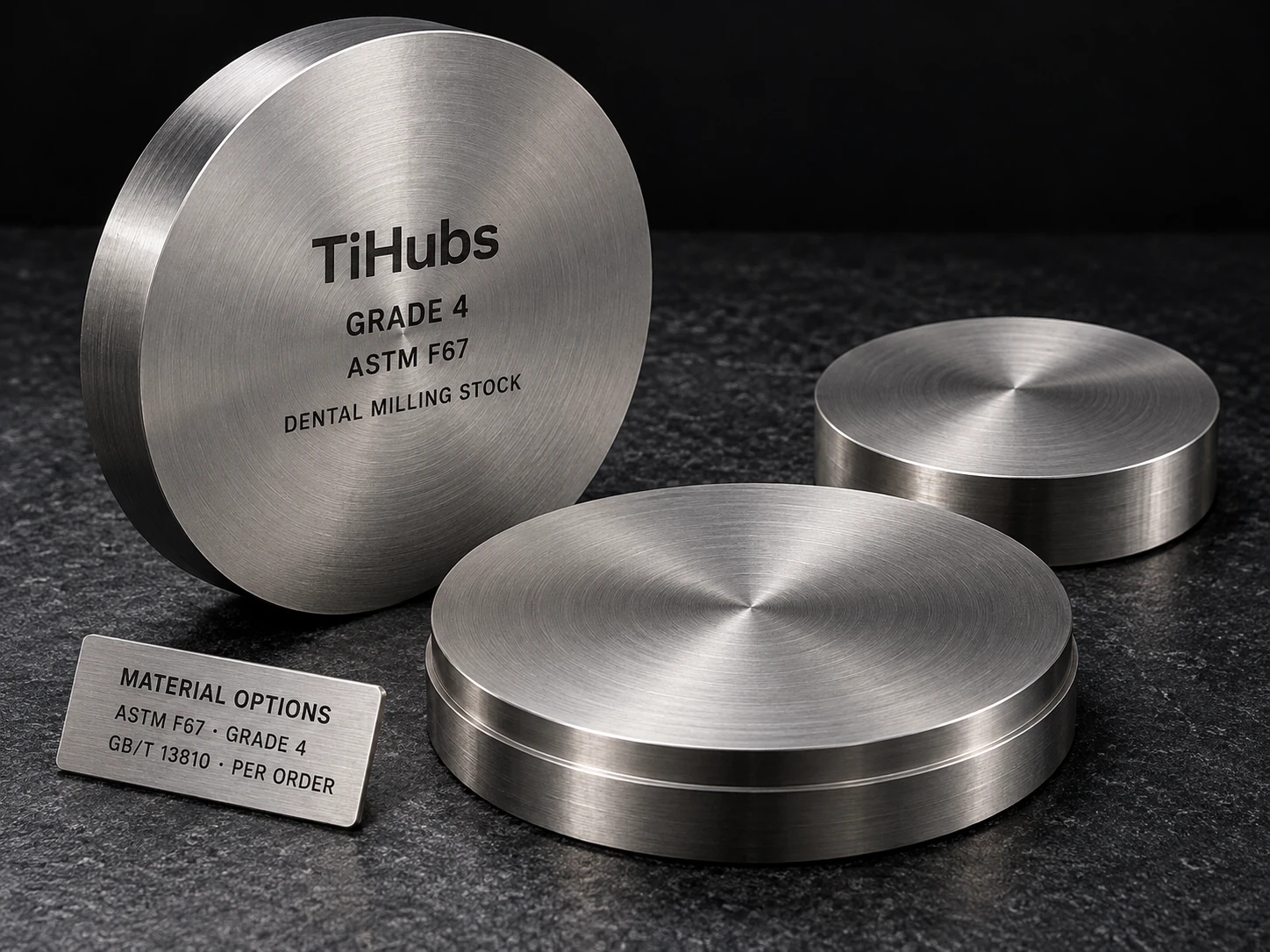
Dental CAD/CAM · Blank geometry to your system
Grade 4 titanium dental milling blanks
Discuss discs, pucks or drawing-defined blanks for dental framework machining. Confirm your milling system and material requirements before setting the blank dimensions.
- Material
- Specify the required Grade 4 or TA4G material standard, condition and records. Blank geometry alone does not establish implant-material conformity.
- Geometry
- Outside diameter, thickness, clamping step or collar, locating features, flatness and usable machining envelope.
- Compatibility
- Send the machine, holder or approved blank drawing. Do not assume a disc fits a system from its nominal diameter alone.
- Acceptance
- Material traceability, critical blank dimensions, finish, identification, protective packing and first-sample approval where needed.
03 / 06
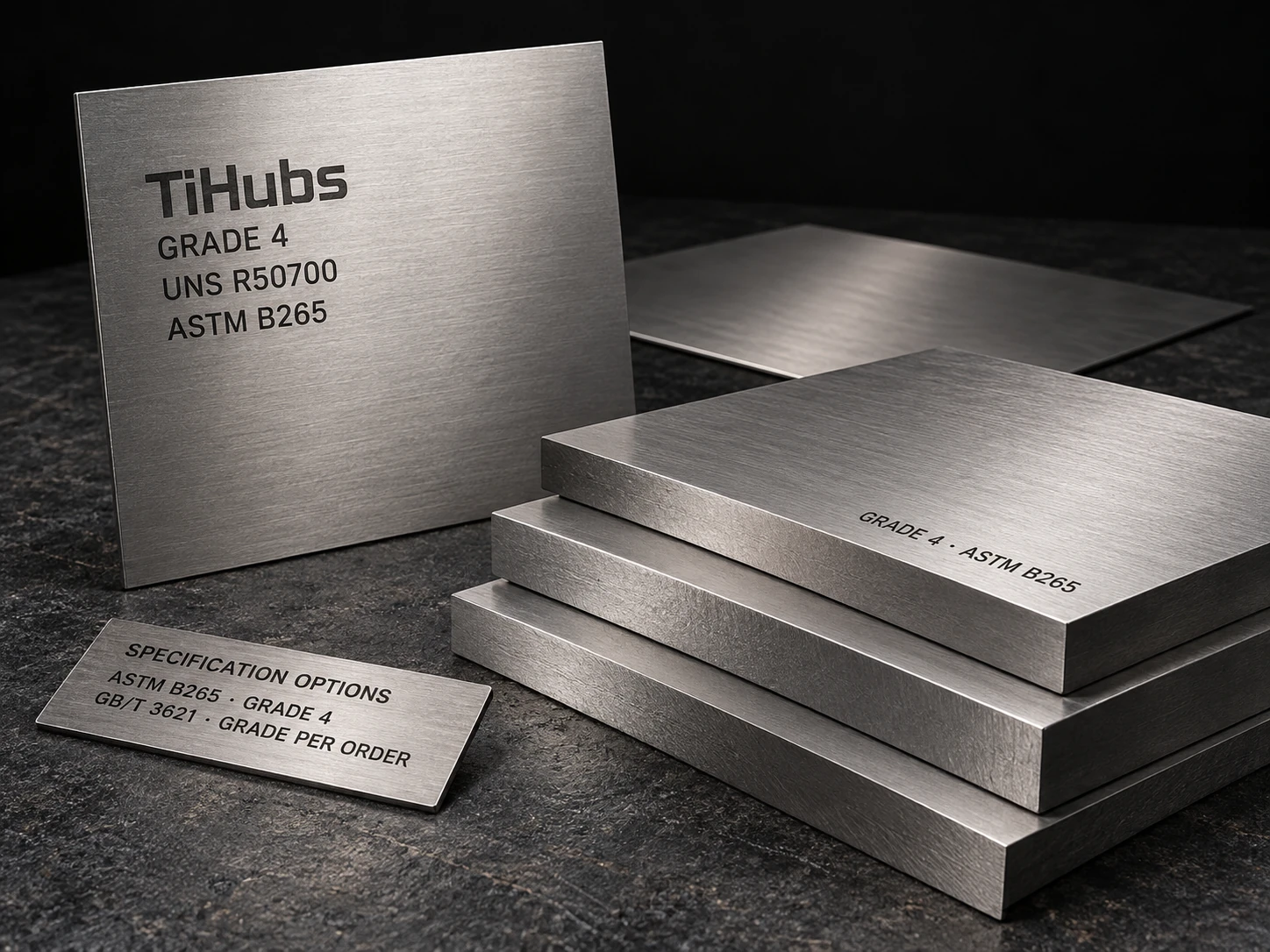
Grade 4 / TA4 titanium · Flat stock
Grade 4 / TA4 titanium sheet & plate
Flat stock for specified medical-device components and industrial machined parts. Share the drawing, thickness and intended process so we can review the supply scope.
- Specification
- Use the applicable ASTM F67 or GB/T 13810 medical-material requirements when specified. ASTM B265 / GB/T 3621 provide separate industrial product routes.
- Dimensions
- Thickness × width × length; thickness tolerance, flatness, cut-size tolerance, rolling direction and machining allowance.
- Condition
- Supplied condition, surface finish and any forming, joining or subsequent heat-treatment requirements.
- Acceptance
- Grade and lot identification, chemistry, applicable mechanical and bend tests, dimensions and the required material records.
04 / 06
Grade 4 / TA4 titanium · Coils & straight lengths
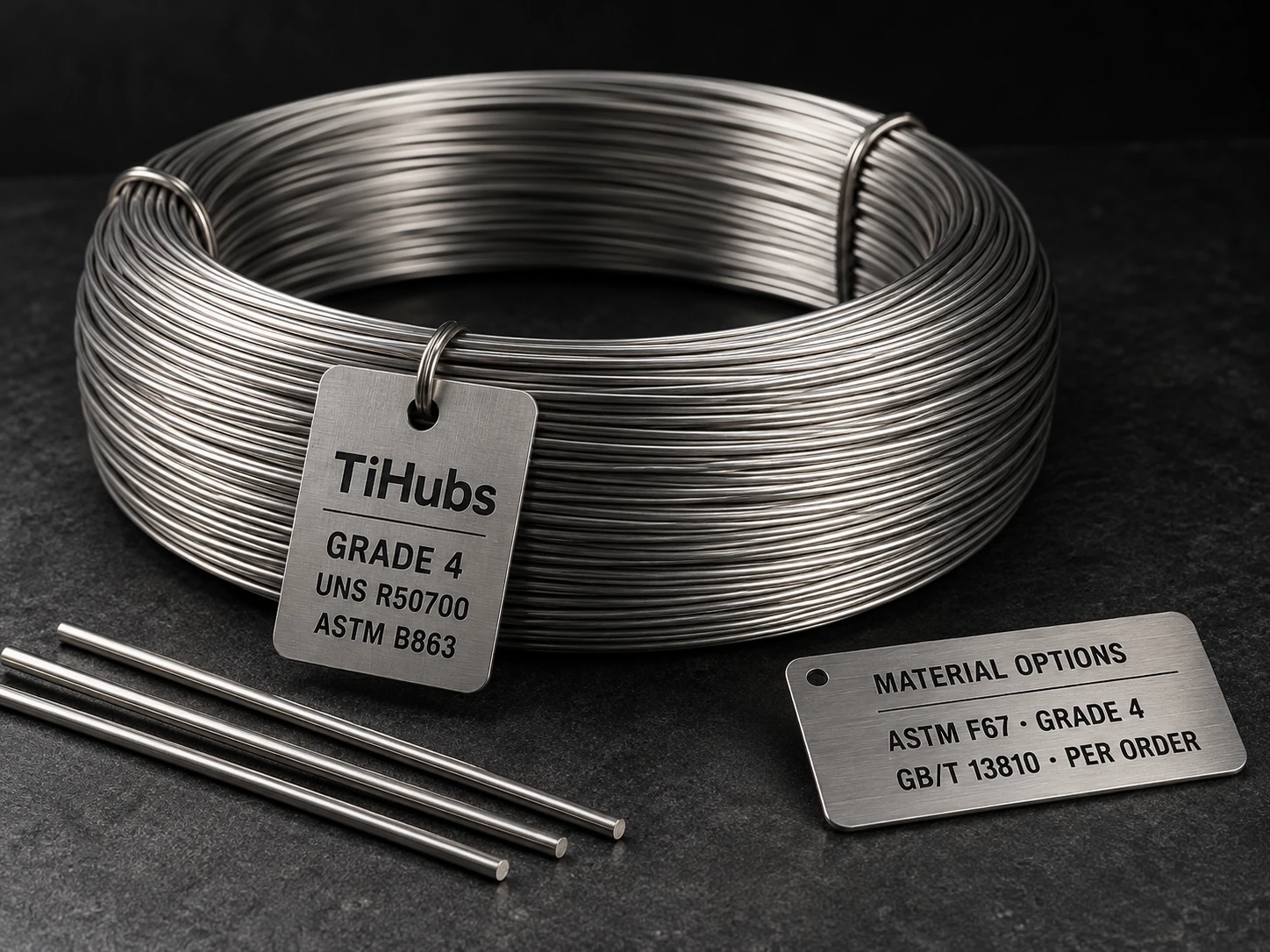
Grade 4 / TA4 titanium wire
Wire for specified component manufacture. Define the intended use, diameter and condition so the correct product requirements can be selected.
- Specification
- ASTM B863 / GB/T 3623 for industrial wire, or the specified ASTM F67 / GB/T 13810 route for medical-material requirements.
- Dimensions
- Diameter or section, tolerance, coil weight or straight length, quantity and delivery format.
- Processing
- Surface cleanliness, straightness, winding, feed requirements and the forming or cutting operation that follows.
- Acceptance
- Apply the wire-specific mechanical and sampling requirements. Welding filler and orthodontic performance need their own specifications.
05 / 06
Application illustration · Dental implant manufacture
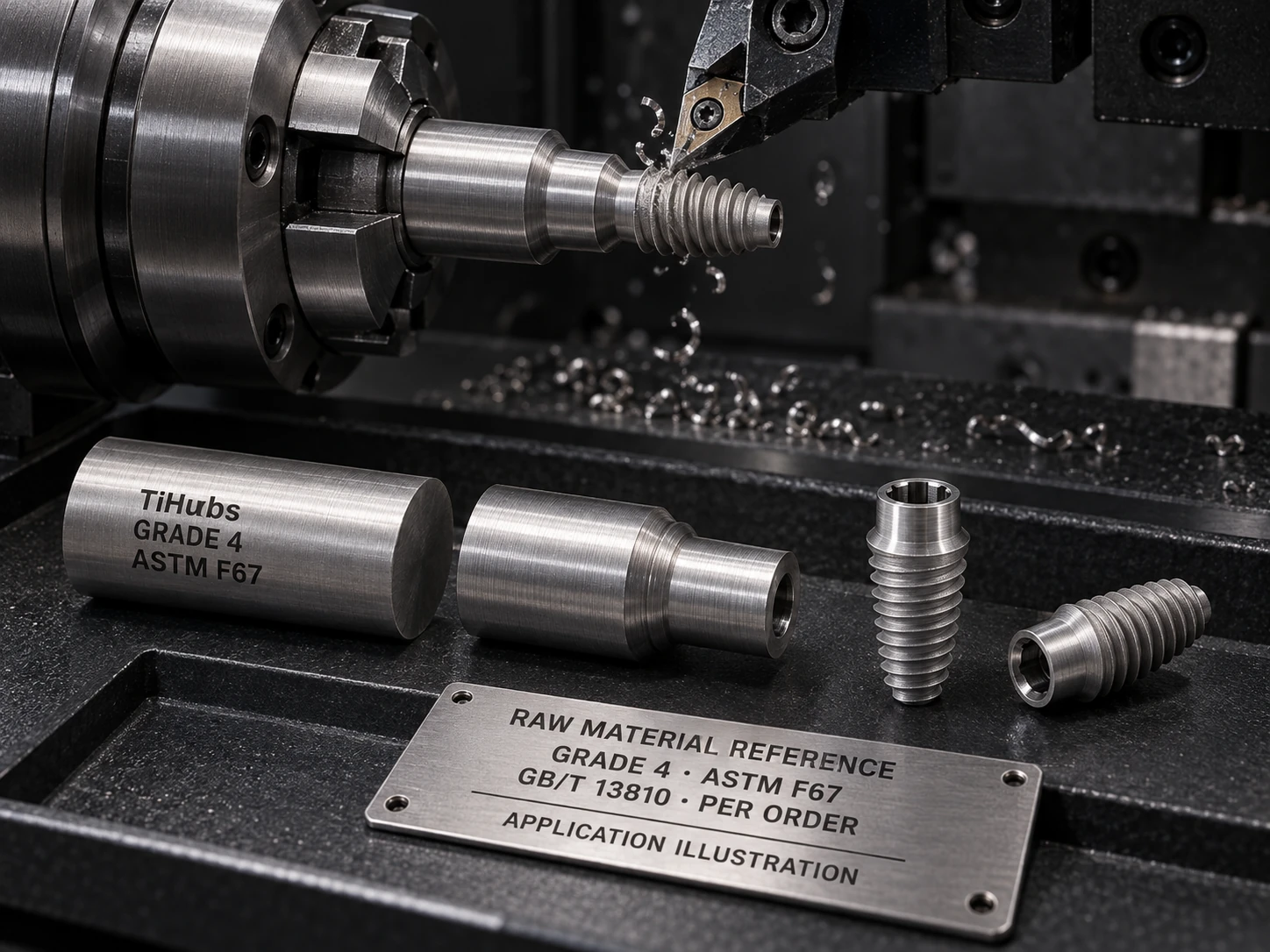
Grade 4 titanium for dental implant machining
Grade 4 commercially pure titanium is a material option used in dental implant systems. Define the stock condition and manufacturing requirements for your approved design.
- Supply scope
- Bar, cut stock or a drawing-based machining enquiry. Specify which operations and records are part of the requested supply.
- Material basis
- For example, ASTM F67 Grade 4 or the explicitly specified ISO / GB/T route. Agree condition and mechanical requirements before machining.
- Drawing review
- Current revision, thread geometry, connection features, concentricity, tool access, surface allowance and critical dimensions.
- Responsibility
- Material supply does not establish finished-device clearance. Device design, process validation, cleaning and final release follow the responsible manufacturer’s requirements.
06 / 06
Application illustration · Dental CAD/CAM
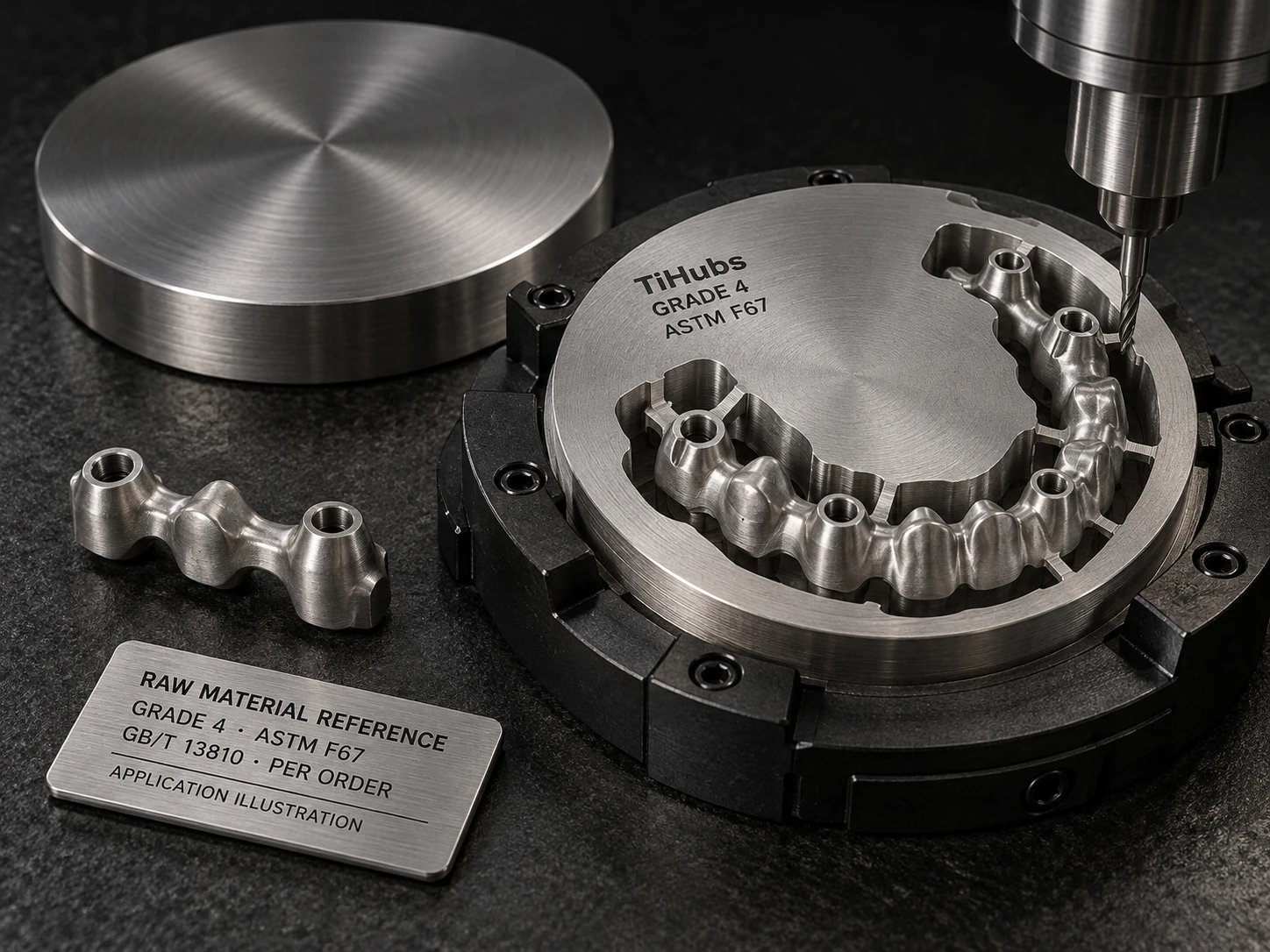
Grade 4 titanium for dental bridge frameworks
Grade 4 titanium can be used for CAD/CAM dental frameworks. The design, manufacturing system and final acceptance requirements determine the suitable material and blank.
- Starting stock
- Disc, puck, bar or drawing-defined blank; specify the material route, condition and usable envelope.
- Design inputs
- Bridge or framework CAD data, machining setup, interface geometry, critical wall sections and fit requirements.
- Processing scope
- Rough blank, machined framework or intermediate component; identify finishing, cleaning and inspection responsibilities.
- Acceptance
- Traceable material, blank or component dimensions, fit-verification method and agreed sample approval. Images show a manufacturing concept, not a validated device.
Images illustrate material forms, specification options and dental manufacturing concepts. They are not material certificates or TiHubs production records. For TA4 enquiries, confirm the full Chinese designation: GB/T 13810-2017 uses TA4G for the former TA4 grade.
Define the blank and the next operation.
Give purchasing, engineering and quality one clear supply scope.
01 / Custom requirement
Cut stock & prepared blanks
Specify cut lengths, disc geometry, tolerances, identification and surface protection. Keep the material heat or lot linked to the prepared blanks.
02 / Custom requirement
Drawing-based machining review
Send the current revision, critical features and inspection plan. Discuss machining feasibility, trial quantities and sample approval before committing the production scope.
03 / Custom requirement
Several forms, one delivery
Combine bar, blanks, sheet and wire in one requirements list. Identify the records, packing and items that must be ready for the same dispatch.
02 / Material identity
Grade 4 & TA4.
Know the ordering basis.
Grade 4 titanium is commercially pure, unalloyed titanium identified as UNS R50700. It has the highest specified strength among the conventional ASTM CP titanium Grades 1–4. Dental implant stock and precision machining blanks are key enquiries for this material.
TA4 titanium enquiries belong on this same page. For Chinese medical-material orders, GB/T 13810-2017 changed the earlier TA4 designation to TA4G. The purchase specification must state the full designation, product form, edition and condition; a common trade-name comparison does not establish dual conformity.
550MPa
Minimum tensile strength
ASTM F67-13 (2017), Table 3
483MPa
Minimum 0.2% offset yield strength
Annealed Grade 4, Table 3 basis
15%
Minimum elongation
Apply the specified specimen and gauge basis
| Property or condition | Reference | Ordering implication |
|---|---|---|
| Headline reference | ASTM F67-13 (2017), Table 3 | Annealed bar, billet, forgings and other forms within the table scope. Check size, specimen and table notes; sheet, strip and wire have their own requirements. |
| Annealed versus cold-worked | State the required condition | Cold working changes strength and ductility. Do not apply annealed values, proprietary high-strength data or another grade’s values to an unspecified order. |
| ISO 5832-2:2018 | Grade 4A / Grade 4B | 4A is annealed; 4B is cold-worked. Table 2 gives different properties and a maximum diameter or thickness of 75 mm. Specify the actual route. |
| TA4 / TA4G orders | Use the Chinese product specification | Confirm the complete designation, form, condition, dimensions and test basis. The ASTM headline values are not a universal Chinese-standard acceptance table. |
These are selected material acceptance references, not design allowables or a guarantee for a finished dental device. Use the complete ordered specification and actual lot records.
| Element | Symbol | ASTM F67 Grade 4, mass % |
|---|---|---|
| Oxygen | O | 0.40 maximum |
| Iron | Fe | 0.50 maximum |
| Carbon | C | 0.08 maximum |
| Nitrogen | N | 0.05 maximum |
| Hydrogen | H | 0.015 maximum |
| Titanium | Ti | Balance |
Source: supplied ASTM F67-13 (2017), Table 1. The billet hydrogen maximum is 0.0100%. Product-analysis tolerances and sampling are separate requirements. ISO 5832-2:2018 uses a different hydrogen limit with product exceptions; do not assume identical chemistry rules across standards.
Grade 4 and TA4 on one page
Use either purchasing term to start your enquiry. For GB/T 13810-2017, the updated designation is TA4G. Confirm the complete order callout rather than treating the names as an automatic substitution approval.
Grade 4 versus Grade 2
Grade 4 has higher specified strength in conventional CP titanium requirements. Grade 2 offers greater ductility on a comparable annealed basis. The drawing, manufacturing process and service requirements should determine the selection.
Grade 4 versus Grade 23
Grade 4 is unalloyed titanium. Grade 23 is the Ti-6Al-4V ELI alloy and follows different chemistry and material requirements. They are separate material choices, even where both are considered for medical manufacture.
Raw material versus a finished device
ASTM F67, ISO 5832-2 and GB/T 13810 address material requirements. The finished implant or restoration also needs its own design, manufacturing, testing and regulatory requirements. State who controls each part of the scope.
Material and dental-use background: Carpenter Technology — dental materials ↗. Product conditions and strengths must come from your specified route.
03 / Dental applications & manufacturing requirements
From titanium stock
to dental manufacturing.
Specify the material, the next operation and the evidence required. The two dental illustrations help define manufacturing enquiries; they are not examples of delivered TiHubs medical devices.
Application review / 01
Grade 4 titanium stock for dental implants
Commercially pure Grade 4 is used in dental implant systems. A useful material enquiry connects the approved design with the required stock condition and manufacturing controls.
Products to discuss
Bar and cut stock; drawing-based machining enquiries with a defined scope.
What we need to review
Material standard and condition, diameter tolerance, straightness, surface, thread and connection features, traceability and required records.
Application review / 02
Titanium for CAD/CAM dental frameworks
Grade 4 titanium is used for dental frameworks in established CAD/CAM systems. Blank choice must fit the design, machine and final restoration requirements.
Products to discuss
Milling discs, pucks or tailored blanks; framework machining review.
What we need to review
CAD data, clamping geometry, usable envelope, interface fit, wall sections, finish and sample-verification method.
Application review / 03
Define the dental blank before machining
A well-defined blank specification connects the material certificate to the stock your milling process will actually receive.
Products to discuss
Discs, stepped blanks, cut bar and drawing-defined stock.
What we need to review
Diameter, thickness, collar or step dimensions, flatness, marking, material lot identity and handling protection.
Application review / 04
Bar stock matched to your turning process
For dental-related and other precision components, control the supplied stock before evaluating the machining route. Suitability follows the drawing and acceptance requirements.
Products to discuss
Round bar, cut lengths and machining blanks.
What we need to review
Bar-feeding dimensions, straightness, material condition, surface, concentricity, critical features and inspection.
Application review / 05
Agree trial stock and sample approval
Use a defined trial order to evaluate machining, blank fit or sample inspection before agreeing repeat production. A trial does not replace device validation.
Products to discuss
Sample bars, discs or cut pieces to the specified material route.
What we need to review
Trial quantity, drawing revision, cutting or machining scope, sample acceptance, retained records and approval milestones.
Application review / 06
Titanium stock for drawing-defined medical parts
Where a device drawing calls for Grade 4 or TA4G, select the material standard and product form required by that design. Do not infer suitability from the word medical alone.
Products to discuss
Bar, sheet, plate or wire for the stated component and manufacturing route.
What we need to review
Device-manufacturer specification, material condition, critical dimensions, cleanliness, records and release responsibilities.
Application review / 07
Grade 4 wire with a defined end use
Wire requirements depend on diameter, condition and the next manufacturing operation. Separate general industrial wire from specifically ordered medical material.
Products to discuss
Coiled wire or straight lengths in the required delivery condition.
What we need to review
Diameter, surface, winding or straightness, forming needs, wire-specific mechanical requirements and lot documentation.
Application review / 08
CP titanium for specified industrial service
Grade 4 can be considered where CP titanium strength and corrosion behavior suit the design. Review the actual operating environment before selecting the material.
Products to discuss
Bar, sheet, plate and cut stock under the applicable industrial product standard.
What we need to review
Loads, medium, concentration, temperature, joining, machining allowance, dimensions and inspection scope.
Application references: Carpenter Technology — dental materials ↗ · Straumann — grade 4 titanium frameworks ↗. These sources describe material uses and do not imply a supplier relationship with TiHubs.
Dental material procurement checklist
What makes a dental-material RFQ useful?
Connect the drawing, material specification and approval requirements before comparing quotations.
Define the material route
State Grade 4 or TA4G, standard and edition, product form and condition. Include every standard that must be met, with any additional purchaser requirements.
Define the supplied item
Raw bar, cut stock, milling blank or machined component: specify the geometry, tolerances, surface, quantity and operations included.
Define the evidence
List material certificates, heat and lot identity, chemistry, mechanical and microstructure records, samples, inspection and manufacturer approval requirements.
Example: a useful Grade 4 dental bar enquiry
Grade 4 / UNS R50700 titanium bar for dental implant machining; ASTM F67 [required edition]; specified condition; diameter × length and tolerances; straightness and surface; quantity; required material and microstructure records; lot traceability; sample approval; destination and target date.
For a Chinese route, state GB/T 13810-2017 TA4G and its applicable requirements. Attach the current drawing or purchaser specification when available.
04 / Standards & documentation
Grade 4 / TA4 standards.
Choose the required route.
Ten reference files cover medical-material requirements, industrial product forms and Chinese designations. Use the files to define the purchase scope; specify the edition and acceptance requirements in the order.
| Material or product | ASTM / ISO route | Chinese standard route | Clarify before quotation |
|---|---|---|---|
| Implant-material requirements | ASTM F67-13 (2017) View PDF ↗ISO 5832-2:2018 View PDF ↗ | GB/T 13810-2017 View PDF ↗ | Grade, condition, form, dimensions, chemical and mechanical requirements, microstructure, traceability and purchaser additions. |
| Material identity & composition | Grade 4 · UNS R50700
Unalloyed titanium. Use the selected ASTM / ISO specification and its complete analysis requirements. |
GB/T 3620.1-2016 View PDF ↗
TA4 is a common enquiry term; GB/T 13810-2017 uses TA4G for the earlier TA4 designation. |
Full designation and edition. Any requirement to meet more than one standard must be agreed and demonstrated. |
| Industrial bar & rod | ASTM B348-08a View PDF ↗ | GB/T 2965-2023 View PDF ↗ | Section, length, condition, straightness, surface and inspection. Do not assume this route satisfies medical-material requirements. |
| Industrial sheet & plate | ASTM B265-08 View PDF ↗ | GB/T 3621-2022 View PDF ↗ | Thickness, width, length, flatness, condition, rolling direction, surface and applicable tests. |
| Industrial wire | ASTM B863-19 View PDF ↗ | GB/T 3623-2022 View PDF ↗ | Diameter, condition, coil or straight length, surface, intended use and the required wire-specific records. |
Agree the edition and supply scope. Files include ASTM F67-13 (2017), B348-08a, B265-08 and B863-19. ISO 5832-2:2018 is the supplied reference edition and has been superseded. Confirm the edition required by your drawing or purchasing specification.
Designation note: GB/T 13810-2017 records the change from TA4 to TA4G. The linked English GB/T reference copies should be checked against the controlling Chinese text for acceptance. ISO 5832-2:2018 catalogue and edition status ↗.
05 / Order coordination
Know the scope
before ordering.
Our founder’s 20 years in titanium inform the questions we ask before quotation: what material must be supplied, what the next process needs and what your quality team must review.
Material, manufacturing & evidence
Know the stock.
Know the acceptance plan.
TiHubs connects your requirements with relevant manufacturing resources in Baoji. One contact coordinates technical clarification, supply options and the agreed records.
- Material
- Full designation, standard edition, product form, condition, dimensions and quantity.
- Scope
- Raw stock, prepared blank or drawing-based work; define process and sample approvals.
- Evidence
- Heat and lot identity, material records, dimensional checks and the agreed inspection scope.
Our network of 100+ titanium factories provides supply options. Project-specific manufacturer qualifications and document requirements must be reviewed as part of the order.
A quotation you can evaluate
Agree the grade, standard edition, dimensions, tolerance, condition and quantity before comparing prices.
- Identify whether inspection, samples and tooling are included.
- Confirm packaging, transport and delivery terms.
- Record items that still need technical confirmation.
Acceptance agreed before supply
Confirm the full Grade 4 or TA4G callout, standard edition, condition, material records, heat and lot identity, dimensions and the agreed testing before supply starts.
For dental-material orders, identify microstructure, surface, sample and manufacturer-qualification requirements. Independent inspection can be discussed with its scope, criteria, timing and cost agreed.
Delivery with clear milestones
Review the proposed lead time, approvals, production sequence and dispatch requirements. For several product forms, coordinate document and packing readiness together.
Material substitutions and technical changes require written approval. A schedule deviation should identify the impact, decisions needed and next steps.
One contact when an issue arises
Contact TiHubs with the order reference, affected items and supporting photos or inspection records.
We record the issue, review it against the agreed requirements and coordinate the next steps with the relevant manufacturing parties.
01 / Material identity
Material records
Material designation, edition, chemistry, mechanical results and heat or lot identity linked to the supplied stock.
02 / Agreed acceptance
Inspection records
Dimensional, microstructure and other agreed inspection records, including blank or sample requirements where specified.
03 / Ready for dispatch
Dispatch records
Item identification, packing list, protective packaging and required shipment documents.
06 / Questions before sourcing
Before you source
Grade 4 / TA4 titanium.
A clear grade name is the starting point. The material standard, condition, supplied geometry and acceptance plan complete a useful dental-material enquiry.
A useful first enquiry
- Product and specificationGrade 4 or the complete Chinese TA4 / TA4G callout, standard edition, form and condition.
- Order and deliveryQuantity per size, destination, packaging and required delivery date.
- Acceptance requirementsDrawing revision, material records, inspection, samples and purchaser approvals.
Not every detail is finalized? Send the information you have. We can help identify the questions to resolve before quotation.
What happens next: requirement review, technical clarification, then a supply proposal and quotation.
What is Grade 4 titanium?
Grade 4 is commercially pure, unalloyed titanium identified as UNS R50700. It has the highest specified strength among conventional ASTM CP titanium Grades 1–4. Dental implant stock, dental milling blanks and precision machining stock are common enquiries; the specific application still requires an agreed material and acceptance specification.
Is Grade 4 titanium the same as TA4 titanium?
Grade 4 and TA4 are commonly associated purchasing terms, and TiHubs handles both on this page. For Chinese medical-material orders, GB/T 13810-2017 changed the former TA4 designation to TA4G. State the full designation, standard edition, product form and condition. A name comparison does not by itself establish that a lot meets two standards.
Why does the page also mention TA4G?
TA4G is the designation used for the former TA4 grade in GB/T 13810-2017. Buyers may still search or enquire using TA4, so both terms are explained here. Your purchase order and material records should use the designation required by the applicable standard and drawing.
Is Grade 4 titanium suitable for dental implants?
Grade 4 commercially pure titanium is used in dental implant systems. For a specific design, the responsible manufacturer must define the material standard, condition, dimensions, manufacturing controls and finished-device requirements. Material conformity alone does not establish approval or suitability of a finished implant.
Can Grade 4 titanium be used for bridges and restoration frameworks?
Grade 4 titanium is used for CAD/CAM dental frameworks in established systems. Send the approved design, blank geometry, machine or holder details, material specification and fit requirements. TiHubs can review material or blank supply and discuss any drawing-based machining scope.
Can you supply dental milling discs or custom blanks?
Send the disc or blank drawing, outside diameter, thickness, collar or clamping features, tolerances, condition, quantity and material records needed. Machine compatibility and usable machining space must be confirmed from the actual holder and drawing. Available sizes and supply scope are reviewed before quotation.
What is the difference between annealed and cold-worked Grade 4?
Cold working changes strength and ductility. In the supplied ISO 5832-2:2018 reference, Grade 4A is annealed and Grade 4B is cold-worked, with different mechanical requirements. ASTM F67 also requires the condition and applicable product requirements to be specified. Do not transfer a high-strength value to an unspecified Grade 4 order.
Does ASTM B348 Grade 4 automatically comply with ASTM F67?
No. ASTM B348 is a bar and billet product specification, while ASTM F67 specifies unalloyed titanium for surgical implant applications. If F67 or multiple standards are required, include them in the enquiry and confirm that the supplied lot and records demonstrate the agreed requirements.
How does Grade 4 differ from Grade 23 titanium?
Grade 4 is commercially pure titanium. Grade 23 is Ti-6Al-4V ELI, a titanium alloy with different chemistry, properties and specifications. Both may be considered for medical manufacture, but they cannot be substituted solely because the application is dental or medical.
What records and inspection can be requested?
Agree material certificates, heat and lot identity, chemistry, mechanical results, microstructure, dimensions and any additional testing during quotation. Samples and independent inspection can be discussed. Records must relate to the supplied material, and manufacturer-qualification requirements must be stated for review.
What are the MOQ, price and lead time?
They depend on form, size, condition, quantity, processing, material route and inspection. Send the requirements, destination and target date. We review suitable supply resources and clarify included items, separately priced work and proposed lead time in the quotation.
Who coordinates an order issue?
TiHubs remains your technical and commercial contact. We record the issue, review it against the agreed scope and coordinate the next steps with the relevant manufacturing parties. Material substitutions and technical changes require written agreement before implementation.
07 / Your next step
Start with the
requirement you have.
Send your Grade 4 or TA4 titanium specification, blank drawing or dental manufacturing requirement. We will review the available information, identify missing details and discuss a suitable supply route before quotation.
- Requirement review
- Technical clarification
- Supply proposal and quotation
Connect the stock to the next process.
Include the material route, condition, size, tolerance and quantity. Tell us whether the next step is turning, milling, forming or another defined operation.
Share your quality and delivery requirements.
List material records, manufacturer qualifications, inspection, samples and approval milestones. Include destination, packaging and the required delivery date.
Baoji, China · info@tihubs.com
Start your Grade 4 / TA4 enquiry
Tell us what you need. Details can be clarified after your first enquiry.