Titanium welding wire: specify the complete consumable.
Match the approved filler requirement to the wire diameter, feeding arrangement, protected package and traceable delivery. A material nickname alone cannot define the order.
Welding requirementClassification and approved size
Supply requirementPackage, condition and identity
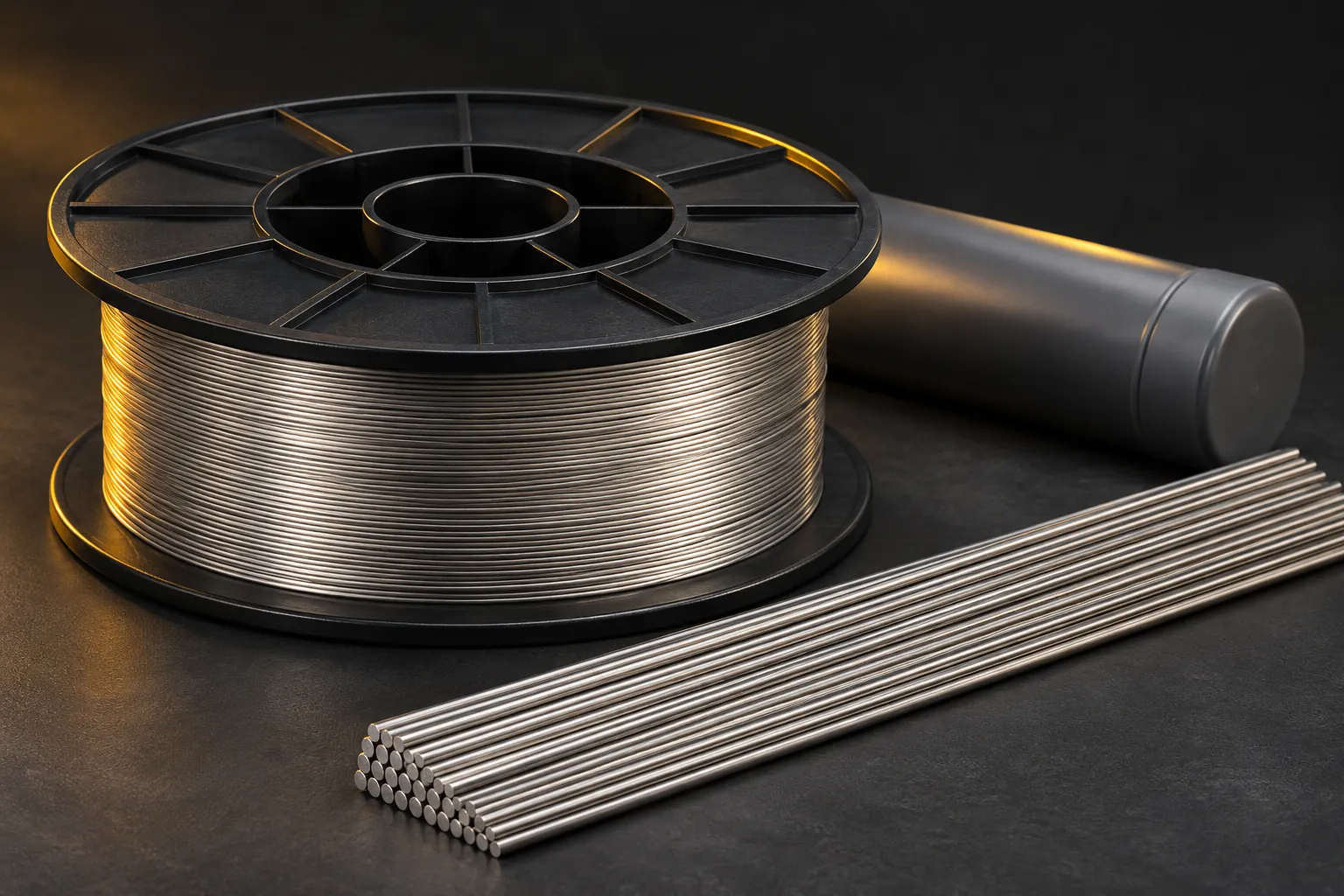
AI illustration; not a production or inspection record.
Quick answer
Order titanium welding wire against the approved welding procedure and exact consumable classification. State the specification edition, controlling diameter and units, straight-rod or spool format, package dimensions where applicable, surface condition, identification and required records. A base-metal grade name is not a complete filler specification. Keep substitutions separate for review, and use a representative trial when the project requires qualification of a new supply configuration.
01 / Procedure and classification
Start with the approved weld requirement, not the base-metal nickname.
A fabricator asks purchasing for titanium wire, 1.6 mm, to join a Grade 2 component. One quotation offers industrial Grade 2 wire in a coil, another offers ERTi-2 filler rods, and a third offers a spool for mechanized feeding. The descriptions share a material family and diameter, but they do not establish the same consumable. Before choosing the lowest price, connect the order to the approved welding procedure, required filler classification and actual feeding arrangement.
The starting document is normally the applicable welding procedure specification, or the controlled requirement issued by the responsible welding engineer. Extract the filler classification, specification edition, diameter, process and any project restrictions. Record the revision. If the procedure has not yet been approved, mark the enquiry as a qualification or development request. A supplier can quote a proposed consumable, but a quotation does not qualify the weld or authorize production use.
AWS A5.16/A5.16M:2023 covers titanium and titanium-alloy welding electrodes and rods, with classification based on composition. Its public scope also identifies testing and packaging provisions. This is a consumable specification, not an approval of every joint made with a classified wire. The order should carry the complete classification and any applicable suffix exactly as required, rather than reducing it to a general phrase such as “pure titanium” or “Grade 5 wire.” [1]
A base-metal grade and a filler classification have different roles. A material certificate for an industrial wire product does not automatically demonstrate compliance with the welding-consumable requirement. Conversely, a correctly classified filler still needs to be suitable for the approved joint and service. Do not assume that matching a familiar grade number settles the selection. TWI describes both matching-composition practice and exceptions; those exceptions require a technical decision rather than an informal purchasing substitution. [2]
Information
Who establishes it
What purchasing preserves
Joint and service requirement
Design and welding authorities
Approved drawing and procedure revision
Filler classification
Approved procedure
Exact designation, suffix and specification
Diameter and supply form
Procedure and equipment review
Numerical size, rod or spool details
Delivery acceptance
Project quality requirements
Lot records, condition and package identity
For a mixed-material joint, a repair or a corrosion-critical component, include the relevant approved instruction instead of asking the supplier to infer suitability from a photograph. The same principle applies when changing from hand-fed welding to a mechanized system. Keep the material choice, process qualification and supply configuration visible as separate decisions. That makes it possible to identify which question remains open when an alternative is proposed.
A good first enquiry can therefore be brief but precise: identify the base materials for context, cite the approved filler requirement, state the process and ask for a compliant supply proposal. If a supplier cannot meet one item, request a clearly separated alternative. Do not let the alternative overwrite the original line. The comparison should show exactly what the welding engineer would need to review before the order could be accepted.
02 / Diameter and units
Treat diameter as a controlled input to the process.
Wire diameter affects more than whether the material fits into a package. It changes the cross-sectional area supplied per unit length and must be compatible with the intended feeding equipment. For manually added rod, diameter also forms part of the approved technique and access arrangement. Purchasing should obtain the permitted size from the procedure or process owner. A generic web chart relating diameter to plate thickness cannot account for the actual joint, process, position and qualification scope.
Keep the controlling units explicit. A nominal 1/16-inch diameter converts mathematically to 1.5875 mm; a product sold as 1.6 mm is not automatically the same acceptance designation. The relevant specification may define separate unit-system requirements and permitted variations. AWS specifically notes that its U.S. Customary and SI requirements are used independently. Preserve the requested designation and have a proposed conversion reviewed rather than rounding the order silently. [1]
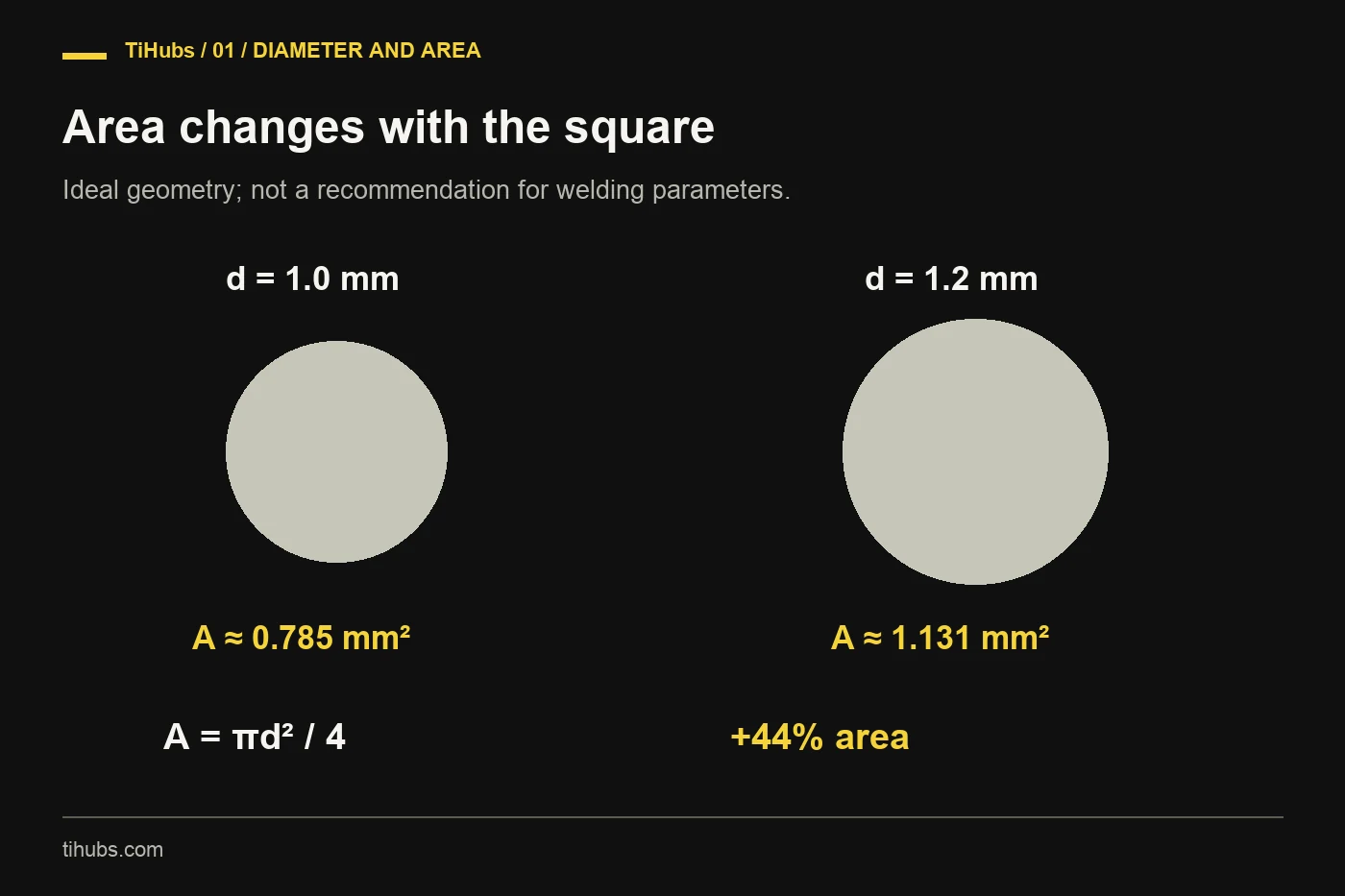
An original geometry example helps explain the scale of a diameter change. The area of round wire is A = πd²/4. At nominal diameters of 1.0 mm and 1.2 mm, the areas are approximately 0.785 mm² and 1.131 mm². The ratio is 1.44. At the same linear feed speed, the larger wire therefore supplies 44 percent more geometric volume per unit time in this ideal model. This is not a recommendation to change feed speed, current or any welding setting; actual procedure changes require the appropriate review.
That squared relationship also matters when estimating length per kilogram. For the same material density and net mass, thinner wire provides more length. Comparing two quotes by spool mass alone can hide a diameter change that affects the whole production plan. Verify the requested diameter and tolerance before using a weight comparison. A spool that contains the correct kilograms but a different diameter is not a like-for-like replacement for the scheduled operation.
For mechanized feeding, confirm the equipment manufacturer’s compatible wire range and the installed feed path. Rollers, guides, liners, contact arrangements where applicable and spool holders must be considered together. A nominal diameter printed on a machine advertisement does not establish every installed component’s compatibility. Ask the fabricator to approve the consumable configuration actually being ordered, including any diameter change proposed because the preferred item is unavailable.
Proposed change
Question before acceptance
1.6 mm offered for an inch designation
Does the approved requirement permit that size and tolerance?
Different diameter, same classification
Is it covered by the procedure and equipment arrangement?
Same diameter, different package
Will it load and feed in the installed system?
Same mass, different diameter
Has the available length and production estimate been revised?
Receiving inspection should use a method capable of assessing the agreed diameter without damaging or contaminating the consumable. Define the sampling and recording scope before the material is opened. A single convenient measurement does not establish every relevant requirement of a spool. If a diameter discrepancy is suspected, preserve the package and lot identity while the quality team evaluates it. The aim is to resolve the measured issue without losing the evidence needed to trace the affected supply.
Industrial buying guide / 02Diameter changes the supplied area.
Ideal round-wire geometry: increasing diameter from 1.0 to 1.2 mm increases area by 44%. This is not a welding-setting recommendation.
03 / Rods, spools and feeding
Order the package that the welding station can actually use.
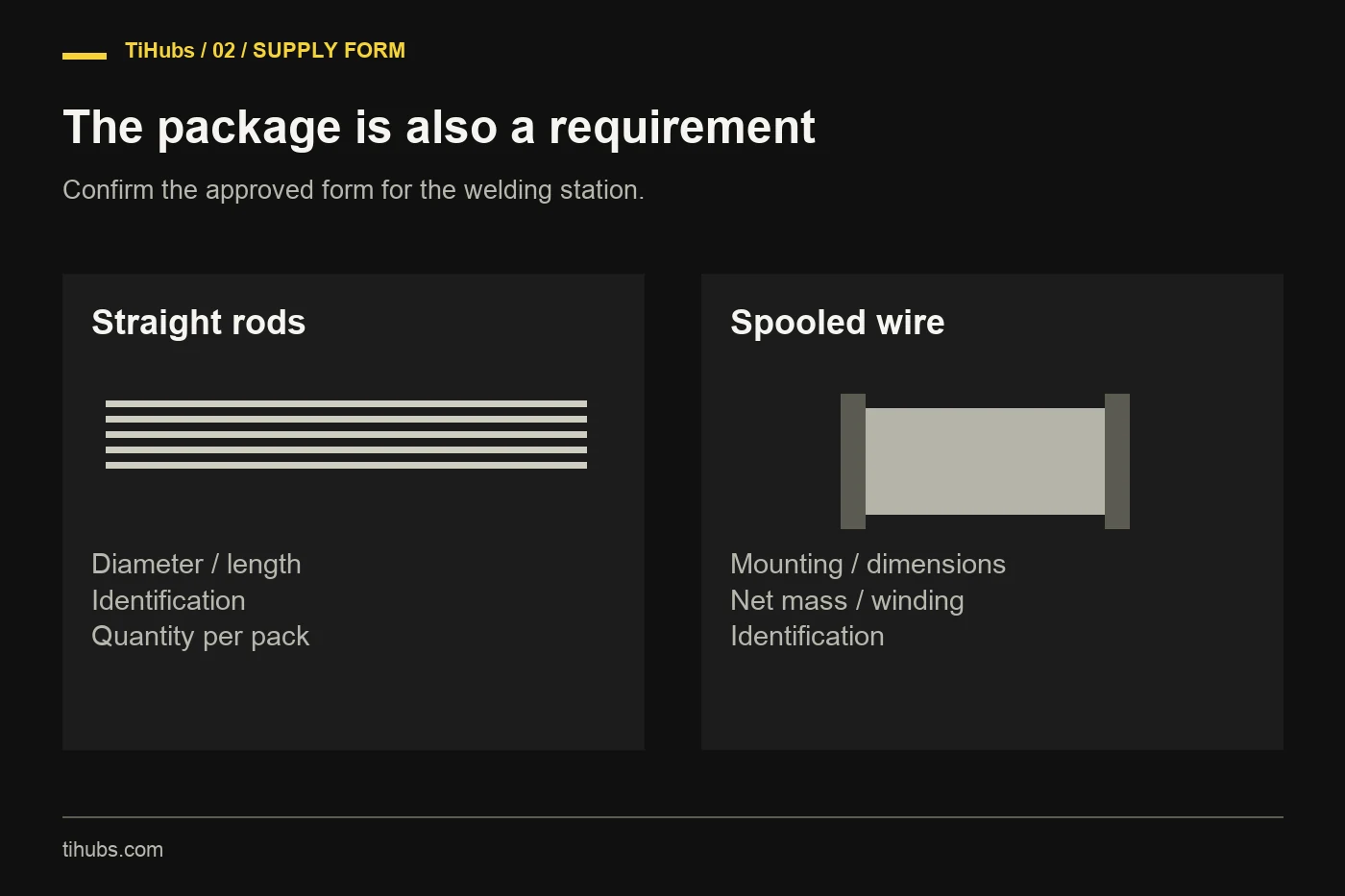
Straight cut rods and continuously wound wire serve different handling and feeding arrangements. A correct chemical classification does not make them interchangeable in production. Specify whether the order requires straight lengths, a particular spool configuration or another approved form. The product description should identify the useful consumable and the physical package, because both can determine whether a delivery is ready for the planned welding station.
For straight rods, state diameter, cut length, permitted length variation, quantity basis and identification method. Confirm whether the shop needs individual rod identification, bundle identification or another project-defined arrangement. Do not assume that a supplier’s standard rod length matches the work area or handling practice. If rods will be divided into smaller issue quantities, plan how the classification and lot identity will remain with each issued group without introducing an unsuitable marking material into the weld area.
For spooled wire, record the spool outside diameter, width, hub or mounting details, net wire mass and any applicable spool standard or approved drawing. Distinguish net consumable mass from the gross weight including the carrier and packaging. A “5 kg spool” description may identify only the quantity of wire; it does not define every mounting dimension. A photograph of a spool is useful for orientation, but a dimensioned specification is a better basis for checking the holder.
Winding quality and the wire’s free shape can affect feeding. Cast describes the wire’s natural curvature after release from the package; helix describes its out-of-plane tendency under the specified assessment method. If these properties are important to the equipment, obtain the required limits and test method from the approved supply or equipment specification. Do not assign a universal cast or helix value to all titanium welding wire. Manufacturer literature illustrates controlled winding and different package options, but those options must be confirmed for the actual order. [3]
Supply form
Details to include
Issue to prevent
Straight rods
Diameter, length, identification and pack quantity
Unidentified rods or unusable handling lengths
Spool
Carrier dimensions, mounting, net mass and winding requirements
A chemically correct wire on an incompatible carrier
Small issue packs
Required quantity and retained lot identification
Repeated opening or loss of traceability during redistribution
Ask how the wire end is secured for transport and whether the package can be opened and reclosed according to the shop’s handling procedure. Do not improvise a production respooling operation merely to fit an incompatible carrier. Respooling can change handling exposure, winding and traceability, so any such route should be expressly reviewed and included in the approved supply scope. It may be more practical to order the correct carrier from the start.
For a first delivery to an automated station, qualify the physical package as well as the wire. The trial should use the intended holder and feed arrangement under the shop’s approved procedures. Record any feed interruption with the package, lot and equipment configuration. That record helps distinguish a dimensional or winding issue from an equipment setup problem, and gives the repeat order a clear, reproducible package requirement.
Industrial buying guide / 03Specify the carrier as well as the wire.
Rod length and identification differ from spool mounting, width and net mass. Confirm the actual equipment and approved package.
04 / Cleanliness and protection
Specify the delivery condition and protect it through issue.
Titanium welding consumables need a defined clean condition, not merely an attractive silver appearance. TWI identifies surface contamination and moisture as important contributors to welding problems and emphasizes controlled handling of filler material. For a buyer, the useful response is to specify the condition at delivery and the packaging needed to preserve it. Detailed cleaning and welding instructions must come from the approved shop procedure and consumable guidance. [2]
Avoid vague purchasing terms such as “bright,” “polished” or “premium clean” without an agreed meaning. Ask what surface preparation is included, how the product is protected after that preparation, and what evidence or declaration accompanies the shipment. A shiny surface is not a chemical cleanliness measurement. At the same time, do not invent a numerical contamination limit that the project has never specified or the supplier cannot verify. Define the acceptance basis with the welding and quality teams.
Packaging should match the receiving and issue workflow. A large package may be economical for continuous production, while smaller sealed quantities can be more practical for occasional work. The decision depends on how often the package will be opened and how unused material will be managed under the shop’s procedure. Ask for the proposed inner protection and outer transport protection separately. A strong shipping carton does not by itself establish the condition of the wire inside it.
At receipt, check package integrity before opening. Record damaged seals, moisture evidence, loose wire, crushed carriers or missing identification. Keep an affected package separate while the responsible quality personnel decide its status. Do not assume that wiping visible dirt away restores a documented welding-consumable condition. Equally, a damaged outer carton does not necessarily prove that a sealed inner pack is unsuitable; the decision should use the actual condition and the approved acceptance process.
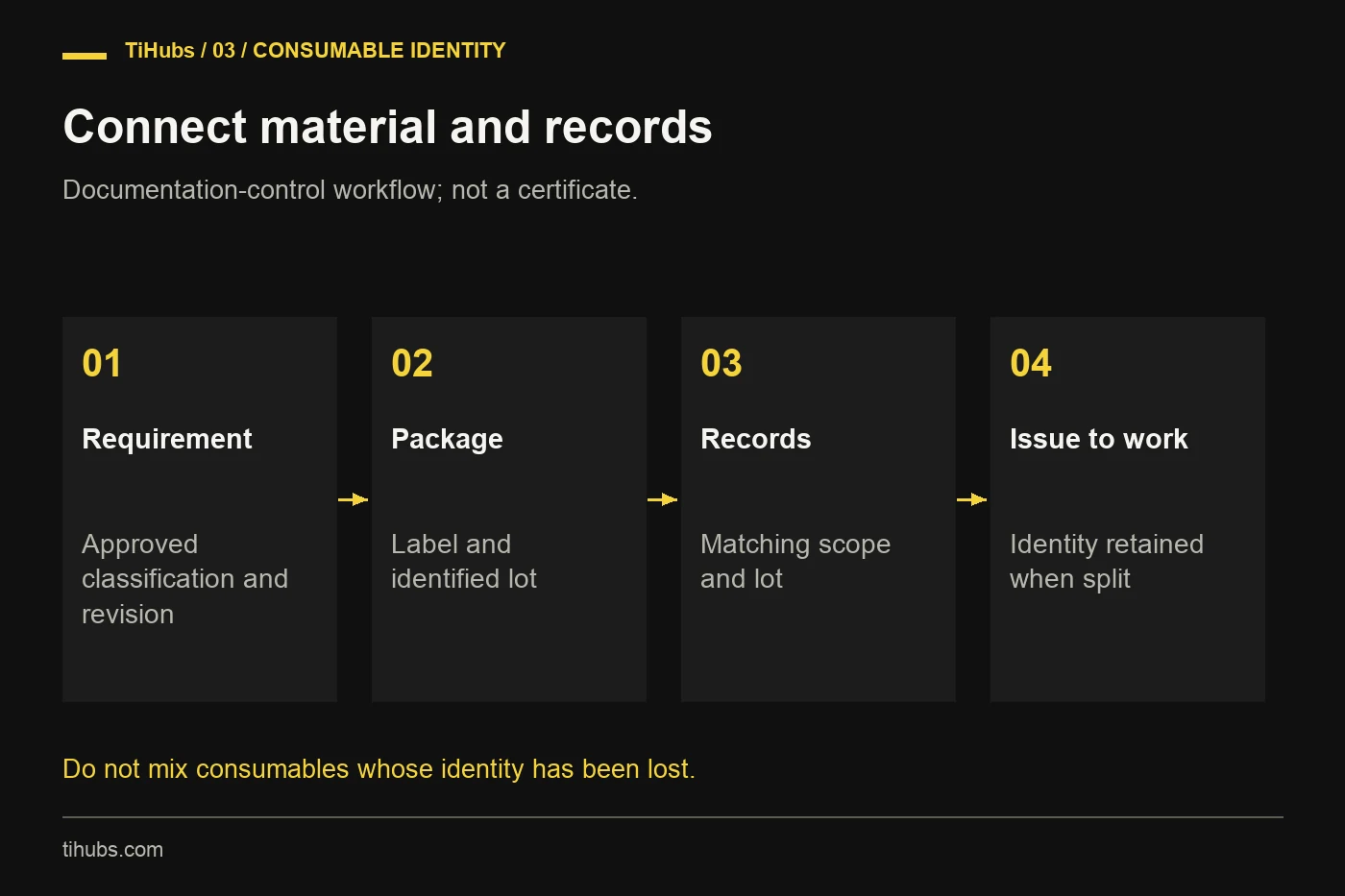
For routine issue, identify the person or function responsible for retaining lot information. Once a package is split, each issued group should remain connected to the original classification and lot by an approved identification method. Do not mix leftover rods from several unidentified packages into a common tube. That practice can make a later weld record impossible to reconstruct even when the rods look identical. The required level of traceability should be agreed before buying, especially where multiple jobs share a consumables store.
Stage
Purchasing or store control
Before delivery
Agree surface condition, pack size and identification
Receiving
Check protection, label and correspondence with records
Issue to work
Preserve classification and lot identity in the approved system
Return from work
Apply the shop’s disposition and storage rules
Do not assign a universal shelf life or rebaking cycle to titanium wire. Ask for the manufacturer’s storage instructions and any project-specific controls, and distinguish unopened material from partially used packages. If returned wire has an uncertain history, the welding-quality process should determine whether it can be used. Buying the correct specification is only the first step; keeping the supplied condition and identity intact is what allows the production team to rely on that purchase.
05 / Documents and traceability
Make the certificate refer to the consumable you received.
A certificate is useful only when it can be connected to the delivered wire or rods. Before placing the order, identify the required document type, information and relationship to the package. A generic product data sheet describes a product range; it is not automatically the test record for the delivered lot. A statement that a supplier can provide certificates should be expanded into the actual reporting commitment included in the quotation.
The document review should check manufacturer or responsible source identification, product classification, specification and edition where required, diameter, supplied form, heat or lot references and the reported inspection or analysis scope. Confirm how package labels link to those references. If the producer uses separate heat and finished-product lot numbers, ask for the relationship needed by the project. Do not assume that the number on a commercial invoice is the same as the number used for production traceability.
For a specification requiring composition-based classification, compare the reported classification and required analysis documentation with the approved purchase requirement. Do not infer compliance from a familiar alloy name alone. Nor should a general handheld alloy-identification result be treated as a substitute for every required element or test. The project quality team should define the analytical and documentary evidence it needs, and the supplier should state whether that evidence is included, optional or unavailable.
If a project needs additional certification, customer approval, origin information or a particular traceability format, state it before pricing. An ordinary welding-consumable offer should not be described as suitable for a regulated or specially qualified application without the required supporting scope. Titanium products can share a chemistry family while having different procurement and documentation requirements. TiHubs should be asked to review the actual requirement rather than make a broad promise based only on a grade designation.
A sample document can be reviewed before ordering, provided it is clearly marked as an example and not mistaken for the future delivery’s certificate. Use it to agree field names, report format and the information the receiving team expects. The actual shipment still needs its own applicable records. If a translation is required for the destination, preserve the original identifiers, values, units and document revision, and keep the translated text traceable to the original record.
Document
Useful role
Limit
Product data sheet
Describes the offered product and options
Does not identify every delivered lot
Lot-related certificate or report
Connects agreed results to identified supply
Must match the requested reporting scope
Approved welding procedure
Defines the production welding requirement
Is not replaced by the filler certificate
Receiving record
Shows the delivered package was checked
Does not create missing material evidence
When a label or report does not match, stop the affected item’s release and seek a factual correction or disposition. Do not rewrite the identification locally to make the documents appear consistent. Record the package, discrepancy and supplier response so the final decision remains auditable. Clear traceability is particularly valuable during a trial: if the result is accepted, the team can identify what was actually tested instead of trying to reorder an anonymous “sample of titanium wire.”
Industrial buying guide / 05Keep one identity through the supply chain.
Connect the ordered classification to the package, lot records and issued consumable. The diagram is a documentation workflow, not a certificate.
06 / Trial and commercial scope
Compare usable supply and approve changes explicitly.
A first order should be sized around the qualification task and the intended production demand. Ask the welding team what quantity is needed for setup, procedure or production trials, accepted joints and retained material where required. These quantities serve different purposes. A trial spool may establish handling and feeding behavior for one configuration, but it does not automatically authorize every later diameter, classification or packaging change.
Define the trial record before the material arrives. Identify the consumable lot, diameter, package, equipment arrangement and approved procedure revision. State what the trial is intended to verify and who releases the result. The shop should use its normal authorized welding and inspection process; this buying guide does not prescribe current, gas flow, travel speed or acceptance limits. Record observations precisely enough to distinguish consumable condition from setup, shielding or other process variables.
For quantity planning, separate estimated deposited metal from purchased consumable. Rod ends, setup work, qualification coupons and handling losses can make those figures different. Use the fabricator’s measured experience or a documented project assumption instead of a universal efficiency percentage. The calculation should show which losses are already included so they are not counted twice. Revisit the estimate after the trial provides useful project-specific evidence.
For a simple hypothetical example, suppose the approved planning sheet estimates 8 kg of usable consumable for production, 2 kg for trials and setup, and a separate 1 kg contingency. The planned requirement is 11 kg. If the agreed package contains 2.5 kg net wire, five complete packages provide 12.5 kg. That arithmetic does not establish actual weld deposition efficiency or a recommended contingency. It simply makes the difference between the planning quantity and the order quantity visible.
Compare quotations on the same basis: classification, specification, diameter, form, net mass, package configuration, cleaning condition, identification and records. Then compare minimum order quantity, lead time, shipment scope and price. One offer may include smaller individually protected packs while another prices one bulk package. That difference can affect the store’s handling plan even when the material description matches. Ask each supplier to state exceptions explicitly, rather than relying on a short line saying “as requested.”
A substitution request should name the changed characteristic. A different carrier with identical wire is a package change; a different diameter is a process-input change; a different classification is a material-selection change. More than one can occur at once. Route each change to the relevant approval and preserve the accepted version with the purchase order. A verbal agreement that “the wire is similar” is difficult to verify when production later needs the original configuration.
For repeat orders, retain the successful product specification and package details without turning a trial result into an unlimited supplier-performance claim. Check whether the source, condition, classification, diameter or package has changed, and apply the project’s change-control process where necessary. A stable order description allows useful production feedback to accumulate. Repeatedly changing unspecified details prevents the team from knowing whether a result came from the consumable or the surrounding process.
When contacting TiHubs about titanium welding wire and rods, send the approved requirement with the desired quantity and delivery destination. Include the exact classification and supply form even if a drawing is not needed. If the technical requirement is still under development, explain the trial purpose. The supplier can then review a concrete supply scope while the welding authority retains responsibility for process selection and approval.
07 / Build your RFQ
Prepare a titanium welding-consumable enquiry.
Send the approved filler classification and procedure-related purchasing requirement, together with diameter, supply form, quantity and destination. TiHubs can review the requested wire or rod supply scope. If the requirement is provisional, identify the trial purpose and the technical decisions still awaiting approval.
Information to include
Exact filler classification, specification and edition
Approved process context and procedure revision where applicable
Diameter, controlling units and permitted variation
Rod length or spool dimensions, mounting and net mass
Surface condition, pack size and identification requirements
Lot-linked records, trial quantity and delivery destination
Build your RFQ checklist
Choose the product and add the information you have. Copy the resulting brief or send your requirements to TiHubs. Submitting an enquiry does not place an order.
08 / FAQs
Questions buyers ask
Can industrial titanium wire replace certified filler wire?
Not on the basis of a similar grade name alone. The supplied product must meet the welding-consumable specification, classification, condition and documentation required by the approved purchase and procedure. Request a separate compliance review before substituting.
Does the base-metal grade automatically identify the filler?
No. It provides context, but the approved procedure must identify the required filler. Matching-composition choices are common, while some applications use technically approved alternatives. Purchasing should preserve the specified classification rather than infer it.
Can 1.6 mm replace 1/16-inch wire?
The mathematical conversion is close, but acceptance depends on the controlling designation, specification tolerances and approved process requirement. Do not round between unit systems or assume equivalence without review.
Is a spool mass enough to order mechanized welding wire?
No. Also specify carrier dimensions, mounting arrangement, wire diameter, winding requirements and net consumable mass. The physical package must suit the installed equipment and approved feed arrangement.
Does shiny wire prove it is clean enough for welding?
Appearance alone does not establish the required surface condition. Agree the preparation, protection and acceptance basis, and follow the approved handling and storage instructions. Preserve package and lot identity if a condition problem is suspected.
What should be retained after a successful trial?
Keep classification, diameter, supply form, package details, lot identity, relevant records and the approved procedure or trial revision. The result should state its scope so a future material or package change is not accepted automatically.
09 / Key takeaways
Keep the purchase requirements connected.
Use the approved filler classification, not only a base-metal nickname.
Keep diameter, units and process compatibility explicit.
Specify the rod length or complete spool configuration.
Protect the agreed surface condition and lot identity.
Compare the same net supply scope and review substitutions.
Technical references
Sources and data scope
References reviewed November 13, 2026. Public source summaries support the discussion; the controlled specification, agreed edition and approved project requirements govern acceptance.
TiHubs coordinates titanium material and custom supply enquiries from Baoji, China. Send the product, drawing revision and acceptance requirements so the proposed supply scope can be reviewed. Learn about our sourcing role.
Contents
TiHubs
Talk to TiHubs
Ask about titanium materials, grades or custom parts.
Enter your email to start chatting.
We use your email to respond to your enquiry. Your conversation is stored on this website.
Our team is away right now. Leave your enquiry and we will follow up by email.